
Micron-level precision in molds: when tighter tolerances backfire

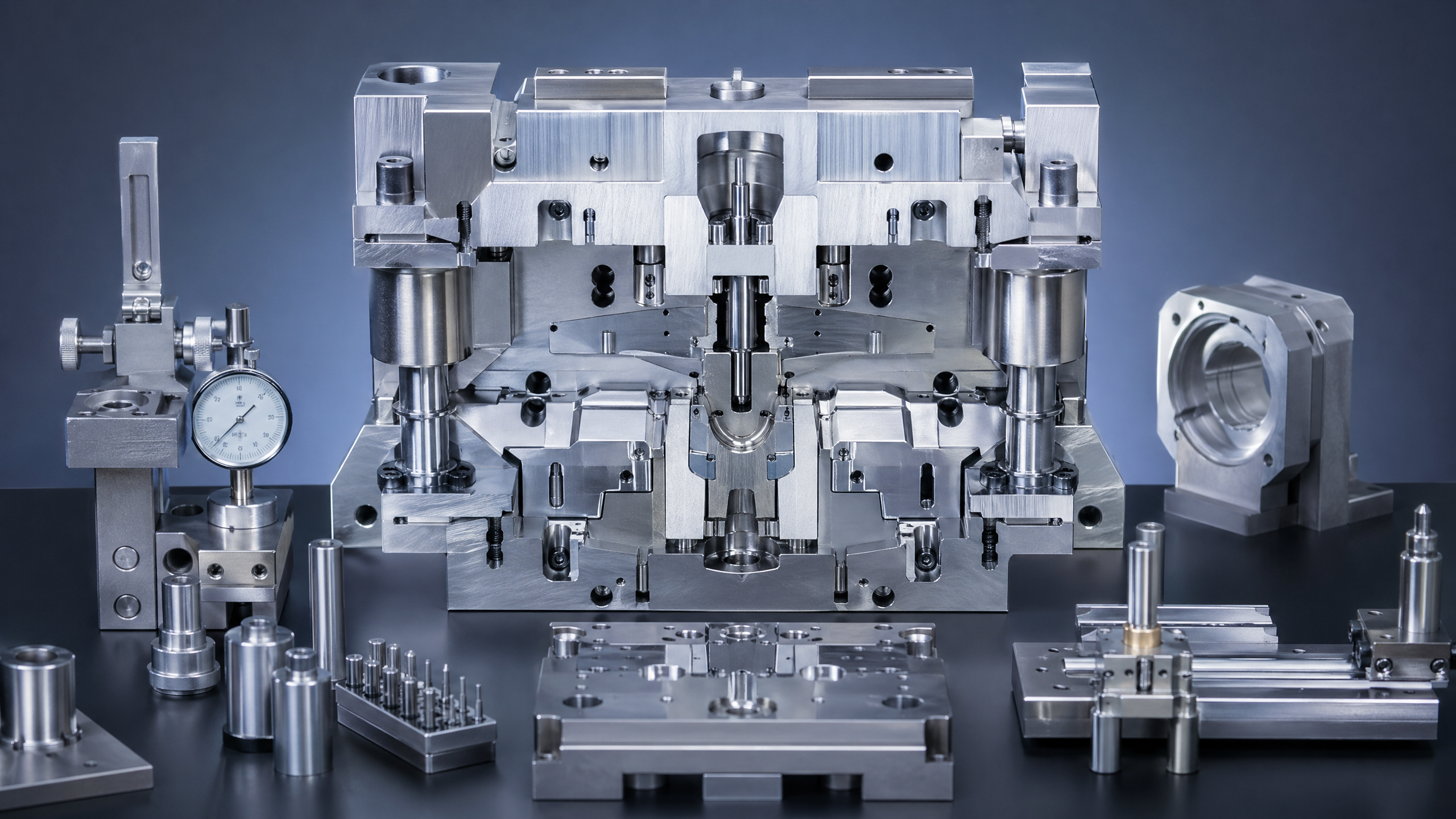
Micron-level precision can improve mold performance, but beyond a point it may disrupt manufacturing logic, raise costs, and slow delivery to the high-end industrial market. For professionals across the hardware sector, this article explores when tighter tolerances backfire, how they affect industrial standardization and greening components, and what smarter decisions mean for quality, procurement, and long-term industrial greening.
Understanding micron-level precision in molds
In mold manufacturing, micron-level precision usually refers to dimensional control in the range of a few micrometers, often applied to cavity geometry, parting surfaces, ejector fit, vent depth, and alignment features. In practical terms, a tolerance window of ±2 μm, ±5 μm, or ±10 μm may look like a straightforward quality upgrade, yet the engineering meaning changes depending on the process. A die-casting mold, a stamping die, and an injection mold do not respond to the same precision target in the same way.
This is why experienced tooling teams do not treat micron-level precision as a universal virtue. Precision must match manufacturing logic: material behavior, thermal expansion, machine capability, downstream assembly tolerance, maintenance frequency, and the expected production volume. If the mold works in a high-cycle environment of 100,000 to 1,000,000 shots, a local tolerance that is too tight may increase wear sensitivity instead of improving consistency.
For target audiences such as technical evaluators, purchasers, OEM engineers, project managers, and quality leaders, the key question is not whether tighter tolerances are possible, but whether they are functionally necessary. In the high-end industrial market, high precision has value only when it supports stable output, compliant performance, faster validation, and efficient total lifecycle cost.
What precision should actually control
A useful distinction is between critical precision and decorative precision. Critical precision affects sealing, flash control, fit, optical quality, electrical enclosure integrity, or automated assembly performance. Decorative precision often looks impressive on a drawing but contributes little to function. In many industrial programs, only 10% to 20% of mold features truly require ultra-tight control, while the remaining 80% can follow robust, standardized tolerance bands.
- Critical areas usually include shut-off zones, guide interfaces, insert matching faces, and thin-wall geometry.
- Moderate-control areas often include outer frame dimensions, non-functional pockets, and support features.
- Maintenance-related areas need balance, because excessive tightness can complicate rework after 3 to 6 months of operation.
This distinction matters for industrial standardization. When every feature is specified at extreme precision, engineering drawings become harder to interpret, supplier comparison becomes less transparent, and inspection time increases. A mold that is technically “more precise” may become commercially weaker because it introduces ambiguity into quality acceptance and slows industrial collaboration network decisions across design, tooling, production, and procurement.
Why the topic matters now
The subject is gaining attention because modern production combines three pressures: faster product launches, tighter compliance requirements, and stronger pressure for industrial greening. In sectors linked to electrical housings, connectors, appliance hardware, compact tools, and automation accessories, molds are expected to support precision while also reducing scrap, rework, energy load, and material waste. That makes the real target not the smallest number on a print, but the best balance of precision, throughput, and sustainability.
Why tighter tolerances can backfire in real manufacturing
Tighter tolerances backfire when the cost of achieving them grows faster than the operational value they create. This often happens in molds because each additional reduction in tolerance may require slower machining feeds, additional grinding or EDM steps, more temperature-controlled measurement, more fitting time, and longer validation cycles. Moving from a ±10 μm target to ±5 μm may be manageable; moving from ±5 μm to ±2 μm can trigger a disproportionate rise in time and cost.
The technical problem is not only manufacturing difficulty. Mold materials expand with temperature, surfaces wear, and process conditions drift. A dimension held at room temperature during inspection may behave differently under operating heat. For example, a steel length of 100 mm can shift several micrometers with ordinary shop temperature variation. If the tolerance is tighter than the process environment can realistically protect, the measured precision may not survive the first production week.
This is especially important in the hardware sector, where molds support products that must be rugged, repeatable, and commercially viable. Decision-makers often discover that over-specified precision delays sample approval by 1 to 3 weeks, increases tooling revisions, and narrows the supplier base. Instead of enabling the high-end industrial market, it can become a barrier to scaling into it.
Where over-precision creates hidden losses
Losses from over-precision are often indirect. They may appear in quotation gaps, maintenance difficulty, spare insert complexity, and inconsistent acceptance criteria between buyer and supplier. Quality teams may spend extra hours proving conformance on dimensions that do not affect product function, while more relevant factors such as venting, release behavior, or thermal balance receive less attention.
The table below summarizes common areas where tighter tolerances can either help or hurt, depending on the application and lifecycle requirements.
The practical takeaway is that micron-level precision is most valuable where functional risk is high and operating conditions can sustain it. Elsewhere, chasing extreme tightness can weaken flexibility, hurt serviceability, and work against industrial standardization. That is one reason leading tooling teams define precision hierarchies instead of applying one blanket tolerance philosophy.
The connection to greening components
There is also a sustainability angle. Over-precision may increase scrap during mold making, extend machine occupation time, consume more energy in finishing processes, and produce more rejected inserts. In other words, a design intended to be “better” can conflict with greening components if it raises material loss by even 3% to 8% over a tooling project. Industrial greening is not only about end-product materials; it also includes how intelligently precision is specified in tooling.
Industry context: precision, compliance, and standardization
Across global manufacturing, mold precision now sits at the intersection of product quality, compliance, and market responsiveness. For electrical enclosures, connector bodies, switch accessories, fastener-related overmold parts, and tool housings, geometry influences not only appearance but also fit, protection rating stability, and assembly behavior. However, the right response is not endless tightening. It is controlled precision aligned with standards, process capability, and end-use risk.
This is where electrical compliance standards and industrial standardization enter the discussion. A component serving electrical or mechanical functions may need dimensional repeatability to support insulation distance, sealing, interface fit, or housing closure. Yet compliance-oriented design generally values repeatable conformity over decorative over-control. A mold that reliably produces parts within functional limits across 30,000 or 300,000 cycles is often more valuable than one that achieves ultra-tight first-off dimensions but drifts quickly in production.
For distributors, agents, and sourcing teams using an industrial collaboration network, standardization also improves comparability between suppliers. When tolerance schemes are rational and layered, quotations can be reviewed faster, capability can be checked against common machining and measurement routes, and onboarding of alternative toolmakers becomes easier if capacity shifts are required.
A practical industry overview
The table below provides a broad view of how different industrial applications tend to balance precision, service life, and standardization needs.
This overview shows a consistent pattern: the most effective mold programs use precision where risk justifies it, while preserving standard practices elsewhere. That approach supports both performance and industrial greening by limiting unnecessary processing effort. It also matches the way global manufacturers increasingly evaluate total cost, resilience, and lead-time exposure together rather than in isolation.
What standardization really improves
Standardized tolerance logic improves communication between design, machining, inspection, procurement, and aftermarket support. In many organizations, a 2-stage or 3-stage tolerance classification system is enough to reduce internal debate and shorten design review cycles by several days. It also helps prevent precision inflation, where each stakeholder adds tighter requirements “just to be safe,” even when no functional evidence supports the change.
Where smarter precision creates real business value
Smarter precision means targeting the dimensions that control product function, process consistency, and lifecycle risk. When used this way, micron-level precision remains highly valuable. It can reduce flash in critical closure areas, improve mating consistency for electrical and mechanical assemblies, lower manual adjustment during launch, and support stable Cp or Cpk goals where customers expect tight process discipline.
For quality managers and safety personnel, smarter precision also makes inspections more meaningful. Instead of measuring everything with the same intensity, teams can focus on features that affect sealing, breakage risk, movement, or compliance-sensitive clearances. This often reduces inspection burden while increasing confidence in output quality. A focused control plan with 5 to 8 critical dimensions can be more powerful than a broad checklist of 40 low-value checks.
For purchasers and business evaluators, the value appears in better supplier alignment. When requirements are practical, more capable toolmakers can participate, quotations become easier to compare, and lead times are less likely to stretch from 4 weeks to 8 weeks because of avoidable ultra-precision requests. That improves supply resilience without lowering standards.
Business effects by stakeholder
- Technical evaluators gain clearer links between tolerance, function, and process capability.
- Operators benefit from molds that are easier to set, clean, and maintain across normal production shifts.
- Procurement teams reduce hidden cost surprises tied to rework, spare inserts, and delayed PPAP-like approval stages.
- Enterprise decision-makers get stronger lifecycle economics and better support for industrial greening targets.
- Distributors and agents can represent products more confidently when quality logic is consistent and documented.
This alignment is increasingly important in the high-end industrial market, where customers expect technical discipline but also demand reliable launch timing, environmental responsibility, and maintainable quality systems. Precision supports these goals best when it is selective, evidence-based, and embedded in manufacturing logic rather than treated as a prestige metric.
Practical guidance for evaluating mold tolerance strategy
A practical evaluation framework begins with function, not drawing aesthetics. Before tightening any dimension into the micron range, teams should ask what failure mode it prevents, how often that risk occurs, and whether the production environment can preserve the intended control. This is especially relevant in programs involving mixed materials, heat-sensitive parts, automated handling, or long production schedules across multiple shifts.
A second step is to compare tolerance ambition with process capability. If machining, fitting, and measurement require repeated manual correction, the cost and schedule impact should be treated as part of the engineering decision, not as a separate sourcing problem. In many mold shops, every additional high-precision intervention adds queue time, and queue time is often the hidden factor behind delayed tool trials.
A third step is to include industrial greening in the review. Tolerances that drive excessive polishing, re-machining, or insert rejection may conflict with greening industrial goals. Sustainable tooling is not loose tooling; it is precision applied where it prevents waste over the whole lifecycle.
A working checklist for cross-functional teams
- Identify 5 to 10 truly critical dimensions tied to function, compliance, or assembly.
- Separate cavity performance requirements from non-functional mold base or external dimensions.
- Review thermal behavior, wear expectation, and maintenance interval, such as every 50,000 or 100,000 cycles.
- Define replacement strategy for inserts before finalizing extremely tight fit requirements.
- Check whether the tolerance supports industrial standardization across internal teams and external suppliers.
- Estimate the effect on machining time, sample timing, scrap risk, and energy use.
Questions worth asking suppliers
Good supplier discussions should move beyond “Can you hold this tolerance?” and toward “How will you hold it repeatedly, inspect it, maintain it, and replace it?” That shift improves transparency for OEMs, project leaders, and sourcing teams. It also strengthens industrial collaboration network outcomes because everyone works from the same risk picture instead of chasing isolated numbers.
Useful topics include expected lead time impact, trial iteration count, preferred steel and insert strategy, temperature control during inspection, maintenance access, and compatibility with electrical compliance standards where applicable. In many projects, these questions reveal that a slightly broader but better-engineered tolerance delivers superior field performance and lower total cost.
Why choose us for precision tooling insight and market guidance
GHTN connects precision manufacturing understanding with commercial decision support. Our focus is not only on what looks advanced on paper, but on what works across design review, sourcing, validation, production, and aftermarket support. For stakeholders in the hardware sector, mold manufacturing, and adjacent electrical applications, that means clearer judgment on when micron-level precision creates value and when it undermines manufacturability, industrial standardization, or industrial greening.
Because our perspective combines technological trend analysis with trade insight, we help readers and partners evaluate precision through the full chain: material selection, tooling strategy, compliance-sensitive dimensions, lead-time implications, and fit for the high-end industrial market. This approach is especially useful for enterprises balancing quality targets with greening components, supplier flexibility, and long-term competitiveness.
If you are assessing a mold drawing, refining a tolerance strategy, comparing supplier capability, or planning entry into more demanding industrial segments, contact us for focused support. You can consult us on parameter confirmation, product and tooling selection, delivery cycle evaluation, customized precision strategy, certification-related dimensional concerns, sample support planning, and quotation communication. GHTN is built to link precision, strengthen manufacturing logic, and support smarter decisions across the global industrial collaboration network.
Related News
- mold manufacturing
- material selection
- global manufacturing
- hardware sector
- die-casting
- industrial standardization
- technological trend analysis
- high-end industrial market
- industrial collaboration network
- electrical compliance
- greening industrial
- industrial collaboration
- greening components
- electrical compliance standards
- industrial greening
- micron-level precision
- manufacturing logic