
How precision mold quality affects part consistency

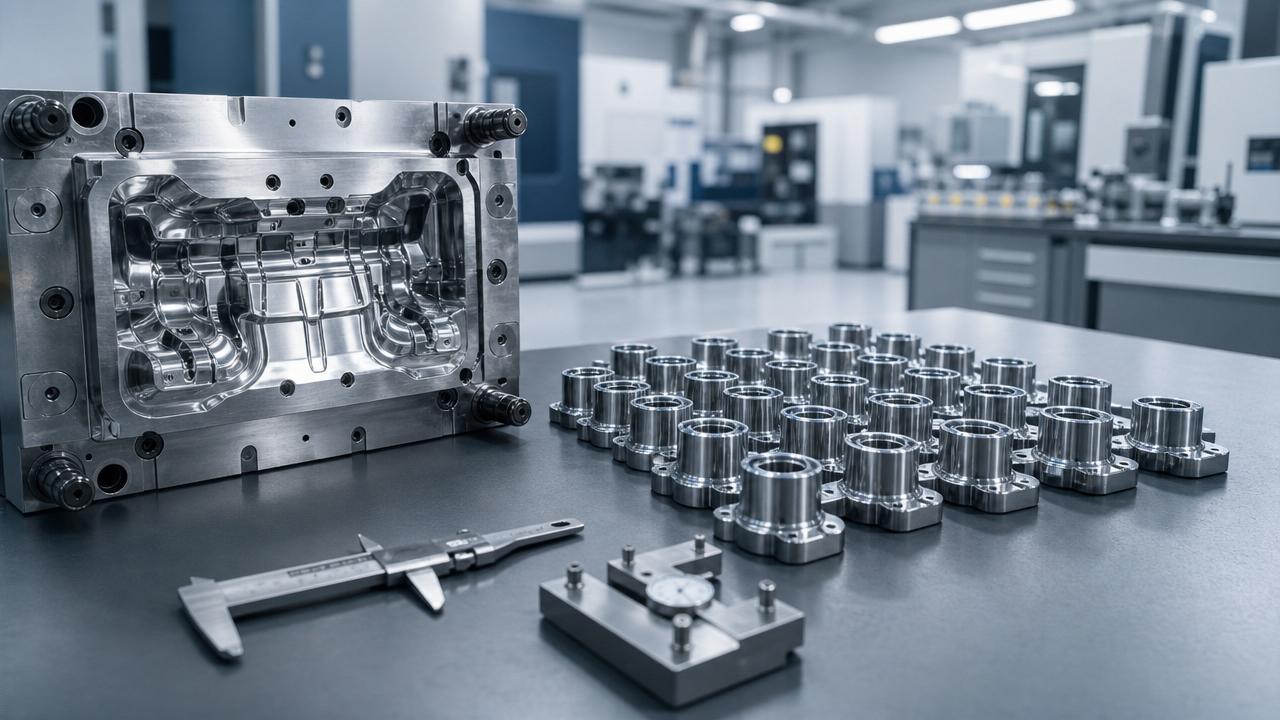
For quality control and safety teams, part consistency is not just a production metric—it is a risk control priority.
A precision mold determines how reliably each component meets dimensional, surface, and performance requirements across repeated production cycles.
Even minor deviations in mold design, material hardness, cooling balance, or maintenance can lead to defects, assembly failures, or compliance issues.
Understanding how precision mold quality influences consistency helps reduce scrap, stabilize output, and protect operational efficiency and end-user safety.
How Precision Mold Quality Affects Part Consistency in a Changing Manufacturing Landscape
Across general industry, tolerance expectations are becoming tighter while product lifecycles are becoming shorter.
Automotive, electronics, medical device, electrical hardware, and industrial equipment supply chains now demand repeatable parts with fewer inspection escapes.
This shift makes precision mold quality a strategic factor, not only a tooling department concern.
A stable precision mold converts design intent into repeated physical accuracy, cycle after cycle.
When mold quality is weak, variation appears in dimensions, appearance, strength, sealing, and assembly behavior.
When mold quality is strong, production data becomes more predictable, and quality decisions become less reactive.
Trend Signals: Consistency Is Becoming a Competitive Requirement
The market is moving from “acceptable average quality” toward “controlled variation.”
This change is visible in tighter customer audits, automated assembly lines, and stricter traceability systems.
A precision mold with unstable cavities can undermine these systems before inspection even begins.
Part consistency now affects warranty exposure, line speed, downstream automation, and brand credibility.
In high-volume production, small mold variation multiplies quickly into large operational losses.
For this reason, precision mold investment is increasingly evaluated through total lifecycle cost, not purchase price alone.
Key Signals Appearing Across Industrial Supply Chains
- More automated assembly lines require tighter dimensional repeatability.
- Shorter product lifecycles reduce tolerance for long debugging periods.
- Digital quality records expose process drift faster than manual inspection.
- Material substitution increases sensitivity to mold temperature and flow balance.
- Global sourcing raises expectations for standardized precision mold validation.
Why Precision Mold Quality Controls Repeatability
A precision mold is a physical system combining steel, geometry, thermal behavior, venting, surface finish, and movement.
Each element influences how material fills, cools, shrinks, ejects, and stabilizes after molding.
Part consistency depends on whether these elements remain balanced under real production conditions.
A polished cavity alone does not guarantee consistency if cooling channels create uneven shrinkage.
Likewise, a strong mold base cannot compensate for poor venting or misaligned shut-off surfaces.
The Main Drivers Behind Higher Mold Quality Expectations
Several structural forces are pushing precision mold standards upward across the industrial parts ecosystem.
These forces are technical, commercial, and regulatory at the same time.
- Automation dependency: Robotic assembly tolerates less variation than manual fitting.
- Material complexity: Reinforced polymers and alloys react strongly to flow and temperature imbalance.
- Compliance pressure: Safety-critical parts need documented dimensional and process stability.
- Cost transparency: Scrap, rework, downtime, and returns are measured more precisely.
- Global benchmarking: Suppliers are compared by consistency, not only delivery speed.
These drivers explain why precision mold quality is becoming part of strategic manufacturing planning.
The mold is increasingly viewed as a controlled production asset with measurable risk impact.
How Poor Precision Mold Quality Creates Variation
Variation often begins quietly, long before major defects appear.
A small mismatch in cavity inserts may create gradual flash or uneven wall thickness.
An imbalanced cooling circuit may shift dimensions between the first and ten-thousandth shot.
A worn precision mold surface may change friction, release behavior, and final appearance.
These changes can disrupt statistical process control and mask the true source of defects.
Common Variation Paths
- Dimensional drift caused by cavity wear or thermal expansion.
- Surface inconsistency caused by polishing defects or deposit buildup.
- Warping caused by uneven cooling or gate imbalance.
- Incomplete filling caused by inadequate venting or poor flow design.
- Assembly failure caused by accumulated tolerance stack-up.
A high-quality precision mold reduces these paths by making process behavior more stable and measurable.
Impact on Quality Control, Production, and Safety
Part consistency affects multiple business links, from inspection planning to field reliability.
When precision mold quality is reliable, quality control can focus on prevention instead of containment.
Stable cavity behavior supports better sampling plans, clearer control limits, and faster root cause analysis.
Production also benefits through shorter start-up time and fewer parameter adjustments.
In safety-related applications, consistency supports predictable load transfer, sealing performance, and electrical insulation behavior.
What Should Be Monitored as Quality Expectations Rise
The next stage of mold management will depend on earlier detection of instability.
A precision mold should be reviewed through design, manufacturing, trial, production, and maintenance data.
The most useful indicators connect physical mold condition with actual part measurement trends.
Core Focus Areas
- Cavity-to-cavity dimensional difference during first article inspection.
- Cooling temperature difference between critical mold zones.
- Wear patterns on slides, lifters, inserts, and shut-off surfaces.
- Gate balance, filling pressure, and repeatability of shot weight.
- Surface finish changes after extended production cycles.
- Maintenance history linked to recurring part deviations.
These indicators help identify whether inconsistency comes from process settings or precision mold condition.
That distinction is critical because process tuning cannot permanently correct worn or imbalanced tooling.
Practical Evaluation Criteria for Better Consistency
A practical precision mold evaluation should combine engineering judgment with measurable acceptance criteria.
The goal is not to over-specify every feature, but to protect the dimensions that determine function.
This approach makes precision mold acceptance more objective and easier to defend during audits.
Future Direction: From Tooling Inspection to Data-Driven Mold Control
The next trend is the connection of mold condition data with production quality data.
Sensors, digital maintenance logs, and cavity pressure monitoring are making precision mold behavior more transparent.
This does not replace skilled mold engineering, but it strengthens early warning capability.
Instead of waiting for defects, teams can identify drift in temperature, pressure, wear, or filling balance.
For global hardware and tooling networks, this shift supports better supplier comparison and clearer technical collaboration.
It also aligns with greener manufacturing because stable molds reduce scrap, energy waste, and emergency rework.
Response Strategy: Building a More Consistent Mold System
Improving consistency requires action before, during, and after mold launch.
The following staged approach helps convert precision mold quality into reliable production performance.
- Define functional dimensions and safety-related features before mold design starts.
- Review flow, venting, cooling, and ejection risks during design validation.
- Select mold materials based on volume, resin, pressure, and wear exposure.
- Validate the precision mold through repeated trials under realistic production settings.
- Link inspection results with cavity number, cycle count, and maintenance records.
- Schedule preventive maintenance based on evidence, not only calendar intervals.
This strategy turns mold quality from a one-time purchase decision into a continuous capability.
Action Guide: Turning Precision Mold Quality into Lower Risk
A useful next step is to audit recent defects against mold-related causes.
Separate variation caused by machine settings from variation caused by mold geometry, wear, or thermal imbalance.
Then prioritize improvements on parts where inconsistency affects safety, assembly, sealing, or compliance.
For new programs, build precision mold validation into the project timeline before mass production pressure begins.
For existing tools, use cycle data, inspection trends, and maintenance findings to identify hidden drift.
The core principle is simple: consistent parts begin with a stable precision mold.
By treating mold quality as a measurable risk-control system, industrial operations can reduce scrap and strengthen long-term competitiveness.
GHTN will continue tracking tooling trends, material behavior, and mold manufacturing practices that link precision with future industrial performance.
Related News