
Injection Molding Technical Analysis for Recurring Warpage

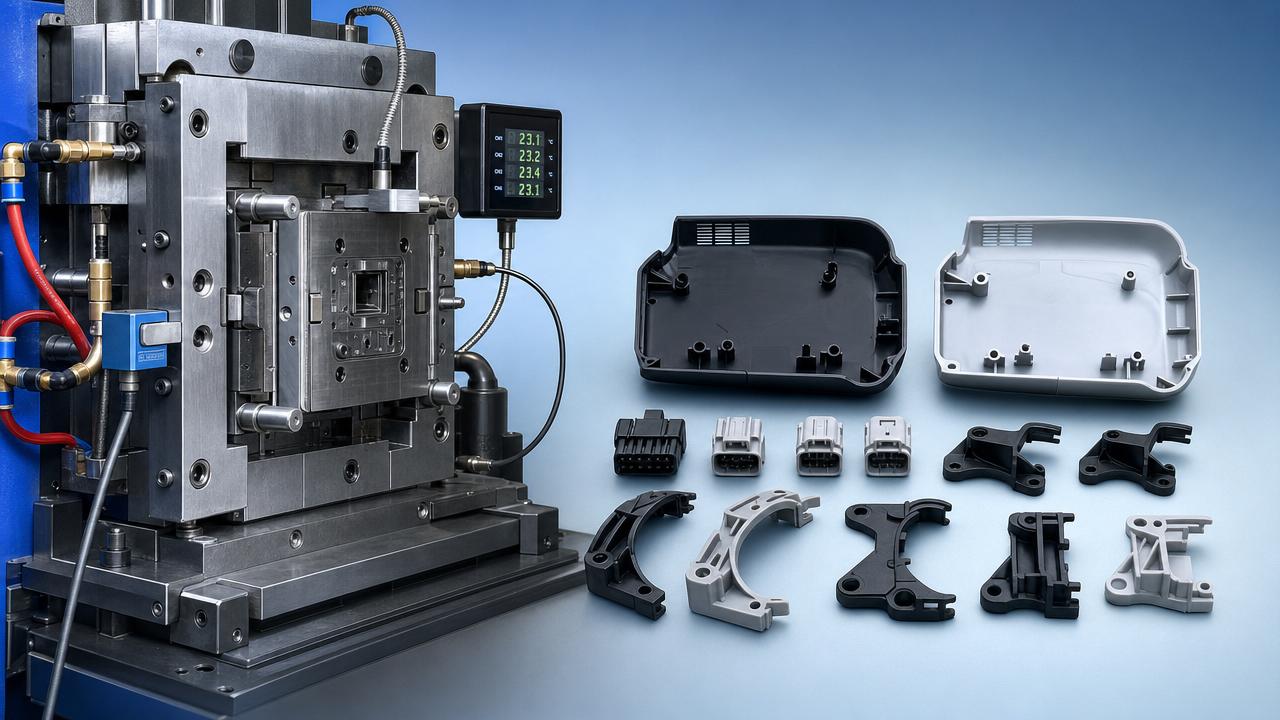
Recurring warpage in molded parts can turn routine maintenance into a costly cycle of machine resets, scrap, delayed delivery, and field complaints. This injection molding technical analysis focuses on practical diagnosis in real production environments, where deformation often comes from a combination of mold temperature imbalance, cooling inconsistency, resin shrinkage behavior, packing variation, and subtle process drift. For industrial supply chains that depend on dimensional stability in housings, connectors, brackets, covers, and precision inserts, solving warpage is not only a quality task but also a cost, tooling, and reliability decision. Within the broader manufacturing ecosystem served by GHTN, a disciplined injection molding technical analysis helps connect tooling performance, material logic, and maintenance action into a repeatable corrective path.
When recurring warpage is a maintenance issue rather than a one-time defect
Not every warped part signals the same problem. In some cases, deformation appears immediately after ejection and points to uneven cooling or premature demolding. In other cases, the part looks acceptable at inspection but bends after 24 to 72 hours, indicating residual stress release, moisture interaction, or post-crystallization effects. A strong injection molding technical analysis begins by identifying when the warpage appears, how repeatable it is, and whether it follows a cavity, machine, resin lot, or ambient shift.
This distinction matters across the general industrial sector because molded components serve very different functions. A cosmetic cover may tolerate slight curvature that a sealing frame or electrical enclosure cannot. A clip with anisotropic shrinkage may still assemble, while a precision guide may fail downstream automation. The maintenance goal is therefore not just “reduce bending,” but determine which process variable is creating a shape change large enough to affect assembly, performance, or compliance.
Scenario 1: Warpage appears right after ejection and points to cooling imbalance
If parts leave the mold already twisted, bowed, or dished, cooling asymmetry is usually the first checkpoint. One mold half may be running hotter, a circuit may be partially blocked, or insert contact may be poor enough to create local hot spots. Thin-wall geometry intensifies this effect because small temperature differences produce large shrinkage differences across the section. In this scenario, injection molding technical analysis should compare inlet and outlet temperatures by circuit, surface temperature by cavity zone, and part temperature at ejection.
Core judgment points include whether the deformation direction is consistent, whether it follows one side of the tool, and whether longer cooling time reduces but does not eliminate the issue. If yes, process adjustment alone may only mask the problem. The root cause may sit in channel layout, scale buildup, baffle inefficiency, or a worn interface between insert and mold base. Thermal imaging, water flow verification, and cavity-by-cavity comparison are often more revealing than repeated parameter changes.
Useful checks in this scenario
- Measure mold surface temperature symmetry before and during stable production.
- Check cooling circuit flow rate, pressure drop, and possible internal blockage.
- Review ejection timing against actual part skin rigidity, not only cycle target.
- Inspect insert seating and thermal contact on repaired or frequently serviced molds.
Scenario 2: Warpage is delayed and linked to residual stress or material behavior
Some parts pass initial inspection but distort later during storage, transport, or secondary assembly. This pattern often means internal stress was frozen into the part during filling and packing, then released over time. Semi-crystalline materials may continue structural change after molding, while hygroscopic engineering resins can shift dimensions if drying or conditioning control is weak. In such cases, injection molding technical analysis must extend beyond the press to include drying records, resin history, wall thickness transitions, gate freeze behavior, and post-mold handling.
A common mistake is to chase mold temperature only, while the larger cause is orientation from high fill speed through a restrictive gate or overpacking one section relative to another. Material substitution can also change shrinkage directionality even when nominal datasheet values look similar. Filled grades, flame-retardant compounds, and regrind ratios all influence dimensional stability. For industrial applications such as electrical housings, switch carriers, and small tool components, these delayed effects can cause fit-up failures far from the molding cell.
Scenario 3: Warpage varies by cavity, shift, or machine and suggests process drift
When recurring warpage is inconsistent across cavities or changes from shift to shift, the issue often involves process drift rather than a fixed geometric defect. Barrel residence time, cushion variation, valve gate timing, hydraulic response, and ambient cooling water fluctuation can all move the process window. A reliable injection molding technical analysis compares actual machine behavior with setpoints, because stable settings do not guarantee stable output.
This scenario is especially important in multi-cavity tools supplying industrial assemblies at volume. If only two cavities trend out of flatness, venting, local wear, or unbalanced filling may be involved. If all cavities drift gradually, resin moisture, screw recovery inconsistency, or heat exchanger performance may be the stronger suspect. Statistical tracking of part flatness, cavity pressure, cycle variation, and cooling water temperature often reveals a pattern that visual inspection alone misses.
How scenario differences change diagnostic priorities
Practical adaptation strategies for different molded-part environments
An effective injection molding technical analysis should adapt to the function of the part and the industrial environment it enters. A thin electrical cover, a load-bearing tool component, and a precision mold insert support all respond differently to the same deformation pattern. Function-first diagnosis prevents wasted effort on variables that matter less than assembly geometry or service temperature.
- For flat housings and covers: prioritize mold temperature symmetry, gate location influence, and rib-to-wall ratio. Large flat areas amplify differential shrinkage.
- For connector or electrical carrier parts: focus on material conditioning, fiber orientation, and pin-area cooling. Small dimensional shifts can disrupt fit or compliance.
- For structural brackets and tool-adjacent parts: review packing transfer, wall transition design, and ejection force balance. Stiffness can hide internal stress until load is applied.
- For high-volume multi-cavity production: add cavity-specific measurement and utility monitoring. Average data can hide localized failure modes.
Common misjudgments that keep warpage recurring
Many repeat failures come from treating warpage as a single-variable problem. Increasing holding pressure may improve one dimension while adding stress that worsens late-stage deformation. Extending cooling time may reduce visible bending but leave the true issue of blocked circuits unresolved. Changing resin grade without reviewing shrinkage anisotropy can simply move the defect from one axis to another. A disciplined injection molding technical analysis avoids “parameter chasing” and checks the relationship between mold design, polymer response, and machine behavior.
Another frequent oversight is inadequate measurement method. If flatness is checked at different temperatures, support points, or time intervals after molding, trend data becomes misleading. The same applies when only good parts are measured and transition states are ignored. Repeatable fixture-based inspection, timed sampling, and cavity traceability are essential to separate true root cause from apparent variation.
A step-by-step action path to stabilize recurring warpage
To turn diagnosis into sustained improvement, start with a structured sequence rather than broad machine changes. First, classify the warpage by timing: at ejection, after conditioning, or after assembly. Second, isolate whether the trend follows cavity, machine, material lot, or production period. Third, verify thermal balance with real measurements, not assumptions. Fourth, compare actual fill, pack, and cooling behavior against part geometry and resin characteristics. Fifth, lock the corrected window with documented limits for resin drying, coolant temperature, cycle timing, and inspection method.
For organizations managing industrial tooling and component quality across regions, this method creates a common language between mold maintenance, processing, quality, and technical sourcing. GHTN supports that broader objective by linking precision-level manufacturing insight with practical industrial decision-making. If recurring deformation is reducing yield or causing downstream fit issues, the next useful step is to build a warpage map by scenario, cavity, and material condition, then use that evidence to guide targeted mold, process, or material correction rather than repeated trial-and-error. That is the real value of a robust injection molding technical analysis: faster root-cause closure, more stable molded parts, and better long-term manufacturing control.
Related News