
Injection Molding Technical Analysis for Warpage Reduction

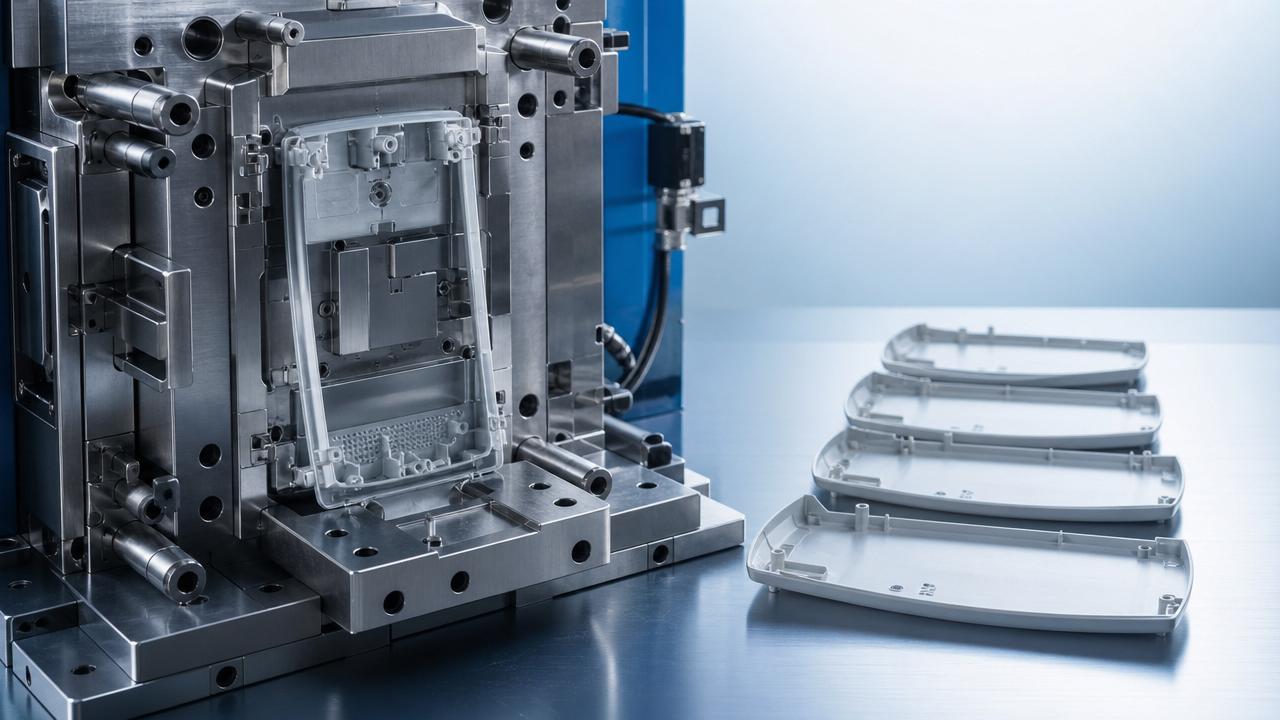
For technical evaluators seeking practical ways to improve part stability, this injection molding technical analysis explores the root causes of warpage reduction from both process and tooling perspectives. By examining material behavior, mold design variables, cooling balance, and production parameters, it provides a clear starting point for assessing dimensional accuracy, lowering defect rates, and supporting more reliable manufacturing decisions.
Understanding warpage in injection molding
In the context of precision manufacturing, warpage refers to the unwanted deformation of a molded part after ejection, cooling, or post-processing. It is usually driven by non-uniform shrinkage across the geometry. A part may appear acceptable when still warm, but later twist, bow, or sink out of tolerance as internal stresses relax. For technical evaluators, this makes warpage one of the most important dimensional quality risks in plastic molding programs.
A useful injection molding technical analysis does not treat warpage as a single defect. Instead, it separates visible shape distortion from the underlying causes: resin orientation, uneven wall thickness, pressure decay, thermal imbalance, gate position, cooling circuit performance, and mold rigidity. This distinction matters because correction action depends on whether the main driver is material response, part design, processing settings, or tooling limitations.
In global manufacturing sectors served by GHTN, warpage reduction is not only a molding issue. It affects assembly fit, electrical enclosure sealing, fastener alignment, automation handling, and downstream inspection yield. When molded parts are used as structural carriers, housings, clips, tool bodies, or insert-bearing components, even modest distortion can create larger system-level failures.
Why the industry pays close attention to warpage reduction
The industrial value of warpage reduction is growing because tolerances are becoming tighter while product architectures are becoming lighter and more integrated. OEMs increasingly demand thin-wall parts, snap-fit features, mixed-material assemblies, and high cosmetic standards. These trends improve functionality and reduce weight, but they also raise sensitivity to residual stress and cooling imbalance.
For technical assessment teams, an injection molding technical analysis is often used to answer practical questions: Can the current mold support repeatable flatness? Will a material change improve dimensional stability without harming cycle time? Is the warpage caused by cavity imbalance or by gate-induced orientation? Can process optimization solve the issue, or is tool modification unavoidable? Clear answers help prevent trial-and-error costs and support evidence-based manufacturing decisions.
This is particularly relevant across hardware, electrical, and mold-related industries, where molded parts interact with metal inserts, threaded interfaces, seals, or mechanical loading points. In such environments, warpage reduction supports not only appearance but also torque retention, assembly repeatability, thermal management, and compliance with dimensional inspection standards.
Core factors evaluated in injection molding technical analysis
A structured injection molding technical analysis for warpage reduction typically reviews four interdependent domains: material behavior, part geometry, tooling design, and process control. None of these should be evaluated in isolation, because the final deformation pattern usually results from their interaction.
This framework is valuable because it prevents overcorrection. For example, increasing hold pressure may reduce local sink but intensify stress-related distortion elsewhere. Likewise, changing mold temperature may improve surface replication while worsening differential shrinkage. Technical evaluators should therefore seek cause ranking, not isolated parameter changes.
Material behavior and shrinkage patterns
Material selection has a major influence on warpage reduction. Semi-crystalline polymers generally show higher and more direction-sensitive shrinkage than amorphous materials. Reinforced grades can improve stiffness, yet glass fiber orientation often creates unequal shrinkage between flow and transverse directions. If this is not considered during mold and gate design, the part may curve toward predictable but undesirable directions.
A strong injection molding technical analysis should compare supplier shrinkage data with actual molded geometry, not just with nominal datasheet values. Moisture content, regrind ratio, lot variation, and residence time can all alter flow behavior and dimensional outcome. In technical evaluation work, it is often useful to request directional shrinkage ranges, mold flow simulation assumptions, and post-mold conditioning requirements before approving a material for critical dimensions.
For parts used in electrical housings, clips, or tool accessories, dimensional stability under thermal cycling is also important. Some parts may pass room-temperature inspection but warp after environmental exposure. This is why warpage reduction should be assessed across intended service conditions, not only at the press.
Tooling and cooling balance as decisive factors
From a tooling perspective, cooling design is often the most decisive lever. Uneven heat extraction creates unequal shrinkage, and unequal shrinkage creates distortion. Even when cavity fill appears balanced, one region may solidify earlier than another due to poor channel placement, different steel mass, deep ribs, shutoffs, or inserts that interrupt thermal flow. This makes cooling balance central to any injection molding technical analysis.
Gate location also deserves close attention. A gate controls flow path, pressure transmission, orientation, and packing efficiency. If the gate is too small, too remote, or located in a way that overorients fibers, the part may lock in stress patterns that later drive warpage. Multi-gate designs can further complicate this by creating weld lines and asymmetric pressure histories. In many cases, a modest gate redesign or runner rebalance delivers better warpage reduction than repeated process tuning.
Ejection is another overlooked source. If a part is ejected before reaching sufficient rigidity, or if ejector force is uneven, temporary deformation may become permanent as the polymer finishes cooling outside the mold. Technical evaluators should therefore review ejection layout, part support during demolding, and handling conditions immediately after discharge.
Process conditions that commonly influence part distortion
Process settings affect how melt fills, packs, cools, and relaxes. Common variables include melt temperature, mold temperature, injection speed, transfer position, pack pressure, hold time, cooling time, and screw recovery consistency. The challenge is that these parameters interact. Higher melt temperature may improve fill in thin sections, but it can also increase total shrinkage or extend stress relaxation behavior. Shorter cycle times may increase productivity while reducing dimensional stability.
For warpage reduction, cavity pressure monitoring is especially useful. It helps evaluators confirm whether the molded part is receiving consistent packing from shot to shot. If the pressure curve decays too early, the part may shrink unevenly due to insufficient compensation in thicker or more remote areas. If pressure is excessive, internal stress may rise and later release as distortion. A balanced process window should therefore be validated with data, not only with visual inspection.
When analyzing production stability, evaluators should also check whether machine capability matches the tool. Barrel size, response accuracy, clamp rigidity, and temperature control performance all influence repeatability. A technically sound mold can still produce warped parts if the molding platform cannot reproduce the required process window consistently.
Typical application scenarios where warpage control matters most
The need for injection molding technical analysis is especially clear in parts with structural, sealing, or alignment functions. Technical evaluators should prioritize warpage review when the molded component interacts with other precision parts or must maintain geometry over time.
These examples show why warpage reduction should be linked to end-use function. A slight bend may be acceptable in a noncritical cover but unacceptable in a fixture component, connector support, or part with mating surfaces. Functional priority should guide tolerance assessment and corrective action.
Practical evaluation approach for technical teams
A practical injection molding technical analysis should begin with measured evidence. First, define the distortion pattern clearly: bow, twist, dish, edge lift, or localized bending. Second, compare the distortion direction with flow direction, gate location, and cooling layout. Third, review cavity pressure, cycle consistency, and part temperature at ejection. Fourth, test whether controlled parameter changes shift the result in a predictable way. This sequence helps separate root causes from symptoms.
Technical evaluators should also request cross-functional input. Tool designers can explain cooling limitations and steel constraints; process engineers can map the stable process window; material specialists can interpret shrinkage behavior; quality teams can define inspection relevance to final use. Warpage reduction is most effective when these perspectives are integrated early rather than after repeated nonconforming batches.
Where possible, combine physical trials with simulation. Mold flow and warpage prediction are not perfect, but they are highly useful for ranking risk and testing alternative gate, wall, and cooling concepts before tool modification. In modern industrial decision-making, this combination of empirical validation and digital analysis improves speed and reduces rework exposure.
Common priorities for warpage reduction
In many projects, the most effective priorities are straightforward: improve wall uniformity where possible, optimize gate design, balance cooling efficiency, verify material preparation, and stabilize pack-and-hold behavior. If those actions do not close the gap, teams should evaluate structural redesign, alternative resin families, conformal cooling options, or localized tool adjustments.
For organizations tracking supplier capability, an injection molding technical analysis can also serve as a qualification tool. It reveals whether a molding partner understands dimensional risk at a process-physics level, whether the tooling strategy supports long-term repeatability, and whether quality control methods are aligned with functional requirements rather than cosmetic screening alone.
Moving from analysis to better manufacturing decisions
Warpage reduction is rarely achieved through a single setting change. It depends on disciplined evaluation of shrinkage behavior, thermal balance, pressure control, and part design intent. For technical evaluators, the real value of injection molding technical analysis lies in turning scattered production observations into a clear decision path: what can be corrected by process, what requires tooling revision, and what should be redesigned for stable mass production.
Within the broader industrial ecosystem, this approach supports the goals championed by GHTN: linking precision with practical manufacturing intelligence. When technical teams assess warpage using both tooling logic and material science, they reduce scrap, improve assembly confidence, and build a more reliable foundation for global production programs. If your organization is evaluating molded components for critical industrial applications, a structured, data-based review is the most dependable starting point for better dimensional performance and lower long-term risk.
Related News