
Injection molding OEM service mistakes that affect consistency

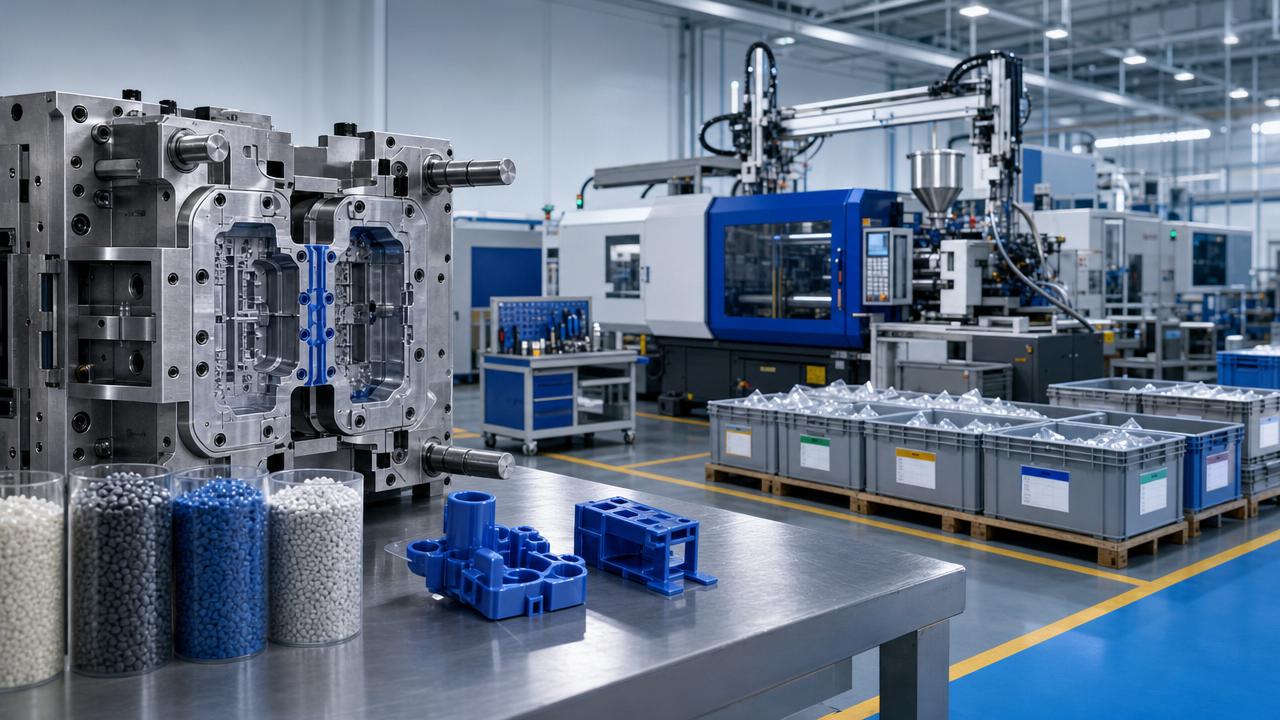
In injection molding OEM service, small sourcing or process-control mistakes can quickly turn into batch inconsistency, hidden safety risks, and costly customer complaints. For quality control and safety managers, understanding where suppliers fail—from mold maintenance to material traceability—is essential to protecting stable output. This article highlights the most common errors that undermine consistency and what to verify before they escalate into production problems.
Why does consistency become a major risk in injection molding OEM service?
Consistency is not only about making parts that look similar. In injection molding OEM service, consistency means dimensional stability, repeatable mechanical performance, color uniformity, surface integrity, and process repeatability across shifts, cavities, lots, and delivery cycles. For quality control teams, inconsistent output drives rework, sorting, customer returns, and audit failures. For safety managers, it can be even more serious when molded parts are used in housings, connectors, clips, guards, or structural assemblies where hidden defects may lead to cracking, overheating, poor fit, or field failure.
The reason this issue gets so much attention is simple: many OEM buyers assume the supplier’s machine capacity guarantees stable quality. It does not. A modern press cannot compensate for poor resin handling, weak preventive maintenance, undocumented parameter changes, or uncontrolled regrind usage. In practice, the weak points of injection molding OEM service usually sit between departments: purchasing changes the resin source, tooling delays maintenance, production adjusts settings without approval, and quality checks only final dimensions rather than process signals. That gap is where inconsistency starts.
For industrial buyers in hardware, electrical, and mold-driven supply chains, consistency also affects assembly efficiency. A part that is still “within tolerance” but drifting toward the limit can increase insertion force, reduce sealing reliability, or shorten product life. That is why a qualified injection molding OEM service partner must be evaluated as a controlled system, not just a price-based supplier.
Which supplier mistakes most often cause batch-to-batch inconsistency?
The most common failures are rarely dramatic. They are routine shortcuts that slowly destabilize output until defects become visible. Quality and safety managers should look for the following high-risk mistakes during supplier evaluation and ongoing audits.
1. Poor material control and weak traceability
A frequent mistake in injection molding OEM service is treating polymer supply as interchangeable. Suppliers may change resin grade, lot, additive package, color masterbatch ratio, or approved sub-supplier without a formal review. Even when the resin family remains the same, melt flow changes, moisture sensitivity, and shrinkage behavior can shift part performance. If lot coding cannot link each production batch to incoming resin records, root cause analysis becomes slow and unreliable.
2. Inadequate drying and handling of hygroscopic materials
Materials such as nylon, PC, PET, and certain blends require controlled drying. When the dryer is overloaded, poorly calibrated, or bypassed to save time, moisture causes splay, brittleness, dimensional drift, and inconsistent strength. This is a basic but still common weakness in lower-discipline injection molding OEM service environments.
3. Mold maintenance done reactively instead of preventively
A mold can keep producing parts long after it stops producing stable parts. Worn gates, blocked vents, damaged ejectors, cavity corrosion, cooling scale, and mismatch between cavities all create hidden variation. If mold maintenance is only triggered by breakdown, the supplier is already producing risk before anyone notices visible defects.
4. Uncontrolled process adjustments on the shop floor
Operators often adjust melt temperature, injection speed, packing pressure, cooling time, or back pressure to keep parts running. Some changes are necessary, but if they are made without engineering approval, parameter windows become meaningless. A mature injection molding OEM service provider should have locked process sheets, change authorization, and deviation records tied to each lot.
5. Excessive or inconsistent regrind usage
Regrind can be controlled in some applications, but many suppliers use it to protect margin without fully validating the effect on strength, appearance, and flow behavior. If the ratio changes by shift or by machine, consistency disappears. This is especially dangerous for parts with mechanical loading, snap-fit features, or electrical insulation requirements.
6. Inspection focused only on final dimensions
Final inspection alone cannot catch process instability early. A supplier may pass a sample check while cavities drift, cycle times change, or pressure curves widen. Strong injection molding OEM service includes in-process monitoring, cavity-to-cavity comparison, first-off approval, and clear reaction plans when trends move toward limits.
How can quality and safety managers quickly judge whether an OEM molder is under control?
A practical assessment should go beyond brochures and machine lists. Ask for evidence that the supplier controls variation before defects reach shipment. The table below summarizes what to check.
For buyers working with complex industrial parts, this kind of review is especially important when the molded component interfaces with metal inserts, electrical assemblies, sealing surfaces, or downstream automated lines. GHTN’s cross-sector perspective on tooling, hardware, and electrical systems shows that many quality escapes happen not because a single dimension fails, but because process capability was never linked to real end-use conditions.
What are the most overlooked safety-related mistakes in injection molding OEM service?
Safety managers often inherit molded components after sourcing decisions have already been made, yet several supplier errors directly affect product safety, compliance, and field reliability.
First, insufficient control of resin identity can compromise flame rating, dielectric performance, impact resistance, or chemical resistance. A part may look identical but fail under heat, vibration, or exposure. Second, mold wear can create sharp flash, weak knit lines, or reduced wall thickness in critical zones. These are not cosmetic issues when parts are touched by users or support live components.
Third, poor insert molding control can leave hidden stress around brass inserts or threaded elements, increasing the chance of cracking during torque application. Fourth, contamination from mixed materials, oil, dust, or degraded resin can affect electrical insulation or cause unexpected odor and emissions in enclosed products. Fifth, weak packaging and lot segregation after molding can mix conforming and nonconforming stock, making containment ineffective during recalls or customer complaints.
In a disciplined injection molding OEM service process, safety risk review should be integrated into APQP, PFMEA, control plans, and incoming change notifications. If the supplier treats safety as a final certificate rather than a process requirement, the risk remains high even when short-term deliveries look acceptable.
How should buyers compare suppliers when price and lead time look similar?
When several suppliers quote similar numbers, consistency capability becomes the real differentiator. Start by comparing not just tooling cost and cycle time, but the supplier’s ability to sustain a validated process. Ask whether the mold flow review was connected to actual machine tonnage, cooling design, gate location, and expected resin family. Check whether they can provide cavity balance studies, capability data, first article records, and change control examples from previous projects.
Also compare communication maturity. A reliable injection molding OEM service partner will discuss tolerance stack-up, sink-risk geometry, warpage sensitivity, gate vestige impact, and maintenance intervals before mass production starts. A weaker supplier often says “no problem” too quickly and delays discussion until defects appear. For quality teams, transparency is a stronger signal than sales confidence.
It is equally useful to review how the supplier manages abnormal conditions. Ask what happens if the approved resin lot is unavailable, a mold insert wears out, or one cavity starts drifting. If the answer depends on verbal coordination rather than documented escalation, the operation may not be robust enough for critical industrial parts.
What common misconceptions lead companies to choose the wrong injection molding OEM service?
One misconception is that larger machine fleets automatically mean better consistency. In reality, process discipline, tooling care, and traceability matter more than machine count. Another mistake is assuming a passed sample run proves long-term control. Short pilot runs can hide moisture problems, cavity imbalance, or maintenance weaknesses that only appear over time.
A third misconception is focusing only on piece price while ignoring quality cost. Cheap molded parts become expensive when sorting, downtime, returns, and engineering changes are included. A fourth is treating material substitutions as minor commercial adjustments. In many industrial applications, a small resin change alters shrinkage, impact behavior, and compliance status. Finally, some buyers underestimate documentation. If a supplier cannot produce clean records, that usually reflects unstable execution, not just poor paperwork.
For the audience of quality control and safety management, the better approach is to view injection molding OEM service as a controlled manufacturing partnership. The question is not only “Can they mold this part?” but “Can they mold it repeatedly, trace it accurately, and react fast when the process drifts?”
What should be confirmed before placing or renewing an OEM molding order?
Before award, transfer, or annual renewal, confirm a focused set of technical and quality items. Verify approved resin specifications, alternative material rules, and certificate requirements. Review mold ownership, spare insert policy, preventive maintenance frequency, and cavity repair responsibility. Confirm the validated process window, sample retention, capability targets, and control plan response limits. Define regrind limits in writing. Clarify packaging, labeling, lot coding, and nonconformance escalation timelines.
It is also wise to confirm whether the supplier’s injection molding OEM service includes regular process audits, dimensional trend reporting, and notification rules for any change in material source, machine, mold location, tooling repair, operator training, or subcontracted secondary operations. These points may seem administrative, but they directly support consistency.
For companies sourcing through global industrial networks, especially across hardware, electrical, and mold-related categories, a structured confirmation list reduces surprises. It aligns with the broader manufacturing logic emphasized by GHTN: durable industrial performance comes from controlling the smallest variables before they become system-level failures.
What are the most useful questions to ask in a final supplier review meeting?
If you need to move from evaluation to action, the best next step is a disciplined question set. Ask: Which resin lots were used during validation, and how will future lots be approved? What process parameters are locked, and who can authorize changes? How often is the mold serviced, and what wear points are tracked? What evidence shows cavity-to-cavity consistency? How is regrind controlled and recorded? What happens when production trends approach control limits? How quickly can the supplier isolate affected lots if a complaint occurs?
These questions help determine whether an injection molding OEM service provider can support stable output rather than just initial sampling. If you need to confirm a specific solution, parameters, project direction, lead time, quotation basis, or cooperation model, start with material control, mold maintenance discipline, process change governance, traceability depth, and abnormal response speed. Those are the issues most likely to decide whether consistency is protected or lost.
Related News