
Injection molding OEM service: where delays usually begin

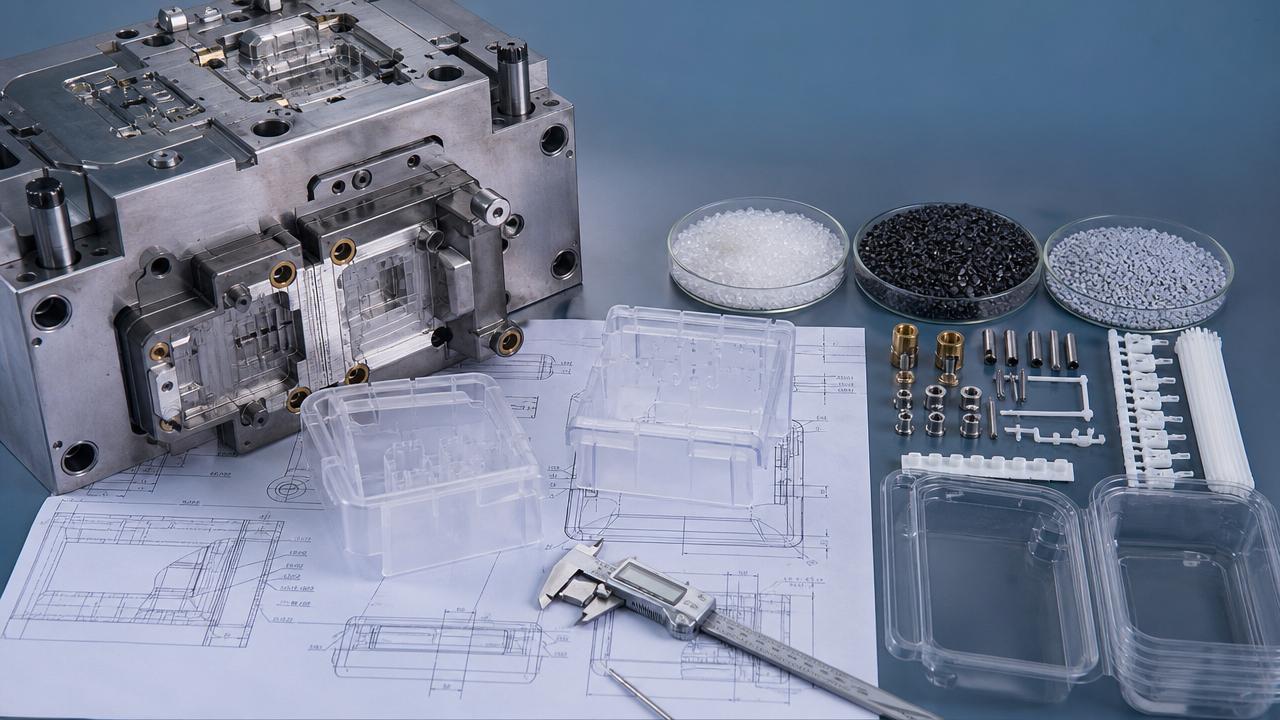
In injection molding OEM service, delays rarely start on the production floor—they begin much earlier, in quoting gaps, unclear specifications, tooling revisions, and weak cross-team coordination. For project managers and engineering leads, identifying these hidden triggers is essential to protecting launch schedules, cost targets, and supplier performance from the very first decision.
Why do delays in injection molding OEM service start before production?
Many teams treat lead time as a factory issue. In practice, the first delay often appears during RFQ preparation, DFM communication, mold concept review, or material confirmation. Once these early-stage issues are missed, every downstream milestone becomes fragile.
For project owners in industrial supply chains, injection molding OEM service is rarely a standalone purchase. It connects tooling, fasteners, electrical subassemblies, packaging, compliance paperwork, and logistics. A small ambiguity at the mold stage can disrupt a much larger launch plan.
This is where GHTN brings value. By tracking underlying industrial components and precision manufacturing tools, GHTN helps procurement and engineering teams see the full chain, not just the molded part. That broader view is often what prevents avoidable schedule drift.
- Incomplete product definition leads to repeated technical clarification after the quote has already been issued.
- Part geometry may be technically moldable, but not stable at the requested cycle time, resin grade, or tolerance level.
- Cross-border projects often underestimate the time needed for approval loops, sample feedback, and documentation alignment.
Where project managers usually lose time first
The table below maps common delay points in injection molding OEM service before mass production begins. It is especially useful when multiple internal teams share responsibility for design, sourcing, quality, and launch timing.
The pattern is clear: delays in injection molding OEM service are usually management and definition issues before they become machine-time issues. Teams that formalize these checkpoints early reduce both tooling risk and communication friction.
How unclear specifications create hidden schedule risk
When “standard tolerance” is not really standard
A common problem is assuming the supplier will interpret tolerance intent correctly. Injection molded parts can meet general tolerances yet still fail assembly, sealing, or appearance requirements. If the functional dimensions are not explicitly prioritized, measurement reports may look acceptable while the part remains unusable.
Material naming can be too broad for sourcing decisions
Calling for “ABS,” “PA,” or “PC” is often insufficient. Resin grade, flame rating, glass content, color stability, shrink behavior, and regional availability all affect tooling and timing. In a volatile supply environment, a generic polymer label may hide future procurement problems.
Cosmetic expectations need measurable language
Terms such as “no defects” or “good surface finish” create approval conflict. Project teams should define visible zones, permissible gate marks, weld line limits, texture references, and packaging protection. That is especially important for housings, control panels, and customer-facing industrial components.
- Mark critical-to-function dimensions separately from general dimensions.
- Specify resin grade or approved alternatives, not only the polymer family.
- Define acceptable appearance with reference photos, surface notes, or inspection criteria.
What should be confirmed before placing an injection molding OEM service order?
Before issuing a PO, project managers need a practical selection framework. The following table compares core decision points that influence lead time, cost, and production stability in injection molding OEM service.
This comparison shows that supplier performance is only part of the equation. Order quality matters just as much. The strongest injection molding OEM service results come from disciplined inputs, not just aggressive deadlines.
How tooling revisions quietly extend delivery time
Tooling is where commercial urgency often meets physical reality. A part may look finalized in CAD, yet still require changes once draft, cooling, shrinkage, venting, or ejection are reviewed. If revision governance is weak, the project team discovers delay only after promised dates begin to slip.
Three revision patterns that hurt schedules
- Late design freeze. Marketing, product engineering, and sourcing continue changing details after tool design begins.
- Unclear ownership. No single person approves functional trade-offs between appearance, tolerance, and moldability.
- Underestimated rework. A “small” gate move or insert change can affect cooling balance, sink risk, and sample timing.
For engineering project leaders, the lesson is straightforward: tooling revisions should be managed as schedule events, not as routine technical comments. Once steel is cut, even minor changes have real cost and lead-time consequences.
Which cross-team coordination gaps cause the most disruption?
In broad industrial programs, molded components interact with metal inserts, electrical interfaces, seals, mounting hardware, and downstream automation. Delays emerge when these dependencies are reviewed separately. A molded housing may pass dimension checks but still fail cable routing, torque fit, or environmental sealing.
GHTN’s cross-domain perspective is useful here. Because it follows mechanical tools, electrical systems, and mold manufacturing together, it supports teams that need more than part-level advice. That systems view is critical when injection molding OEM service affects a full assembly line or product platform.
- Mechanical fit issues often surface late because fastening and molded geometry are reviewed by different teams.
- Electrical or compliance requirements may force resin or wall design changes after tool planning has already started.
- Packaging assumptions can distort parts with thin walls or visible surfaces during transit, creating false quality alarms.
Procurement guide: how to control lead time without overpaying
Project managers often face a hard trade-off: faster delivery versus acceptable cost. In injection molding OEM service, paying more does not automatically reduce risk. What matters is whether the quote structure and service flow are transparent enough to support reliable execution.
Ask for lead time by milestone, not just one total number
A single promised lead time hides the real drivers. Break it into DFM review, mold design, tool fabrication, T0 sampling, corrections, T1 approval, and mass production ramp. This makes delays visible earlier and helps management escalate the right issue.
Compare quote assumptions before comparing price
One supplier may include texture, fixture support, initial dimensional reports, and export packaging, while another does not. The lower quote may simply defer cost and time into later project stages. Procurement teams should normalize assumptions before ranking options.
Treat sampling strategy as a commercial issue
If the sample plan is vague, each trial becomes a negotiation. Clarify how many sample rounds are included, what data will be provided, how deviations are handled, and who approves corrective action. This protects both schedule and budget discipline.
Standards, compliance, and documentation that should not be left to the end
Not every molded part requires the same compliance depth, but many industrial applications still need documented material control, traceability, dimensional records, or regional conformity support. If these requirements appear only after sampling, delays become likely.
Depending on the application, teams may need to review resin declarations, restricted substance expectations, flame-retardant grade documentation, or inspection records aligned with internal quality systems. For export-oriented OEMs, document readiness often matters as much as part readiness.
- Confirm whether traceability must be lot-based, cavity-based, or shipment-based.
- Align documentation scope before tooling starts, especially for regulated electrical or industrial applications.
- Check whether substitute materials require formal re-approval in your internal process.
FAQ: practical questions about injection molding OEM service
How early should a supplier join the project?
Ideally before final RFQ release. Early involvement during design-for-manufacturing review can expose draft, gating, shrinkage, or assembly risks before they become tooling changes. For tight launch schedules, this is one of the most effective ways to reduce delay.
What is the most overlooked input in an RFQ?
Annual demand and market destination are frequently missed. These influence cavity strategy, resin sourcing, packaging assumptions, and documentation needs. Without them, a quote may be technically valid but commercially mismatched to the actual program.
How many sample rounds are normal?
There is no universal number, because complexity, tolerance, appearance, and assembly requirements vary. However, teams should define what each trial is meant to prove. A sample round without agreed objectives usually leads to repeated loops and blurred accountability.
Is a lower-cost tool always the wrong choice?
Not always. For limited-volume projects or stable, low-risk geometries, a simpler tooling strategy may be rational. The key is matching mold construction, steel selection, and maintenance expectations to production volume and quality risk rather than buying to a headline price.
Why choose us for injection molding OEM service insight and sourcing decisions?
GHTN supports project managers and engineering leads who need more than isolated supplier data. Our strength is linking precision manufacturing knowledge across molds, hardware, electrical interfaces, and industrial components, helping teams understand where schedule risk begins and how to contain it early.
If you are evaluating injection molding OEM service for a new launch or a transfer project, you can consult us on practical issues such as parameter confirmation, moldability review, supplier comparison logic, lead-time breakdown, material selection, documentation expectations, sampling strategy, and quotation alignment.
You can also reach out when your team needs support comparing tooling options, checking whether a lower-cost quote hides downstream risk, understanding likely revision bottlenecks, or preparing a clearer RFQ package for faster supplier response. That is where better project outcomes usually begin: not at the press, but at the decision point before production starts.
Related News