
Injection molding machine supplier claims that need checking

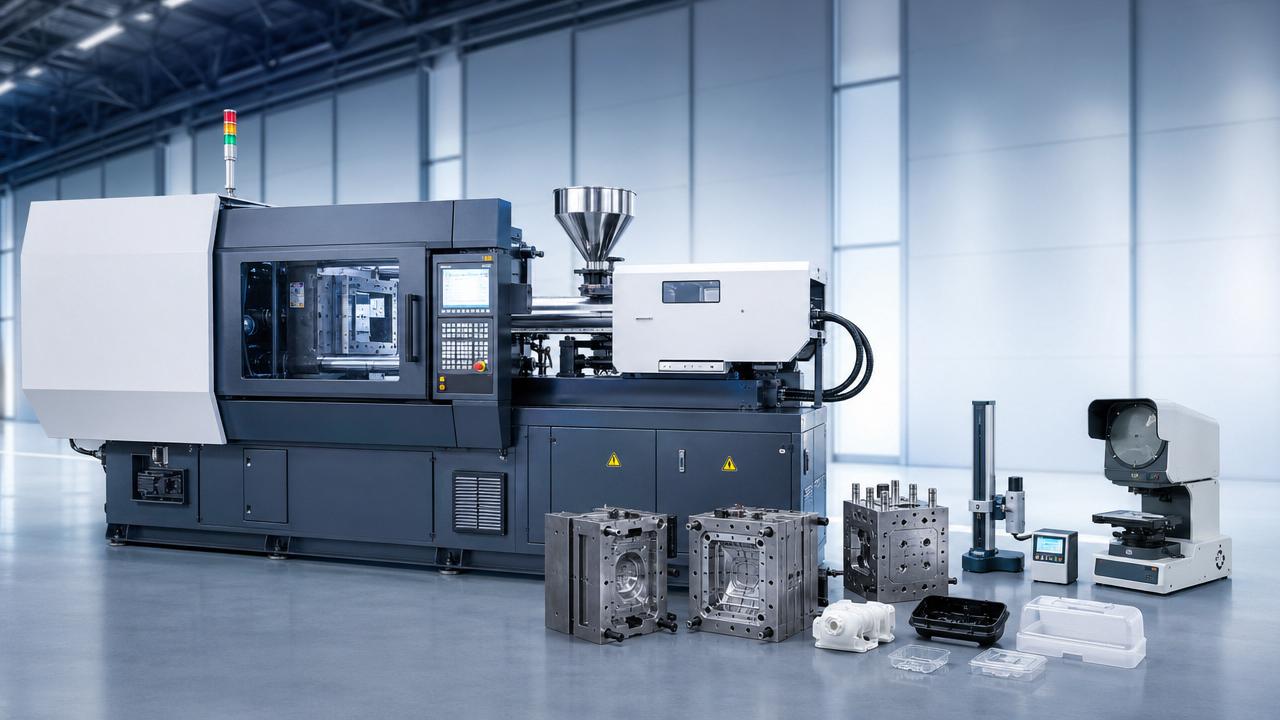
Choosing an injection molding machine supplier based on brochures or sales promises alone can expose buyers to costly risks. For business evaluation teams, the key is to verify whether supplier claims about production capacity, machine stability, energy efficiency, tooling compatibility, and after-sales support stand up to technical and commercial scrutiny before any commitment is made.
What these supplier claims really mean
An injection molding machine supplier does more than sell equipment. In most industrial settings, the supplier also shapes production economics, maintenance burden, mold adaptation, operator learning curves, spare-parts access, and long-term scalability. That is why supplier statements such as “high precision,” “energy saving,” “fast delivery,” or “global service” should not be treated as marketing language alone. Each claim represents an operational promise with measurable consequences.
For business evaluation professionals, the goal is not simply to identify the lowest quotation or the best-known brand. It is to determine whether the proposed machine, service model, and supplier capabilities align with actual production needs. In industries where precision tooling and industrial components are central to quality performance, unchecked assumptions can create downstream costs in cycle time instability, reject rates, mold damage, unplanned downtime, and delayed customer deliveries.
This is especially relevant in the wider hardware, electrical, and mold ecosystem covered by GHTN, where manufacturing performance depends on the interaction between machines, tooling, materials, process control, and compliance demands. A credible injection molding machine supplier should therefore be assessed as part of a broader production system rather than as a stand-alone seller of equipment.
Why the market pays close attention to supplier credibility
Injection molding remains a core process across industrial products, consumer components, electrical housings, automotive parts, connectors, fastener-related plastic assemblies, medical disposables, and precision engineering applications. As product tolerances tighten and customers demand shorter lead times, the cost of choosing the wrong machine partner has increased. Buyers are no longer evaluating only clamp force and machine size; they are also examining data capability, repeatability, servo efficiency, integration with automation, and total lifecycle support.
At the same time, supplier claims have become more sophisticated. A modern injection molding machine supplier may advertise smart manufacturing dashboards, lower power consumption, faster mold changes, multi-material support, and remote diagnostics. These features can be valuable, but only when they are demonstrated under realistic production conditions. A machine that performs well in a controlled showroom may behave differently when handling abrasive resins, high-cavity molds, tight wall-thickness tolerances, or demanding production schedules.
For evaluation teams, credibility matters because machine investment decisions affect capex recovery, output stability, labor planning, utility loads, and customer satisfaction over many years. A weak validation process can lock a company into hidden costs that were not visible in the original proposal.
Core claim areas that deserve verification
Most supplier proposals concentrate around a familiar group of claims. These should be reviewed using both technical evidence and business impact criteria.
Business value of a disciplined verification process
A structured review of an injection molding machine supplier provides value far beyond avoiding a poor purchase. It improves budget forecasting, allows more accurate ROI modeling, and reduces the risk of mismatch between machine capability and mold portfolio. It also supports internal alignment among procurement, engineering, operations, quality, and finance teams.
For example, procurement may focus on capital price, while production managers care about uptime and cycle consistency. Tooling engineers may prioritize platen configuration and mold protection logic, whereas finance may emphasize energy cost and depreciation planning. A robust evaluation framework turns supplier claims into a common set of measurable criteria, helping decision-makers compare offers on a like-for-like basis.
In the broader industrial parts environment, this matters because equipment is deeply interconnected with product quality. A slight mismatch in clamping behavior, injection control, or thermal stability can influence dimensional consistency, surface finish, assembly fit, or electrical housing integrity. The right injection molding machine supplier can therefore support not only machine performance, but also the competitiveness of the products manufactured on that platform.
Where supplier claims matter most in practice
Not every buyer faces the same risk profile. The importance of specific claims varies by production model, product complexity, and end-market requirements.
How to check capacity and performance claims intelligently
Capacity claims often appear straightforward, but they are highly context-dependent. A supplier may present impressive cycle times achieved with a simple mold, a low-viscosity material, or limited quality constraints. Business evaluators should ask for evidence linked to comparable part geometry, resin family, cavity count, wall thickness, and tolerance profile.
A reliable injection molding machine supplier should be willing to discuss the assumptions behind its throughput numbers. Important questions include whether stated output reflects ideal test conditions or actual production averages, whether startup scrap is included, how machine performance changes at higher ambient temperatures, and what level of operator skill is required to maintain those results. If possible, witness trials or customer reference audits provide stronger validation than generic data sheets.
It is also useful to examine how the machine behaves over time rather than only during a short demonstration. Repeatability across multiple shifts, stable hydraulic or servo response, and consistent part weight are more meaningful than one-time peak performance.
Energy and lifecycle cost claims need a wider lens
Energy-saving promises are among the most common claims made by any injection molding machine supplier. Yet a headline percentage reduction can be misleading without a baseline. Evaluation teams should request measured power consumption under representative load conditions, including startup, heating, normal cycling, idle intervals, and auxiliary equipment interactions.
True lifecycle cost includes more than electricity. It also includes preventive maintenance frequency, lubricant or hydraulic fluid demand, wear-part replacement intervals, software update costs, training costs, expected machine availability, and residual value. In some cases, a machine with a higher purchase price delivers better long-term economics because it reduces rejects, stabilizes scheduling, or lowers technical service dependency.
For hardware and tooling ecosystems, energy and lifecycle analysis should also consider mold health. Poor clamp control or unstable processing can shorten mold life, especially in precision applications where alignment and thermal balance matter. That hidden cost is often absent from supplier presentations but highly relevant to total value.
Tooling, controls, and support are often the real differentiators
Many equipment comparisons focus too heavily on basic machine specifications. In practice, differentiation often lies in how well the machine integrates with existing molds, downstream automation, and plant-level control systems. A qualified injection molding machine supplier should be able to explain controller architecture, recipe management, alarm logic, data export options, and compatibility with robots, dryers, chillers, and MES environments.
After-sales support deserves equal attention. Fast response is valuable only if the supplier has the right diagnostic capability, local language coordination, spare-parts inventory, and escalation discipline. Buyers should review service geography, technician training standards, documentation quality, and whether remote troubleshooting is practical for their plant cybersecurity policies.
For organizations operating across regions, support consistency matters even more. The same injection molding machine supplier may perform strongly in one country but rely on weak third-party service channels in another. Reference checks should therefore be region-specific rather than brand-general.
Practical guidance for business evaluation teams
A practical assessment model should combine technical validation, commercial review, and operational fit. Teams can start by defining the intended application window: part families, materials, annual volume, quality tolerance, mold base standards, utility conditions, staffing level, and automation roadmap. Only then should supplier proposals be compared.
Next, convert supplier claims into evidence requests. Ask for trial protocols, benchmark assumptions, installed base references, service commitments, commissioning scope, and spare-part lists. Where possible, score each injection molding machine supplier against weighted criteria rather than relying on narrative impressions. This reduces bias and makes internal approval easier.
Finally, evaluate strategic fit. A supplier may satisfy today’s application but fail to support future needs such as digital traceability, multi-cavity precision molds, engineering material processing, or cross-border service coordination. The best choice is usually the supplier whose verified capability supports both immediate production goals and longer-term manufacturing resilience.
Conclusion
Selecting an injection molding machine supplier is ultimately a business-risk decision shaped by engineering facts. Brochure claims about speed, precision, efficiency, and support can be useful starting points, but they should never replace structured verification. For business evaluation teams, the most effective approach is to connect each supplier promise to measurable plant outcomes: output stability, mold compatibility, lifecycle cost, service responsiveness, and quality performance.
In industrial sectors where precision tools and component reliability determine competitiveness, disciplined supplier assessment protects both investment and production continuity. Organizations that validate claims carefully are better positioned to choose an injection molding machine supplier that delivers real operational value, not just persuasive marketing language.
Related News