
Mold Design Software Features That Actually Reduce Rework

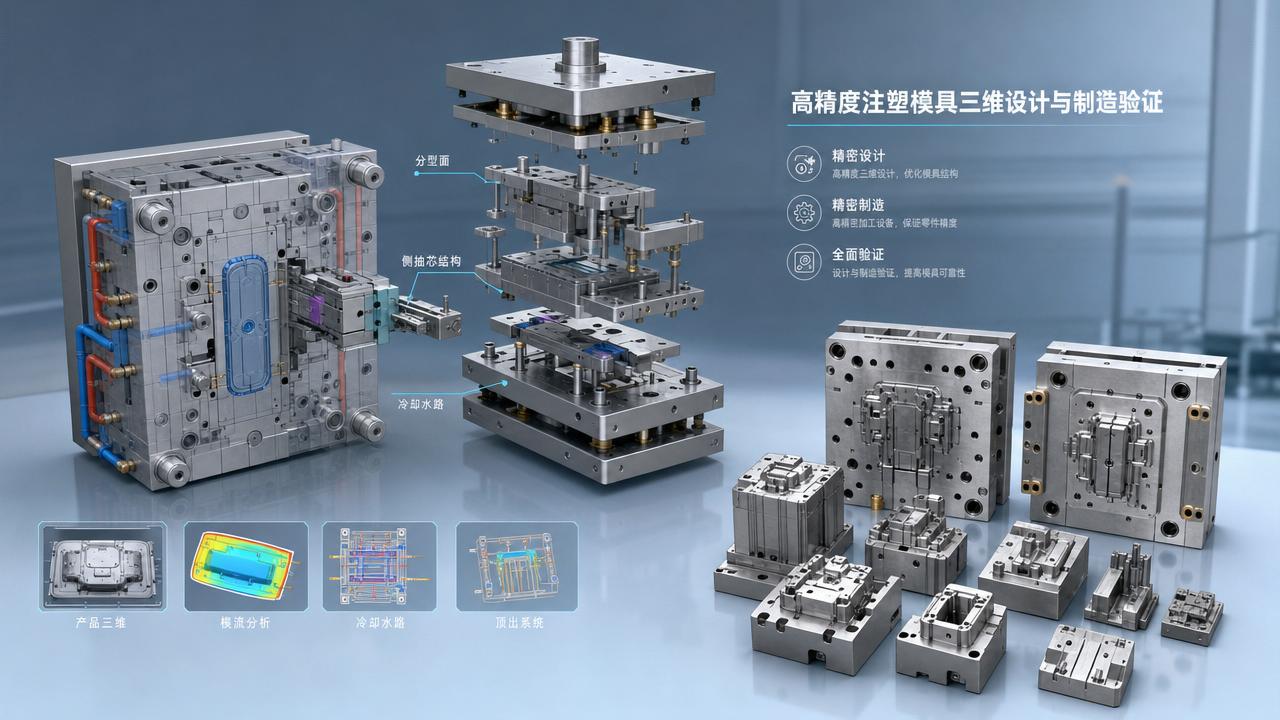
For technical evaluators, choosing mold design software is no longer just about modeling speed—it is about preventing costly revisions before tooling begins. The right platform can expose manufacturability risks early, improve collaboration between design and production teams, and reduce trial-and-error across the mold lifecycle. This article examines the software features that truly help cut rework and support more reliable decision-making.
The core search intent behind “mold design software” in this context is practical evaluation. Readers are not looking for a generic list of CAD functions. They want to know which software capabilities measurably reduce mold changes, shorten debugging cycles, and improve confidence before cutting steel. For technical evaluators, the real question is simple: which features lower downstream risk enough to justify adoption, integration, and training costs?
That is why the most useful way to assess mold design software is not by interface polish or feature count, but by its impact on rework drivers. In most mold programs, rework comes from predictable sources: late discovery of undercuts, weak parting logic, poor cooling layout, interference between components, incomplete standardization, and handoff gaps between design, machining, and tryout teams. The best software addresses those points directly.
What Technical Evaluators Are Actually Trying to Prevent
Before comparing tools, it helps to define what “rework” means in mold development. It is not only a design revision on screen. It includes electrode redesign, component replacement, steel-safe corrections, repeated CAM updates, delayed procurement, extra fitting during assembly, and additional mold trials caused by issues that should have been visible earlier.
From an evaluation standpoint, the most valuable mold design software is the one that catches these errors at the lowest-cost stage. A feature is only meaningful if it improves decision quality before commitments are locked in. That is why automated checks, process-aware templates, and simulation-linked validation often matter more than advanced surfacing alone.
Technical evaluators also tend to care about software behavior in real project conditions. Can it handle engineering changes without breaking references? Does it support large assemblies without becoming unstable? Can different teams see the same manufacturability risks in a consistent way? These concerns often influence rework outcomes more than isolated design functions.
Feature #1: Early Manufacturability Analysis That Works Inside the Design Flow
A strong manufacturability analysis module is one of the clearest indicators that mold design software can reduce rework. The reason is straightforward: many expensive changes begin with geometry or molding feasibility problems that are discovered too late. If draft, wall thickness, shutoff conditions, rib proportions, and undercut concerns are identified during mold planning, teams avoid redesigning the tool structure after detailed work has started.
The key is integration. Standalone analysis tools can be useful, but they often depend on users exporting models, switching environments, and manually interpreting results. That creates delays and increases the chance that checks will be skipped. Software that embeds draft analysis, wall evaluation, and parting feasibility review directly into the mold design workflow is more likely to affect outcomes.
Evaluators should also check whether the analysis is actionable. A color map alone is not enough. Good systems connect the finding to design decisions: where a parting line may fail, where side action may be required, where insufficient draft will increase polishing or ejection risk, and where geometry changes could simplify the mold concept. That connection between diagnosis and correction is what reduces rework.
Feature #2: Reliable Parting Line, Parting Surface, and Shutoff Surface Tools
Parting design remains one of the most common sources of downstream mold changes. Weak automation or unstable surface generation can force designers into manual patching, and manual patching often creates hidden errors that reappear later in machining or tool assembly. For this reason, robust parting line and shutoff surface functionality is not a convenience feature. It is a rework control feature.
Technical evaluators should look beyond whether the software can generate parting surfaces automatically. The real question is how well it handles difficult geometries, small gaps, ambiguous edges, and revision updates. When the part model changes, does the software preserve intent and update associated surfaces cleanly, or does the design team need to rebuild large portions of the mold split manually?
Software that supports associative parting logic can significantly reduce repeated work during engineering change cycles. This is especially important in sectors where product teams continue adjusting plastic parts after mold design has begun. If the parting system is fragile, every upstream revision multiplies downstream rework. Stable associativity limits that damage.
Feature #3: Automated Undercut Detection and Side-Core Planning
Undercuts that are discovered late are expensive not because they are impossible to solve, but because they affect many connected decisions at once. A missed undercut can alter insert design, slide travel, cooling channels, ejection strategy, machine tonnage assumptions, and tooling cost. That is why automatic undercut recognition is one of the most practical features in mold design software.
The best systems do more than flag undercut areas. They help teams evaluate possible release directions, side-action requirements, lifter feasibility, and interference risks. This matters because rework often begins with incomplete motion planning rather than with the undercut itself. A software environment that visualizes movement envelopes and assembly relationships early can prevent structural redesign later.
For technical evaluators, one useful test is whether the software supports repeatable decision-making across designers with different experience levels. If undercut handling depends heavily on expert intuition and manual review, results will vary. If the platform captures this logic systematically, it reduces the chance that avoidable issues move into machining.
Feature #4: Cooling System Design Linked to Thermal Performance
Cooling is a major driver of both mold quality and post-launch correction work. Uneven cooling can lead to warpage, long cycle times, sink marks, and repeated optimization after the tool is built. Yet in many workflows, cooling layout is still treated as a late-stage drafting exercise. Mold design software reduces rework most effectively when it makes cooling a validated engineering decision, not just a geometric one.
At minimum, evaluators should expect libraries and tools for standard cooling components, channel routing, baffle placement, and interference checking. More importantly, they should assess whether the software supports thermal analysis or connects cleanly to simulation tools that predict hot spots, cooling imbalance, and cycle-time implications before tooling decisions are finalized.
The practical value here is substantial. When cooling channels are designed with performance feedback, teams are less likely to reopen plates, relocate fittings, or modify inserts after trial runs reveal temperature-related defects. In other words, software that treats cooling as a performance system can reduce both physical rework and process debugging time.
Feature #5: Assembly Interference Detection Across the Full Mold Structure
Large mold assemblies contain many opportunities for hidden clashes: ejector pins against cooling lines, screws intersecting water circuits, slide components interfering with guide elements, or insufficient clearance for assembly and maintenance. These are exactly the types of issues that can survive basic design review and then create costly workshop corrections.
That is why interference detection should be examined as a full-assembly capability, not just a simple solid-overlap check. Good mold design software allows teams to analyze static interference, moving-component clearance, minimum spacing, and access constraints. In more mature systems, users can also review interference in context with standard components and subassemblies.
For evaluators, this feature becomes even more valuable when linked to revision control. As projects evolve, new collisions often appear because one subsystem changes while another remains fixed. Software that can quickly rerun clash analysis across the updated mold structure helps catch these issues before drawings are released to manufacturing.
Feature #6: Standard Component Libraries and Rule-Based Design Automation
One of the least glamorous but most effective ways to reduce rework is to reduce unnecessary variation. Mold design software that includes well-structured standard libraries for bases, ejector systems, guide elements, sliders, fasteners, and cooling parts helps teams avoid custom decisions where standard solutions are better. Standardization improves not only speed, but also reliability.
However, the real value comes from rule-based automation rather than from libraries alone. If the software can automatically size components, position standard elements based on design rules, and generate common mold structures from validated templates, it reduces the chance of omission and inconsistency. This is especially useful for companies trying to scale quality across multiple designers or locations.
Technical evaluators should ask whether these rules are editable and aligned with the company’s own practices. A rigid template system may save time but still create rework if it conflicts with internal machining, assembly, or maintenance standards. The most useful mold design software is configurable enough to reinforce organizational best practice, not replace it with vendor assumptions.
Feature #7: Change Management and Associative Updating
Rework often comes not from the first design decision, but from the second or third change after customer updates arrive. Product geometry changes are common in mold programs, and software that cannot absorb those changes cleanly tends to generate cascading manual corrections. That makes change management one of the most important but underappreciated evaluation criteria.
Associativity is central here. When the part model updates, related mold features should update intelligently: parting geometry, inserts, electrodes, cooling references, BOM data, and drawings where applicable. No system updates everything perfectly in every case, but the difference between partial associative updating and manual reconstruction can determine whether a revision takes hours or days.
Evaluators should also consider version comparison tools, change highlighting, and reference stability. These functions help teams understand exactly what changed and what must be reviewed again. Without that visibility, software may create a false sense of control while hidden breakages continue into production preparation.
Feature #8: Integrated Collaboration Between Design, CAM, and Shopfloor Functions
Many mold revisions originate at handoff points. A designer may create geometry that is technically correct but difficult to machine. A CAM programmer may discover inaccessible features after toolpath planning begins. An assembly team may find that a maintenance clearance was never considered. For that reason, mold design software reduces rework best when it improves communication across functions, not only within design.
Useful collaboration features include shared model annotation, design review snapshots, markups, role-based comments, and linkage to downstream manufacturing data. Stronger platforms also support digital continuity into CNC preparation, electrode planning, and inspection workflows. The goal is to make design intent visible before physical work starts.
For technical evaluators, this area is especially important if the organization operates across sites or external suppliers. In such environments, software that centralizes revision status and review feedback can prevent duplicate work, outdated model use, and avoidable corrections driven by miscommunication.
How to Evaluate Mold Design Software Beyond the Demo
Vendor demonstrations often emphasize speed, automation, and polished examples. But technical evaluators should structure assessments around rework scenarios, not best-case workflows. Ask vendors to demonstrate how the software handles a part revision, an undercut discovered midstream, a cooling conflict, or a late change in standard component selection. These cases reveal whether the platform truly supports robust engineering decisions.
A practical evaluation framework should include at least four dimensions: error prevention, change resilience, workflow integration, and standardization support. Error prevention covers analysis, clash checking, and motion validation. Change resilience covers associativity and revision handling. Workflow integration covers links to simulation, CAM, and documentation. Standardization support covers templates, libraries, and rule customization.
It is also useful to involve cross-functional reviewers. Designers may focus on usability, but manufacturing engineers, toolmakers, and CAM teams often identify the hidden weaknesses that lead to actual rework. Since the business impact of mold design software appears downstream, software selection should include the people who absorb downstream consequences.
The Real ROI: Fewer Corrections, More Predictable Tooling Outcomes
For technical evaluators, the value of mold design software should be framed less as drafting efficiency and more as risk compression. Saving design time matters, but avoiding one major steel correction, one delayed trial, or one repeated cooling modification often delivers more financial value than faster modeling alone. The best platforms reduce uncertainty across the full tool lifecycle.
This is particularly relevant for organizations serving global OEMs and high-precision manufacturing programs, where schedule reliability and repeatability matter as much as design capability. In these environments, mold design software becomes part of a broader digital manufacturing system that links design intent, tool quality, and delivery confidence.
That perspective also aligns with how industrial decision-makers increasingly evaluate engineering software: not by the number of functions on a checklist, but by how well the platform supports stable, standardized, and scalable execution under real production pressure.
Conclusion
When technical evaluators search for mold design software, the most important question is not which system looks most advanced on paper. It is which features actually reduce rework when projects become complex, revisions arrive late, and downstream teams depend on accurate decisions. The answer usually comes down to a short list of high-impact capabilities: embedded manufacturability analysis, reliable parting tools, undercut and motion planning, cooling validation, full-assembly interference checking, standards-driven automation, resilient change management, and cross-functional collaboration.
Software that performs well in these areas does more than help designers work faster. It helps organizations cut avoidable corrections, improve tooling predictability, and make better engineering decisions before steel is cut. For any company assessing mold design software seriously, that is the standard that matters.
Related News