
Qingdao Summit Signals New EV Die Export Moves

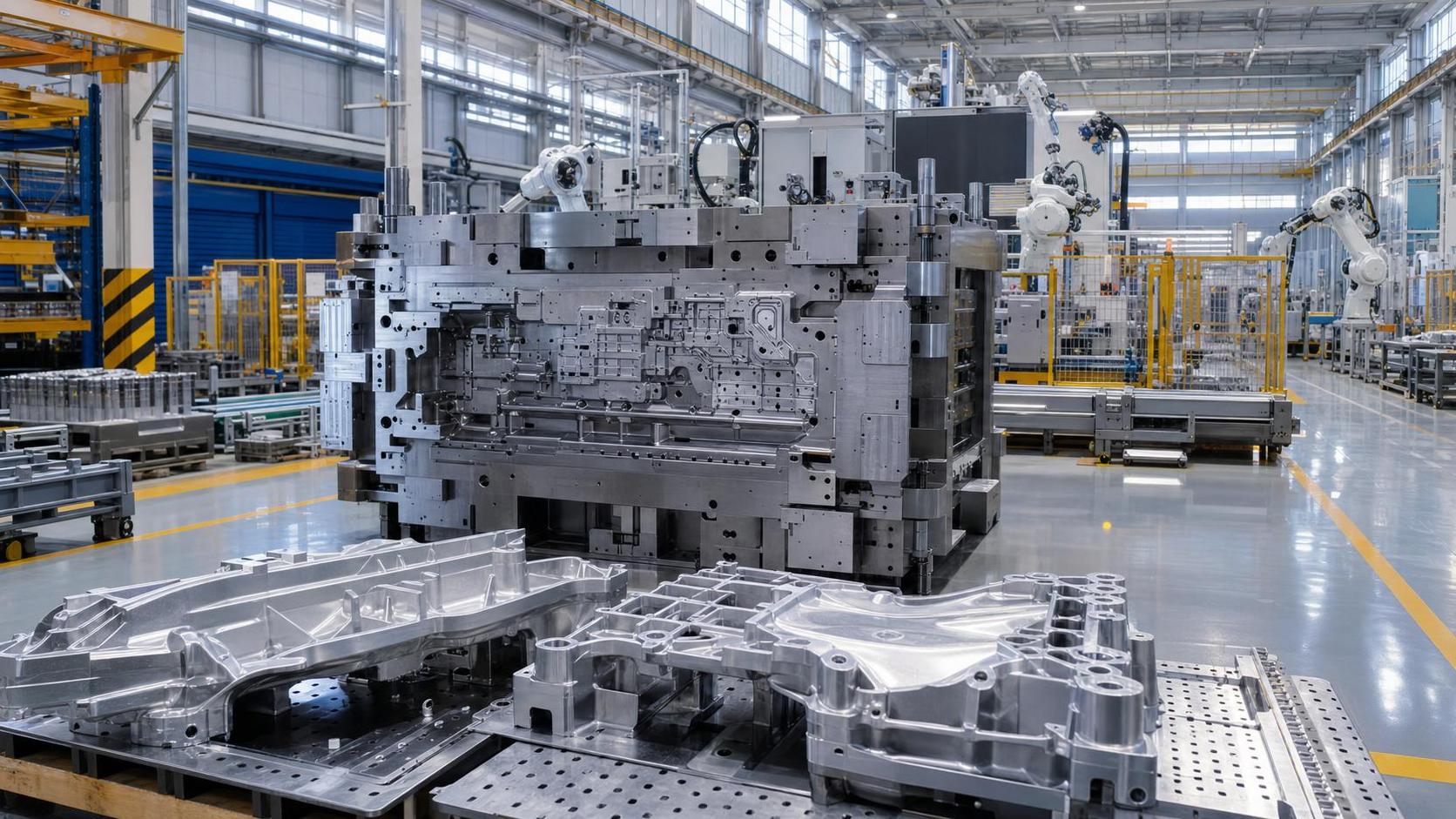
From June 15 to 17, 2026, the seventh Qingdao Summit for Multinational Corporation Leaders put new-energy vehicle tooling and die-casting cooperation into focus. The most notable developments were agreements involving Ruichi Mould with Continental and SEAT on localized service for integrated die-casting molds, alongside Guangdong Hongtu’s announcement that its Thailand die-casting base has entered operation. For mold makers, die-casting suppliers, overseas distributors, and OEM-facing channel partners, the event is worth watching because it points to a more localized route for Chinese high-end tooling capacity to enter overseas automotive supply chains.
What was confirmed at the summit
The summit was held in Qingdao from June 15 to 17, 2026. During the event, Ruichi Mould signed localized service agreements for integrated die-casting molds with Continental of Germany and SEAT of Spain. Separately, Guangdong Hongtu announced that its die-casting base in Thailand has started operations. Based on the event summary provided, the summit conveyed a clear message that Chinese high-end mold and die-casting companies are accelerating overseas expansion through a dual model of exporting both technology and production capacity.
Why this matters across the supply chain
Localized supply is becoming more relevant for OEM-linked business
From an industry perspective, this development may affect companies serving automakers in Europe and Southeast Asia because localized mold service and local die-casting capacity can change how sourcing, project launch, and after-sales support are organized. What deserves closer attention is whether more business shifts from pure export delivery toward local support embedded in customer production systems.
Distributors and channel partners may gain a new role
Analysis shows that overseas distributors and channel partners could be influenced not only as sales intermediaries but also as participants in joint development and local customer coordination. The business impact is likely to show up in customer access, project follow-up, technical communication, and service responsiveness rather than in simple product distribution alone.
Manufacturing suppliers need to watch delivery structure changes
For processing and manufacturing suppliers, the signal is less about a single transaction and more about how export projects may increasingly require combinations of tooling know-how, local service capability, and regional production support. Observably, companies tied to mold production, die-casting operations, and OEM project execution should monitor whether customer requirements begin to emphasize local responsiveness alongside product capability.
What companies should track next
Distinguish signed cooperation from broader market rollout
Analysis shows that signed agreements and a base entering operation are confirmed developments, but they should not automatically be read as full-scale market expansion across all regions or customers. Companies should separate official announcements from actual order conversion, program ramp-up, and long-term supplier inclusion.
Focus on markets where localization is being emphasized
What deserves closer attention is the combination of Europe and Southeast Asia in this event summary. That makes these markets relevant for firms involved in mold exports, die-casting services, OEM sourcing support, and cross-border business development, especially where local service capability may influence purchasing decisions.
Prepare for higher requirements in coordination and fulfillment
For suppliers and service providers, this signal suggests a need to review customer communication, qualification materials, fulfillment timelines, and documentation readiness for overseas projects. If the business model shifts toward local service plus capacity deployment, operational preparation may matter as much as technical delivery.
Watch for follow-up wording and implementation details
From an industry perspective, companies should pay attention to subsequent official statements, company disclosures, and concrete implementation updates related to localized service, overseas base operations, and cooperation depth. The practical business meaning will become clearer only as more execution details emerge.
How this signal should be read now
Observably, this news is better understood as a directional industry signal than as proof that a broad overseas supply-chain reshaping has already been completed. The combination of localized mold service agreements and overseas die-casting capacity suggests that some Chinese suppliers are moving beyond straightforward exports toward a more embedded presence in local OEM ecosystems. Still, analysis shows that the scope, pace, and durability of this shift require continued observation.
A measured takeaway for the market
At this stage, the summit developments indicate that high-end mold and die-casting companies from China are exploring a more integrated overseas expansion path tied to technology output and local capacity support. For market participants, the practical implication is not to assume a settled outcome, but to recognize that project structure, channel cooperation, and supply-chain localization may become more important in future cross-border automotive business.
Basis of this article and what still needs verification
This article is based on the user-provided news title, event date, and event summary. For this type of industry update, relevant source categories typically include official event announcements, company announcements, industry association releases, authoritative media reports, and standard-setting or sector documentation where applicable. A specific official source link was not provided in the input, so further verification is still needed. Continued attention should be paid to follow-up disclosures on the signed agreements, the Thailand base’s operating progress, and any additional official clarification on localized supply-chain cooperation.
Related News