
VDE Pilots Tooling 4.0 for Injection Molds

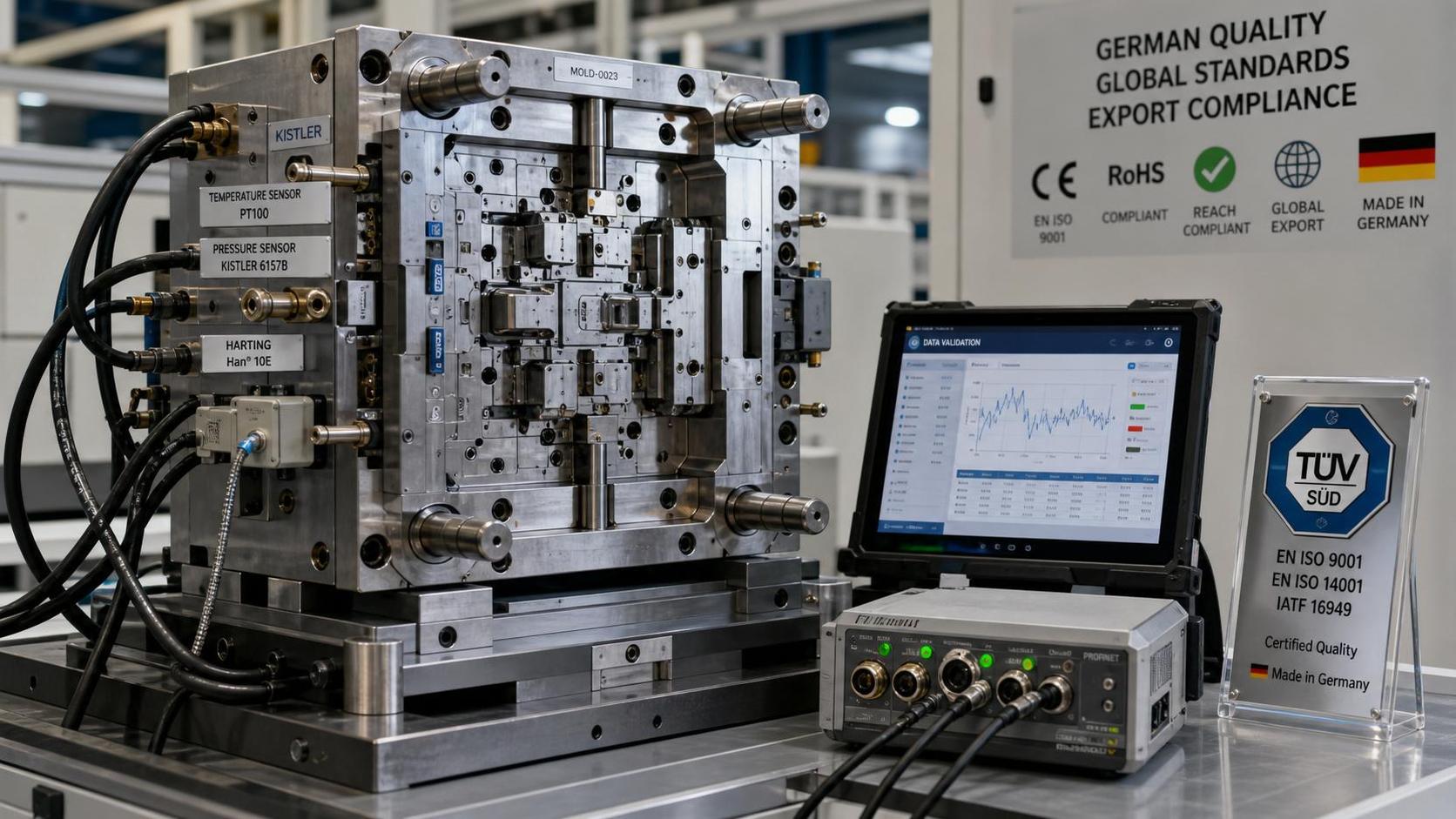
On July 1, 2026, Germany's VDE Association announced a voluntary "Tooling 4.0" certification pilot for injection molds, introducing a new compliance signal for mold exporters and buyers serving the German market. The pilot matters because it links mold qualification not only to physical tooling performance, but also to embedded temperature and pressure sensing, a standardized OPC UA communication interface, and remote data verification by VDE. For mold manufacturers, export teams, procurement functions, and certification-related service providers, this points to a practical shift in how technical readiness, bid access, and supplier screening may be assessed in upcoming transactions.
What the pilot formally includes
According to the provided event summary, VDE launched the voluntary "Tooling 4.0" certification program on July 1, 2026, with Injection Molds as the first open product category. To participate, molds must integrate temperature and pressure sensors, include a standardized OPC UA communication interface, and pass VDE remote data verification. Certified molds will be eligible for priority booth allocation at Hannover Messe 2027 and a fast-track review channel with the VDMA Tooling Group purchasing alliance. Chinese mold factories may submit pre-assessment applications starting on July 15.
Where the rule change may start to affect business
Export-facing mold makers may need to treat connectivity as part of deliverable scope
From an industry perspective, the immediate effect is likely to fall on manufacturers shipping injection molds into German-facing projects. The reason is straightforward: the pilot sets out specific technical elements for participation, including sensors and an OPC UA interface, which may move digital status capability closer to a procurement requirement in some sales contexts. What deserves closer attention is whether exporters will need to reflect these items in technical specifications, quotation documents, acceptance criteria, and delivery documentation when pursuing projects that value certification access.
Buyers and sourcing teams may add a new screening layer
Procurement organizations and sourcing teams may also feel the impact because the pilot connects certification with both exhibition visibility and a fast-track review path inside a purchasing alliance. Analysis shows that this does not automatically change all purchasing rules, but it can influence how buyers compare suppliers, especially when technical transparency, remote verification capability, or review efficiency become part of sourcing decisions. In practice, buyers may need to pay closer attention to whether a mold supplier can document sensor integration, interface standardization, and verification readiness.
Certification and testing support functions may see new document and data demands
Certification-related firms, technical consultants, and testing support providers may be affected through an increase in requests tied to interface preparation, technical file completeness, and remote data validation readiness. The relevant change here is less about a new law and more about a new certification pathway that could shape market access conversations. Businesses involved in compliance support should therefore watch for changes in required technical records, validation workflows, and evidence formats associated with pre-assessment and later certification review.
What companies should track now
Check whether current mold designs can support the stated sensor configuration
Companies targeting this pilot should first review whether current injection mold designs already incorporate temperature and pressure sensing in a way that can be presented for evaluation. Where that capability is not built in, the key issue is not simply product redesign, but whether commercial offers, project timing, and customer commitments need to be adjusted to account for the added integration work.
Review interface readiness against the OPC UA requirement
The event summary explicitly names a standardized OPC UA communication interface, so exporters and engineering teams should examine how that requirement may affect control architecture, documentation, and handover materials. Observably, the main practical question is whether the interface can be demonstrated in a form suitable for VDE remote data verification, not just whether the term appears in a specification sheet.
Prepare for pre-assessment as a document and data exercise
Because Chinese mold factories may apply for pre-assessment from July 15, firms considering participation should focus on what evidence they can organize early. Based on the provided information, that attention should center on technical descriptions related to sensors, communication interfaces, and the data conditions needed for remote verification. Since detailed execution steps were not provided in the input, it would be premature to assume a fixed review format or timeline.
Watch whether procurement language starts to shift
It is also worth monitoring whether certification language begins to appear in RFQs, supplier qualification checklists, exhibition planning, or customer-side audit requests. Analysis shows that the pilot's commercial value may come less from the certificate alone and more from how buyers, industry platforms, and review channels choose to recognize it in actual transactions.
How this development should be read at this stage
Observably, this announcement is best understood as an execution signal rather than a fully settled market rule. The reason is that VDE has moved beyond abstract discussion and opened a defined pilot for a named mold category with stated technical conditions and a pre-assessment entry point. At the same time, the program is described as voluntary, and the input does not provide detailed enforcement language, procurement mandates, or broader market adoption terms. For that reason, the industry still needs to watch how certification criteria are applied in practice, how buyers respond, and whether the pilot remains a differentiator or evolves into a stronger bidding expectation.
The practical takeaway for the mold trade
The immediate significance of this development lies in the combination of certification, digital interface requirements, and commercial access incentives. It does not yet amount to a universal export mandate based on the provided facts, but it does signal that connected, verifiable mold status may carry more weight in German-facing procurement and industry showcase settings. At this stage, it is more appropriate to understand the pilot as a concrete market-facing compliance trend with operational implications, while reserving judgment on how broadly and how quickly it will shape mainstream sourcing decisions.
Basis of this article and what still needs verification
This article is based on the user-provided news title, event date, and event summary. For developments of this type, source categories commonly worth checking include official association announcements, regulator or trade authority releases, industry association notices, standards organization documents, procurement notices, and reporting by authoritative trade media. No specific official source link was provided in the input, so the original announcement link and any later implementation documents still need to be verified on an ongoing basis. What remains important to track includes certification wording, review criteria, pre-assessment procedures, procurement document changes, industry feedback, and how participating companies implement the stated technical requirements in practice.
Related News