
Vietnam Opens Green Lane for Mold Exports

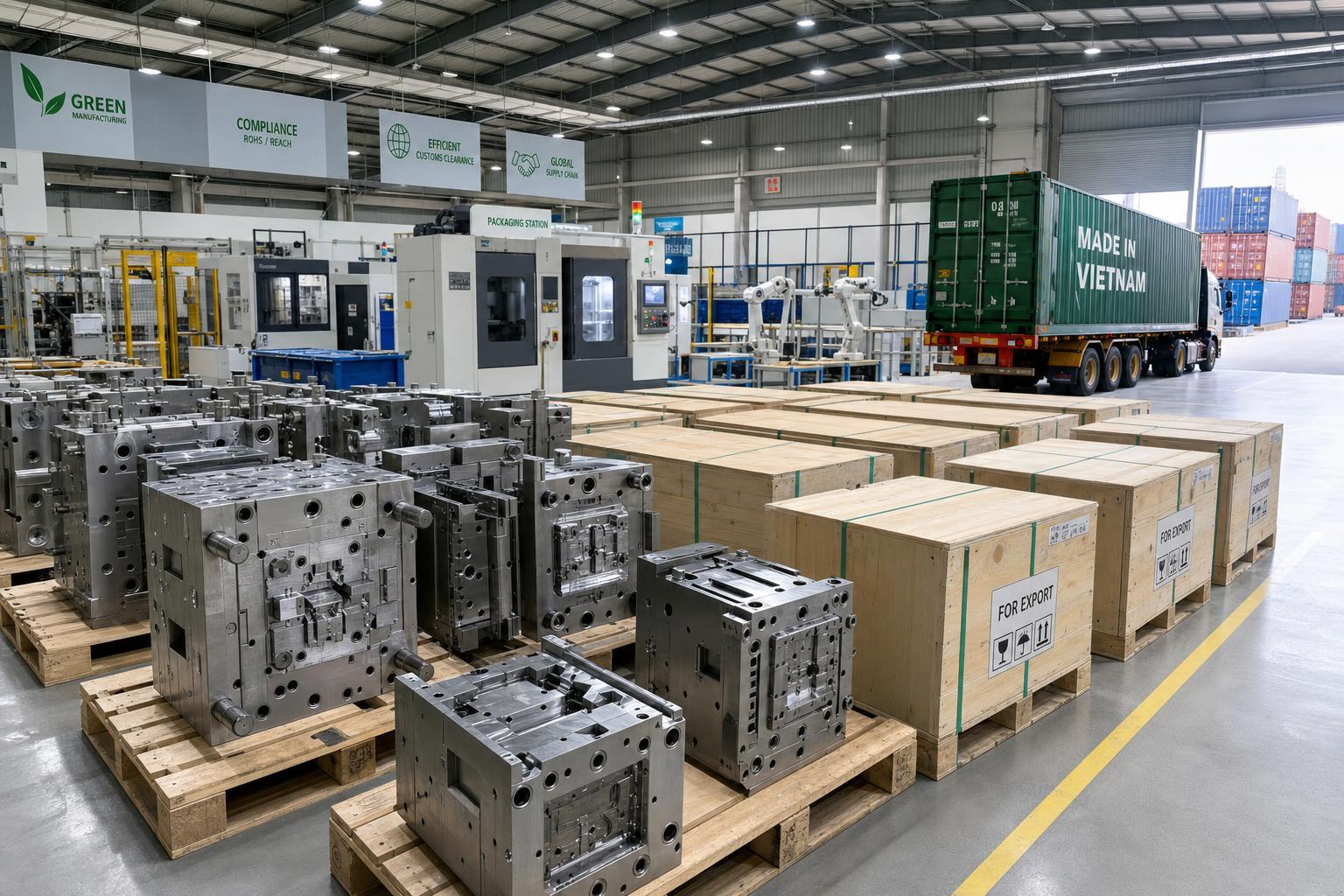
On July 3, 2026, Vietnam’s Ministry of Industry and Trade introduced the “Tooling Export Green Lane,” a customs facilitation program for exporters of injection molds and die casting tooling. The measure centers on faster customs clearance and less frequent inspections for shipments bound for the EU, US, and ASEAN markets, but only where suppliers hold valid ISO 14001:2025 certification and can provide third-party verification of environmental management system performance. For mold exporters, buyers, and supply chain partners, the update is worth watching because it links export processing benefits directly to verified environmental compliance.
What the program officially covers
Based on the information provided, the new program was launched on July 3 by Vietnam’s Ministry of Industry and Trade. It applies to exporters of injection molds and die casting tooling. Eligible exporters can receive expedited customs clearance and reduced inspection frequency. The scope stated in the input covers shipments to the EU, US, and ASEAN markets. A further stated condition is that participating exporters must hold valid ISO 14001:2025 certification and undergo third-party verification of environmental management system performance.
Where the impact may be felt first
Export-oriented tooling suppliers
From an industry perspective, the most immediate effect may fall on mold makers and die casting tooling exporters serving overseas markets covered by the program. The reason is straightforward: customs speed and inspection frequency directly affect outbound shipment handling. What deserves closer attention is whether suppliers already have the required certification status and verification process in place, because that appears central to access.
Overseas buyers sourcing from Vietnam
Buyers in the EU, US, and ASEAN may also be affected in practical terms, especially where sourcing plans depend on delivery timing and supplier qualification. Analysis shows that the policy matters not only as a customs measure but also as a signal that environmental management credentials may become more visible in supplier selection and order planning. For buyers, the key issue is likely to be supplier readiness rather than the policy announcement alone.
Customs, compliance, and logistics service providers
Service providers involved in export documentation, compliance coordination, and shipment execution may see a more operational impact. Observably, the combination of faster clearance and reduced inspection frequency can shift attention toward document accuracy, certification validity, and verification readiness. In this context, the main point to monitor is how eligibility is demonstrated in actual export workflows.
Practical issues companies should monitor now
Certification status versus actual eligibility
What deserves closer attention is the difference between holding ISO 14001:2025 certification and meeting the program’s full participation requirements. The input clearly states that third-party verification of environmental management system performance is required, so companies should not assume that certification alone automatically secures Green Lane treatment.
Market-specific shipment planning
The program is stated to apply to shipments going to the EU, US, and ASEAN. For exporters and their customers, this means shipment destination matters. Companies involved in order allocation, export scheduling, and customer communication should pay close attention to whether particular shipments fall within the program’s stated market scope.
Document preparation and customer communication
Analysis shows that this type of measure can matter most at the documentation and execution stage. Exporters should watch the consistency of certification records, third-party verification materials, and shipment documents used in customer and customs communication. Buyers, in turn, may want clearer confirmation from suppliers on qualification status before relying on any expected timing advantage.
Further official clarification
It is more appropriate to understand this announcement as a framework that still requires close reading of any subsequent official wording. Companies should monitor whether additional guidance clarifies procedural details, evidence requirements, or implementation boundaries. Until those points are fully visible, the commercial impact should be assessed carefully.
Why this matters beyond a single customs update
As an editorial observation, this development can be read as more than a narrow logistics measure. It connects export facilitation in the tooling segment with verified environmental management performance. That does not by itself prove a broad market shift, but it does indicate that environmental qualification is being tied more directly to trade processing advantages in this case. For the industry, that makes the announcement relevant both operationally and strategically.
How to read the signal at this stage
At this point, the update is best understood as a targeted policy signal with immediate operational implications for qualifying mold and die casting tooling exporters. It is not yet the same as a confirmed sector-wide outcome. The most rational view is that the program may influence supplier qualification, shipment planning, and customer communication in the near term, while its broader market effect still needs continued observation.
Basis of this article and what still needs verification
This article is generated from the user-provided news title, event date, and event summary. For developments of this type, commonly relevant source categories may include official government announcements, company disclosures, industry association updates, authoritative media reporting, and standards-related documentation. A specific official source link was not provided in the input, so further verification remains necessary. Continued follow-up should focus on any later official implementation details, procedural guidance, and clarification of how third-party verification is applied in practice.
Related News