
California Apparel EPR Rule Reaches Trims Supply Chains

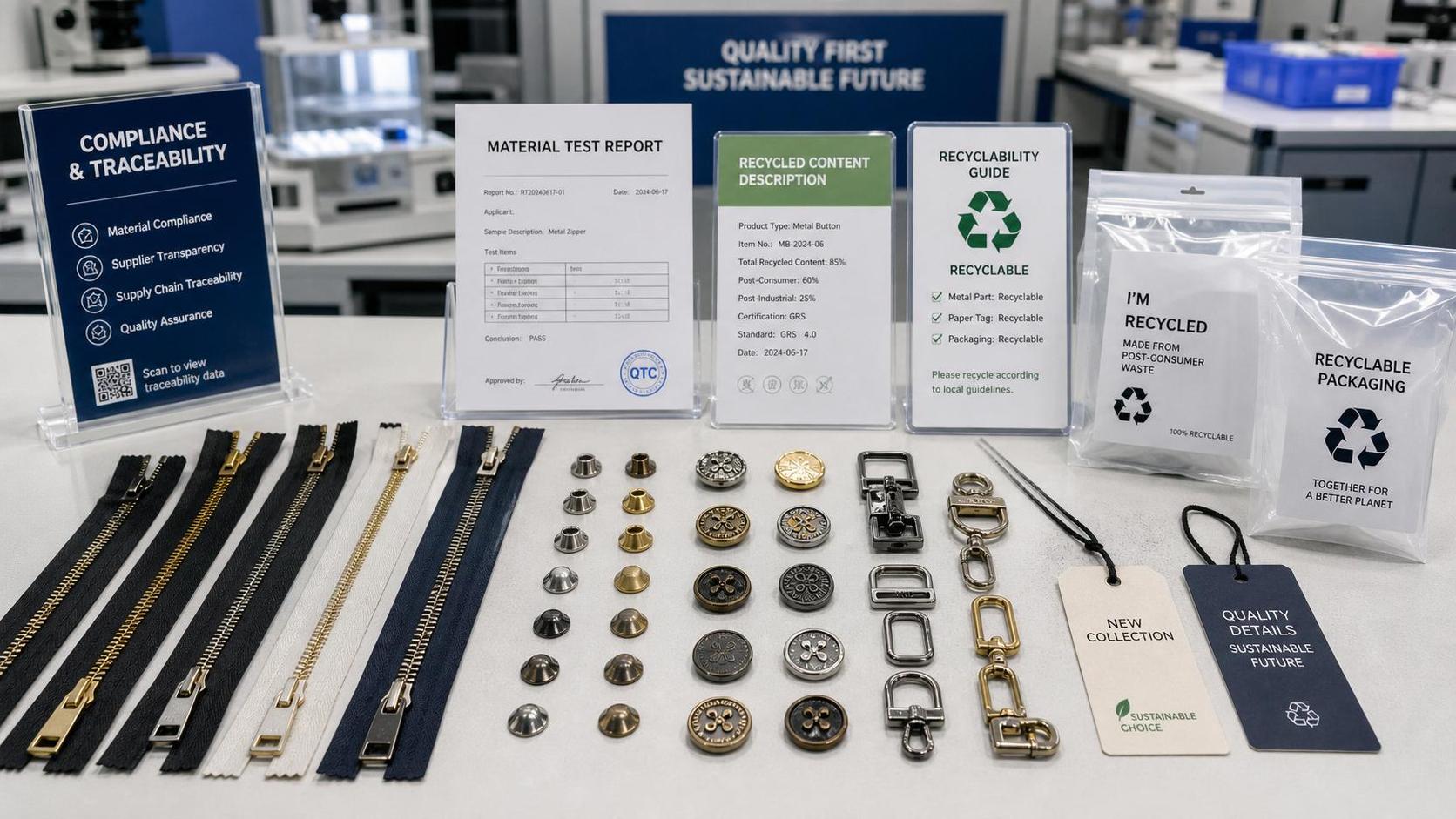
On July 1, 2026, California’s apparel and textile extended producer responsibility requirements under SB 343 are set to take effect, turning product stewardship into a practical supply-chain issue for brands selling into the state. The change matters not only to clothing labels, but also to suppliers connected to metal zippers, rivets, decorative buttons, tag hardware, packaging, and labeling, because upstream material disclosure, recyclability marking, and recycled-content information are becoming more relevant to market access and compliance review.
What the July 1 effective date confirms
The confirmed development is that California’s SB 343 will formally take effect on July 1, 2026, and brands selling apparel and textile products in California will be required to take responsibility for the recycling of metal zippers, rivets, decorative buttons, and hardware used on hangtags in those products. The summary provided also makes clear that this requirement is pushing brands to trace upstream suppliers involved in fasteners, stamping, and injection molds, with attention to material composition, recyclability labels, and the proportion of recycled material used. It also indicates that green certification is moving toward an entry requirement in the affected supply chain.
Where the pressure is likely to appear first
Brands and direct sellers face a broader compliance perimeter
From an industry perspective, the immediate pressure falls on brands and other companies placing apparel and textile products on the California market, because responsibility no longer sits only at the finished-garment level. What deserves closer attention is that compliance review may now extend into trims and accessory components, which can affect supplier onboarding, technical file collection, packaging and labeling review, and internal procurement controls.
Trim, fastener, and component suppliers move closer to the compliance front line
Suppliers of zippers, rivets, decorative hardware, hangtag metal parts, and related stamping or mold-linked components may be affected because brands are likely to request clearer supporting information on material content, recyclability identification, and recycled-content usage. Analysis shows that the impact is not limited to production itself; it may also reach quotation packages, product specifications, supporting declarations, and delivery documentation that buyers use for compliance checks.
Packaging, labeling, and documentation functions gain operational importance
The reference to recyclable marking and upstream traceability means packaging, labeling, and documentation work may become more sensitive in cross-functional execution. For companies supporting export delivery, sourcing, or supply-chain services, the practical issue is whether product files, material statements, and labeling information can match buyer requirements without creating delays in approval, shipment, or post-delivery traceability.
Certification and verification-related services may see stronger demand signals
Observably, the summary points to green certification becoming an access threshold, which may affect certification-related businesses and testing or verification service providers connected to textile trims and accessory materials. The confirmed fact is the direction of buyer demand implied by the rule change, while the exact certification pathway or review standard is not specified in the provided information and therefore still requires case-by-case confirmation.
What companies should watch in current execution planning
Check whether material traceability is available beyond the finished product
Analysis shows that companies should pay close attention to whether traceability records cover not only garments but also metal and molded accessory parts tied to fasteners, stamping, and injection-mold supply. If upstream material composition cannot be explained clearly, commercial discussions and compliance review may become more difficult.
Review labels, markings, and technical support files early
What deserves closer attention is whether recyclable markings, recycled-content descriptions, and related technical documents can be presented in a consistent way across product, packaging, and supplier files. The provided summary does not define a detailed enforcement format, so this should be treated as a compliance preparation issue rather than an already standardized documentation outcome.
Prepare for tighter supplier qualification conversations
Because the summary indicates that green certification is becoming an entry requirement, buyers and procurement teams should closely review supplier qualification standards, especially for trims and accessories that may previously have received less scrutiny than core textile materials. This is more appropriately understood as a market-access screening trend linked to the rule’s implementation, not as proof that one uniform certification rule is already being applied in every transaction.
Monitor delivery and sourcing implications in contracts and purchase plans
Observably, when additional material and labeling disclosures are requested, sourcing and delivery coordination may become more complex. Companies should therefore watch for changes in buyer checklists, tender documents, specification alignment, and document submission timing, even though the provided information does not confirm a specific official execution timetable for those downstream commercial adjustments.
Why this looks like an execution signal, not just a policy headline
Analysis shows that this development is more significant as an execution signal than as a simple legal update. The effective date gives the market a concrete compliance milestone, while the stated focus on upstream tracing suggests that regulatory pressure is being transmitted through procurement and supplier management rather than remaining only at the policy-text level. At the same time, it is more appropriate to understand this as a rule now entering practical implementation, with many operational details still needing continued observation through buyer requirements, certification practice, and market feedback.
How the market may need to interpret this development now
A rational reading of this event is that California’s apparel EPR implementation is expanding compliance attention from finished garments to the accessory and support-material layers around them. For the industry, the immediate significance lies in traceability, recyclability-related information, recycled-content disclosure, and supplier qualification rather than in any confirmed single outcome for all market participants. In that sense, the update is best understood as a live compliance and supply-chain signal with direct commercial implications, while the exact pace and depth of downstream execution still warrant close monitoring.
Basis of this article and points that still need verification
This article is generated from the user-provided news title, event date, and event summary. For developments of this kind, market participants usually also monitor source types such as official notices, regulatory releases, trade authority information, industry association updates, standards documentation, and reporting from established professional media. No specific official source link was provided in the input, so the underlying official text and subsequent implementation details still need ongoing verification. What remains important to watch includes any further policy detail, certification interpretation, tender-document changes, industry feedback, and how companies implement the requirements in actual sourcing and delivery processes.
Related News