
OEM manufacturing mistakes that raise stamping costs

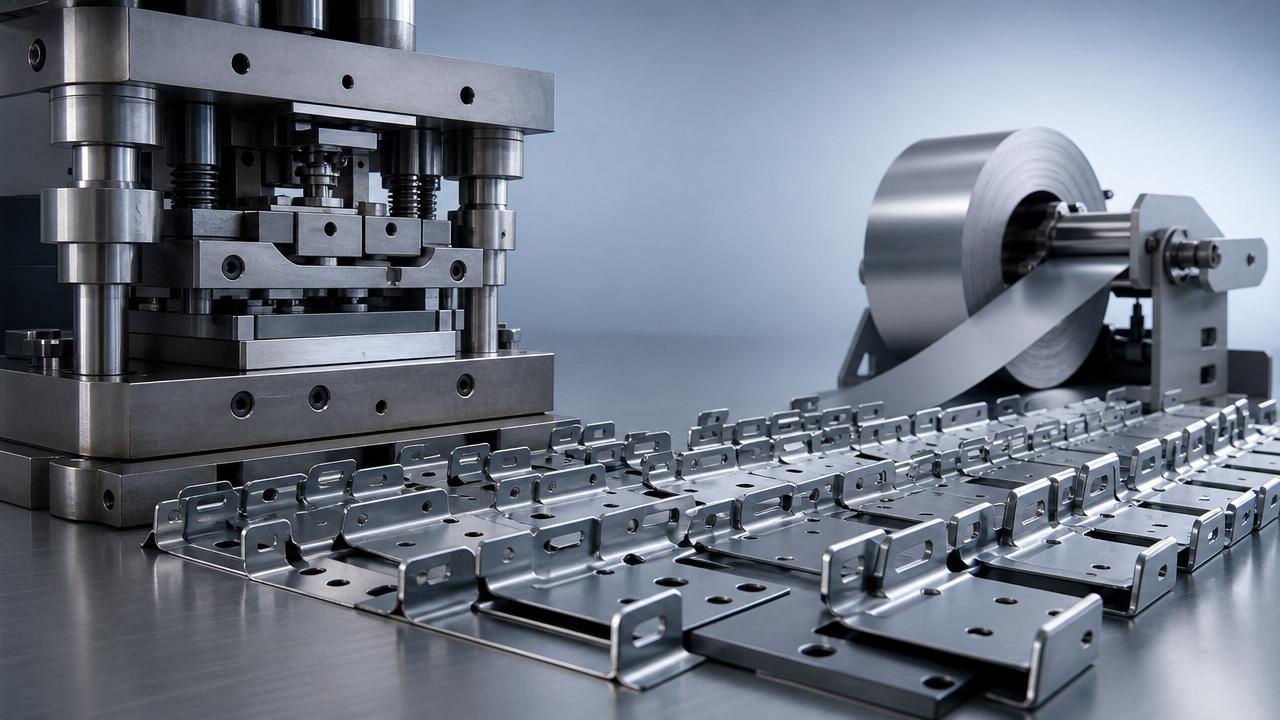
In OEM manufacturing, stamping cost overruns often begin long before a purchase order is issued. For finance leaders, the biggest risks usually come from avoidable decisions in design, tooling, quoting, and supplier coordination rather than metal price volatility alone.
That matters because hidden stamping inefficiencies distort margins, weaken forecast accuracy, and create recurring cost leakage across programs. When the same preventable mistakes repeat at launch, the total financial impact can far exceed any savings gained through aggressive unit-price negotiation.
This article explains the most common errors that raise stamping costs, why they happen, and how financial decision-makers can spot them early. The goal is not only lower piece prices, but more predictable budgets, fewer change orders, and stronger supplier performance.
Why stamping costs rise even when steel prices stay stable
Many buyers assume higher stamping costs mainly reflect commodity movement. In reality, OEM manufacturing programs often become expensive because the part, tool, or sourcing strategy introduces complexity that suppliers must price into labor, scrap, maintenance, downtime, and quality risk.
For a finance approver, this is an important distinction. Commodity inflation is difficult to control, but preventable manufacturing mistakes are manageable. The earlier those mistakes are identified, the easier it becomes to avoid cost escalation that later appears unavoidable in supplier quotations.
Stamped parts are especially sensitive to upstream decisions because every detail affects throughput. Tight tolerances, poor material utilization, extra forming steps, unstable demand, and rushed tool changes all push cost upward, sometimes without being visible in the first commercial review.
1. Approving part designs that are harder to stamp than necessary
One of the most common OEM manufacturing mistakes is approving a part design optimized for function but not for manufacturability. Sharp corners, deep draws, unnecessary features, and overly tight tolerances can force more complex tooling, lower press speed, or secondary operations.
These design choices rarely look expensive on a drawing. However, they often create a chain reaction: longer setup times, more die stations, increased maintenance, lower yield, and more in-process inspection. Suppliers then build those risks into the quoted cost structure.
From a financial perspective, the key question is simple: does every design requirement create measurable customer value? If not, it may be adding cost without improving performance, durability, compliance, or marketability in a way that justifies the extra spend.
Finance teams do not need to redesign parts themselves. They do, however, benefit from requiring evidence that design-for-manufacturing review happened before tooling approval. A small early challenge to specifications can prevent years of excess unit cost across production volumes.
2. Ignoring material utilization and scrap economics
Material price matters, but material utilization often matters just as much. A part layout that wastes strip width, requires excessive trim, or produces difficult nesting conditions can increase effective material cost even when the raw steel price appears competitive.
In high-volume stamping, scrap is not a side issue. A few percentage points of avoidable waste can materially affect annual spend. If the quote only highlights price per kilogram and not yield from strip to finished part, the real economics may be hidden.
Financial approvers should ask suppliers for basic visibility into material utilization assumptions. What is the expected yield? How much scrap will be generated? Can blank design or strip layout be improved? Is there a lower-cost material grade that still meets performance requirements?
These questions are valuable because they shift discussions from nominal input price to actual conversion efficiency. In OEM manufacturing, better material usage can generate recurring savings with no change to demand, no renegotiation conflict, and no compromise in product quality.
3. Underestimating tooling decisions that lock in long-term cost
Tooling is often treated as a one-time capital line, while piece price receives most attention. That is a mistake. Poor tooling decisions can increase maintenance frequency, reduce press uptime, limit production speed, and drive inconsistent part quality for the life of the program.
Choosing the cheapest tool upfront may look prudent in a capital review, but it can become expensive if the die wears quickly, requires frequent adjustment, or cannot support forecast volumes. In such cases, apparent savings simply shift into operating cost and supplier claims later.
Finance leaders should evaluate tooling not only by initial price, but by expected life-cycle economics. Questions worth asking include die life, maintenance intervals, spare part strategy, changeover time, and whether the tool design matches actual annual demand and quality requirements.
This approach is especially important when comparing suppliers. A higher tooling quote may support lower total cost if it enables faster throughput, less scrap, and fewer disruptions. For budget control, total program economics are more meaningful than isolated upfront expenditure.
4. Accepting unrealistic tolerances and cosmetic standards
In many stamping programs, tolerances are specified more tightly than the application requires. Cosmetic expectations may also be carried over from visible consumer parts to components that are never seen by the end user. Both practices can unnecessarily inflate cost.
Tighter tolerances generally mean slower production, more process control, additional inspection, and higher rejection risk. If the dimension is not critical to assembly, safety, or performance, the extra precision adds cost without generating corresponding business value.
The same applies to surface finish and appearance criteria. Requiring premium visual consistency on non-visible industrial parts can trigger extra handling, packaging, and secondary finishing. Those costs are often embedded in piece price and may go unchallenged during approval.
For financial reviewers, the practical step is to ask which specifications are truly critical-to-function. If engineering or quality cannot clearly explain the cost-benefit logic, that requirement deserves review before it becomes a permanent burden in OEM manufacturing spend.
5. Launching without stable demand assumptions
Suppliers price stamped parts based on expected volumes, run lengths, and scheduling stability. When OEMs provide uncertain forecasts, frequent revisions, or unrealistic ramp assumptions, suppliers must protect themselves with higher pricing, larger buffers, or conservative capacity planning.
This problem is common in OEM manufacturing where commercial teams push for flexibility while procurement requests aggressive pricing. Unfortunately, unstable demand undermines the very efficiencies needed to deliver that price, especially when tooling amortization depends on predictable output.
Short runs, erratic call-offs, and repeated schedule changes increase setup frequency and lower press utilization. They may also force premium freight, overtime, and excess inventory. Even if these costs do not appear in the initial quotation, they often emerge later in claims or performance issues.
Financial decision-makers should therefore view forecast quality as a cost driver. Better demand discipline supports better supplier pricing. In many cases, a realistic volume commitment can reduce total program cost more effectively than a late-stage negotiation over a few cents per part.
6. Treating supplier communication as a purchasing detail instead of a cost control lever
Another major source of stamping cost inflation is poor communication between engineering, procurement, quality, and the supplier. Missing data, late revisions, unclear inspection standards, and informal change requests all create confusion that suppliers must price as risk.
When suppliers do not receive complete information early, they quote conservatively. If information changes after tooling starts, costs rise further through rework, schedule impact, tool modification, or expedited corrective action. These are classic examples of preventable cost leakage.
For finance teams, this issue matters because it affects quote reliability. A low initial quotation is less valuable if the RFQ package was incomplete and likely to trigger future changes. Robust communication discipline improves not only cost, but also budget confidence.
Useful controls include standardized RFQ packages, formal engineering change approval, documented assumptions, and cross-functional quote review before award. These practices reduce ambiguity, help suppliers price accurately, and limit the expensive surprises that often appear after launch.
7. Overlooking secondary operations and hidden process steps
Some stamped parts appear simple until secondary operations are considered. Deburring, tapping, welding, plating, heat treatment, cleaning, and packaging can significantly alter total cost. If these steps are not evaluated early, the quoted part price may seem unexpectedly high.
In some cases, design decisions create secondary processes that could have been avoided. In others, compliance or assembly requirements make them necessary. The financial risk comes from not clearly separating core stamping cost from value-added downstream operations.
Approvers should ask for a process breakdown showing which steps are included and why. This helps identify whether cost is driven by the stamping itself or by add-on requirements that might be redesigned, consolidated, or sourced differently for better economics.
Clear process visibility also improves benchmarking. Without it, teams may compare one supplier’s all-in quote with another supplier’s partial quote and draw the wrong conclusion. Accurate cost comparison requires a common definition of scope across all OEM manufacturing bids.
8. Choosing suppliers mainly on quoted unit price
A low quoted unit price can be attractive, especially under budget pressure. But in stamping, the cheapest source is not always the lowest-cost source over time. Weak process capability, poor maintenance discipline, and limited technical support often create hidden downstream costs.
These downstream costs may include line stoppages, quality sorting, delayed launches, engineering rework, emergency logistics, or repeated commercial disputes. Finance teams eventually absorb the impact through margin erosion, working capital strain, or unplanned corrective spend.
That is why supplier evaluation should include more than price. Tooling competence, process stability, quality history, engineering support, capacity planning, and responsiveness to design review all affect the true economics of stamped-part sourcing.
For financial approval, a balanced decision framework is more effective than single-point price comparison. If a supplier can demonstrate stronger yield, fewer defects, and more stable delivery, a slightly higher quote may produce materially better total return.
How finance leaders can identify stamping cost risk earlier
Financial decision-makers do not need to become stamping engineers to improve outcomes. What they need is a sharper review lens at the points where cost is committed: design release, tooling approval, supplier nomination, and forecast alignment.
A practical review checklist should include five areas: manufacturability review completed, material utilization validated, tooling life-cycle assumptions documented, critical tolerances justified, and process scope clearly defined. If any of these are unclear, future cost inflation becomes more likely.
It also helps to ask for scenario comparisons. What changes if annual volume doubles or drops? What is the cost impact of tolerance relaxation? How does a more durable tool affect total cost over three years? These questions reveal whether a quote is structurally efficient.
Most important, finance should encourage early cross-functional challenge rather than late-stage cost cutting. The best savings usually come before the tool is built, not after production problems begin. In OEM manufacturing, prevention is consistently cheaper than correction.
What better decisions look like in practice
Stronger stamping economics usually come from a combination of small, disciplined decisions rather than one dramatic intervention. The most effective programs align design, sourcing, and financial review before cost is locked into tooling and supplier contracts.
That means engaging suppliers early for design feedback, treating material yield as a major metric, validating true specification needs, and comparing suppliers on total program performance. It also means acknowledging that forecast stability and communication quality are real cost variables.
For finance approvers, the value is clear: fewer surprise charges, more accurate budgeting, lower risk of chronic piece-price inflation, and stronger confidence that approved spending will hold over the production cycle. These are not technical benefits alone; they are commercial advantages.
In a competitive market, controlling preventable stamping cost is a margin discipline. Companies that manage these details well are better positioned to scale production, negotiate from facts, and build more resilient supplier relationships.
Conclusion
OEM manufacturing stamping costs rise fastest when avoidable mistakes are accepted early and discovered late. Overdesigned parts, poor material utilization, weak tooling choices, unstable forecasts, incomplete RFQs, and price-only sourcing all create cost that compounds over time.
For financial decision-makers, the lesson is straightforward. The most valuable cost control actions usually happen before production begins. By asking better questions at approval stage, finance can help reduce waste, improve quote reliability, and protect margin without compromising supply security.
In stamping, not every higher cost is preventable, but many are predictable. And when they are predictable, they are manageable. Better early decisions lead to better long-term economics across the full OEM manufacturing program.
Related News