
Sheet metal fabrication processes explained: Cutting, bending, welding, and finishing
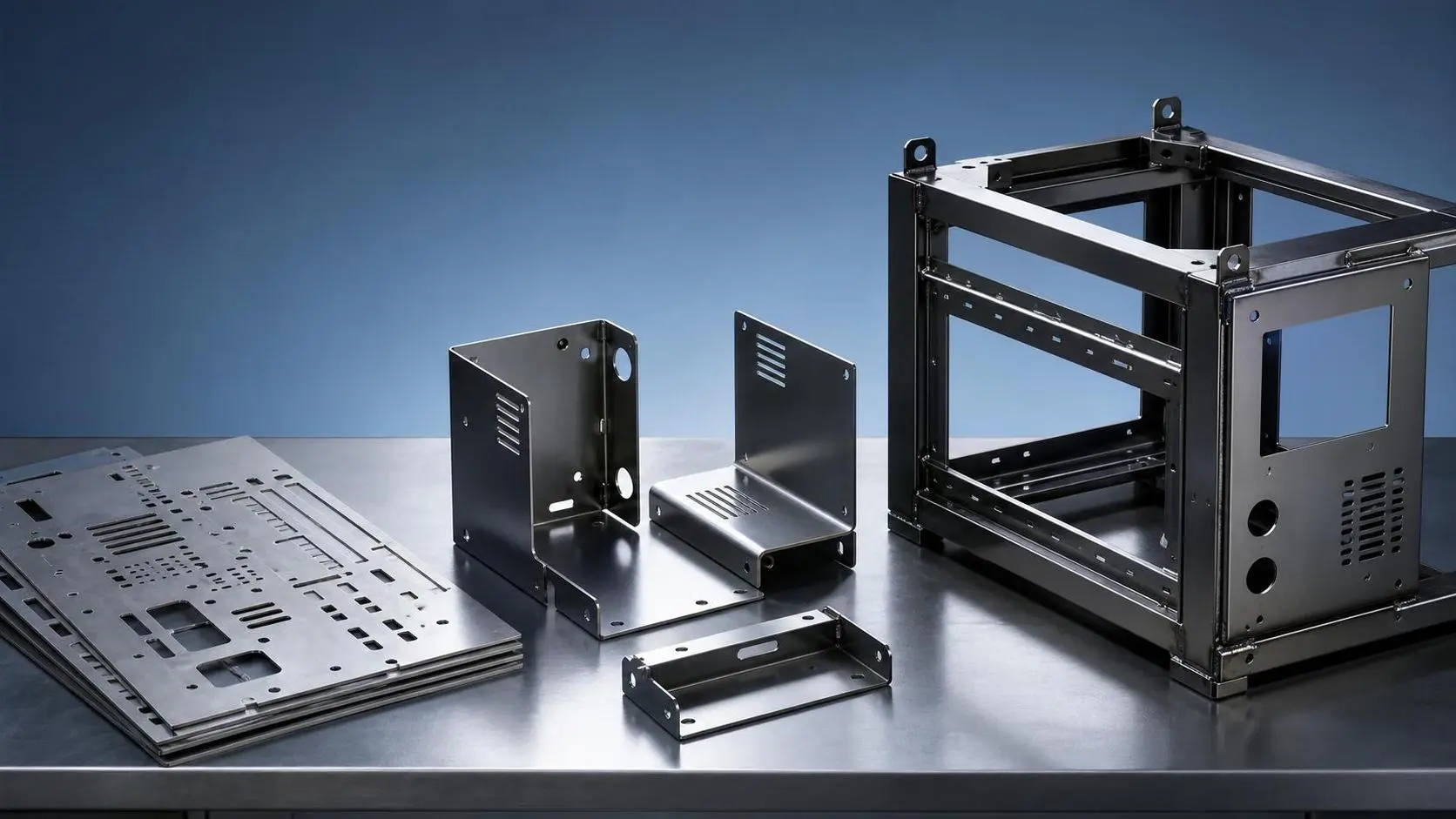
Sheet metal fabrication processes explained: Cutting, bending, welding, and finishing
Sheet metal fabrication shapes flat metal into usable parts for products, machines, enclosures, brackets, and structural assemblies.
It sounds simple at first, but each step changes cost, tolerance, strength, and surface quality.
That is why understanding sheet metal fabrication matters long before production starts.
In real manufacturing, the process usually follows four core stages: cutting, bending, welding, and finishing.
Each stage has multiple methods, and the right choice depends on material, design, batch size, and end use.
This guide explains sheet metal fabrication in practical language, with attention to process logic and evaluation points.
What sheet metal fabrication includes
Sheet metal fabrication is the manufacturing workflow used to convert thin metal sheets into precise components.
Common materials include carbon steel, stainless steel, aluminum, copper, and galvanized steel.
Thickness can range from very thin electronics panels to heavier industrial housings and support parts.
The process is widely used in automotive, electrical equipment, HVAC, construction, appliances, telecom, and industrial automation.
A typical sheet metal fabrication project begins with drawings, tolerances, material selection, and production planning.
From there, fabricators choose machines and methods that match the product’s technical and commercial targets.
Cutting: the first step that sets accuracy
Cutting is usually the first major stage in sheet metal fabrication.
It defines the blank shape, hole positions, edge quality, and how easily later operations can be completed.
A poor cutting method can create burrs, heat distortion, scrap loss, or unstable dimensions.
Common cutting methods
- Laser cutting offers high precision, fast programming, and strong flexibility for complex profiles.
- Punching works well for repeated holes, slots, louvers, and medium to high production volumes.
- Shearing is efficient for straight cuts and simple rectangular blanks.
- Plasma cutting handles thicker conductive metals, though edge quality is usually rougher than laser cutting.
- Waterjet cutting avoids heat-affected zones and suits sensitive materials or mixed-material applications.
Laser cutting has become one of the most visible sheet metal fabrication technologies in recent years.
The reason is simple: it balances speed, nesting efficiency, and design freedom.
Still, no method is universally best.
In practical sourcing, the best cutting choice depends on thickness, part geometry, finish expectations, and unit economics.
What to evaluate after cutting
- Edge burr level
- Hole accuracy and consistency
- Heat distortion risk
- Material utilization rate
- Preparation quality for bending or welding
Bending: turning flat blanks into functional forms
After cutting, sheet metal fabrication moves into forming.
Bending is the most common forming process, and it creates angles, channels, boxes, flanges, and reinforcement features.
Most bending is done on a press brake using matched tooling.
The machine applies force along a programmed line until the part reaches the desired angle.
Why bending is not just about angle
Bending performance depends on bend radius, grain direction, springback, tooling choice, and material behavior.
A design that looks easy on screen may be difficult to bend without marks, cracks, or dimensional drift.
This is where sheet metal fabrication experience becomes especially valuable.
Experienced teams review bend sequence early to avoid tool collisions and tolerance stacking.
Typical bending risks
- Springback causes angles to open after pressure release.
- Tight inside radii may crack some materials.
- Short flange lengths may be hard to form accurately.
- Multiple bends can reduce access for later tooling.
- Visible parts may show tool marks if protection is poor.
For design review, it helps to ask whether every bend is necessary and whether tolerance values match real function.
Welding: joining parts into a complete assembly
Not every sheet metal fabrication job includes welding, but many assemblies depend on it.
Welding joins cut and formed pieces into frames, cabinets, brackets, tanks, and structural subassemblies.
The selected welding process affects appearance, strength, cycle time, and post-processing effort.
Main welding methods in sheet metal fabrication
- MIG welding is fast and practical for many steel fabrication tasks.
- TIG welding gives cleaner, more controlled welds, especially on stainless steel or aluminum.
- Spot welding is common for joining overlapping sheet parts in high-volume production.
- Stud welding attaches threaded studs or pins without drilling through the part.
Welding quality is not judged by bead appearance alone.
Fit-up accuracy, joint design, heat input, and fixturing all matter.
If those basics are weak, even skilled welding cannot fully recover the result.
Common welding concerns
- Heat distortion can move holes, edges, and flatness out of tolerance.
- Spatter or burn marks may increase finishing work.
- Poor joint access may reduce consistency.
- Mixed-material assemblies may require special welding controls.
This is why many buyers review welding together with fixture design and inspection criteria, not as a separate topic.
Finishing: protecting performance and appearance
Finishing is the final stage of sheet metal fabrication, but it should never be treated as an afterthought.
A finish can improve corrosion resistance, wear life, conductivity, cleanliness, and visual consistency.
It can also hide or expose earlier process problems.
Common finishing options
- Deburring removes sharp edges left by cutting.
- Grinding smooths welds and blends surfaces.
- Powder coating adds durable color and corrosion protection.
- Painting supports appearance and environmental resistance.
- Plating improves conductivity, wear resistance, or rust prevention.
- Anodizing is widely used for aluminum parts.
- Brushing or polishing creates a decorative or uniform surface.
The right finish depends on where the part will be used and what conditions it must survive.
Outdoor enclosures need a different strategy than indoor control panels or food-contact equipment.
More importantly, finishing specs should match functional risk, not just visual preference.
How the four processes affect cost and quality
In sheet metal fabrication, cost and quality are linked across the full workflow.
A problem created during cutting often appears again during bending, welding, or finishing.
That chain effect is one of the biggest reasons projects miss budget or delivery targets.
This also means better manufacturability decisions often reduce both defects and total cost.
Practical questions to ask when evaluating sheet metal fabrication
When reviewing a part or supplier, a few focused questions can reveal a lot.
- Which cutting method fits the material thickness and feature detail?
- Are bend radii and flange lengths realistic for the selected metal?
- Will welding create distortion that affects downstream assembly?
- Does the finish match the corrosion and appearance requirements?
- Are tolerances functional, or are they tighter than needed?
- Can the supplier inspect the critical characteristics consistently?
These questions help turn sheet metal fabrication from a vague process into a measurable decision area.
Final takeaway
Sheet metal fabrication is more than a series of shop operations.
It is a connected system where cutting, bending, welding, and finishing shape the final result together.
The clearer this process is understood, the easier it becomes to compare designs, suppliers, and manufacturing risks.
For ongoing industry research, practical process knowledge remains one of the best tools for making better technical and sourcing decisions.
Related News