
KOMATEK 2026 Signals Deeper China Push Into Middle East Rebuild

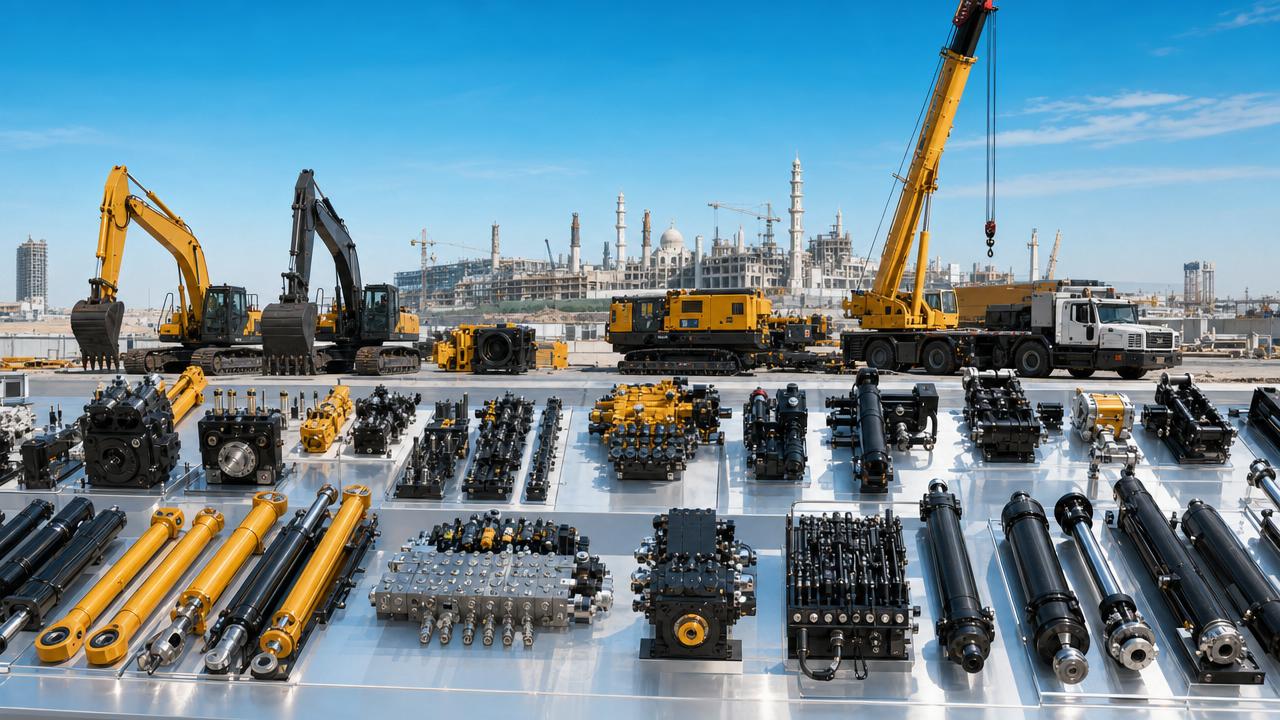
On June 6, 2026, the close of KOMATEK 2026 in Istanbul highlighted a clear shift in regional sourcing for construction machinery and hydraulic components. The event matters not only for equipment exporters, but also for hydraulic system suppliers, importers, procurement teams, and supply-chain service providers watching reconstruction demand in Iran, Iraq, and Syria. What deserves closer attention is that the exhibition result was not limited to product display: it also showed how delivery speed, customization capability, and certification readiness are becoming practical decision factors in Middle East infrastructure rebuilding.
What the Istanbul Exhibition Confirmed
From June 3 to 6, the 18th KOMATEK exhibition was held in Istanbul. A total of 165 Chinese manufacturers participated, covering excavating machinery, lifting equipment, hydraulic systems, and core components, including Air Cylinders, Valves, and Compressors. The exhibition also introduced, for the first time, a dedicated technology matchmaking zone focused on Middle East infrastructure reconstruction.
This new area centered on post-war repair demand in Iran, Iraq, and Syria. During the event, Chinese companies signed more than 23 hydraulic turnkey projects on site. In parallel, the latest report cited from the United Nations Development Programme indicated that the Middle East faces a funding gap of more than USD 120 billion for infrastructure repair over the next 18 months.
The same event summary also pointed to the reasons Chinese suppliers are gaining traction with regional importers: shorter lead times, faster customization response, and complete CE plus TS EN 13463 explosion-protection certification.
Why Different Parts of the Supply Chain Are Watching Closely
Exporters are seeing demand move beyond standalone equipment
From an industry perspective, the on-site signing of hydraulic turnkey projects suggests that demand is extending from single-machine exports to more integrated supply packages. For direct trading companies and equipment exporters, the impact may be felt in quotation structure, solution bundling, and after-sales coordination rather than in shipment volume alone. What deserves closer attention is whether buyers increasingly prioritize system compatibility and documentation readiness alongside price.
Hydraulic component makers may face more specification-led inquiries
Manufacturers of Air Cylinders, Valves, Compressors, and related core parts may be affected because reconstruction-oriented procurement often requires parts to fit broader hydraulic assemblies and field conditions. The business impact is likely to appear in custom configuration, compliance documentation, and delivery scheduling. Observably, suppliers that can respond quickly to non-standard requirements may gain more importer attention, but this remains a market signal rather than a confirmed long-term outcome.
Importers and distributors are reassessing sourcing priorities
For regional importers and channel distributors, the exhibition result indicates a possible acceleration in supplier substitution. The confirmed facts show that Chinese suppliers are being seen as an alternative to European and US suppliers because of lead time, customization response, and certification completeness. The key issue for these buyers is not only product availability, but also whether supporting documents, technical communication, and delivery commitments can be maintained consistently after the exhibition cycle.
Supply-chain and service providers may need to prepare for project-based delivery
Logistics firms, technical service providers, and project coordinators may also be affected if more orders shift toward complete hydraulic packages. In that case, the pressure point moves from standard export handling to milestone-based delivery, document coordination, and communication across multiple equipment and component categories. Analysis shows that these service roles should watch how many exhibition-stage agreements convert into structured execution demand.
What Companies Should Track After the Exhibition
Separate exhibition momentum from executable orders
Companies should closely monitor how the signed hydraulic projects progress after the event. The current information confirms on-site signing, but it does not confirm later delivery schedules, final order execution, or repeat procurement. That distinction matters for sales planning, production allocation, and channel expectations.
Pay attention to certification and technical file readiness
The event summary specifically highlighted CE and TS EN 13463 explosion-protection certification as part of the competitive case for Chinese suppliers. For exporters and manufacturers, this means buyer conversations may increasingly focus on whether certificates, technical specifications, and supporting documents are complete and easy to verify, not just whether the product itself is available.
Focus on the categories closest to reconstruction demand
The product coverage at KOMATEK included excavating machinery, lifting equipment, hydraulic systems, and core components. Companies operating in these categories should watch which inquiries are linked to post-war repair demand and which are still general market procurement. Analysis shows this distinction will shape inventory planning, customization priorities, and customer communication.
Prepare for faster-response commercial workflows
The current signal from the exhibition is that short lead time and rapid customization response are important competitive factors. In practical terms, businesses may need to review quotation turnaround, technical clarification speed, and coordination between sales, engineering, and supply teams. This is not a confirmed market rule for every transaction, but it is a concrete operational point raised by the event summary.
How This Signal Should Be Read for Now
Analysis shows that this development is better understood as a strong directional signal rather than a fully settled market outcome. The combination of large Chinese participation, a reconstruction-focused matchmaking zone, and more than 23 signed hydraulic turnkey projects indicates that Middle East rebuilding demand is creating a more visible channel for Chinese machinery and hydraulic suppliers.
At the same time, observably, the event does not by itself prove that supplier substitution is complete or irreversible. The present information supports the view that procurement preferences are shifting in some scenarios, especially where delivery speed, customization, and certification are decisive. Whether this becomes a stable long-term pattern still requires continued observation of follow-up orders, project execution, and buyer retention.
Why the Market Will Keep Watching
The closing of KOMATEK 2026 matters because it connects exhibition activity with a specific reconstruction context in the Middle East. For the industry, the more meaningful takeaway is not simply that Chinese companies showed up in large numbers, but that they appear to be gaining relevance in system-level hydraulic and machinery supply tied to urgent rebuilding needs.
It is more appropriate to understand this as a developing industry signal with real commercial weight, rather than as a final conclusion about regional market structure. The next stage to watch is whether exhibition-stage demand translates into sustained procurement, delivery performance, and deeper importer reliance on Chinese suppliers.
Basis of This Article and What Still Needs Verification
This article is based on the user-provided news title, event date, and event summary related to the close of KOMATEK 2026, the participation of 165 Chinese manufacturers, the launch of a Middle East reconstruction technology matchmaking zone, the signing of more than 23 hydraulic turnkey projects, and the UNDP-referenced funding gap for regional infrastructure repair.
For this type of industry update, commonly relevant source categories may include official exhibition announcements, company statements, industry association releases, authoritative media coverage, and standard-organization documents. Specific official source links were not provided in the input, so further verification is still needed. Continued observation should focus on subsequent official disclosures, project execution updates, and any follow-up statements related to certification, delivery, or reconstruction procurement demand.