
Industrial Air Compressors for Manufacturing: Key Types, Pressure Range, and Energy Cost Factors

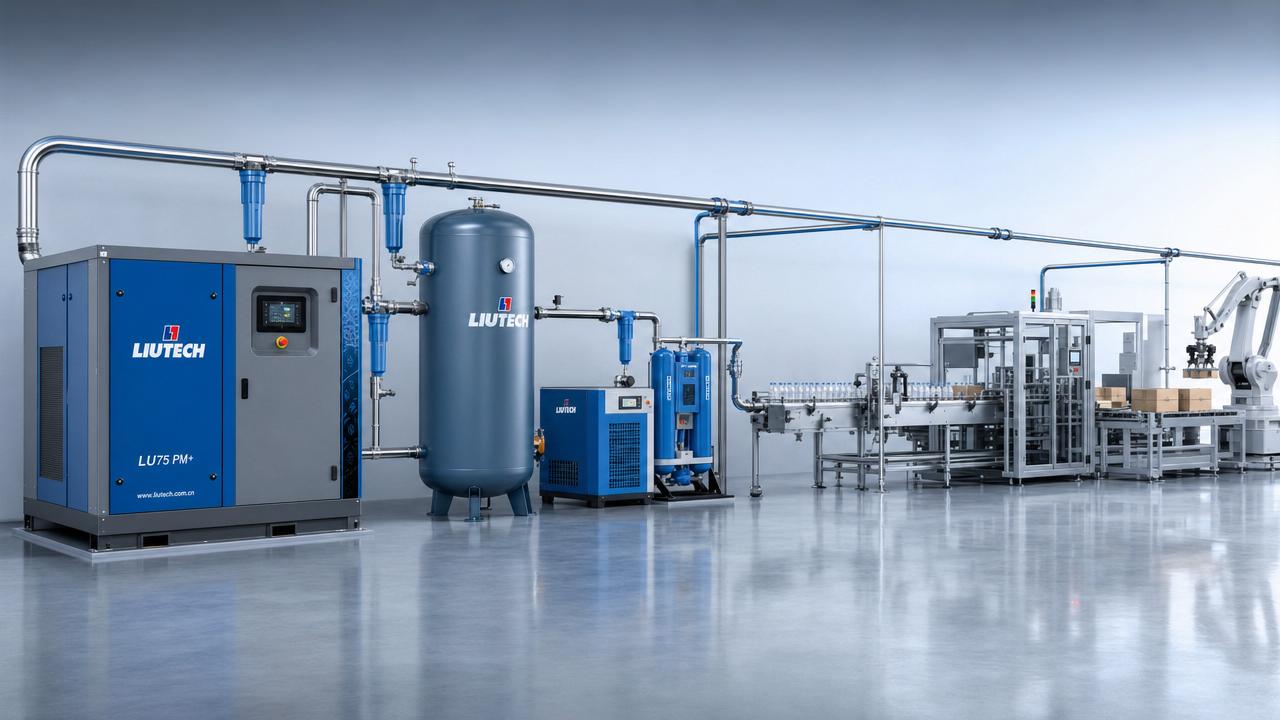
Industrial air compressors are at the center of many production lines. They power tools, actuators, packaging systems, spray equipment, and automation devices across the broader hardware and tooling supply chain.
That also means one wrong buying decision can quietly raise electricity bills, create pressure instability, and shorten equipment life. In practice, the cheapest unit rarely delivers the lowest long-term cost.
For industrial sourcing, the better approach is simple: match compressor type, pressure range, air quality, and energy profile to the actual job. This is where many industrial air compressors differ more than the nameplate suggests.
GHTN regularly tracks industrial tools, pneumatic products, automation components, and manufacturing trends. That wider view matters, because compressed air choices affect not only compressors, but also valves, cylinders, fasteners, molds, finishing systems, and assembly efficiency.
Start with the application, not the machine brochure
Before comparing brands, define where compressed air is used, how many shifts run, and what happens if pressure drops for even a few seconds.
A stamping workshop, electronics assembly line, mold shop, and packaging plant can all use industrial air compressors, but their duty patterns are very different.
- Map every air-consuming point, then total normal demand and peak demand separately. This avoids buying industrial air compressors based only on installed equipment counts.
- Check duty cycle by shift, weekend loading, and seasonal output changes. A unit sized for average demand may struggle during short but repeated production peaks.
- Separate critical loads from non-critical loads. Stable pressure is more important for CNC fixtures, valves, and automation lines than for occasional cleaning tasks.
- Confirm air quality requirements early. Dry, oil-free air may be essential for electronics, coatings, food-adjacent packaging, or precision pneumatic control systems.
- Review downstream equipment manuals. Many issues blamed on industrial air compressors actually come from mismatch between pressure settings and tool specifications.
Key industrial air compressors and where each one fits
The right compressor type depends on load pattern, pressure stability, maintenance tolerance, and energy expectations. No single design is best for every plant.
Reciprocating compressors
These are often used for intermittent demand, smaller workshops, or backup duty. Initial cost can be attractive, but noise, vibration, and maintenance are usually higher.
Rotary screw compressors
This is the most common choice for continuous industrial use. Rotary screw industrial air compressors handle steady production loads well and usually offer better lifecycle efficiency.
Centrifugal compressors
These are typically selected for very large facilities with high, stable demand. They can be efficient at scale, but are less forgiving in fluctuating low-load situations.
- Choose reciprocating units for lighter, stop-start applications where budget matters more than noise control, airflow smoothness, or low maintenance frequency.
- Choose rotary screw industrial air compressors when the line runs daily and stable airflow supports automation, tools, and pneumatic components across several workstations.
- Choose centrifugal systems only when demand is both high and consistent enough to justify larger capital investment and more specialized technical support.
Pressure range should match the real process window
Many facilities overbuy pressure “just in case.” That sounds safe, but every unnecessary bar can raise energy use and stress the system.
Most general manufacturing applications work within moderate pressure ranges, often around 6 to 8 bar. Some tools or specialty operations may require more, but that should be verified, not assumed.
- Record the minimum pressure needed at the furthest use point, not only at the compressor outlet. Pipe loss can distort actual performance.
- Set pressure based on the most sensitive production task. Running the whole plant higher for one tool usually wastes power.
- Review pressure drop across filters, dryers, separators, and long pipe routes. These hidden losses often trigger unnecessary compressor upgrades.
- Ask suppliers for delivered pressure stability under load, not just maximum rated pressure. Daily performance matters more than peak brochure figures.
In mold processing, fixture clamping and actuator movement usually need reliability more than extreme pressure. In surface finishing, stable air quality may matter even more than pressure itself.
In fastener production or tool assembly, pressure swings can affect torque consistency, reject rates, and line rhythm. Small deviations add up quickly over long runs.
Energy cost factors that change total ownership cost
Energy is usually the biggest long-term cost in industrial air compressors. Purchase price gets attention first, but electricity often decides the real economics.
- Check specific power consumption at expected operating load. A low purchase price means little if the unit consumes more electricity every hour.
- Avoid oversizing. Industrial air compressors running lightly loaded often cycle inefficiently, creating energy waste and unstable control behavior.
- Consider variable speed drive models when demand changes throughout the day. They can reduce waste in plants with fluctuating airflow needs.
- Inspect leak rates in the existing network before replacing equipment. Sometimes the air system problem is leakage, not compressor capacity.
- Evaluate heat recovery options. In some facilities, recovered heat can support space heating or process water preheating.
- Include filter, dryer, and separator losses in the energy review. Auxiliary equipment can quietly increase required operating pressure.
A practical sourcing comparison should always include annual energy cost, not just equipment cost. This is especially important in multi-shift plants where industrial air compressors run for long periods.
A quick comparison view
Common oversights during industrial air compressor sourcing
Some of the most expensive mistakes happen before installation. They usually come from incomplete data, not poor intentions.
- Comparing only motor power instead of delivered airflow, control strategy, and energy efficiency under real plant conditions.
- Ignoring local service capability, spare parts lead time, and maintenance skill requirements for selected industrial air compressors.
- Forgetting future expansion plans, especially when pneumatic valves, cylinders, and automated stations may be added later.
- Treating dryer and filter selection as secondary, even though air quality failures can damage downstream equipment and product quality.
- Skipping total system review. Piping layout, storage tank sizing, and controls often influence results as much as the compressor itself.
This matters across the wider industrial ecosystem covered by GHTN. A compressor decision can affect pneumatic tools, electrical controls, mold handling equipment, and line uptime at the same time.
How to compare suppliers more effectively
Supplier comparison works better when technical and commercial questions are kept in one document. That makes bids easier to read and easier to challenge.
- Request rated airflow, operating pressure, energy data, noise level, maintenance intervals, and control method in a single comparison sheet.
- Ask for reference cases in similar applications such as tooling workshops, fastener production, packaging lines, or automation cells.
- Clarify what is included: dryer, filters, tank, controller, piping advice, commissioning, warranty, and after-sales support.
- Use lifecycle cost over three to five years when ranking industrial air compressors, especially where electricity costs are rising.
If two offers look close, the better one is usually the one with clearer operating data and fewer assumptions. Transparency often predicts support quality later.
A practical next step before making the final choice
A solid decision on industrial air compressors starts with a short site-level fact set: demand profile, required pressure at point of use, air quality class, shift pattern, and energy price.
Once that is clear, compare compressor type, control method, service support, and annual operating cost side by side. That process usually reveals whether a lower upfront quote is actually more expensive over time.
For broader industrial sourcing work, GHTN supports this kind of evaluation by connecting compressor knowledge with pneumatic systems, tooling applications, production trends, and supplier market insight. That makes it easier to compare options with fewer blind spots and better cost control.
Related News