
What industrial digitalization means for compressor uptime

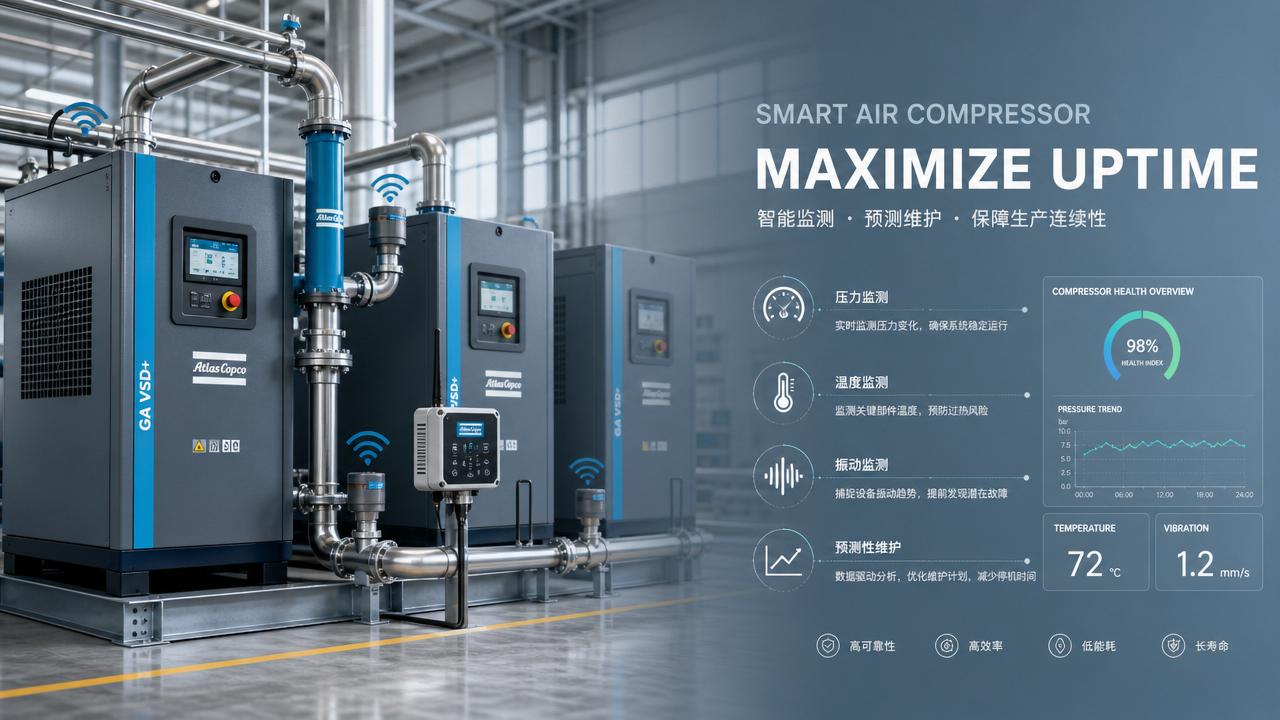
For aftermarket maintenance teams, compressor uptime is no longer shaped by repairs alone. Industrial digitalization is changing how failures are detected, how service is scheduled, and how spare parts are managed across complex operations. By turning equipment data into actionable insight, it helps reduce unexpected downtime, improve response speed, and support more reliable maintenance decisions in demanding industrial environments.
The core search intent behind industrial digitalization in this context is practical, not theoretical. Maintenance readers want to know how digital tools improve compressor uptime, what problems they solve first, and whether the results justify the effort.
For aftermarket teams, the biggest concerns are usually straightforward: fewer emergency breakdowns, faster fault diagnosis, better parts availability, lower service costs, and clearer maintenance priorities across multiple compressors, sites, or operating conditions.
The most useful content, therefore, is not a broad overview of digital transformation. It is guidance on how digitalization changes daily maintenance work, which signals matter most, what systems create measurable uptime gains, and where implementation can fail.
This article focuses on those questions. It explains where industrial digitalization delivers real value for compressor uptime, what maintenance teams should track, and how to evaluate digital initiatives without getting lost in technology language.
Why compressor uptime is now a data problem as much as a repair problem
For many plants, compressor downtime still triggers a familiar cycle: operators notice unstable pressure, maintenance investigates, a technician isolates the fault, and spare parts are ordered after the issue is already affecting production.
That reactive model is expensive because compressed air and gas systems often support critical equipment downstream. When a compressor fails unexpectedly, the true cost includes production loss, delayed shipments, overtime labor, and secondary equipment stress.
Industrial digitalization changes this model by making compressor condition visible before failure becomes obvious. Instead of waiting for alarms or shutdowns, teams can track patterns in vibration, temperature, pressure stability, motor load, dew point, and run hours.
This matters because many compressor failures do not begin as sudden events. They begin as small deviations: rising discharge temperature, unstable current draw, shortened load-unload cycles, increasing condensate issues, or gradual pressure drop across filters.
Without digital visibility, these weak signals are easy to miss during routine rounds. With connected monitoring and historical trend data, maintenance teams can separate normal variation from emerging failure patterns and act earlier.
In simple terms, industrial digitalization improves uptime because it helps teams intervene at the point where action is still planned, not forced. That shift from reactive repair to informed prevention is the main operational value.
What industrial digitalization actually looks like in compressor maintenance
For aftermarket service personnel, industrial digitalization does not need to mean a full smart factory program. In compressor environments, it usually begins with connected assets, condition monitoring, service records, and decision support tied to real equipment behavior.
The first layer is data capture. Sensors and controllers collect operating information such as suction and discharge pressure, oil temperature, bearing temperature, vibration, motor amperage, energy consumption, air quality indicators, and runtime by load state.
The second layer is connectivity. Data moves from the compressor or local controller into a supervisory platform, CMMS, cloud dashboard, or service portal where trends can be reviewed remotely by plant teams or external support partners.
The third layer is interpretation. Software applies thresholds, rule-based alerts, historical baselines, or predictive models to identify anomalies. This is the point where raw numbers become maintenance insight rather than just more screens to monitor.
The fourth layer is workflow integration. Alerts only improve uptime when they trigger action: creating a work order, assigning inspection steps, checking spare stock, scheduling a technician, or escalating a risk before the compressor reaches failure condition.
When these layers work together, digitalization becomes useful to maintenance teams because it shortens the path from symptom to response. It replaces guesswork with evidence and reduces the delay between a developing issue and a planned intervention.
Which compressor problems digital tools can help detect earlier
Aftermarket teams often ask a fair question: what kinds of failures can digitalization actually help prevent? The answer is not every failure, but many of the most disruptive compressor issues leave measurable traces before shutdown occurs.
Bearing wear is a common example. Rising vibration, temperature drift, and changes in load behavior can signal deterioration before severe damage happens. Early detection creates time for inspection, lubrication review, alignment checks, or planned replacement.
Filter blockage is another high-value case. Pressure differential trends can show when filters are restricting flow beyond acceptable limits. That allows maintenance to replace elements based on condition and impact, not only fixed intervals.
Cooling problems also become easier to catch. A slow rise in operating temperature may indicate fouled coolers, poor ventilation, fan issues, or lubrication degradation. If seen early, the repair is usually far less disruptive than a thermal trip.
Leaks in air systems, condensate management faults, and unstable pressure control can also be highlighted through trend analysis. These issues may not stop the compressor immediately, but they reduce efficiency and increase long-term mechanical stress.
Oil quality and separator performance are additional areas where digital monitoring can support better timing. Differential pressure, contamination patterns, and temperature behavior can reveal declining performance before output quality or reliability suffers.
Even cycling behavior matters. Excessive starts, short load-unload intervals, or unexpected idle time can indicate control issues, system mismatch, storage problems, or demand instability that affects compressor life and service frequency.
The point is not that software magically prevents every breakdown. The value is that industrial digitalization helps reveal developing faults while maintenance still has options. More options usually mean better uptime, safer intervention, and lower total repair cost.
How digitalization changes everyday work for aftermarket maintenance teams
One reason compressor digitalization matters is that it changes daily service decisions, not just long-term strategy. For maintenance teams, the benefit is often operational clarity rather than technology for its own sake.
Remote visibility reduces the need to wait for site reports that may be incomplete or delayed. A technician or service coordinator can review performance trends before arriving, bringing the right tools, likely spare parts, and a more accurate fault hypothesis.
This improves first-time fix rates. When a team knows whether the issue points to overheating, pressure instability, excessive vibration, or control irregularity, troubleshooting becomes narrower, faster, and less dependent on trial and error.
Scheduling also improves. Instead of servicing every compressor strictly by calendar, teams can prioritize units showing actual stress, degraded performance, or unusual behavior. That is especially useful when labor resources are limited across several sites.
Documentation becomes stronger as well. Digital service histories connect alarms, inspections, replaced components, operating conditions, and repeat events. Over time, that record helps identify recurring causes rather than just repeating the same repair sequence.
Communication with plant operators also becomes easier. Instead of vague warnings, maintenance can show trend data and explain why a shutdown window is recommended. Evidence often leads to faster approval for intervention and less friction between teams.
For organizations supporting customers after installation, digitalization can also improve service contracts. Teams can move from generic maintenance promises to measurable support based on response time, equipment condition, and uptime risk visibility.
Where the uptime gains usually come from
When people hear industrial digitalization, they sometimes expect one dramatic result. In practice, compressor uptime gains usually come from several smaller improvements that reinforce each other across the maintenance process.
The first gain is earlier detection. If teams can identify abnormal behavior days or weeks before failure, they avoid emergency outages and reduce the chance that minor damage spreads into major mechanical failure.
The second gain is faster diagnosis. Historical trends, alarm context, and operating comparisons help teams narrow probable causes quickly. Less time is wasted on inspection steps that do not match the actual fault pattern.
The third gain is better planning. When issues are visible in advance, maintenance can coordinate shutdown windows, labor allocation, access permits, and spare parts delivery. Planned work is usually shorter, safer, and more effective than reactive work.
The fourth gain is stronger spare parts readiness. Digital service data helps identify which components fail most often under specific operating profiles. That makes it easier to set smarter inventory levels and reduce delays caused by missing critical parts.
The fifth gain is improved asset usage. Performance data may show that one compressor is overloaded while another is underused, or that sequencing logic is increasing wear. Correcting those conditions can extend service life and reduce unplanned interventions.
Energy efficiency can also support uptime indirectly. Compressors running inefficiently often operate hotter or harder than necessary. When digital systems expose waste, they also highlight conditions that may shorten component life if left unresolved.
For maintenance leaders, the key point is that uptime improvement does not come from dashboards alone. It comes from better decisions made earlier, with better evidence, and followed by action that is easier to plan and execute.
What maintenance teams should monitor first
Not every compressor operation needs a complex analytics platform on day one. For many aftermarket teams, the best results come from starting with a focused set of health indicators tied to known failure modes.
Begin with the variables that most directly affect reliability: discharge temperature, pressure behavior, vibration, motor current, lubricant condition, run hours, start frequency, and alarm history. These signals often reveal trouble earlier than visual inspection alone.
Next, connect those signals to maintenance thresholds that reflect your equipment and operating context. Generic alarm settings are useful, but they are less valuable than limits based on actual historical performance and site conditions.
It is also important to distinguish between equipment data and system data. A compressor may appear healthy while the broader air system shows leaks, poor storage balance, pressure instability, or inappropriate sequencing that still harms uptime.
Maintenance teams should also monitor service workflow metrics. Examples include mean time to acknowledge alarms, mean time to diagnose, first-time fix rate, emergency callout frequency, and repeat fault incidence after service.
These indicators matter because industrial digitalization is not only about machine condition. It is also about how effectively the organization responds to machine condition. Good monitoring with poor execution will not deliver the expected uptime benefit.
Common implementation mistakes that limit value
Many companies invest in connected equipment but see disappointing results because the maintenance process never changes. The most common mistake is collecting data without assigning ownership, response rules, or practical service actions.
Another problem is over-monitoring. When teams receive too many alerts without clear prioritization, genuine risks are buried in noise. Alarm fatigue can quickly undermine trust in the system and push people back toward reactive habits.
Poor data quality is another issue. Faulty sensors, missing baselines, inconsistent naming, and disconnected records make analysis unreliable. Maintenance teams need confidence that digital signals reflect real operating conditions before acting on them.
Some projects also fail because they focus too heavily on software features while ignoring technician usability. If dashboards are difficult to interpret or disconnected from service workflows, they become reporting tools rather than uptime tools.
Another frequent mistake is ignoring change management. Technicians, planners, and operators need shared procedures for escalation, verification, and intervention. Without process alignment, digitalization creates visibility but not consistent response.
Finally, organizations sometimes expect predictive maintenance immediately. In reality, value often begins with better condition monitoring and structured service data. Advanced prediction becomes more credible after the basics are stable and trusted.
How to judge whether digitalization is worth the effort for your compressor fleet
For maintenance-focused readers, the right question is not whether industrial digitalization is fashionable. It is whether it can reduce real downtime, service disruption, and avoidable cost in the compressor environments you support.
Start by looking at your current pain points. If breakdowns are frequent, diagnosis is slow, sites are spread out, spare parts are often missing, or repeat failures occur without clear root causes, digitalization likely has strong practical value.
Next, estimate where uptime losses happen most. Is the main issue emergency shutdowns, slow troubleshooting, unstable operating conditions, or weak maintenance planning? The answer will determine which digital tools deserve priority.
Also review equipment criticality. A digitally connected approach offers the greatest return where compressors support essential production, continuous processes, clean air requirements, or customer environments where service delays are costly.
It is wise to begin with a pilot on a limited group of assets. Choose compressors with known maintenance history, measurable downtime impact, and enough operational variation to generate useful trend data.
Success should be judged with practical metrics: fewer unplanned stoppages, faster response, fewer repeat repairs, improved planned maintenance ratio, reduced emergency parts orders, and better service scheduling accuracy.
If those improvements appear, digitalization is doing its job. If not, the issue may not be the concept itself, but rather data quality, threshold design, workflow discipline, or lack of alignment between monitoring and maintenance action.
Conclusion
What industrial digitalization means for compressor uptime is ultimately simple: it gives aftermarket maintenance teams earlier visibility, better diagnostic context, and more control over how and when they intervene.
Its value is not in abstract transformation language. Its value is in preventing avoidable failures, improving first-time fixes, organizing spare parts and labor more effectively, and helping compressors stay available in demanding operating conditions.
For maintenance professionals, the strongest approach is practical and phased. Start with critical assets, monitor the failure signals that matter most, connect alerts to real service workflows, and measure results in uptime terms.
When done well, industrial digitalization does not replace maintenance expertise. It strengthens it. It helps experienced teams make better decisions faster, which is exactly what compressor uptime depends on today.
Related News
- How to Use an Air Compressor Selection Chart to Size CFM, PSI, and Tank CapacityTime : Aug 06, 2026
- How to Choose Compressed Air Equipment for Automation Based on Load, Speed, and Duty CycleTime : Jul 23, 2026
- How to Improve Compressed Air System Efficiency: 7 Loss Points to Check FirstTime : Jul 13, 2026