
Industrial productivity gains often start with air valves

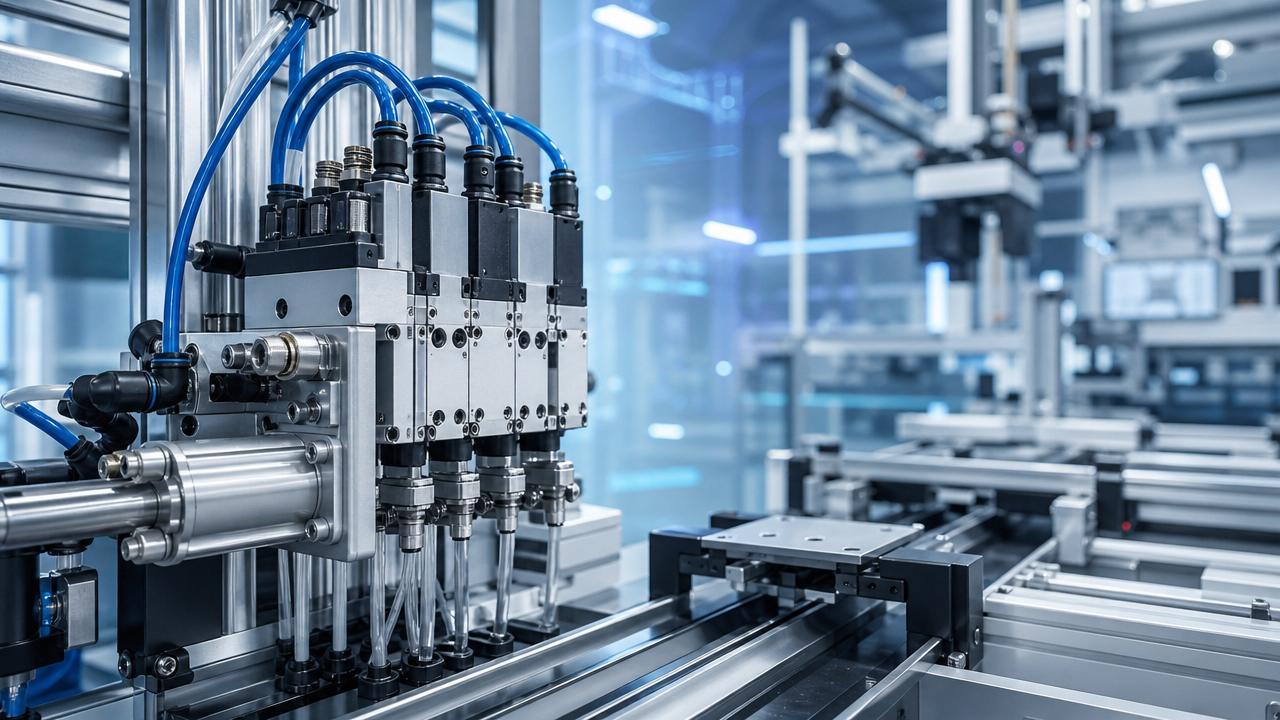
Industrial productivity often improves through small but critical components, and air valves are a prime example. In automated lines, valve speed, airflow stability, and sealing integrity shape output more than many teams expect.
When an air valve reacts too slowly, leaks under pressure, or sticks during cycling, the result is not only lost air. It can mean missed takt time, unstable motion, uneven quality, and avoidable downtime.
That is why industrial productivity gains often start with air valves. They sit quietly inside broader systems, yet they influence reliability, energy use, maintenance frequency, and automation safety every day.
Across the wider industrial landscape, this topic matters far beyond pneumatic specialists. It connects machine design, electrical control, tooling performance, mold handling, assembly precision, and line efficiency.
Why air valves are becoming a sharper industrial productivity lever
A major trend in modern production is the move toward faster, denser, and more connected automation. As cycle times tighten, component-level delays become easier to measure and harder to ignore.
In older lines, compressed air systems were often treated as background utilities. Today, they are increasingly managed as performance assets that directly affect industrial productivity and operating cost.
Several signals explain this shift. Plants now collect more machine data. Energy prices remain volatile. Quality tolerances are narrower. Unplanned stops are costlier in synchronized production environments.
As a result, air valves are no longer judged only by basic function. They are evaluated by response consistency, service life, contamination resistance, diagnostics potential, and compatibility with digital control strategies.
The trend is driven by measurable pressure points on the factory floor
Industrial productivity improves when repetitive motion becomes stable, energy loss falls, and recovery from disturbances gets faster. Air valves influence all three conditions at once.
These pressures explain why air control hardware receives renewed attention. In many cases, a modest valve upgrade delivers a faster industrial productivity return than larger capital changes.
Response speed is now tied to line economics
Milliseconds matter when repeated thousands of times per shift. Faster switching improves actuator synchronization, shortens dead time, and reduces the hidden losses that accumulate inside routine motion.
Flow stability is replacing oversized design habits
Older systems often compensated with extra pressure or oversized components. Newer strategies focus on balanced flow, controlled exhaust, and right-sized valve performance for better industrial productivity.
Where air valves change outcomes across industrial operations
The influence of air valves extends across mixed industrial environments. Their value is not limited to one machine type or one production discipline.
- Assembly stations benefit from repeatable clamp and release timing.
- Packaging lines rely on accurate pneumatic motion for speed and product handling.
- Mold and die handling systems need stable force and reliable actuator sequencing.
- Electrical and hardware production lines depend on clean, consistent automation steps.
- Test fixtures use valves to maintain repeatable pressure and cycle control.
In each case, industrial productivity improves when motion becomes predictable. Predictability reduces minor stops, rework, premature wear, and operator intervention.
There is also a quality dimension. Unstable pressure delivery can affect seating force, press timing, part positioning, and transfer accuracy. These issues may appear small, but they scale quickly.
Hidden valve issues often appear as unrelated production problems
Many recurring faults are traced first to sensors, tooling, or PLC logic. Later investigation often shows contamination, internal leakage, or delayed spool movement inside the valve system.
That pattern matters because it changes improvement priorities. Better diagnostics around air valves can unlock industrial productivity gains that would otherwise remain hidden behind symptom-based troubleshooting.
What deserves closer attention when evaluating air valve performance
Not every valve issue is solved by selecting a premium unit. Performance depends on matching valve characteristics to application demands, environmental conditions, and maintenance discipline.
- Switching response under actual load, not only catalog conditions.
- Flow coefficient and pressure drop across the full duty range.
- Seal material suitability for temperature, oil, moisture, and contaminants.
- Cycle life under real operating frequency.
- Manual override design and maintenance accessibility.
- Compatibility with fieldbus, sensors, or centralized diagnostics.
- Safe exhaust and fail-state behavior during power loss.
These points shape industrial productivity more than brand labels alone. A well-matched valve protects uptime, while a poorly matched one can quietly weaken an otherwise modern line.
The next productivity gains will come from integration, not isolated parts
The strongest trend is not simply better valves. It is better integration between pneumatic hardware, electrical control, machine data, and maintenance planning.
This integrated view supports industrial productivity because it treats compressed air control as part of the production system, not as a separate utility concern.
Why this matters for broader industrial competitiveness
In global manufacturing, competitiveness often depends on small improvements repeated at scale. Air valves fit that pattern because they affect time, quality, energy, and reliability simultaneously.
For sectors connected through hardware, electrical systems, tooling, and molds, these improvements reinforce each other. Better pneumatic control supports more stable tooling use and cleaner automated handling.
How to judge the opportunity before making changes
A useful starting point is to identify whether valve-related losses are visible or hidden. Many industrial productivity issues appear as slow drift rather than sudden failure.
- Map stations with frequent minor stops, timing drift, or pressure instability.
- Compare actual cycle performance with valve response requirements.
- Inspect contamination sources, air preparation quality, and leakage patterns.
- Review whether legacy sizing still fits present throughput goals.
- Prioritize changes where downtime, scrap, and air loss overlap.
This approach keeps decisions practical. It links valve selection and maintenance choices directly to industrial productivity outcomes rather than abstract technical preferences.
Industrial productivity gains often start with air valves because they shape the basic rhythm of automated work. When airflow is stable and response is repeatable, the entire line performs more confidently.
For organizations following industrial technology and component trends, the lesson is clear. Watch the small control points inside larger systems. They often hold the fastest route to measurable improvement.
GHTN continues to track how granular component choices influence industrial productivity across hardware, electrical, and tooling ecosystems. The next step is simple: evaluate pneumatic control where output still feels harder than it should.
Related News