
Vietnam to Require Vietnamese QR Labels on Imported Pneumatic Valves

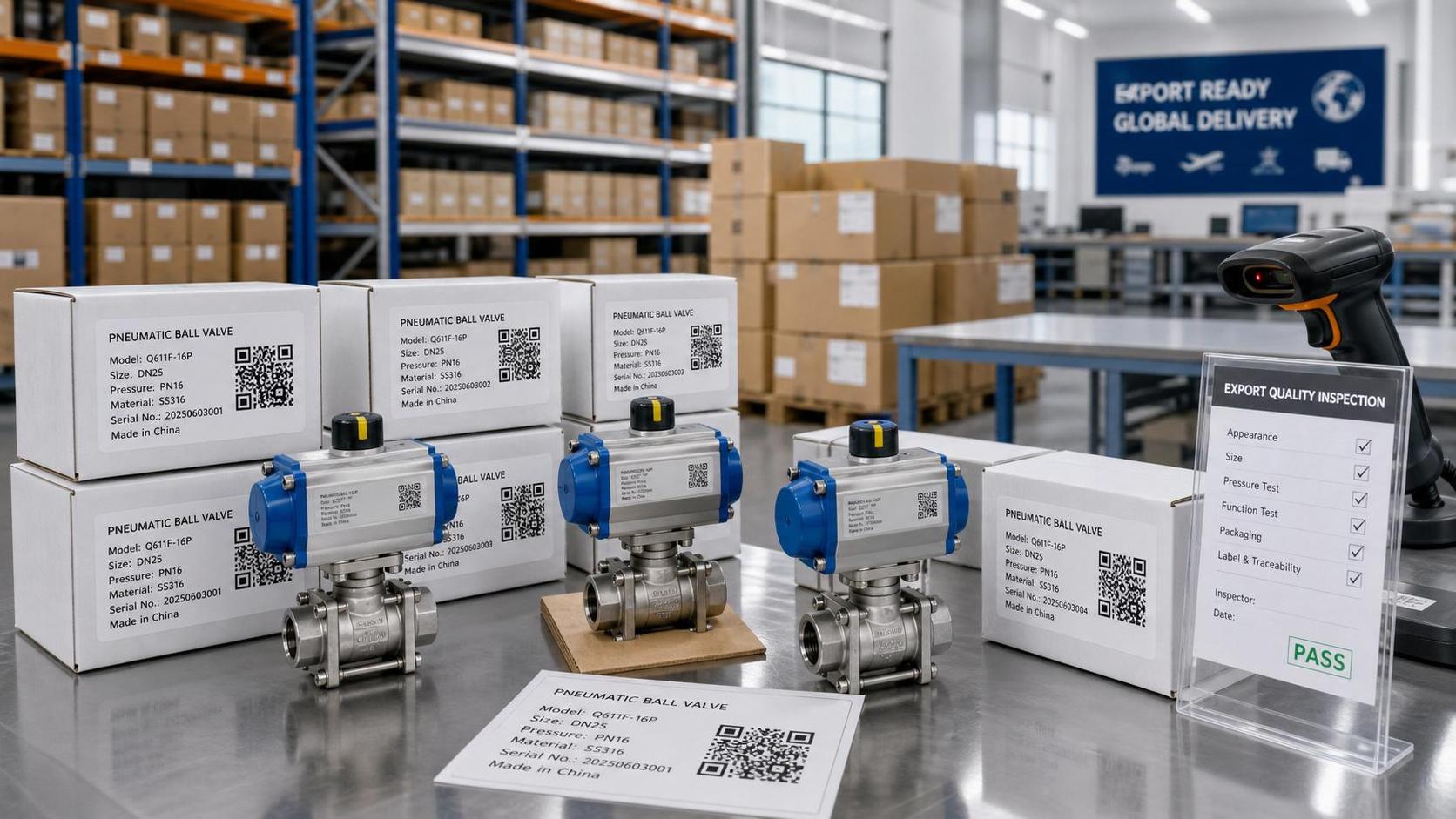
Vietnam’s latest import control for pneumatic valves has moved from a general compliance expectation to a concrete market-entry requirement. Effective from August 2026 under a notice that took effect on July 14, 2026, imported pneumatic valves must carry a dynamic QR code label in Vietnamese at the smallest sales unit and be connected to the national traceability system VTRAC. For Chinese exporters, importers, distributors, and supply chain service providers serving the Vietnam market, this is worth close attention because the rule directly affects customs clearance, labeling preparation, product traceability, and delivery execution.
A New Labeling and Traceability Requirement Is Now Defined
According to the information provided, Vietnam’s Ministry of Industry and Trade (MOIT) brought Notice No. 22/2026/TT-BCT into effect on July 14, 2026. The notice requires all imported pneumatic valves to carry a dynamic QR code label on the smallest sales unit. The label must include product information in Vietnamese, the country of origin, and a declaration of conformity. The rule also requires connection to Vietnam’s national product traceability system, VTRAC.
The measure applies to pneumatic valves exported from China to Vietnam. Products without the required label will be detained at the port, and a penalty of 20% of the cargo value will apply.
Where the Immediate Pressure Falls Across the Trade Chain
Export shipments now face a packaging-level compliance checkpoint
From an industry perspective, exporters are likely to feel the impact first because the requirement is tied to the smallest sales unit rather than only outer packaging or shipment documents. That means compliance is no longer limited to paperwork at the border; it extends into product labeling, packaging workflows, and shipment readiness before goods move.
What deserves closer attention is whether export teams have aligned Vietnamese-language product information, origin statements, and conformity declarations with the labels actually used on each sales unit. Even where the product itself is technically unchanged, the delivery process may be affected if labeling is not prepared in time.
Importers and distributors face higher clearance and inventory risk
For importers and local distribution channels, the practical risk lies in port detention and the stated penalty for non-compliant goods. Analysis shows that this shifts part of the commercial risk from a back-office regulatory issue into a direct inventory and delivery issue. Goods that cannot clear on time may affect handover schedules, warehouse planning, and downstream order commitments.
These parties should pay attention to whether incoming products are already prepared for the Vietnamese QR code requirement and whether traceability connection through VTRAC has been arranged before shipment arrival. The rule matters not only at the import point but also for onward circulation once products enter the domestic market.
Supply chain and service providers may need tighter document coordination
Logistics coordinators, customs service providers, and other trade support firms may also be affected because the new requirement links physical labeling with traceability system access. Observably, this creates a stronger need for coordination between exporters, packaging teams, import compliance staff, and customs-facing service partners.
The main concern here is not only whether a shipment has the right documents, but whether the label content, origin presentation, conformity statement, and traceability connection are consistent enough to support clearance and delivery without interruption.
What Companies Should Review Before Shipments Move
Check whether label preparation is built into order execution
Analysis shows that companies shipping pneumatic valves to Vietnam should treat the QR code label as part of order execution rather than as a last-step customs attachment. Because the requirement applies at the smallest sales unit, businesses should review how product units are packed, labeled, and released for export.
Review the conformity statement and product information workflow
What deserves closer attention is the internal process used to prepare Vietnamese-language product information, country-of-origin wording, and the declaration of conformity. If these elements are prepared by different teams or external suppliers, inconsistencies may create avoidable trade risk even before any technical product issue arises.
Watch for implementation language around VTRAC connection
The provided information confirms that products must connect to VTRAC, but it does not provide detailed operating steps, submission procedures, or enforcement practice. It is therefore more appropriate to understand this as a live compliance requirement with execution details that still need continued verification. Companies should watch for later official wording, operational instructions, or market practice that clarifies how this connection is expected to be completed in real transactions.
Adjust delivery timing and customer commitments conservatively
Given the stated risk of port detention and a 20% cargo-value penalty for unlabeled goods, exporters and buyers may need to review shipping schedules, acceptance timing, and delivery commitments for Vietnam-bound orders. This is especially relevant where labeling is handled late in the process or where multiple parties share responsibility for packaging and trade compliance.
How This Change Is Best Understood at This Stage
Observably, this development is more than a policy signal and less than a fully transparent operating framework. It already sets a clear compliance threshold for imported pneumatic valves entering Vietnam, especially for China-to-Vietnam trade. At the same time, the information provided does not establish how all implementation details will be interpreted in practice across labeling review, VTRAC connection, and port-side enforcement.
From an industry perspective, the most useful reading today is that this is an execution-facing rule change with immediate commercial implications. The market does not need to wait for a broader policy trend to recognize its relevance, because the stated detention and penalty mechanism already ties compliance directly to shipment release.
A Practical Signal for Trade, Not Just a Formal Rule Update
In summary, the Vietnam measure should be read as a concrete compliance change affecting how pneumatic valves are labeled, traced, and delivered into the market. Its significance lies not in abstract regulatory language, but in the fact that labeling at the smallest sales unit and connection to VTRAC are now linked to import access and port risk.
Current analysis suggests this is best understood as an implemented trade-control signal that companies should act on, while continuing to monitor how enforcement language, operational interpretation, and market response develop in practice.
Basis of This Article and What Still Needs Verification
This article is based on the user-provided news title, event date, and event summary. For developments of this type, commonly relevant source categories include official notices, releases from regulatory authorities, customs or trade administration information, industry association updates, standard-setting documents, and reporting from authoritative media. A specific official source link was not provided in the input, so continued verification remains necessary.
Further attention should remain on any later clarification of policy details, compliance interpretation, certification-related wording, tender or procurement document changes, industry feedback, and how companies are implementing the requirement in actual export and import operations.