
Greening industrial components starts with better materials

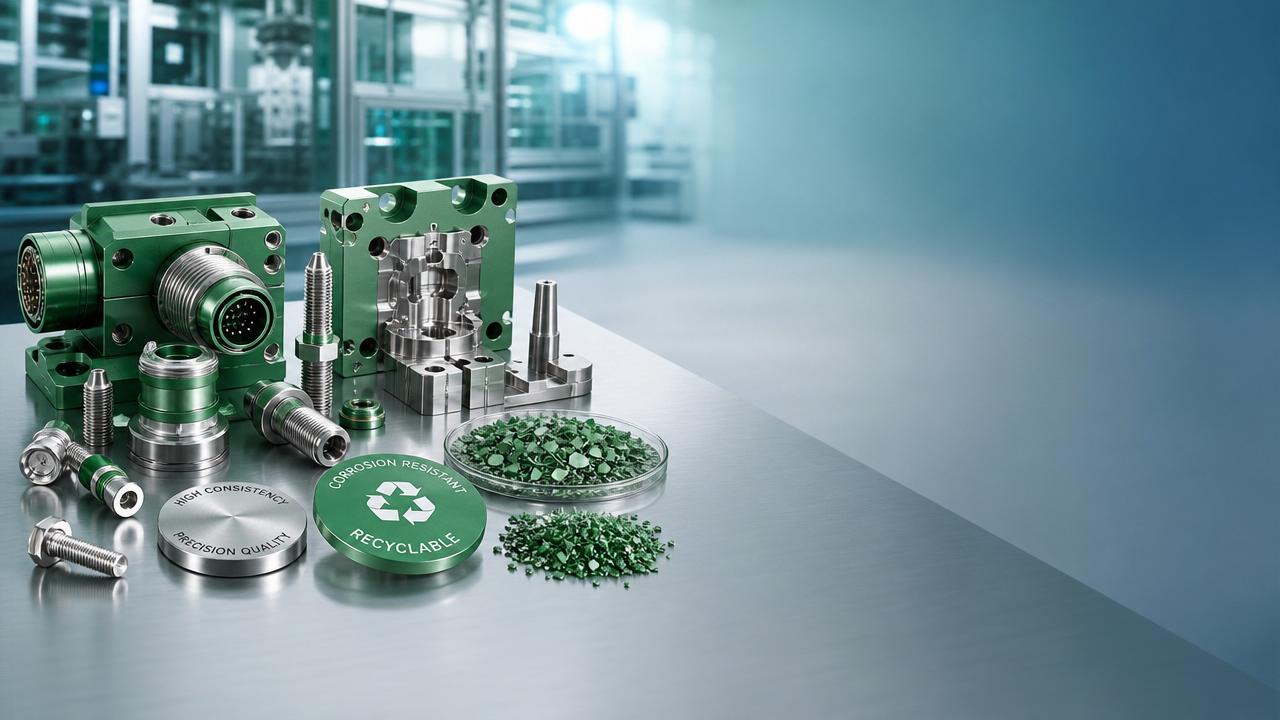
Greening industrial components starts long before production scales—it begins with smarter material choices, tighter engineering standards, and supply chains built for resilience. For business decision-making, greening industrial components has moved beyond corporate messaging. It now shapes compliance readiness, lifecycle cost, export access, and long-term industrial competitiveness. Better materials can reduce waste, improve durability, and support a stronger value proposition across hardware, electrical, and tooling ecosystems.
Material choices are becoming the first signal of industrial transition
Across the broader industrial landscape, the pressure to decarbonize is reaching deeper into base components. Fasteners, connectors, housings, dies, inserts, seals, and conductive parts are under closer scrutiny.
This shift matters because small components appear in very large volumes. A minor change in alloy design, recycled content, coating chemistry, or service life can reshape total environmental impact.
Greening industrial components increasingly means selecting materials that balance strength, machinability, corrosion resistance, conductivity, and recoverability. Sustainability only works when performance remains reliable in real operating conditions.
For industrial networks such as GHTN, this transition is especially important. Component-level insight helps connect materials science with tooling efficiency, compliance trends, and practical trade decisions.
The current trend is clear: lower-impact materials now influence market access
The market no longer views greener materials as a niche upgrade. In many segments, they are becoming an entry condition for new projects, supplier qualification, and cross-border commercial acceptance.
Electrical components face stricter attention on hazardous substances, traceability, and thermal performance. Mechanical parts are judged more often on service life, repairability, and embodied carbon.
Tooling and mold applications also show a notable shift. Longer tool life, lower scrap rates, and improved process stability are now linked to greening industrial components, not treated as separate objectives.
This trend is reinforced by customer audits, green procurement frameworks, carbon disclosure expectations, and growing interest in circular manufacturing systems.
Visible trend signals across industrial categories
- Higher demand for recycled metals with certified composition control
- Replacement of high-risk surface treatments with safer alternatives
- More specifications focused on durability rather than lowest unit price
- Greater preference for materials that support remanufacturing and recycling
- More supplier reviews tied to energy intensity and process transparency
Why greening industrial components is accelerating now
Several forces are driving the adoption of better materials. They come from regulation, technology, economics, and supply chain risk management at the same time.
The key point is practical. Greening industrial components is accelerating because better materials can now solve operational problems while also supporting sustainability targets.
Better materials are redefining value in hardware, electrical, and mold systems
In hardware applications, advanced steels, aluminum variants, engineered polymers, and recycled metals can improve strength-to-weight balance and reduce downstream processing losses.
In electrical systems, material selection affects conductivity, heat resistance, insulation stability, and compliance confidence. Lower-impact compounds are gaining interest when they maintain safety and operating consistency.
In mold manufacturing, substrate quality and coating strategy determine cycle efficiency, tool wear, and defect rates. Greening industrial components in this context often means fewer replacements and more stable output.
Where the impact becomes measurable
- Lower reject rates from improved material consistency
- Reduced maintenance frequency due to better wear resistance
- Lower coating risk from cleaner chemistry choices
- Improved recyclability at product end-of-life
- Better reporting quality for ESG and customer audits
The biggest shift is from unit price thinking to lifecycle judgment
A low-cost component can become expensive when failure, rework, corrosion, excess weight, or non-compliance enters the equation. That is why lifecycle logic is becoming central.
Greening industrial components supports this shift by linking material choice to measurable operating outcomes. These include uptime, inspection frequency, warranty exposure, and recovery value after use.
This does not mean every greener material is automatically better. It means decisions should compare total performance across sourcing, fabrication, use phase, and end-of-life handling.
The industrial advantage appears when environmental improvement and engineering efficiency reinforce each other instead of competing for budget.
What deserves close attention in the next phase
The next stage of greening industrial components will be shaped by data quality as much as material innovation. Traceability and verification will matter more in procurement and technical approval.
- Material passports and batch-level traceability
- Embodied carbon comparison at component level
- Safer substitute materials for restricted substances
- Design for disassembly and repair compatibility
- Tooling adaptations for lower-waste production routes
- Regional sourcing strategies for critical materials
GHTN’s industry perspective is especially useful here. Precision components are often overlooked in green transition discussions, yet they strongly influence efficiency, safety, and industrial durability.
A practical response starts with evaluation, not slogans
Organizations seeking progress should begin by mapping which components drive the greatest environmental and operational impact. Focus should stay on high-volume, failure-sensitive, or regulation-exposed parts first.
A measured approach also requires pilot testing. Material substitution should be validated against fatigue, heat, dimensional stability, conductivity, or chemical resistance where relevant.
This is where industrial knowledge platforms create value. Technical trend analysis, standards monitoring, and component-specific trade insight help reduce uncertainty before larger implementation.
Greening industrial components will reward those who align precision with transparency
The direction of travel is unmistakable. Better materials are not only reducing environmental burden. They are improving resilience, supporting certification, and enabling stronger industrial positioning.
Greening industrial components works best when it is treated as a precision discipline. The most durable gains come from evidence-based material selection, realistic application testing, and cleaner process integration.
For businesses navigating hardware, electrical, and mold markets, the next step is clear: review critical components, compare lifecycle performance, and strengthen material transparency across the value chain.
GHTN supports that journey by linking precision with market intelligence. In an era of industrial transition, better materials are becoming the foundation of better competitiveness.
Related News