
Greening industrial operations without slowing output

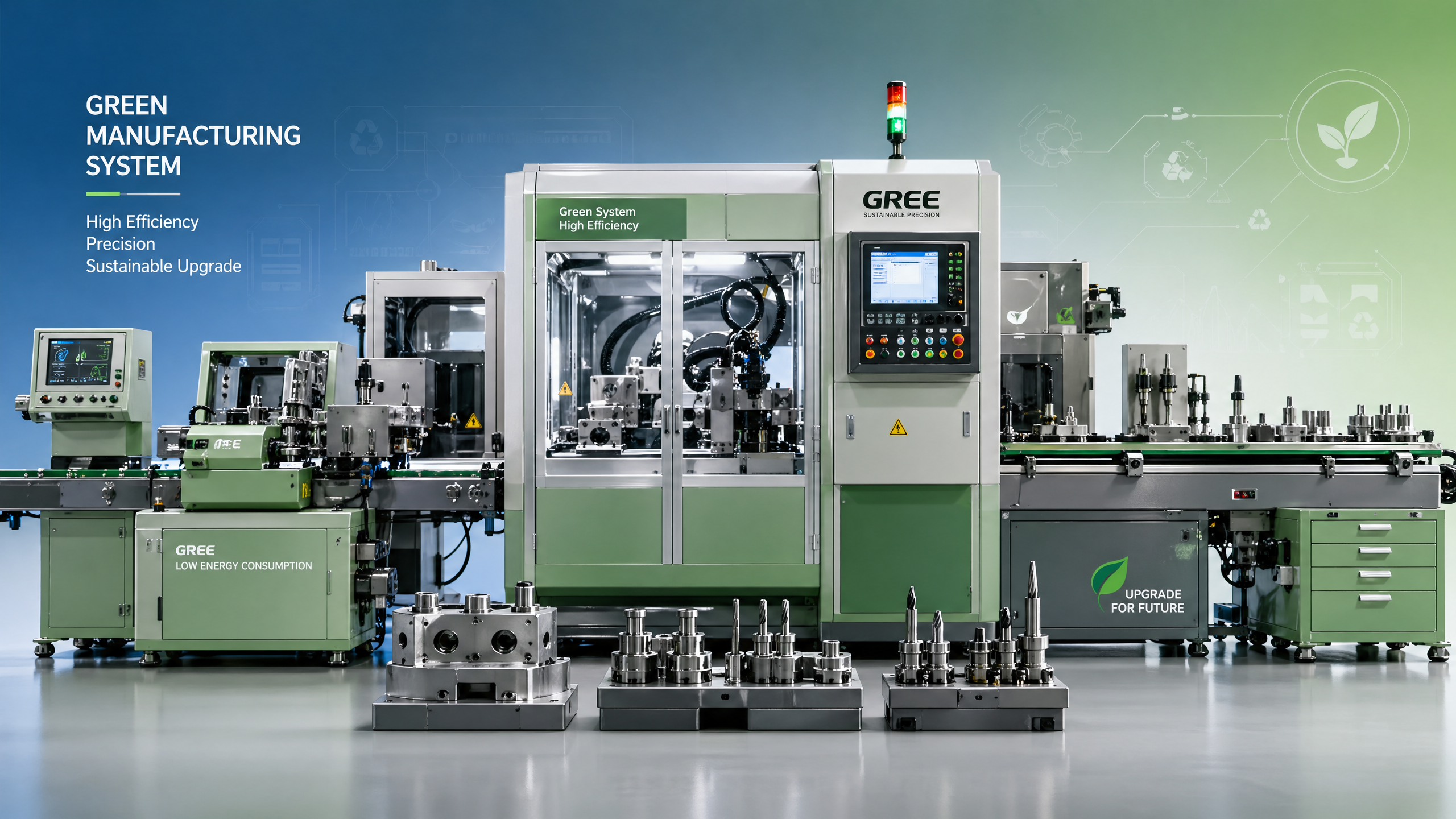
Greening industrial operations no longer means sacrificing speed. Across the hardware sector, manufacturers are advancing industrial greening through greening components, stronger industrial standardization, and smarter manufacturing logic. From micron-level precision in tooling to evolving electrical compliance standards, this shift is reshaping access to the high-end industrial market and strengthening the industrial collaboration network that keeps output, quality, and sustainability aligned.
Why scenario differences matter in greening industrial operations
In practice, greening industrial operations looks very different on a fastener line, an automated electrical assembly cell, and a mold workshop producing short-run precision parts. The same sustainability target can lead to very different technical decisions depending on takt time, material variability, maintenance capacity, and compliance demands. For procurement teams, the wrong assumption often appears in the first 4 to 12 weeks of sourcing, when initial cost seems clear but process-side tradeoffs remain hidden.
This is why a scenario-based view matters more than a generic “green upgrade” narrative. A plant focused on high-volume repeat output may prioritize energy-efficient drives, low-loss pneumatic routing, and longer-life consumables. A facility serving export markets may focus first on electrical compliance standards, documentation readiness, and industrial standardization across suppliers. A precision tool room may start with coolant management, coating selection, and micron-level precision to reduce scrap rather than chase headline energy metrics.
For the Global Hardware & Tooling Network, this is also where the industrial collaboration network becomes practical rather than abstract. Engineers, quality managers, OEM buyers, and distributors rarely need identical answers. They need a way to connect manufacturing logic, greening components, process reliability, and market-entry requirements without slowing throughput or introducing avoidable risk.
Typical questions by role before a green transition
- Operators ask whether cycle time, rework frequency, or machine setup complexity will change during the next 1 to 3 production shifts.
- Technical evaluators look at dimensional consistency, material compatibility, tool wear, and the effect of replacement components on process windows.
- Procurement teams compare total landed cost over 6 to 18 months, not just the unit price on the first purchase order.
- Safety and quality personnel review maintenance intervals, compliance records, traceability, and failure thresholds in normal and extreme environments.
- Decision-makers want to know whether industrial greening helps secure access to the high-end industrial market without disrupting existing customer commitments.
When these perspectives are aligned early, greening industrial projects are more likely to stay within budget, avoid output dips, and produce measurable improvements within one planning quarter instead of becoming an open-ended transformation program.
Three common application scenarios and what each one needs
The most useful way to evaluate greening components is to place them inside realistic production scenarios. Below are three common situations across the hardware sector and related industrial supply chains. Each one has distinct pressure points, so the best green choice is rarely universal.
The table compares core priorities, likely risk areas, and practical upgrade directions. It can help OEM teams, plant engineers, and distributors quickly identify which industrial greening route is likely to support output rather than interrupt it.
A key takeaway is that industrial greening works best when linked to the dominant process constraint. In fast-paced hardware production, even a 3% reduction in unplanned downtime may matter more than a visible packaging change. In electrical assembly, stronger compliance files and standardized interfaces can be more valuable than a marginal material switch. In mold manufacturing, preserving micron-level precision often delivers the most credible green result because fewer rejected parts means lower embodied waste.
Scenario 1: High-volume hardware lines
For plants producing fasteners, stamped hardware, or repeat mechanical components, output speed is usually the first concern. These environments often run multi-shift operations, sometimes 16 to 24 hours per day, which means the most successful greening components are the ones that reduce interruption. Coatings that extend tool life, better chip handling, and more stable material feeds often outperform larger system changes in the short term.
The manufacturing logic here is simple: if a green initiative introduces more changeovers, tighter operator sensitivity, or uncertain wear patterns, output may suffer before benefits appear. This is why many teams begin with consumables, maintenance intervals, and lubrication discipline. Small gains repeated over hundreds of cycles per shift can be more valuable than one large but risky upgrade.
Procurement and quality teams should also watch consistency between batches. In the hardware sector, a greener substitute that behaves differently across humidity ranges, heat conditions, or feed speeds can create hidden costs. A 2-week trial across only one line is often too narrow; a better check spans at least 2 material lots and more than one machine condition.
Scenario 2: Automated electrical assembly
In automated cells handling electrical hubs, connectors, enclosures, or control assemblies, industrial greening is tightly linked to electrical compliance standards and documentation discipline. Here, the risk is not just performance failure. It is also delayed approval, inconsistent supplier records, and field service complications if parts are substituted without standardization.
This scenario benefits from industrial standardization more than almost any other. Common terminal formats, material declarations, stable insulation properties, and thermal management consistency reduce troubleshooting time. For project managers, the most useful metric may be fewer engineering clarifications over a 30 to 90 day launch window rather than an immediate drop in energy use.
Distributors and OEM sourcing teams should ask whether the supplier’s greening components fit existing documentation structures. If updating one part forces revisions across drawings, test plans, user manuals, and regional product files, the total cost may rise. A greener option is only practical when it fits the surrounding compliance ecosystem.
Scenario 3: Precision mold and tooling work
Mold shops and precision tooling operations sit at a different point in the value chain. Their customer promise is often based on surface finish, cavity stability, and repeatability at the micron level. In this environment, industrial greening often begins by reducing wasted machining hours, scrap inserts, coolant consumption, and trial iterations rather than making dramatic line-level changes.
The relationship between micron-level precision and sustainability is direct. If a mold insert holds tolerance more consistently, downstream injection or die-casting processes produce fewer rejects. If a cutting strategy extends edge life by even 10% to 15%, the operation may reduce both tool consumption and machine idle time. This is the kind of manufacturing logic that matters in high-value, lower-volume applications.
Technical evaluators should compare green initiatives against measurable indicators such as rework hours per tool, thermal distortion frequency, and setup corrections per batch. For these workshops, “green” should never be detached from process capability. The most credible path is one that improves precision retention while lowering waste streams over multiple production runs.
How demand differs by user type, project size, and market target
Not every company approaches greening industrial projects with the same time horizon or decision criteria. A contract manufacturer serving several customers may value compatibility and rapid rollout. A brand owner aiming at the high-end industrial market may prioritize traceability, premium positioning, and supplier transparency. SMEs often need a phased route that delivers visible operational gains within one budget cycle.
The table below helps map demand differences across stakeholder groups and project types. It is especially useful for distributors, sourcing teams, and project leads who must translate broad industrial greening goals into practical specifications and supplier discussions.
This comparison shows why one-size-fits-all messaging often fails. For example, a distributor may need a portfolio aligned with industrial standardization so replacement and aftersales remain smooth. A project owner launching a new line may be more concerned with whether greening components can be validated before FAT or SAT milestones. Matching the recommendation to the user type is often more important than claiming the broadest possible benefits.
How export orientation changes priorities
Companies targeting overseas customers or the high-end industrial market often face tighter documentation demands. Even when product design remains stable, supporting files around material declarations, electrical compliance standards, and component traceability may need upgrading. In these cases, industrial greening should be synchronized with market-entry planning rather than treated as a separate engineering task.
A practical approach is to review three layers at once: component performance, documentation completeness, and supplier responsiveness. If one layer is weak, the project can stall. This is where an industrial collaboration network becomes valuable, because access to cross-functional insight reduces the back-and-forth between engineering, sourcing, and channel partners.
For SMEs, the smart route is often staged implementation. Start with components or subassemblies where the process is already stable, verify repeatability over 1 to 2 months, and then expand. This lowers disruption risk while still building a credible green positioning for customer communication.
Practical adaptation checklist: what to confirm before changing components or processes
Before introducing greening components or revising process settings, teams should confirm whether the application is mature enough for change. The most expensive errors usually come from weak front-end checks: unclear tolerances, incomplete maintenance baselines, or missing compliance review. A disciplined pre-check can shorten evaluation time by several weeks.
The checklist below is designed for mixed audiences, including operators, quality staff, sourcing teams, and engineering managers. It focuses on application fit, verification scope, and rollout pacing rather than broad sustainability claims.
Core checklist for scenario fit
- Define the main process constraint first: cycle time, heat buildup, wear, dimensional drift, leakage, or compliance burden.
- Set a validation window of at least 2 to 4 weeks for stable lines, and longer for variable or multi-shift operations.
- Check whether industrial standardization will improve or decline after the change, especially across multiple suppliers or sites.
- Review whether electrical compliance standards or customer documentation require updates before adoption.
- Measure effects on scrap, rework, setup time, and maintenance frequency rather than looking at energy use alone.
- Confirm that replacement parts, sample support, and technical communication can be sustained through the intended purchasing cycle.
This checklist helps avoid a common mistake: selecting a greener material or component in isolation. In real manufacturing logic, a small specification shift can affect fixtures, operator settings, quality thresholds, and aftersales support. The better approach is to evaluate the surrounding process system, not only the item itself.
Common misjudgments to avoid
One misjudgment is assuming that any lower-consumption component automatically supports industrial greening. If it raises rejects or downtime, the total footprint may worsen. Another is assuming that premium markets only care about a green label. In reality, the high-end industrial market often expects documented consistency, reliable lead times, and audit-ready supply records.
A third misjudgment appears in precision environments, where teams may chase broad sustainability messaging but ignore tooling geometry, machine condition, or coolant discipline. In mold and tooling work, those fundamentals often decide whether green gains are real. A project that reduces corrections by 20 minutes per setup can be more valuable than one that changes materials but increases instability.
Finally, do not overlook communication speed across the supply chain. In an industrial collaboration network, delays in specification clarification can offset technical advantages. A supplier or platform that helps connect design intent, sourcing details, and compliance expectations can reduce hidden project friction.
Why informed sourcing and industry intelligence make the difference
Greening industrial initiatives succeed faster when teams can access structured insight across components, tooling, electrical systems, and market requirements. That is especially true in the hardware sector, where small part decisions often have large process consequences. Material grade, coating behavior, tolerance range, and documentation quality all interact with production speed and customer expectations.
GHTN supports this need by focusing on the granular core of industry: the fasteners, tools, electrical hubs, and mold systems that shape manufacturing performance. This perspective is valuable because industrial greening is rarely solved by one department alone. It depends on the shared understanding of engineers, buyers, distributors, and decision-makers working from the same manufacturing logic.
If your team is evaluating greening components, planning a supplier adjustment, or preparing for a more demanding market segment, the right next step is to clarify the application scenario first. From there, it becomes easier to compare options, define test scope, and protect output while moving toward better standardization and sustainability.
Why choose us
The Global Hardware & Tooling Network connects precision manufacturing knowledge with real sourcing and application decisions. Our coverage spans mechanical tools, electrical systems, mold manufacturing, and the industrial collaboration network needed to link hidden specialist suppliers with global demand. That means you can evaluate industrial greening with stronger context, not just isolated product claims.
Contact us if you need support with parameter confirmation, product selection, lead-time evaluation, custom application planning, electrical compliance standards review, sample support, or quotation communication. Whether your priority is micron-level precision, industrial standardization, or entry into the high-end industrial market, we can help you narrow options based on your actual scenario and decision path.
Linking Precision, Tooling the Future starts with a clearer match between your process and your green strategy. If you share your use case, target market, and technical concerns, the next conversation can be more focused, faster, and more useful for both engineering and procurement.
Related News
- mechanical tools
- mold manufacturing
- fasteners
- electrical systems
- industrial supply chain
- hardware sector
- electrical hubs
- die-casting
- industrial standardization
- precision mold
- high-end industrial market
- industrial collaboration network
- electrical compliance
- greening industrial
- industrial collaboration
- greening components
- electrical compliance standards
- industrial greening
- micron-level precision
- manufacturing logic