
Where industrial standardization cuts hidden production costs

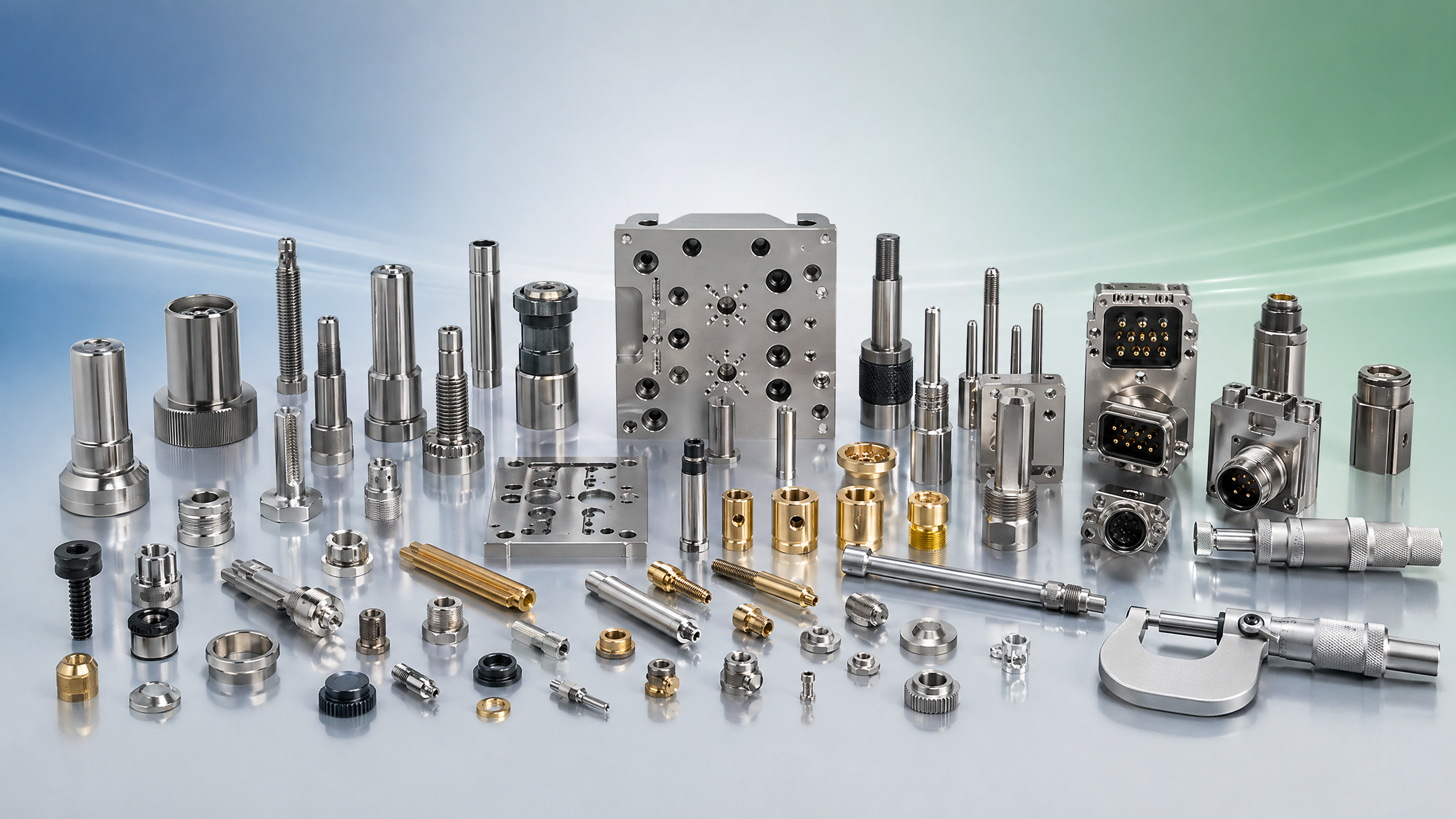
Hidden production costs often stem from weak industrial standardization across the hardware sector. For OEMs, buyers, engineers, and quality leaders, aligning manufacturing logic with electrical compliance standards, micron-level precision, and greening components can unlock measurable gains. This article explores how industrial standardization supports industrial greening, strengthens supply consistency, and helps companies compete more effectively in the high-end industrial market.
Why does industrial standardization reduce hidden production costs more than many teams expect?
Many factories focus first on visible costs such as unit price, freight, labor hours, or energy use. Yet in practice, hidden losses often come from non-standard drawings, inconsistent tolerances, unstable incoming materials, and uneven inspection logic. In the hardware sector, a fastener that varies by only 0.05 mm, a mold insert with poor repeatability, or an electrical part lacking clear compliance mapping can trigger rework, line stoppage, and warranty risk across multiple departments.
Industrial standardization matters because it compresses variation before variation becomes cost. When companies define part specifications, inspection frequency, documentation format, packaging method, and supplier approval criteria in a common system, they reduce decision friction at every service node. Over a 3- to 12-month production cycle, the savings often appear in fewer emergency purchases, shorter changeover time, lower scrap rates, and more reliable lead-time planning rather than in one dramatic line item.
For technical evaluators and project managers, the value is not just process order. Standardization links manufacturing logic to functional output. If the same torque range, coating requirement, or cavity finish standard is applied consistently, production becomes easier to forecast. That is especially important in the high-end industrial market, where OEMs expect not only a conforming part but also repeatable performance over batch sizes of 500, 5,000, or 50,000 units.
Which hidden costs usually come from weak standardization?
The most common cost leaks are operational, not theoretical. They can remain invisible because each loss seems small in isolation, but together they damage margin, delivery, and customer confidence.
- Repeated first-article corrections caused by unclear tolerances or mixed revision control.
- Incoming inspection delays because different suppliers use different labels, test records, or packing methods.
- Assembly inefficiency when operators must adjust tools or fixtures for parts that should have been interchangeable.
- Compliance review costs when electrical compliance standards were not considered early in sourcing.
- Inventory growth due to duplicate SKUs, near-identical parts, or excessive safety stock created by poor confidence in supply consistency.
A useful rule for procurement and quality teams is simple: if a component repeatedly needs special explanation, it is probably under-standardized. That applies to mechanical tools, electrical hubs, mold components, pneumatic parts, and fastening systems alike. In many industrial collaboration network environments, the strongest suppliers are not always the cheapest upfront; they are the ones whose data, tolerances, and delivery discipline reduce total process cost.
A quick FAQ-style view of the cost effect
The table below summarizes how standardization changes cost behavior across common industrial functions. It is useful for decision-makers comparing sourcing models, line managers trying to reduce disruption, and distributors assessing whether a product family is suitable for broader market rollout.
The key lesson is that industrial standardization does not only save inspection minutes. It stabilizes the full chain from design release to after-sales support. That is why it has become a strategic issue in industrial greening and in expansion toward higher-value markets.
Who benefits most from stronger standardization across hardware, electrical, and mold supply chains?
The short answer is that nearly every role benefits, but not in the same way. OEM sourcing teams gain cleaner comparison logic. Operators gain fewer line-side surprises. Quality and safety managers gain better traceability. Distributors gain fewer returns and simpler product communication. For enterprise leaders, the benefit is a stronger bridge between margin control and market credibility.
In the hardware sector, standardization is especially valuable where multi-supplier coordination is common. A production line may combine fasteners, stamped parts, mold-produced housings, electrical terminals, pneumatic fittings, and hand or machine tools from different regions. If each category follows different document norms, packaging logic, and tolerance language, the plant effectively pays a coordination tax every week. A 24-hour delay in one category can idle a line whose final output value is far higher than the component itself.
The same principle applies to aftermarket channels. A distributor serving 20 to 200 industrial customers needs stable product descriptions, usable technical sheets, and reliable replacement logic. Standardized components reduce confusion in reorder cycles and support better service in the high-end industrial market, where users expect documentation quality to match product quality.
How do different stakeholders use standardization differently?
The answer depends on whether the role is operational, technical, commercial, or strategic. The list below helps map decision priorities across a typical industrial collaboration network.
- Information researchers: look for standard terminology, comparable specifications, and market-entry signals.
- Operators and users: want interchangeability, safer use, and fewer adjustments during shifts of 8 to 12 hours.
- Technical evaluators: focus on tolerance bands, material behavior, and micron-level precision where tooling or mold life is critical.
- Procurement teams: compare supplier discipline, lead time ranges, and total lifecycle cost rather than only purchase price.
- Business decision-makers: assess whether standardization supports scale, export readiness, and industrial greening goals.
- Quality and safety leaders: need consistent test records, nonconformance closure, and alignment with electrical compliance standards.
For example, a mold design review may accept a dimensional window measured in microns, while a distribution decision may center on how many SKUs can be consolidated across regional markets. Both decisions rely on standardization, but each uses different indicators. That is why a strong supplier information system should connect engineering detail to commercial usability instead of separating them.
When is standardization most urgent?
It becomes urgent during new product introduction, export preparation, supplier switching, and quality escalation. If a business is moving from one domestic market to 3 or more export destinations, or if it is trying to upgrade from general-use products to the high-end industrial market, standardization becomes less of a best practice and more of a requirement for controlled growth.
Another urgent scenario is automation expansion. As line speed rises and manual adjustment time shrinks, even a small inconsistency in parts, tooling, or electrical interfaces can create a cascade of downtime. In such cases, standardization supports both throughput and industrial greening because stable production usually means fewer rejects, less wasted material, and better energy efficiency per qualified unit.
What should companies check first when evaluating industrial standardization in practice?
A practical review should begin with three linked questions: Are the specifications clear? Are they consistently verified? Are they understood the same way by design, sourcing, production, and quality? If the answer to any one of these is weak, hidden production costs are likely already present. Many businesses discover that the problem is not a lack of standards in theory, but a gap between document control and shop-floor execution.
For component categories such as fasteners, electrical connectors, mold inserts, and pneumatic parts, the first check should cover tolerance definition, material grade, surface treatment, packaging rule, and traceability depth. A standard that does not define revision ownership or acceptance criteria is often too weak to support scale. In many cases, companies need a control window with review intervals of 30, 60, or 90 days rather than a one-time document release.
Technical teams should also consider where micron-level precision is actually necessary and where it is not. Over-specifying every dimension can increase cost without adding function. Under-specifying critical mating features can destroy yield. Strong manufacturing logic means placing precision where performance, safety, or tooling life truly depends on it.
Which evaluation dimensions are most useful?
The following framework can help procurement, engineering, and quality teams evaluate whether a supplier or internal process is ready for more standardized production. It combines technical, operational, and compliance-related factors often overlooked in early sourcing.
This table also shows why standardization is central to greening industrial operations. Fewer defects, fewer expedited shipments, and fewer duplicate parts generally mean lower waste. In that sense, greening components is not only about material substitution; it also includes smarter control over variation and process loss.
What documents and checkpoints should come first?
Start with a simple but disciplined package. At minimum, businesses should confirm controlled drawings, material definitions, acceptance criteria, lot traceability, packaging instructions, and the list of applicable compliance items. For electrical or electromechanical products, early mapping to electrical compliance standards can prevent expensive redesign after tooling or inventory has already been committed.
If a project has custom tooling or molds, add process checkpoints such as first-article approval, cavity or insert verification, preventive maintenance intervals, and wear-monitoring records. In operations where micron-level precision matters, even a 10 to 20 micron drift in a critical feature can affect sealing, fit, flash, or tool life over long production runs.
How does industrial standardization support industrial greening and greener components?
Industrial greening is often discussed in terms of energy-saving equipment, recycled materials, or cleaner surface treatment. Those areas matter, but a quieter driver is process stability. When industrial standardization improves interchangeability and first-pass yield, the factory uses fewer raw materials, less rework energy, and less emergency transport. For many component categories, that is one of the fastest ways to support greening industrial systems without waiting for a full capital upgrade.
Greening components also depends on design discipline. If a part family has ten near-identical versions with minor undocumented differences, waste increases across tooling, inventory, and maintenance. Rationalized standards can reduce SKU complexity by 10% to 30% in some product families, which helps both material efficiency and service efficiency. Less duplication means clearer sourcing, easier replacement, and more consistent recycling or disposal pathways.
Another important link is packaging and logistics. Standard carton quantities, protection methods, pallet logic, and labeling reduce damage and speed warehouse handling. In export-oriented hardware sector supply chains, this can cut repacking, mixed-lot confusion, and unnecessary handling cycles. Industrial greening therefore includes not only what is made, but how components move through the chain.
What are the most practical greening gains from standardization?
For companies seeking realistic progress, the strongest gains usually come from operational improvements that are measurable within one or two quarters rather than from headline projects alone.
- Lower scrap through tighter control of critical dimensions, tool wear, and process windows.
- Less overproduction by standardizing reorder points and approved substitutes.
- Reduced transport waste by improving packaging consistency and shipment consolidation.
- Better component longevity where finish, material, and environment are matched more accurately.
- Stronger compliance planning, reducing the chance of obsolete stock caused by late regulatory discovery.
These benefits are especially relevant in an industrial collaboration network, where many SMEs want to move into higher-value programs but cannot afford repeated quality escapes or complex custom handling. Standardization creates a cleaner path from factory capability to market trust, which is essential for competing in the high-end industrial market.
Does greener always mean more expensive?
Not necessarily. Some greening components strategies do raise material or certification cost, but many savings come from fewer defects, fewer line interruptions, lower packaging waste, and better service life. The right question is not whether industrial greening adds cost at the purchase stage, but whether it lowers total cost across 6 to 24 months of operation, maintenance, and supply support.
For buyers and project leaders, the balanced approach is to compare at least three layers: initial component cost, process impact, and downstream risk. This prevents the common mistake of rejecting a more standardized or greener option because its unit price is slightly higher while ignoring the much larger cost of instability.
What mistakes do companies make when trying to standardize too quickly?
One frequent mistake is forcing uniformity without understanding application differences. A standard should reduce unnecessary variation, not erase functional needs. For example, using one material grade across all environments may look efficient on paper, but can create corrosion, fatigue, or electrical performance issues in the field. Strong manufacturing logic distinguishes between standard core rules and justified exceptions.
Another mistake is treating documentation as the whole solution. A company may publish standards, yet still suffer high defect rates because operator training, gauge control, supplier communication, or packaging discipline are weak. If shop-floor reality does not match the document system within 30 to 60 days of rollout, the standard has not truly landed.
A third mistake is ignoring market-facing impact. In the high-end industrial market, buyers often evaluate technical response speed, revision control, and compliance readiness as part of supplier quality. If standardization is done only for internal convenience and not for customer usability, the business may still struggle to scale internationally.
Which warning signs show that a standardization program is off track?
These warning signs appear often across hardware, electrical, and mold-related operations:
- Teams still rely on verbal explanations to clarify routine specifications.
- Different plants or suppliers use different names for the same part family.
- Inspection records cannot be compared across lots or regions.
- Electrical compliance standards are reviewed only after tooling or purchase commitment.
- Quality escapes repeat even though a formal standard already exists.
If two or more of these signs are present, the business should revisit not only the standard itself but also the governance around it. For many teams, the best correction is to simplify the first control layer: define what is critical, what is preferred, and what is optional. That helps suppliers, distributors, and internal users act with less ambiguity.
How can companies standardize without slowing innovation?
The practical answer is modular standardization. Keep stable rules for interfaces, materials, test methods, and documentation, while leaving room for innovation in geometry, process refinement, or application-specific performance. This is especially relevant where mold development, precision tooling, or custom electrical assemblies are involved. The goal is to protect repeatability while still allowing targeted advancement.
When done well, modular standardization actually accelerates innovation because engineers spend less time resolving preventable variation. Their effort can shift toward higher-value work such as improving cycle time, enhancing tool life, strengthening greening industrial outcomes, or developing product lines with stronger export potential.
If a company wants to act now, what should it ask before sourcing, upgrading, or partnering?
The first step is not to ask for a quote alone. It is to clarify the technical and commercial baseline. That includes part function, operating environment, tolerance level, expected annual volume, compliance requirements, packaging needs, and target lead time. In many industrial projects, a 2-week misunderstanding at the start creates a 2-month delay later through redesign, sample revision, or logistics correction.
For OEMs, distributors, and project owners, it is useful to align on whether the need is standard catalog supply, modified standard supply, or custom development. This single distinction affects tooling route, sample timing, inspection depth, and documentation load. It also changes how industrial standardization should be applied, especially where micron-level precision or electrical compliance standards are involved.
A reliable partner should be able to discuss the full logic chain: component function, process capability, risk points, compliance mapping, and market-entry implications. That is where an expert-driven industrial collaboration network can add real value. It connects technical depth with sourcing efficiency instead of leaving buyers to interpret fragmented data alone.
Why choose us for standardization-focused industrial sourcing insight?
GHTN focuses on the granular core of manufacturing: hardware, electrical systems, mold processes, and the precision logic that links them. Our perspective is built around real manufacturing logic, practical trade insight, and the need to connect hidden champion capabilities with global demand. We pay attention to both micron-level precision and commercial usability, helping industrial buyers and decision-makers see where hidden cost really begins.
Because standardization, industrial greening, and market access are increasingly connected, we help readers and partners evaluate more than one variable at a time. That includes greening components choices, hardware sector sourcing routes, applicable electrical compliance standards, and the operational impact of process variation. The result is a clearer path for companies moving toward more stable supply and stronger competitiveness in the high-end industrial market.
Contact us to confirm the right next step
If you need support with parameter confirmation, product selection, lead-time planning, custom solution review, certification-related requirements, sample support, or quotation communication, contact us with your application details. We can help you organize the key inputs before sourcing or upgrading, including tolerance priorities, material options, inspection expectations, packaging rules, and compliance checkpoints.
For businesses evaluating suppliers or preparing for broader market entry, early discussion can reduce avoidable cost and shorten decision cycles. Whether you are comparing fasteners, electrical components, mold-related parts, or precision tools, a structured conversation about industrial standardization is often the fastest way to uncover risk, improve consistency, and build a more efficient industrial collaboration network.
Related News
- mechanical tools
- electrical components
- fasteners
- precision tools
- electrical systems
- mold design
- hardware sector
- electrical hubs
- industrial standardization
- high-end industrial market
- industrial collaboration network
- electrical compliance
- greening industrial
- industrial collaboration
- greening components
- market entry
- electrical compliance standards
- industrial greening
- micron-level precision
- manufacturing logic