
Precision engineering projects slip when measurement plans lag

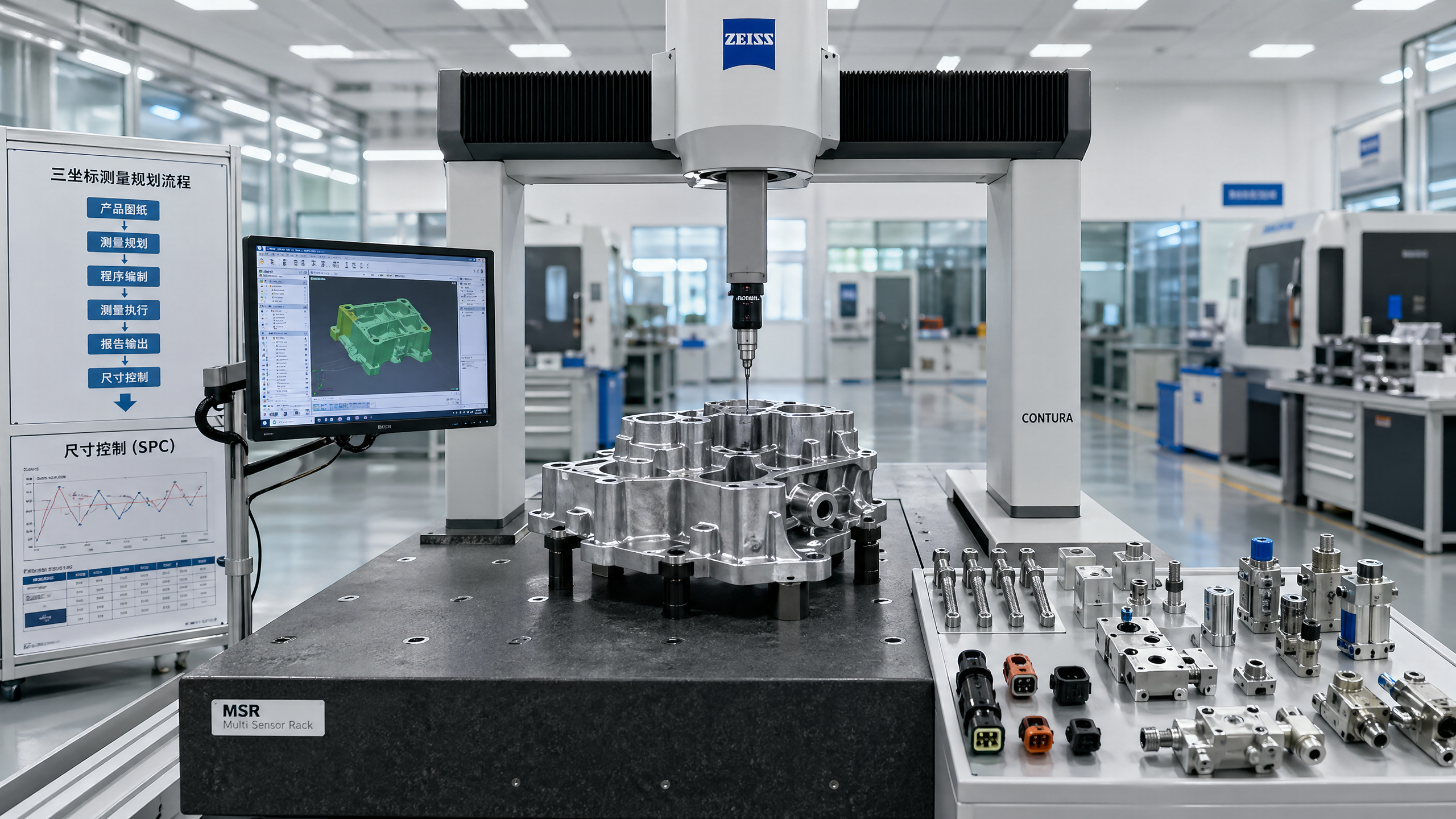
In precision engineering, projects often slip not because tools fail, but because measurement plans fall behind design and production realities. From mold design, injection molding, and die casting to fasteners, electrical components, and industrial automation, strong technical analysis helps teams align quality, timing, and cost. For buyers, engineers, and project leaders, this gap can define success or delay.
What measurement planning means in precision engineering
Measurement planning is the structured definition of what must be checked, when it must be checked, how it will be checked, and what acceptance criteria will be used across a project lifecycle. In precision engineering, that lifecycle often spans concept review, prototype validation, pilot runs, process capability assessment, first article approval, and mass production release. If these checkpoints are not aligned with the actual manufacturing path, teams can lose 2 to 6 weeks resolving avoidable dimensional, fit, or performance deviations.
The topic matters across industries because precision engineering is rarely isolated to one component. A mold cavity, a die-cast housing, a threaded fastener, a connector shell, or a pneumatic valve body all depend on dimensional control that connects design intent to production behavior. The more interfaces a product has, the more critical measurement planning becomes. A tolerance stack of just 0.02 mm to 0.10 mm can be manageable on paper yet unstable in production if the measurement method is undefined or delayed.
For target users such as technical evaluators, purchasers, quality managers, distributors, and project leaders, the issue is not only metrology accuracy. It is also timing, communication, and manufacturability. A capable CMM, vision system, gauge, or electrical test setup does not prevent delay by itself. The plan must tell teams which characteristics are critical, which are process-monitored, which require 100% inspection, and which only need periodic validation every 2, 4, or 8 hours depending on process risk.
Core elements that define a usable plan
A usable measurement plan is practical rather than theoretical. It links drawing characteristics, tooling condition, machine capability, sampling logic, inspection resources, and release criteria. This is especially important for global supply chains where product drawings may be created in one region, tooling manufactured in another, and production validated by a third-party or OEM team under compressed launch windows of 8 to 16 weeks.
- Characteristic definition: critical dimensions, datums, surface finish, torque, electrical continuity, sealing performance, or flatness limits.
- Measurement method: CMM, optical system, plug gauge, thread gauge, profilometer, force measurement, leak testing, or electrical verification.
- Inspection timing: incoming material, in-process control, tool-off validation, first-off approval, final inspection, and periodic audits.
- Reaction plan: containment, tool correction, parameter adjustment, rework review, or engineering deviation approval.
When these elements are defined early, the project has a stable control language. When they are added late, teams often discover that the product can be made, but cannot be verified efficiently at the planned takt time, cost level, or launch date.
Why definition is not enough
Many project files contain inspection notes, but not all inspection notes form a complete measurement plan. A drawing may call for concentricity, roughness, insulation spacing, or pull-out force, yet omit fixture orientation, environmental condition, sampling frequency, or gage repeatability expectations. In practice, that gap creates disagreements between design teams, suppliers, and quality departments, especially when components move from prototype conditions into repetitive production.
Why projects slip when measurement plans lag behind reality
Project delay typically appears as a scheduling problem, but in precision manufacturing it is often a measurement planning problem expressed through engineering changes, approval bottlenecks, and repeated trial loops. A tooling program may hit T1 or T2 trial on time, yet still miss downstream milestones if the measurement plan does not match the true risk profile of the part. This is common in injection molds, die-casting tools, stamped electrical parts, and multi-stage fastener production where process variation emerges differently at each stage.
One recurring issue is that design teams prioritize geometry while production teams must control geometry under heat, pressure, wear, cycle time, and material variability. For example, a die-cast aluminum housing may meet nominal dimensions during early runs but drift after several thousand shots as thermal balance changes. A thread-formed fastener may pass gauge checks initially yet show torque-tension inconsistency after coating variation. If the measurement plan only reflects static drawing dimensions, the project enters correction mode late and loses time.
Another issue is resource mismatch. A project may require 25 critical checks per cavity, but the agreed inspection route only supports 8 checks within the production rhythm. In that situation, quality data arrives slower than production decisions. The result can be excess scrap, repeated mold spotting, delayed PPAP-style submission, or shipment holds for 3 to 10 days while teams reconcile conflicting measurements from different fixtures or laboratories.
Typical causes of lag in different industrial segments
Although the products differ, the causes of lag are often comparable across sectors. The table below outlines where measurement planning commonly falls behind actual project needs and how that affects schedule and quality alignment.
The pattern is clear: the delay rarely comes from one failed measurement. It comes from a plan that separates design data from process behavior. For project managers and decision-makers, this means launch risk should be assessed not only by tooling completion percentage, but also by measurement readiness at each validation gate.
Hidden costs beyond schedule loss
Measurement lag also creates indirect cost. Additional trials increase machine occupancy, engineering labor, and sample logistics. A single revalidation round can involve fixture updates, courier expense, lab queue time, and cross-functional review meetings. In international sourcing projects, even a 5-day delay can affect vessel planning, safety stock assumptions, or customer onboarding schedules.
For distributors and sourcing teams, the risk extends further. If the original supplier’s measurement logic is unclear, comparison between alternate sources becomes difficult. Parts may appear equivalent by drawing but differ in inspection discipline, process capability, or acceptance philosophy. That weakens sourcing resilience and increases onboarding effort for every new vendor.
Application value across tools, molds, components, and automation
Strong measurement planning creates value differently depending on the product and production route. In mold making, it reduces correction loops by clarifying which dimensions are tool-driven and which are process-driven. In fastener manufacturing, it connects geometry with hardness, coating, and assembly behavior. In electrical and pneumatic components, it helps ensure that dimensional stability supports reliable function under installation and operating loads.
For users and operators, the benefit is practical: fewer ambiguous checks, clearer work instructions, and faster escalation when readings drift. For technical evaluators, it improves traceability between specification and production evidence. For procurement and commercial teams, it supports more realistic supplier discussions on lead time, risk, and sample maturity. For quality and safety personnel, it makes control plans auditable and easier to sustain over 3-month, 6-month, or annual review cycles.
GHTN’s cross-sector perspective is particularly relevant here because the same underlying discipline applies from base components to precision tools. Whether the item is a mold insert, a cable gland, a connector contact, a stamped bracket, or a pneumatic fitting, the project performs better when dimensional and functional verification are treated as part of engineering strategy rather than as an end-stage inspection activity.
Where the business value becomes visible
The following application overview shows how measurement planning supports different industrial objects and stakeholder goals. This is useful for OEMs, distributors, and project owners evaluating where to strengthen process control first.
Across these categories, the practical insight is that measurement planning should follow failure mode and process sensitivity, not only drawing order. That approach is especially useful when multiple plants, contract manufacturers, or regional distributors must interpret the same technical file consistently.
Implications for technical and commercial reviews
A technically mature quote or sourcing review should include more than nominal tolerances. Teams should ask whether the supplier can measure the critical-to-function characteristics at the required frequency, whether fixture strategy is already defined, and whether the inspection route fits projected volume. For medium-volume programs of 5,000 to 50,000 pieces per month, this can materially affect labor cost and launch readiness.
It also affects change management. When engineering revisions occur, a robust measurement plan highlights which gauges, fixtures, and reports need revision immediately and which can be updated in the next control cycle. That reduces confusion and helps project teams maintain release discipline.
Practical guidance for building a plan that keeps pace
A strong plan is built early, but it stays useful only if it evolves with tooling progress, process learning, and customer requirements. In practice, the most effective plans are created in parallel with design reviews and updated at each program gate. For many industrial projects, three checkpoints are especially important: pre-tooling review, trial validation review, and pre-production release review.
The objective is not to measure everything at maximum frequency. That would be slow and expensive. The objective is to define the right depth of control for the right feature at the right stage. Critical interfaces may need 100% verification during pilot runs and then move to statistical or periodic checks once capability stabilizes. Secondary dimensions may only need first-off and shift-based confirmation. This staged logic helps balance quality, throughput, and inspection cost.
For cross-border projects, consistency of terminology is also important. Teams should align on datums, revision status, sampling language, and acceptance records before sample submission. A dimensional report that reaches the customer 48 hours after trial may still be too late if it cannot be interpreted quickly due to unclear references or mismatched revision control.
A workable implementation sequence
- Map critical-to-function and critical-to-assembly characteristics from the drawing and intended operating condition.
- Match each characteristic to a realistic measurement method, including fixture need, operator skill level, and expected cycle time.
- Set sampling logic by risk level, such as first-off, hourly, per lot, per cavity, or per batch after coating or heat treatment.
- Define the reaction path when readings drift, including containment, re-measurement, process adjustment, and approval authority.
- Review the plan after each major trial or engineering change to prevent outdated checks from guiding live production.
This sequence is relevant across industries because it respects both engineering intent and shop-floor reality. It also creates a clearer basis for supplier qualification and technical benchmarking, especially when comparing multiple factories that use different equipment but must reach equivalent control outcomes.
Common points to verify before approval
- Are the top 5 to 10 risk features linked to the actual process step that creates variation?
- Can the planned inspection be completed within the production rhythm without creating backlog?
- Are dimensional, functional, and material-related checks integrated rather than split across disconnected reports?
- Does the supplier have a documented reaction path for out-of-trend results before they become out-of-spec results?
If these questions cannot be answered clearly, the project may still proceed, but the chance of launch disruption rises. In many programs, the difference between a controlled launch and a delayed launch is not equipment ownership. It is whether the measurement plan is operational, current, and understood by every decision point from engineering to procurement.
Why informed industrial teams use GHTN as a technical reference point
The Global Hardware & Tooling Network focuses on the industrial details that shape outcomes in hardware, electrical systems, mold manufacturing, and precision components. That matters when evaluating measurement planning, because the issue sits at the intersection of design logic, material behavior, process control, and market execution. Teams need more than broad commentary. They need grounded technical context that reflects how components behave in real manufacturing environments.
GHTN connects trend analysis with practical engineering concerns across mechanical tools, electrical hubs, molds, fasteners, and automation-related parts. This helps research users, sourcing teams, quality specialists, and enterprise decision-makers understand where a delay is likely to start, what data should be requested from suppliers, and how upstream tooling choices influence downstream verification burden.
Because many industrial projects now involve shorter development windows, tighter tolerance expectations, and more distributed supply chains, a reliable knowledge base can reduce evaluation time and improve communication quality. Whether the need is market entry insight, specification interpretation, component selection, or process risk review, a technical portal with granular manufacturing focus supports stronger decisions.
Contact us for focused support
If your project is facing delayed approvals, repeated tool corrections, or unclear supplier inspection logic, contact us to discuss the measurement and engineering questions behind the schedule pressure. We can help you review parameter confirmation, product selection logic, delivery timing assumptions, custom solution direction, certification-related considerations, sample support priorities, and quotation communication points.
For OEMs, distributors, project managers, and technical evaluators, the most useful starting point is often a focused review of critical characteristics, process stage risks, and verification readiness. That can clarify whether the issue sits in tooling, material, measurement method, or reporting structure before more time is lost.
Why choose us: GHTN combines industrial component knowledge with precision manufacturing perspective, helping teams link design intent, tooling reality, and market-facing execution. If you need support on specification review, supplier communication, sample assessment, lead-time planning, or measurement-related risk identification, reach out with your drawings, target application, expected volumes, and validation milestones.
Related News