
How to compare OEM components beyond unit price

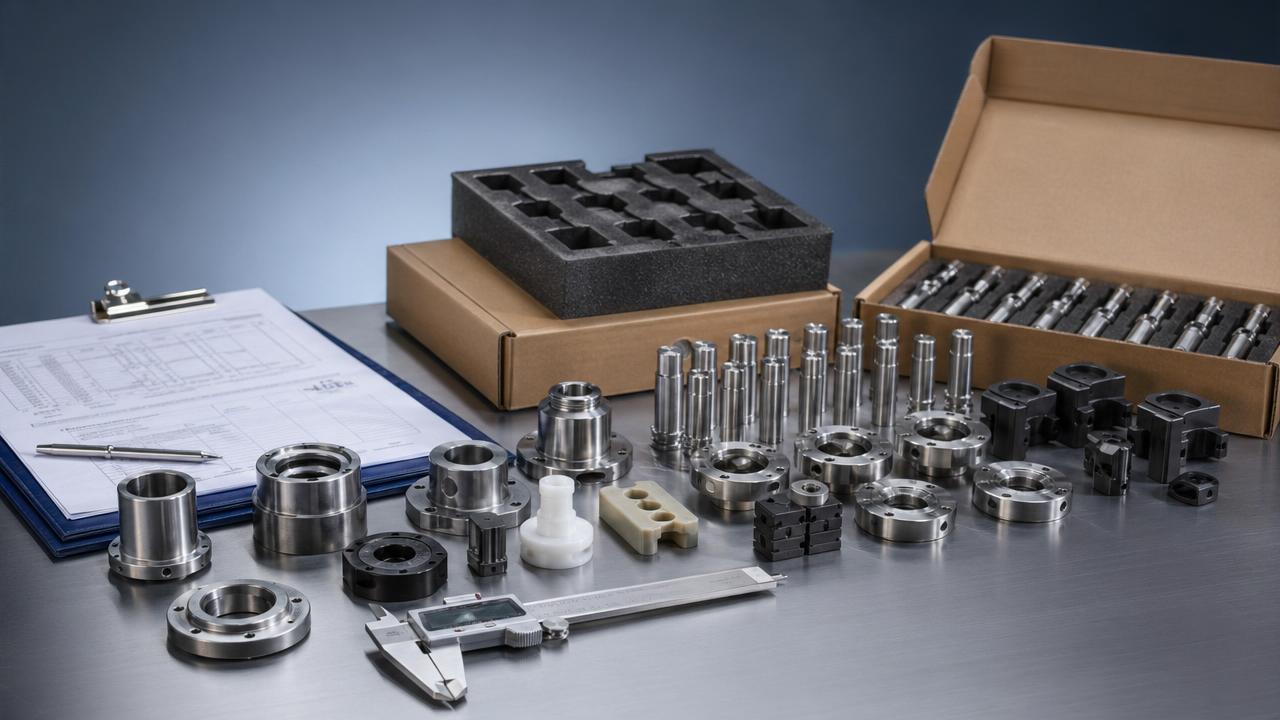
When sourcing OEM components, unit price is only the starting point. For procurement professionals, the real comparison should include material consistency, tooling precision, compliance, lead time stability, defect risk, and total lifecycle cost. Understanding these factors helps buyers avoid hidden expenses, strengthen supply chain resilience, and make smarter purchasing decisions that support both operational efficiency and long-term competitiveness.
Why procurement teams need a checklist before comparing OEM components
For buyers in industrial supply chains, comparing OEM components by quote alone often creates a false sense of savings. A part that is 3% to 8% cheaper on paper may generate much higher downstream cost through scrap, rework, delayed assembly, warranty claims, or line stoppage. This is especially true in sectors that rely on fasteners, electrical interfaces, machined inserts, mold-related parts, pneumatic elements, and other tolerance-sensitive items.
A checklist-based approach improves decision speed and consistency. Instead of debating vague supplier promises, procurement can compare OEM components across the same set of technical, commercial, and delivery criteria. In many organizations, this also helps align sourcing, quality, engineering, and production teams around one decision framework, reducing approval cycles from several weeks to a more manageable 5 to 10 working days for standard projects.
The goal is not to eliminate price pressure. It is to put price in context. For high-volume or safety-relevant OEM components, a small deviation in hardness, plating thickness, dimensional repeatability, or connector fit can affect thousands of units per batch. That is why experienced procurement teams review process capability, incoming quality risk, and replenishment stability before finalizing supplier selection.
What should be checked first
- Confirm whether the OEM components are function-critical, fit-critical, or cost-critical, because each category needs a different evaluation weight.
- Identify the likely hidden cost drivers: material variation, tooling wear, packaging damage, certification gaps, or unstable lead time.
- Define the acceptable tolerance, defect threshold, and replenishment window before requesting final quotations.
- Check whether the supplier can support samples, engineering changes, and batch traceability over a 12- to 24-month program cycle.
This early filtering prevents procurement from spending time on suppliers that are competitive only in unit price. For industrial buyers working across multiple component categories, this structured method is also more scalable. It reflects the way technical sourcing is handled in mature manufacturing networks such as those covered by GHTN, where precision, compliance, and repeatability are often stronger indicators of long-term value than first-round pricing.
Core comparison checklist: the six dimensions that matter most
When comparing OEM components, procurement should use a weighted checklist rather than a single-cost ranking. The table below provides a practical comparison structure that can be adapted for mechanical parts, electrical hardware, mold accessories, and production tooling interfaces. In many sourcing programs, these six dimensions account for the majority of purchasing risk.
This table works best when procurement assigns relative weight to each dimension. For example, a cosmetic bracket may prioritize price and lead time, while an electrical contact or high-cycle mold insert may need heavier weighting on material control and process repeatability. The comparison becomes more meaningful when each supplier is scored against the same standards instead of being judged by quotation format or negotiation style.
Priority checklist for supplier screening
- Request a controlled drawing or specification sheet with revision status.
- Ask what process variables are monitored during production, not only what is inspected at the end.
- Clarify standard lead time, expedited lead time, and recovery lead time after a disruption.
- Review packaging method for moisture, corrosion, impact, or mixed-lot risk.
- Check whether sample approval and mass production use the same tooling, cavity, resin source, or plating route.
For many OEM components, the biggest issue is not whether the first sample works, but whether batch 20 will still match batch 1. Procurement should therefore treat process discipline as a commercial criterion, not just a quality topic. That mindset is essential when sourcing parts used in automated lines, harsh environments, or multi-stage assembly systems.
A practical rule for weighting
A useful starting model is 30% technical fit, 20% quality risk, 20% delivery stability, 20% total landed cost, and 10% service responsiveness. This is not universal, but it provides a realistic framework for comparing OEM components in cross-functional sourcing reviews. Buyers can then adjust the ratio based on application severity, annual volume, and replacement difficulty.
How to compare OEM components by application and sourcing scenario
Not all OEM components should be evaluated the same way. A fastener used in outdoor equipment faces different risks than a precision insert in a mold tool or an electrical terminal in a control cabinet. Procurement teams that use one generic RFQ template for all categories usually miss application-specific failure modes. The better approach is to add scenario-based checks to the core comparison list.
This is especially relevant in broad industrial sourcing, where a buyer may handle mechanical, electrical, and tooling-related items in the same quarter. In such cases, the sourcing model should remain consistent, but the technical questions must change. Typical adjustment points include environment, cycle count, assembly method, compliance destination, and replacement urgency.
The table below summarizes how evaluation priorities often shift across common industrial scenarios. It is intended as a decision aid, not a rigid formula.
The lesson is straightforward: the best supplier for one component family may not be the best supplier for another. Procurement should ask which performance variable matters most in the real use environment. This reduces the risk of awarding business to a low-cost source that is misaligned with application demands.
Scenario-based questions buyers should ask
- Will the OEM components face vibration, heat cycling, moisture, chemicals, or repeated torque loading?
- Is there a maintenance interval, service replacement cycle, or target life measured in thousands or millions of cycles?
- Does the component go into export markets with different documentation or declaration needs?
- Can the supplier support engineering changes without restarting the qualification process from zero?
These questions are highly relevant to the industrial sectors monitored by GHTN, where sourcing decisions often sit at the intersection of performance, manufacturability, and market access. Buyers who capture this information early can compare OEM components with much greater confidence and fewer surprises after launch.
Common hidden costs and risk signals procurement should not ignore
The most expensive sourcing mistakes usually come from costs that were never visible in the original quotation. A unit price difference of a few cents becomes less important when an incoming defect forces 100% sorting, a delayed shipment stops a production line, or inconsistent dimensions increase assembly time by 15% to 20%. Buyers should therefore screen for hidden cost exposure before comparing final offers.
One useful method is to map cost across the full component lifecycle: qualification, production, shipping, receiving, assembly, field use, and replacement. This approach is particularly effective for OEM components that influence uptime, product safety, or warranty perception. It also reveals whether a low quote is actually shifting cost from supplier to buyer.
The list below highlights frequent blind spots in industrial purchasing. Each item should be treated as a formal check point during supplier comparison or annual cost review.
Risk checklist: hidden cost drivers
- Minimum order quantity is too high, tying up working capital for 60 to 120 days of inventory.
- Packaging is optimized for freight cost, not for protection, leading to denting, corrosion, or mixed lots.
- Supplier uses a different process route after sample approval, causing variation in bulk production.
- Documentation is incomplete, slowing customs clearance or customer audits.
- No clear corrective action timing exists if a defect is found after line-side delivery.
- Tooling maintenance is weak, causing drift in dimensions after several production runs.
Quick warning signs during quotation review
Buyers should be cautious when quotations are significantly lower than the market range but lack detail on specification assumptions. Another warning sign is a supplier that gives strong sample support but vague batch-control answers. If the lead time, material source, or inspection scope remains unclear after two rounds of technical questions, procurement should treat the apparent savings as unverified rather than real.
In the OEM components market, hidden cost often appears as variability rather than failure. A part may still be technically usable, yet create enough friction in receiving, assembly, or service to reduce overall efficiency. That is why disciplined buyers compare cost of consistency, not just cost per piece.
A practical procurement workflow for comparing OEM components
A structured workflow helps teams move from broad supplier options to a defensible sourcing decision. For standard industrial components, a 5-step process is often sufficient. For custom or tolerance-sensitive OEM components, procurement may add a pilot run or process audit stage before awarding annual volume.
The advantage of this workflow is repeatability. It gives procurement, engineering, and quality a shared path for discussing trade-offs. It also makes supplier communication more efficient, because each quotation request is tied to explicit technical and commercial checkpoints rather than open-ended discussion.
The table below outlines a practical sequence that many industrial buyers can adapt to their category mix and approval process.
This workflow is effective because it separates promise from proof. A supplier may look competitive in step 3 but lose value in step 4 if repeatability is weak. Procurement teams that follow this sequence are better positioned to compare OEM components on operational value instead of negotiation appearance.
Information buyers should prepare before supplier discussions
- Current drawing, specification, and revision history.
- Annual demand estimate, batch size, and forecast volatility range.
- Critical-to-quality dimensions or functional parameters.
- Required delivery window, safety stock expectation, and packaging constraints.
- Target market requirements for documentation, declarations, or export compliance.
Preparing this information upfront makes the quotation process faster and more accurate. It also helps suppliers propose realistic options for material selection, tooling approach, or schedule planning. In many cases, better input from procurement leads directly to better output from the supply base.
Why choose us for OEM components sourcing insight and supplier evaluation support
GHTN focuses on the industrial detail that often determines sourcing success: the performance of underlying components, the manufacturing logic behind precision tooling, and the trade realities that shape global supply decisions. For procurement teams comparing OEM components, this means access to practical guidance that goes beyond catalog language and headline pricing.
Our perspective covers mechanical tools, electrical systems, mold manufacturing, and the component-level issues that connect them. That is valuable when your sourcing decision involves more than one discipline, such as choosing between alternative materials, reviewing a supplier’s process depth, or balancing cost with lifecycle reliability. We understand that a small part can influence assembly speed, field durability, and market compliance at the same time.
If you are currently reviewing OEM components, contact us to discuss the points that matter before you place an order. You can consult with us on parameter confirmation, product selection, delivery cycle expectations, custom solution direction, certification-related preparation, sample support planning, and quotation comparison logic. For procurement teams that need a clearer basis for supplier evaluation, GHTN helps connect precision with smarter sourcing decisions.
Related News