
Niche industrial fields with stronger margins than expected

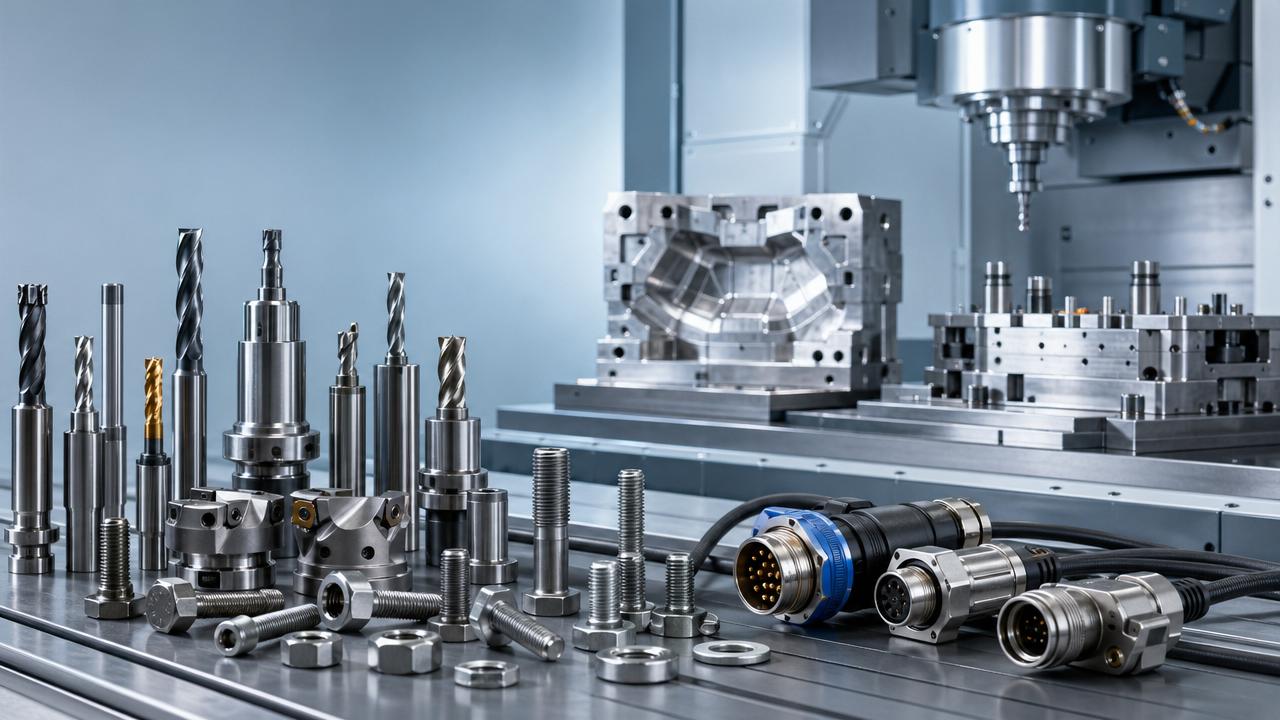
Many buyers and investors overlook niche industrial fields as low-growth or overly technical, yet these segments often deliver stronger margins than expected through precision, compliance barriers, and specialized demand. For financial decision-makers, understanding where hidden value is created in tools, fasteners, electrical components, and molds can reveal more resilient profit pools and smarter allocation opportunities across the industrial supply chain.
Why scenario differences matter when evaluating niche industrial fields
For a financial approver, the phrase niche industrial fields should not be read as “small and risky” by default. In many industrial categories, margins are not driven by shipment volume alone. They are shaped by replacement urgency, certification complexity, tolerance control, after-sales stability, and the cost of switching suppliers. A fastener used in corrosive offshore assemblies, for example, may be a low-cost line item, but a failure can stop equipment worth hundreds of thousands of dollars.
This is why scenario-based analysis matters. The same component family can behave very differently across applications. A standard hand tool for general maintenance may face price competition within 5% to 8%, while a precision cutting tool designed for high-speed machining can preserve stronger gross margins because wear rate, repeatability, and machine compatibility directly affect production yield. For finance teams, the better question is not “Is this market niche?” but “In which operating scenario does this niche become indispensable?”
GHTN focuses on this hidden layer of industrial value. In hardware, electrical systems, and mold manufacturing, the most resilient profit pools often sit where technical detail creates commercial defensibility. These are usually segments with 6- to 18-month customer validation cycles, recurring replacement demand, or process-specific customization. Such conditions can protect margins even when broader industrial purchasing becomes cautious.
What financial reviewers should test first
Before approving sourcing expansion, supplier onboarding, or market entry budgets, decision-makers should look at five filters: failure cost, compliance burden, requalification time, customization ratio, and price sensitivity. These filters help distinguish truly attractive niche industrial fields from segments that are merely obscure. A product with a 2-week production cycle but a 9-month qualification cycle often carries stronger pricing power than a commodity item with faster churn.
- Failure cost: How expensive is downtime, scrap, or safety exposure if the part underperforms?
- Compliance burden: Does the product need electrical, material, or process conformity documentation?
- Requalification time: Would the buyer need 3 months, 6 months, or longer to switch suppliers?
- Customization ratio: Is the order based on standard catalog SKUs or engineered-to-order specifications?
- Price sensitivity: Is the buyer optimizing unit price, or total cost of ownership over 12 to 36 months?
These criteria are especially useful in underlying industrial components because the invoice value of a part rarely reflects its operational leverage. The deeper the component sits inside an automated line, electrical system, or mold cycle, the more likely it is to support better-than-expected margins.
Three business scenarios where niche industrial fields often outperform expectations
The strongest opportunities typically appear in applications where buyers cannot treat components as interchangeable. Below is a practical comparison of three common scenarios across hardware, electrical, and mold-related procurement. These examples are especially relevant for approvers reviewing budget allocations, supplier diversification plans, or premium product lines.
The table shows a recurring pattern: stronger margins in niche industrial fields often come from risk transfer. Buyers are willing to pay more when the supplier reduces operational uncertainty, shortens validation time, or improves process stability. That is a more durable source of profit than competing on catalog price alone.
Scenario 1: Harsh-environment hardware and fastening systems
In marine equipment, outdoor infrastructure, energy installations, and transport assemblies, hardware selection is rarely a simple unit-price decision. Fasteners, anchors, threaded inserts, and joining parts may need to resist vibration, salt spray, heat cycling, or chemical exposure. In such use cases, niche industrial fields gain pricing power because the buyer is paying for service life, traceability, and lower field failure risk over 2 to 10 years.
For finance teams, this scenario usually supports premium pricing when three conditions exist: the installed system is expensive, maintenance access is difficult, and replacement costs exceed the initial part value by a wide margin. A bolt that costs 20% more but avoids one site intervention can be an easy economic choice. This is where hidden margin potential often lives in underlying industrial components.
The caution point is overgeneralization. Not every corrosion-resistant or specialty fastener category is equally attractive. Margin strength improves when the supplier can also support material specification alignment, coating consistency, and documentation quality. Without these, the segment can quickly slide toward standard distribution pricing.
What to verify in this scenario
- Required environmental resistance range, such as humidity, thermal cycling, or chemical exposure.
- Whether the project needs batch traceability, material certificates, or torque-related installation guidance.
- Expected replacement interval, often 12, 24, or 36 months in maintenance-driven procurement models.
- Whether the buyer is replacing a legacy part or approving a new platform specification.
Scenario 2: Electrical and pneumatic components inside automated lines
Automation creates one of the clearest cases for better-than-expected margins in niche industrial fields. Electrical hubs, cable management systems, compact control components, pneumatic fittings, and logic-linked accessories are often low-visibility items, yet they directly influence line uptime. In a plant where one hour of stoppage disrupts multiple downstream stations, a reliable component supplier can command a premium beyond the simple cost of goods.
This scenario is attractive because purchasing behavior changes once the line is running. Initial procurement may look price-conscious, but after commissioning, most buyers prefer continuity, documented compatibility, and stable lead times. That means the supplier relationship can shift from transactional to embedded. For finance approvers, embedded products often produce healthier contribution margins over 18- to 36-month operating periods.
The margin logic is stronger when electrical compliance, connector durability, and maintenance interchangeability are part of the sale. In practical terms, niche industrial fields in automation benefit when technical support reduces startup errors, miswiring risk, or spare-part mismatch. The supplier is not selling a component only; it is selling lower disruption probability.
Scenario 3: Precision tooling and mold ecosystems
Tooling and mold-related segments often appear cyclical from a distance, but within them are narrow categories with strong margin discipline. Precision inserts, specialized cutting tools, mold bases, wear parts, ejector systems, and process-specific accessories support production quality at the micron or sub-millimeter level. Buyers in these niches are usually focused on cavity life, cycle consistency, surface finish, and rework reduction rather than on the lowest quoted price.
This application is especially relevant for financial reviewers because revenue quality can be underestimated. A supplier involved early in design or troubleshooting may participate in multiple value layers: prototype support, revision cycles, consumable replacements, and follow-on tools for adjacent product variants. Even when order volumes are moderate, project stickiness can be high for 6 months to several years.
However, margin strength depends on process depth. If the supplier only offers basic machining with no tolerance discipline or no engineering feedback, the business may remain exposed to standard bidding pressure. The more a supplier helps reduce scrap, flash, dimensional drift, or tool-change downtime, the more credible premium pricing becomes.
How demand priorities shift by scenario and buyer type
Not all buyers value the same features in niche industrial fields. OEMs, distributors, contract manufacturers, and maintenance contractors often use the same product families but judge them through different commercial lenses. For finance teams, this matters because margin sustainability depends on matching the offer to the buyer’s operating logic, not just to the technical category.
A distributor may prioritize breadth, fill rate, and reorder predictability. An OEM may prioritize design consistency and documentation. A maintenance contractor may care most about replacement speed and field reliability. These differences affect stocking policy, quote strategy, and working-capital assumptions. In some cases, a lower-volume account can be more profitable than a large-volume one because support intensity and price discipline are better aligned.
The comparison below helps financial approvers identify where niche industrial fields fit best and where caution is needed before committing resources.
For approvers, the core insight is simple: margin quality improves when the product solves a buyer-specific operational problem. The same niche industrial fields can underperform if they are pitched as generic inventory rather than scenario-matched value. This is why segment selection and customer targeting should be reviewed together, not separately.
A practical approval checklist
When assessing whether a niche segment deserves budget, supplier development time, or strategic focus, finance teams can use a short checklist. This helps translate technical differentiation into commercial judgment.
- Confirm whether the component affects uptime, safety, tolerance stability, or compliance readiness.
- Estimate the buyer’s switching burden, including retesting, redesign, or field service disruption.
- Review whether lead times are stable within a usable range, such as 2 to 6 weeks for stocked items or 6 to 12 weeks for custom items.
- Check if support requirements can be standardized into quotable service steps rather than ad hoc engineering drain.
- Identify whether repeat demand is likely through maintenance cycles, consumable wear, or multi-project adoption.
This kind of review is particularly valuable in comprehensive industrial portfolios where hundreds of parts may look similar on paper but perform very differently in margin terms. The winners are usually the lines where technical relevance is tied to recurring operational need.
Common misjudgments that cause buyers to miss value
One common mistake is comparing niche industrial fields to commodity benchmarks. If a part is judged only against standard hardware pricing, the evaluation may ignore lifecycle cost, failure exposure, and qualification overhead. This often leads to underinvestment in segments that are small in volume but critical in continuity. Finance teams should be careful when low invoice values create a false impression of low strategic importance.
A second error is assuming all technical niches deserve premium treatment. Some do not. If the product has weak differentiation, no certification relevance, and easy multi-source substitution, the niche label alone does not protect margin. That is why scenario fit matters more than category wording. The best opportunities are where product performance can be linked to measurable plant, process, or project outcomes within a 3- to 12-month review period.
A third misjudgment is overlooking documentation and communication discipline. In electrical and mold-related business, delayed drawings, unclear tolerances, or incomplete material records can erase the premium that the product should have earned. In other words, operational execution is part of margin defense in niche industrial fields, not an administrative side task.
Signals that a niche segment may be worth deeper attention
- The customer asks more about service life, fit, compatibility, or certification than about headline unit price.
- Supplier change requires sample approval, line testing, or engineering signoff that can take several weeks or months.
- The part influences scrap, maintenance frequency, or machine utilization in a visible way.
- Orders may be modest per shipment, but reorder patterns are stable and tied to installed equipment.
- The supplier can add value through material advice, dimensional consistency, or application guidance.
These are the kinds of indicators that help approvers separate sustainable industrial opportunities from technically interesting but commercially weak product lines. The goal is not to chase every specialty category; it is to identify the few niche industrial fields where value creation is persistent and defensible.
How to align sourcing and growth decisions with the right industrial scenario
For companies evaluating expansion across hardware, electrical, or mold supply chains, the most effective approach is to map products to real use scenarios before setting pricing or purchasing strategy. A maintenance-driven fastener business should not be managed like a project-based mold accessory line. An automation control accessory portfolio should not be measured only by initial order size when aftermarket continuity may drive the long-term return.
GHTN supports this kind of decision process by looking beneath broad industrial labels. Our perspective connects material behavior, tool performance, electrical compliance logic, and process-level manufacturing realities. That is often where hidden premium potential becomes visible to financial reviewers. When the evaluation starts from application conditions rather than surface category names, better decisions usually follow.
If your team is reviewing niche industrial fields for sourcing, distribution, or investment planning, the next step is to clarify the commercial scenario in detail. Typical discussion points include parameter confirmation, product selection, delivery cycle expectations, customization feasibility, certification-related requirements, sample support, and quotation structure. A precise scenario usually leads to a more reliable approval decision.
Why choose us
GHTN is built for industrial decision-makers who need more than a catalog view. We focus on the granular core of manufacturing: underlying components, precision tools, electrical systems, and mold ecosystems that shape real operating outcomes. Our value lies in translating technical detail into sourcing clarity and market insight that finance, procurement, and business teams can actually use.
Whether you are comparing suppliers, entering a new segment, or assessing where niche industrial fields may offer stronger margins, we can help you evaluate the practical variables that matter: application fit, specification risk, lead-time planning, customization scope, documentation expectations, and long-term replacement patterns.
Contact us to discuss parameter confirmation, product selection, delivery cycles, custom solution paths, certification requirements, sample support, or quotation planning. If your objective is to identify industrial niches with durable value rather than superficial complexity, GHTN can help you connect precision with commercial judgment.
Related News