
Where OEM parts quality problems usually begin

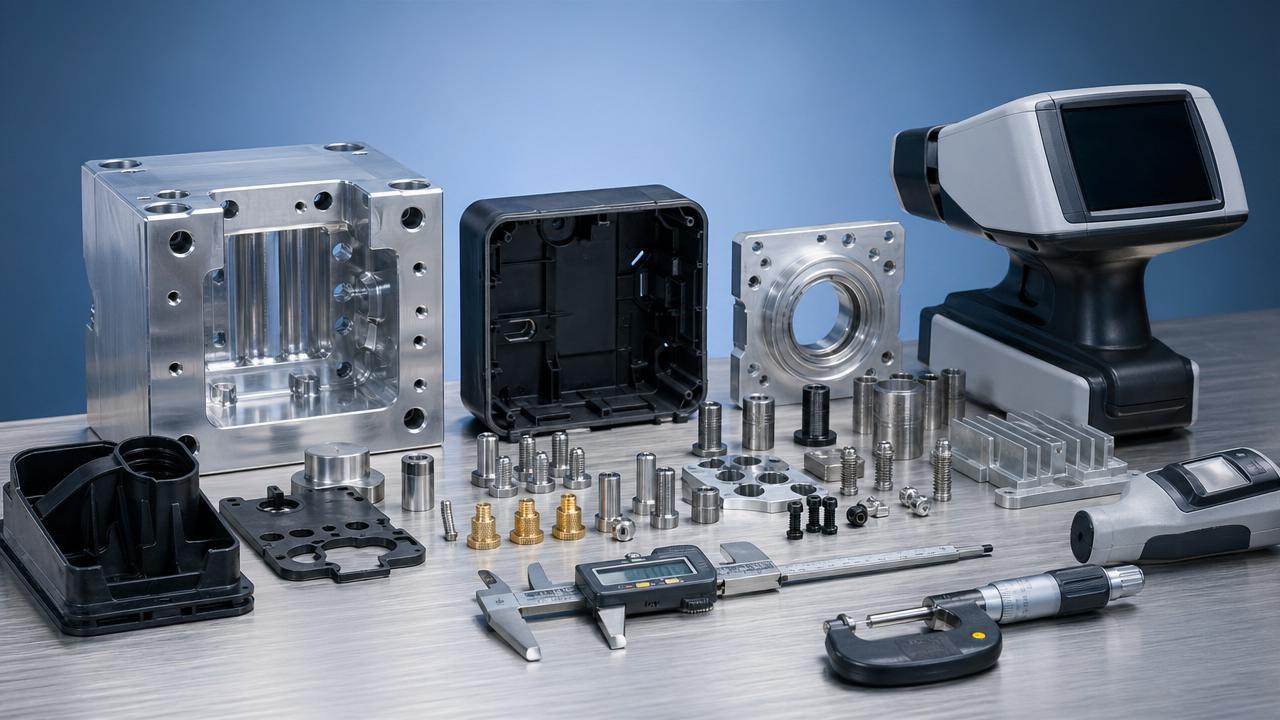
OEM parts quality problems rarely start on the assembly line—they often begin much earlier, in design assumptions, material selection, tooling precision, and supplier communication. For technical evaluators, identifying these hidden failure points is essential to reducing risk, controlling cost, and ensuring consistent product performance. This article examines where OEM parts defects typically originate and how upstream decisions shape downstream quality outcomes.
In industrial supply chains, the most expensive defect is rarely the one found during incoming inspection. The greater cost usually appears 2 to 8 weeks later, when dimensional drift causes assembly issues, plating failure triggers corrosion complaints, or a mold wear pattern starts producing unstable batches. For technical evaluation teams, this means quality assessment must begin before the first production lot is approved.
Across fasteners, electrical hardware, pneumatic subcomponents, and molded precision parts, the same pattern repeats: weak specifications create avoidable ambiguity, and ambiguity turns into variation. For buyers, engineers, and sourcing specialists working with OEM parts, upstream discipline is often the difference between a predictable product lifecycle and recurring corrective action requests.
1. Quality Problems Often Start in the Design Definition Stage
Many OEM parts enter sourcing with drawings that are technically complete but functionally incomplete. A drawing may define length, diameter, and nominal tolerance, yet fail to specify surface roughness, burr limits, edge break requirements, coating thickness, or mating interface behavior. In practice, these omissions can create 3 to 5 different interpretations across suppliers, especially when parts are produced in different regions or under mixed metric and imperial conventions.
Technical evaluators should pay close attention to tolerance stacking. A single feature tolerance of ±0.05 mm may seem acceptable in isolation, but if six related dimensions stack in one assembly path, the total functional variation can become large enough to affect fit, preload, sealing, or electrical continuity. OEM parts used in mechanical joints, connector housings, or mold inserts are especially vulnerable to this issue.
Another frequent weakness is assuming that “similar material” or “equivalent process” is close enough. In reality, a stamped bracket, die-cast housing, and injection-molded insert all respond differently to wall thickness, cooling rate, grain flow, and residual stress. When design intent is not translated into process-aware documentation, suppliers may choose manufacturable routes that meet cost targets but weaken consistency.
Typical design-stage gaps that trigger downstream defects
- Critical-to-function dimensions are not clearly marked, so all tolerances are treated as equally important.
- No defined acceptance criteria for cosmetic versus functional defects, leading to inspection disputes.
- Material grades are listed without heat treatment, hardness, or conductivity ranges.
- Assembly loads, torque values, or operating temperature ranges are missing from technical packages.
A practical review method is to split every OEM parts drawing into 4 layers: geometry, material, process, and inspection. If one layer is vague, quality risk rises immediately. For example, a fastener drawing may define M8 geometry accurately, but if it does not specify hardness band, plating salt-spray target, or hydrogen embrittlement precautions, the part can pass dimensional inspection and still fail in the field within 30 to 90 days.
At GHTN, this design-first perspective matters because industrial components are not standalone commodities. A pneumatic fitting, electrical terminal, threaded insert, or mold core performs inside a larger system. Technical evaluators should therefore review whether each part specification reflects actual use conditions such as vibration, moisture, temperature cycling, dielectric demand, or repetitive load frequency.
Design review checklist for technical evaluators
Before approving supplier quotation or sample tooling, review at least 6 checkpoints: critical dimensions, tolerance stack path, material state, process route, test method, and packaging condition. Missing even 1 of these items can shift cost from design control to field correction, where remediation is typically 3 to 10 times more expensive.
2. Material Selection Errors Are a Major Root Cause of OEM Parts Failure
Material problems in OEM parts rarely come from obvious substitution alone. More often, the issue is mismatch between the material chosen and the actual service environment. A carbon steel fastener may perform well in dry indoor use but degrade quickly in 500 to 1,000 hours of humidity and salt exposure. A plastic housing may meet nominal strength targets at 23°C, yet creep under continuous load at 70°C.
For technical evaluators, the challenge is to move beyond grade names and ask for material condition details. Stainless steel, brass, tool steel, and engineering polymers each have multiple variants, and small composition or treatment differences can change fatigue resistance, machinability, conductivity, or thermal stability. In mold-related OEM parts, for instance, hardness variation of 2 to 4 HRC can affect wear life and cavity consistency significantly.
Material selection must also account for process compatibility. Some alloys machine well but distort after heat treatment. Some plastics mold cleanly but absorb moisture during storage. Some plated finishes improve corrosion resistance but alter thread engagement or contact resistance. This is why material approval should not be separated from process review.
Material-risk comparison in common OEM parts categories
The table below highlights how material-related decisions can trigger different types of quality issues across common industrial components. It is useful during sourcing reviews, RFQ clarification, and PPAP-style evaluation.
The key takeaway is that material decisions must be verified in context. The same nominal material may be acceptable in one operating window and risky in another. For OEM parts used in export programs, evaluators should also consider transportation storage, regional compliance requirements, and replacement cycle expectations, not just first-pass lab results.
A disciplined material approval routine often includes 3 stages: document review, sample test verification, and pilot-run monitoring. This approach helps catch issues like hidden scrap blending, inconsistent surface treatment, or specification drift between prototype and mass production lots.
3. Tooling Precision and Process Capability Shape Batch Consistency
Even when design and material are correct, OEM parts quality can still deteriorate if tooling capability is weak. In stamping, molding, die casting, CNC machining, and thread rolling, the first 500 pieces may look acceptable while the next 20,000 reveal drift caused by tool wear, cavity imbalance, thermal expansion, or inadequate maintenance intervals.
Technical evaluators should distinguish between sample quality and process quality. A supplier can produce a compliant sample through extra adjustment, low-speed operation, or manual selection, but stable volume output requires process capability. In many industrial categories, a Cp or Cpk target above 1.33 on critical dimensions is a common benchmark for controlled production, although the exact threshold depends on function and risk level.
Tooling precision matters especially for OEM parts with mating geometry, sealing surfaces, or repetitive assembly interfaces. A mold cavity wear increase of only 0.02 mm to 0.05 mm can affect flash, insertion force, or leakage rates. In precision threaded or electrical parts, burr height, edge radius, and surface finish may become more important than the visible nominal dimension.
Warning signs that process capability is weaker than the sample suggests
- First Article Inspection passes, but no repeatability study is provided across 3 separate runs.
- Dimensional reports cover only 5 samples when production lot size is expected to exceed 10,000 units.
- Tool maintenance intervals are undefined, or cavity wear history is not tracked.
- Critical operations rely on manual adjustment rather than fixed control windows.
For high-volume OEM parts, a robust review should include tooling life estimate, preventive maintenance cycle, gauge calibration status, and process drift controls. A stamping die may require edge servicing every 50,000 to 100,000 hits, while an injection mold running abrasive resin may need inspection after every 20,000 to 30,000 cycles. Without this visibility, evaluators are judging quality at one moment, not over the true production lifecycle.
In the hardware and tooling ecosystem covered by GHTN, tooling is not merely a manufacturing asset; it is a hidden quality variable. Buyers of OEM parts should therefore request process windows, not just sample reports. Stable tonnage range, mold temperature band, cycle time range, and critical measurement frequency often reveal more about future quality than a polished sample set.
Process capability review questions
Ask whether the supplier can hold the required tolerance across 3 conditions: startup, mid-run, and near-maintenance threshold. If capability changes sharply across these stages, the apparent quality margin may be too narrow for reliable supply.
4. Supplier Communication Breakdowns Create Avoidable OEM Parts Defects
A large share of OEM parts quality issues originate not in technical incompetence, but in communication gaps between design teams, sourcing teams, and suppliers. When RFQs are rushed, technical assumptions remain undocumented. One team assumes deburring is standard, another assumes packaging is bulk, and the supplier assumes a commercial-grade finish is acceptable. By the time parts arrive, the discrepancy becomes a nonconformance case.
For technical evaluators, one of the most effective risk controls is formal technical alignment before order release. This should happen in at least 2 stages: pre-quotation clarification and pre-production confirmation. The first stage reduces quoting ambiguity. The second confirms that the selected supplier has translated requirements into process controls, inspection points, and packaging instructions.
Communication failures are especially common in cross-border supply programs involving hardware, electrical, and mold-related OEM parts. Terminology differences can affect interpretation of finish class, tolerance notation, thread standard, resin condition, or testing method. A “sample approved” email is not enough if revision level, deviation acceptance, and requalification triggers are unclear.
Communication risk points and control actions
The table below outlines common supplier communication failures and the practical controls that technical teams can implement before they become recurring OEM parts problems.
The operational lesson is simple: if a requirement matters, it must be visible in a controlled document. Technical evaluators should not rely on verbal assumptions, chat history, or informal supplier familiarity. In multi-site sourcing, even experienced suppliers can diverge if process notes are not standardized across plants, teams, and subcontractors.
A useful rule is to define 4 communication anchors for every OEM parts program: approved drawing, approved sample, approved inspection method, and approved packaging standard. These anchors reduce ambiguity and make incoming quality decisions more objective.
5. How Technical Evaluators Can Build an Upstream Quality Control Framework
The most effective response to OEM parts quality risk is not more final inspection. It is a structured upstream control framework that screens design, material, tooling, and communication before mass production begins. For technical evaluators, the goal is to convert hidden uncertainty into visible checkpoints that can be reviewed, measured, and approved.
A practical framework can be organized into 5 stages over a 2 to 6 week pre-production window, depending on part complexity and supplier readiness. This sequence is flexible enough for standard hardware and robust enough for custom mold, electrical, or precision-machined OEM parts.
Recommended upstream control sequence
- Specification review: confirm critical dimensions, performance requirements, material condition, finish, and defect criteria.
- Supplier capability review: assess process route, tool condition, inspection method, maintenance plan, and traceability controls.
- Sample validation: verify dimensions, function, appearance, and packaging against approved standards.
- Pilot-run monitoring: inspect output across startup, steady run, and near-maintenance intervals.
- Release control: approve production only when deviations, corrective actions, and requalification rules are documented.
This framework works because it addresses the root of variation instead of filtering it at the end. If a critical feature requires ±0.03 mm control, the evaluator should ask what machine capability, fixture design, and measurement method support that target. If a coating must survive a defined exposure range, the evaluator should confirm pretreatment, thickness control, and pack-out protection, not just a one-time lab result.
Minimum data pack to request before volume approval
- Controlled drawing with revision date and marked critical features.
- Material certificate or equivalent conformity record linked to lot traceability.
- Dimensional report covering at least 10 samples from a representative run.
- Process flow and inspection plan for critical steps.
- Packaging specification with unit count and damage-prevention method.
For organizations sourcing across multiple component families, GHTN’s industry perspective is especially relevant: quality problems in OEM parts are interconnected. The same root cause logic appears in a stamped terminal, a mold insert, a threaded pin, or a pneumatic fitting. Evaluators who build cross-category review discipline can improve supplier selection, reduce repeat NCRs, and shorten qualification cycles.
Where quality usually begins is where quality should first be managed: in the assumptions built into design, the fitness of materials, the condition of tooling, and the precision of communication. Companies that review these factors early typically see fewer emergency sorts, lower rework rates, and more stable delivery performance over 3, 6, and 12-month supply windows.
FAQ for OEM parts technical evaluation
How many samples are enough to assess OEM parts quality?
For simple low-risk parts, 5 to 10 pieces may be enough for a preliminary review. For critical or high-volume OEM parts, evaluators should request samples from at least 2 to 3 separate production conditions or time points. This helps reveal repeatability rather than isolated best-case output.
What should be checked first: dimensions, material, or process?
Start with function-critical requirements, then confirm whether material and process support them. A dimension that passes on paper is not enough if the material is unstable or the process cannot hold tolerance beyond the first run. The sequence should be function, material, process, then inspection evidence.
How long does a typical OEM parts qualification cycle take?
For standard hardware or simple machined components, 2 to 4 weeks is common. For custom molded, die-cast, or multi-process OEM parts, 4 to 8 weeks is more realistic, especially when tooling adjustments, pilot runs, and cross-border document alignment are involved.
Quality problems in OEM parts usually begin long before inspection catches them. They emerge in incomplete specifications, environment-blind material choices, unstable tooling, and undocumented supplier assumptions. Technical evaluators who focus on these upstream variables can reduce launch risk, improve batch consistency, and make sourcing decisions with stronger engineering confidence.
If you are reviewing industrial hardware, electrical components, mold-related parts, or other precision OEM parts, GHTN provides the technical perspective needed to connect design intent with manufacturable, scalable quality. Contact us to discuss your sourcing scenario, request a tailored evaluation framework, or explore more solutions for precision-driven industrial supply.
Related News