
Why OEM manufacturing quotes vary more than expected

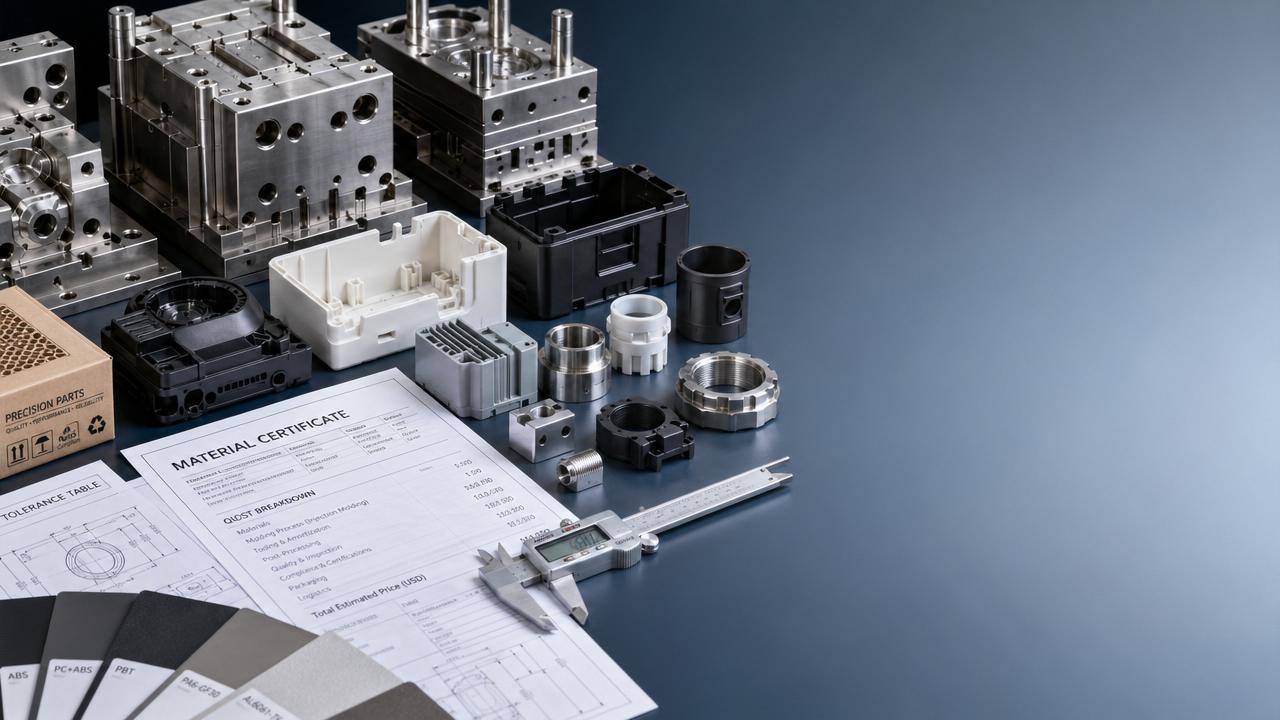
For procurement teams, OEM manufacturing quotes often seem inconsistent—even for similar parts and volumes. The reality is that pricing reflects far more than unit cost, including tooling complexity, material grade, tolerance requirements, compliance standards, and supplier capabilities. Understanding why OEM manufacturing quotes vary more than expected helps buyers compare offers more accurately, reduce sourcing risk, and negotiate with greater confidence.
Why quote variation in OEM manufacturing is becoming more visible
In the past, many buyers assumed that OEM manufacturing quotes for comparable parts should fall within a narrow range, often expecting a spread of 5% to 10%. Today, that expectation is less reliable. Across hardware, electrical components, molded parts, and precision tooling, quote gaps of 15%, 30%, or even more can appear between suppliers that seem similar on paper. This is not always a sign of poor pricing discipline. More often, it reflects deeper differences in manufacturing assumptions, process capability, and risk allocation.
Several industry signals explain this shift. Procurement now operates in a market shaped by shorter product cycles, tighter compliance requirements, and rising customer pressure for traceability. Even a standard fastener, bracket, terminal housing, or mold insert may need more documentation, better process control, or higher material consistency than it did 3 to 5 years ago. As a result, OEM manufacturing quotes increasingly include hidden cost layers that were once absorbed, ignored, or not requested.
For buyers in industrial supply chains, the key trend is not simply “prices went up.” The more important change is that quote structures have become more differentiated. One supplier may price aggressively for production but recover margin through tooling, engineering changes, or logistics. Another may quote higher upfront because it includes validation, tighter inspection, and lower process risk. Without understanding these differences, procurement teams may compare numbers that are not truly equivalent.
A market shaped by complexity rather than only cost
In sectors covered by GHTN’s industrial matrix—mechanical tools, electrical systems, and mold manufacturing—quote variation often follows the growth of technical complexity. A stamped metal part with a ±0.20 mm tolerance can be priced very differently from one requiring ±0.05 mm. A molded housing produced in a commodity resin may look similar to one requiring flame-retardant or glass-filled material, yet the processing window, scrap rate, and tooling wear profile may differ substantially.
This matters because OEM manufacturing is no longer judged only by whether the supplier can make the part. Buyers increasingly ask whether the supplier can hold consistency across 10,000 to 100,000 units, manage engineering revision control, and support future qualification needs. These capabilities change the quote baseline. The result is a wider pricing band, especially when a sourcing event involves parts for export markets, automated assembly lines, or safety-sensitive end use.
Another reason variation is more visible is that procurement teams are requesting quotes from a broader range of suppliers, including specialists, trading manufacturers, and vertically integrated plants. Their business models differ. Some own tooling and machining capacity; others outsource heat treatment, plating, testing, or subassembly. Every handoff adds risk, lead time, and cost. These structural differences surface directly in OEM manufacturing quotes.
Common signals behind wider quote gaps
- Greater tolerance and surface-finish expectations, especially for components used in automated equipment or export assemblies.
- More frequent requests for material certificates, RoHS or REACH-related declarations, and batch traceability.
- Volatile inputs such as alloy surcharges, engineering plastics, copper content, and outsourced finishing services.
- Higher demand for fast sampling, shorter lead times, and dual-stage validation before mass production.
The real drivers behind OEM manufacturing quote differences
For procurement professionals, the most useful way to evaluate OEM manufacturing quotes is to separate visible cost from embedded manufacturing risk. The visible part includes raw material, labor, tooling, packaging, and shipping. The embedded part includes yield loss, process capability, machine utilization, engineering support, quality assurance, and contingency for unclear specifications. Two suppliers may quote the same drawing but make very different assumptions about all of these factors.
Material specification is usually the first major driver. In hardware and electrical applications, the difference between standard carbon steel and higher-grade alloy steel, or between a general resin and an engineering-grade polymer, can change the total quote far beyond the material delta alone. Better material may require different cutting parameters, slower cycle times, controlled storage, or more careful drying. In OEM manufacturing, the material line item often triggers changes across the full process chain.
Tooling and process route are another decisive factor. A supplier that plans to machine a low-volume part from billet will quote very differently from one proposing a progressive die, multi-cavity mold, or dedicated fixture route. At 500 pieces, the cheaper method may not be the same as at 50,000 pieces. This is why buyers should be cautious when comparing quotes across different annual usage assumptions or different amortization periods, such as 6 months versus 24 months.
How quote logic changes by cost driver
The table below highlights why OEM manufacturing quotes can diverge even when the part description appears similar. It is especially relevant in industrial sourcing where design intent, operational environment, and validation requirements often evolve during RFQ review.
The practical lesson is that OEM manufacturing quotes should be read as engineering proposals, not just price offers. If one supplier includes certified raw material, process FMEA-style controls, and full first-article documentation while another assumes basic production only, the higher quote may actually represent lower supply-chain risk.
Supplier capability also changes price logic
A capable supplier does not always quote lowest, but often quotes with better risk visibility. In precision tooling and molded component sourcing, plants with stable process control may price in maintenance intervals, inspection fixtures, and trial runs that smaller workshops omit. Those omitted items do not disappear; they often return later as delays, engineering change fees, or quality claims. Procurement teams should therefore compare cost of ownership over 6 to 18 months, not only purchase price per piece.
Capacity utilization matters as well. A factory running at 70% load may quote more competitively to secure volume, while a supplier near full capacity may build in schedule protection or reject short lead-time requests through higher pricing. This does not automatically mean one is better. It means the quote reflects current operational reality. In OEM manufacturing, capacity and lead-time pressure frequently influence price as much as technical complexity does.
Geography and subcontract depth are also influential. If plating, heat treatment, wire harnessing, or mold texturing must be outsourced to approved partners, the supplier may add 1 to 3 additional logistics loops and more quality coordination. For parts requiring multiple secondary processes, this can explain why quote variation becomes much wider than buyers initially expect.
What these pricing shifts mean for procurement teams
The widening spread in OEM manufacturing quotes changes how procurement should evaluate suppliers. The old method of ranking three bids from lowest to highest is increasingly incomplete. A better approach is to compare commercial terms against technical assumptions, validation scope, and service response. Especially in industrial components, the cheapest quote may represent the narrowest interpretation of the RFQ rather than the best sourcing decision.
This trend affects different buying situations differently. Prototype, pilot, and mass-production stages each have their own pricing logic. For example, a supplier may be expensive for 50-piece prototype machining but very competitive after investing in dedicated tooling for 20,000-piece annual demand. Another may quote attractively for pilot runs but lack the process discipline needed for stable export production. Procurement teams need stage-based evaluation rather than a one-time price comparison.
The consequence is clear: quoting behavior has become a signal. It can reveal how a supplier understands specifications, manages uncertainty, and anticipates downstream requirements. Buyers who learn to read that signal can reduce re-quoting cycles, avoid specification gaps, and improve negotiation quality across future sourcing projects.
Impact by sourcing scenario
The following comparison helps procurement teams identify where quote variation in OEM manufacturing is most likely to create operational consequences.
This table shows why a quote should be matched to business context. In OEM manufacturing, the “best price” for a prototype phase may be the wrong foundation for a long-run production program. Procurement gains more leverage when it evaluates supplier fit by stage, not only by unit price.
Questions buyers should raise before comparing bids
- Is the quoted material exactly aligned with the drawing, environmental use, and downstream certification expectations?
- What tolerance band and inspection frequency has the supplier assumed—100% check, sampling, or first/last-piece verification?
- Does the quote include tooling maintenance, spare inserts, trial runs, and engineering change handling?
- What lead time is based on standard capacity, and what lead time depends on overtime or subcontract support?
How to judge OEM manufacturing quotes more accurately in a changing market
As pricing becomes more layered, procurement teams need a more disciplined review method. The strongest approach is to standardize bid comparison around a quote matrix rather than letting each supplier define its own assumptions. In many industrial RFQs, 20% to 40% of apparent quote variation comes from differences in interpretation, not actual production economics. Clarifying assumptions early can narrow the gap or at least explain it.
A good quote review process should cover commercial and technical checkpoints together. Material substitution, tolerance exceptions, secondary finishing, packaging, inspection method, and logistics terms should be visible in one summary. This is especially important for OEM manufacturing programs involving fasteners, precision machined parts, electrical subcomponents, stamped parts, or molds, where the cost of a late clarification can exceed the initial price difference.
Procurement should also monitor recurring patterns across supplier quotations. If one supplier is always lowest but often revises after DFM review, the original quote may be incomplete. If another is 12% higher but consistently delivers stable PPAP-like submissions, on-time sampling, and smoother pilot builds, that premium may be commercially justified. Quote history is a useful indicator of future sourcing reliability.
A practical quote review framework
The framework below can help buyers compare OEM manufacturing offers in a more decision-ready way, especially when dealing with multiple parts, mixed process routes, or international supply conditions.
Using a structure like this improves sourcing discipline. It allows buyers to identify whether a low OEM manufacturing quote is genuinely efficient or simply incomplete. In a market where cost drivers are changing quickly, disciplined comparison is often more valuable than obtaining one extra bid.
Signals worth monitoring over the next sourcing cycle
Over the next 6 to 12 months, procurement teams should expect continued divergence in OEM manufacturing quotes where projects involve stricter compliance, shorter lead times, or more customized industrial components. The strongest signals to monitor are not only material prices, but also sampling speed, tool lead time, engineering responsiveness, and the supplier’s willingness to document assumptions clearly.
Another trend is the growing importance of manufacturability feedback during the RFQ stage. Suppliers that offer DFM comments early may quote differently because they are already optimizing part geometry, wall thickness, gating, bend radius, hole position, or surface-finish feasibility. That interaction can reduce later cost, even if the initial offer appears higher. In OEM manufacturing, early engineering clarity increasingly creates long-term price stability.
Finally, buyers should pay attention to how suppliers address sustainability and process efficiency in practical terms. While not every RFQ will prioritize greener production, changes such as lower scrap routes, reduced rework, or more durable tooling can influence both cost and long-term supply resilience. These factors are becoming part of serious quote evaluation, especially for procurement teams managing repeat industrial programs.
Why informed sourcing partners matter more now
As OEM manufacturing becomes more technically differentiated, procurement teams benefit from partners who can interpret industrial detail rather than simply relay prices. In hardware, electrical, and mold-related sourcing, a useful partner helps connect drawings, process constraints, material performance, and market reality. That makes quote comparison faster, more accurate, and less exposed to hidden assumptions.
GHTN is built around that need. Our focus on underlying industrial components and precision manufacturing tools allows procurement teams to examine not just supplier numbers, but the manufacturing logic behind them. From fastener performance in demanding environments to mold design changes that affect cycle stability, we help buyers see why quote differences emerge and which of those differences matter most commercially.
For companies sourcing across multiple categories, that visibility matters. A well-interpreted OEM manufacturing quote supports better supplier selection, fewer surprises in sample approval, and stronger alignment between technical requirement and commercial outcome. In a market where quote variation is likely to remain high, informed comparison becomes a competitive advantage rather than an administrative step.
Why choose us
If your team is reviewing OEM manufacturing quotes and needs clearer sourcing judgment, we can support the questions that usually determine real cost and risk. That includes parameter confirmation, material and process selection, tooling route comparison, expected delivery windows, sampling strategy, and documentation expectations for global trade and compliance-sensitive programs.
We also help buyers organize quote communication more effectively. You can consult with us on RFQ completeness, tolerance interpretation, supplier capability signals, custom manufacturing options, and which quote differences deserve negotiation versus deeper technical review. This is especially useful when sourcing mechanical parts, electrical subcomponents, molds, or precision tools across more than one supplier base.
If you want to make better decisions before the next sourcing round, contact us with your drawings, quantity forecasts, target lead times, sample requirements, and compliance expectations. We can help you assess OEM manufacturing quotes with more confidence and turn price variation into actionable sourcing insight.
Related News