
How to judge a reliable injection molding machine supplier

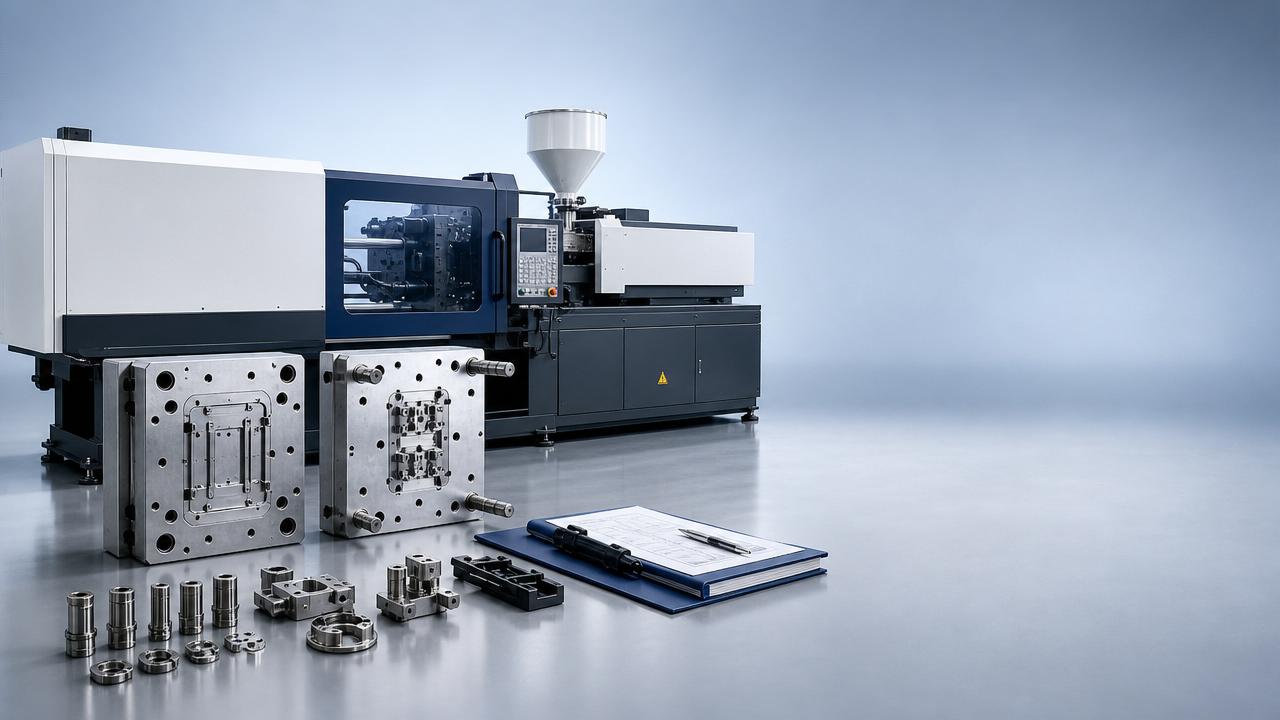
Choosing a reliable injection molding machine supplier is a critical step for business evaluators balancing cost, quality, technical support, and long-term production stability. In a market filled with competing claims, the right partner must demonstrate proven manufacturing capability, transparent service standards, and consistent delivery performance. This guide outlines the key criteria that help decision-makers identify suppliers who can support both operational efficiency and strategic growth.
What makes an injection molding machine supplier reliable in real procurement work?
For business evaluation teams, reliability is not a branding slogan. It is a measurable combination of machine consistency, engineering depth, lead-time control, documentation quality, and after-sales responsiveness.
A dependable injection molding machine supplier should be able to explain not only machine tonnage and cycle time, but also mold compatibility, resin adaptability, utilities demand, spare-parts planning, and installation risks.
In the broader industrial ecosystem, this matters because injection molding rarely stands alone. It connects with tooling design, cooling systems, automation interfaces, electrical compliance, and downstream assembly quality.
- Stable production capability across standard and customized machine configurations.
- Clear technical communication before purchase, not vague promises after a deposit.
- Documented service commitments for commissioning, operator training, and spare-parts support.
- Evidence of process understanding, especially in mold fit, shot stability, and repeatability.
This is also where a technical resource platform such as GHTN becomes valuable. By connecting mold manufacturing, mechanical systems, electrical standards, and industrial trade insights, GHTN helps evaluators judge suppliers from the production-chain perspective rather than from sales brochures alone.
Which supplier capabilities should business evaluators verify first?
Before comparing quotes, evaluators should validate whether an injection molding machine supplier can support the intended product mix, factory environment, and operational targets. Early verification prevents expensive misalignment later.
The table below can be used as a first-pass supplier screening tool during RFQ review, plant audit preparation, or cross-functional scoring with production, engineering, and sourcing teams.
A supplier may offer an attractive machine price, yet fail in technical matching or service readiness. For most industrial buyers, total production risk is a better benchmark than purchase price alone.
Start with process fit, not catalog fit
Many sourcing teams compare models only by tonnage. That is too narrow. A reliable injection molding machine supplier should ask about part weight, resin type, wall thickness, mold cavitation, expected scrap rate, and automation integration.
Check whether the supplier understands tooling, not just machinery
In practical manufacturing, mold performance and machine performance are tightly linked. GHTN’s mold and tooling perspective is especially useful here, because many machine issues are actually process-interface issues between mold, resin, cooling, and control parameters.
How to compare suppliers beyond price and tonnage
Business evaluators often receive similar-looking proposals from several injection molding machine supplier candidates. A structured comparison makes weak points visible before contract commitment.
The next comparison table helps procurement teams identify where low-price offers may create hidden cost exposure in operation, maintenance, or output stability.
The right choice depends on production complexity. For commodity parts with stable molds, a standard manufacturer may be sufficient. For multi-resin, precision, or export-oriented production, deeper engineering support usually pays back faster.
Questions that reveal supplier depth
- Can the supplier recommend screw and barrel configurations based on resin family and filler content?
- Can they explain platen and tie-bar limits in relation to your mold footprint?
- Do they provide a preventive maintenance schedule with parts replacement intervals?
- Can they define what is included in FAT, commissioning, and acceptance criteria?
A reliable injection molding machine supplier answers these questions with specifics. A weak supplier redirects the discussion toward discount rates and urgency pressure.
Technical indicators that should never be treated as secondary
Commercial teams do not need to act as machine designers, but they should know which technical parameters directly affect output, energy use, and defect risk.
The following table highlights key technical checkpoints that an injection molding machine supplier should explain during evaluation and pre-order clarification.
These parameters are especially relevant when machines serve automotive subcomponents, electrical housings, consumer hardware parts, or precision molded inserts. Small specification errors can accumulate into major scrap, downtime, or tooling wear.
Do not ignore utilities and plant-side conditions
A competent injection molding machine supplier should ask about floor loading, cooling water, compressed air, power quality, ambient temperature, and future automation plans. If they do not, the proposal is incomplete.
How to assess service, spare parts, and delivery risk
Machine purchase is only the first transaction. The real test begins during installation, ramp-up, and maintenance. Many procurement failures come from underestimating service execution risk.
Key service checkpoints
- A documented commissioning sequence, including utility connection, dry run, mold trial, and operator handover.
- A recommended critical spare-parts package for the first operating period.
- Defined response channels for technical issues, including remote diagnosis and escalation timing.
- Clarity on whether service is direct from the manufacturer or delegated to local partners.
Business evaluators should also compare delivery promises with production evidence. Ask for the order-to-shipment process, not just the calendar date. A reliable injection molding machine supplier can explain manufacturing milestones and risk points.
Warning signs during supplier review
- Quotations that omit mold compatibility details, utility requirements, or acceptance conditions.
- No clear spare-parts policy or no explanation of parts lead times.
- Sales responses that change technical wording when questioned by engineering staff.
- Unrealistically short delivery claims without a production schedule basis.
What standards, documentation, and compliance points should be reviewed?
For cross-border procurement or regulated production environments, documentation quality matters almost as much as machine quality. Business evaluators should verify whether the injection molding machine supplier can support the target market’s compliance expectations.
Requirements vary by region and application, but general review points may include electrical safety documentation, machine manuals, parts lists, testing records, and installation guidance. If export is involved, confirm destination-specific expectations early.
- Electrical configuration consistency with local voltage and frequency requirements.
- Safety guarding, interlock logic, and emergency-stop design appropriate to plant rules.
- Availability of operating manuals, maintenance instructions, and wiring information in usable form.
- Acceptance test definitions for machine performance before shipment and after installation.
GHTN’s strength in electrical systems, tooling logic, and industrial component analysis helps sourcing teams connect machine procurement with broader compliance and production-readiness considerations.
A practical procurement workflow for choosing the right injection molding machine supplier
A disciplined workflow reduces internal confusion and makes supplier evaluation more objective. This is particularly important when sourcing, engineering, maintenance, and finance have different priorities.
- Define the production case: part dimensions, resin type, annual volume, target cycle time, and mold status.
- Create a technical-commercial checklist covering machine parameters, utilities, support scope, and delivery expectations.
- Shortlist each injection molding machine supplier based on process fit, not just on budget range.
- Run cross-functional review meetings with engineering, production, maintenance, and procurement present.
- Clarify acceptance terms, service boundaries, training, warranty scope, and spare-parts recommendations before order release.
This method helps business evaluators move from quote comparison to lifecycle decision-making. It also improves internal accountability once the machine enters production.
FAQ: common questions when judging an injection molding machine supplier
How do I know whether a low-priced injection molding machine supplier is too risky?
Look beyond the quotation total. Check whether the proposal includes detailed specifications, test scope, commissioning support, spare-parts planning, and service contacts. If these are vague or missing, the low price may simply transfer cost into downtime and corrective action later.
What is more important: machine brand visibility or technical matching?
Technical matching is usually more important. A visible brand may still be a poor fit if shot size, platen dimensions, control functions, or resin handling do not align with your mold and output goals. Supplier capability should be judged by fit, support, and execution quality.
What documents should I request from an injection molding machine supplier before ordering?
Request a formal quotation, technical specification sheet, layout or installation reference, utility requirement list, preliminary spare-parts list, testing scope, manual availability, and service commitment terms. These documents expose both capability and transparency.
How long should delivery and commissioning usually take?
Lead time depends on machine size, customization, supplier backlog, and destination logistics. Commissioning duration depends on mold readiness, utilities, and operator preparation. Instead of asking for a single number, ask the supplier to break the timeline into production, testing, shipment, installation, and trial stages.
Why choose us for supplier evaluation insight and sourcing support?
GHTN supports business evaluators with an industry-wide view that connects precision tooling, industrial components, electrical systems, and manufacturing process logic. That perspective is especially useful when selecting an injection molding machine supplier, because machine performance is inseparable from mold design, plant conditions, and downstream quality needs.
We help buyers and industrial teams focus on the questions that matter: parameter confirmation, product selection logic, mold-machine matching, delivery-cycle review, compliance concerns, customization boundaries, and quotation comparison from a technical-commercial angle.
If you are evaluating suppliers for a new line, capacity expansion, or export-oriented production, contact us to discuss machine specification checks, sourcing risk review, service scope comparison, sample or trial planning, and structured RFQ decision support. Linking Precision, Tooling the Future starts with better industrial judgment.
Related News