
Is niche manufacturing becoming a safer growth bet?

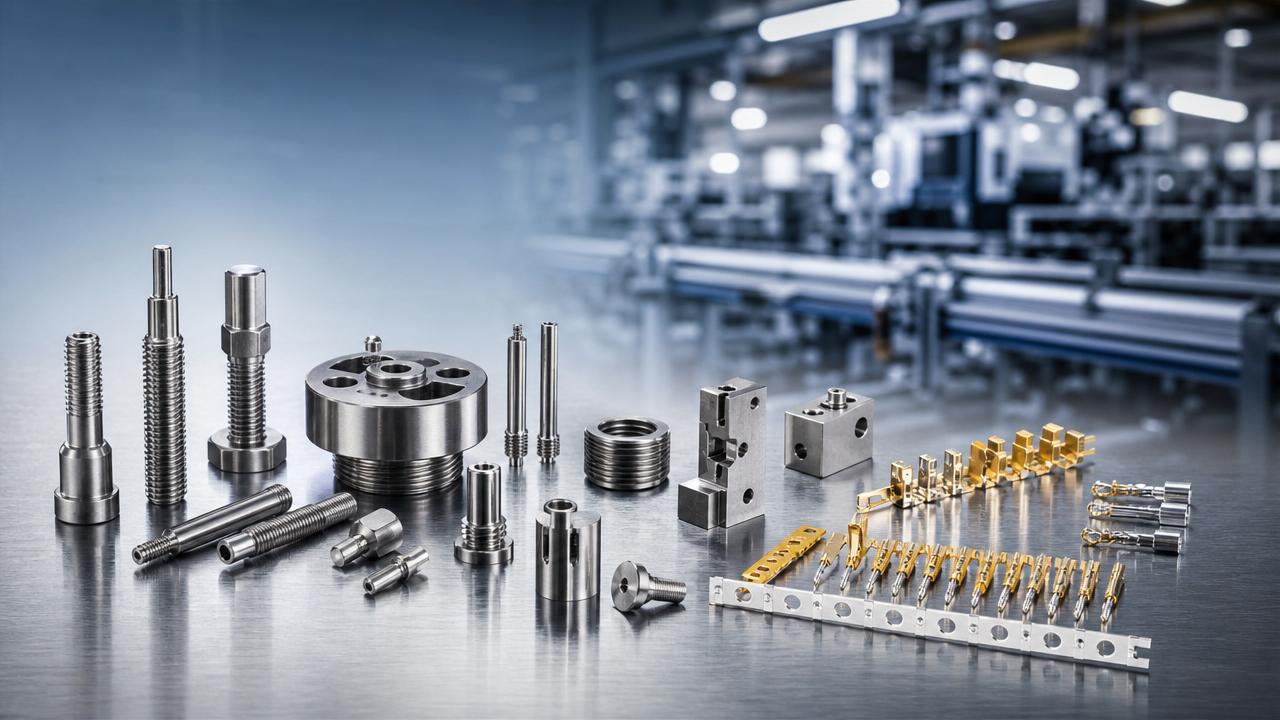
Is niche manufacturing becoming a safer growth bet?
As global supply chains become more selective, niche manufacturing is emerging as a compelling growth bet for business evaluators.
Instead of chasing volume alone, specialized producers can build resilience through technical depth, compliance expertise, and high-value industrial demand.
For precision tools, fasteners, electrical components, and molds, the question is now about scalable and sustainable competitiveness.
The market signal behind niche manufacturing is getting stronger
The old manufacturing playbook rewarded scale, low unit cost, and broad capacity. That model still matters, but its risk profile has changed.
Volatile logistics, tighter compliance, energy pressure, and fragmented demand are forcing industrial systems to value precision over simple volume.
This shift gives niche manufacturing a stronger position, especially where failure costs are high and specifications are demanding.
A custom mold insert, high-strength fastener, or certified electrical terminal may look small inside a large machine.
Yet it can determine output stability, product safety, repair frequency, and regulatory acceptance across markets.
That is why niche manufacturing is increasingly treated as a strategic layer, not a marginal supply category.
Why specialized industrial capacity is becoming more defensible
The safer growth case for niche manufacturing comes from barriers that are difficult to copy quickly.
These barriers are rarely based on brand awareness alone. They usually sit inside process knowledge, material behavior, and application history.
In this environment, niche manufacturing does not win by being small. It wins by being deeply necessary.
The stronger the link between a component and system reliability, the more defensible the specialist becomes.
Precision components are moving from cost items to risk controls
A clear trend is visible across hardware, electrical, tooling, and mold sectors.
Components are no longer judged only by purchase price. They are evaluated through lifecycle cost and operational risk.
For example, a fastener operating under vibration, heat, or corrosion must protect more than assembly integrity.
It protects uptime, warranty exposure, safety reputation, and maintenance planning.
This logic supports niche manufacturing because detailed application knowledge becomes measurable commercial value.
The same applies to pneumatic components, connectors, cutting tools, and injection mold systems.
When tolerance windows narrow, the supplier with empirical data becomes more valuable than the supplier with basic capacity.
Where niche manufacturing is gaining the most traction
Not every specialized segment has the same growth potential. The strongest areas share technical intensity and demand visibility.
- High-performance fasteners used in harsh, mobile, or safety-critical environments.
- Precision molds requiring micron-level stability and repeatable surface quality.
- Electrical components aligned with changing regional compliance standards.
- Mechanical tools optimized for difficult materials and automated production lines.
- Pneumatic and control components that support reliable factory automation.
These fields show why niche manufacturing can be safer than broad commodity expansion.
Demand is tied to function, certification, and engineering trust, not only to short-term purchasing cycles.
When industrial buyers reduce supplier counts, proven specialists may gain influence rather than lose opportunity.
The growth case depends on repeatability, not just specialization
Specialization alone does not guarantee strong returns. Some niche manufacturing firms remain trapped in custom work with weak scalability.
The safer growth bet appears when expertise can be repeated across adjacent applications.
A mold specialist serving one polymer family may expand into related parts with similar flow behavior.
A tooling expert for stainless steel machining may extend into medical, energy, or food equipment applications.
This repeatability turns niche manufacturing into a platform, not a single project business.
Signals of scalable specialization
- Documented test data that supports product selection and technical selling.
- Process controls that reduce defect variation across batches.
- Application libraries built from repeat customer problems.
- Compliance systems that shorten access to regulated markets.
- Modular engineering methods that reduce custom development time.
When these signals are present, niche manufacturing can combine margin resilience with manageable growth risk.
How the trend affects industrial decision chains
The rise of niche manufacturing changes how industrial value is created and evaluated.
Engineering teams gain more influence because component choices affect performance, compliance, and long-term service costs.
Sourcing functions must look beyond price benchmarks and assess production discipline, material traceability, and failure history.
Distribution channels also shift. Technical guidance, documentation, and after-sales troubleshooting become part of the value proposition.
For capital evaluation, niche manufacturing requires deeper due diligence than broad capacity businesses.
Backlog quality, customer concentration, proprietary process knowledge, and certification durability become important indicators.
Key risks still need careful judgment
The trend is promising, but niche manufacturing is not automatically safe.
Several risks can weaken the growth case if they are not addressed early.
- Overdependence on one end market can turn specialization into exposure.
- Undocumented process knowledge can disappear when experienced technicians leave.
- Certification gaps may block entry into higher-value regions.
- Weak digital data can hide quality drift and production inefficiency.
- Limited export readiness can restrict premium market access.
These issues do not invalidate niche manufacturing. They define the operating discipline required to make it investable.
What to watch before treating niche manufacturing as a safer bet
The most useful evaluation approach links technical capability with market durability.
If these answers are strong, niche manufacturing can offer a more balanced growth profile than general industrial expansion.
It combines defensibility, technical relevance, and exposure to modernization across multiple industrial categories.
Practical priorities for the next phase
The next phase of niche manufacturing will reward firms that convert craft knowledge into structured capability.
- Build material and performance databases for recurring applications.
- Strengthen certification planning for target regions and end uses.
- Standardize process parameters without losing customization flexibility.
- Use technical content to explain selection logic and reduce buyer uncertainty.
- Develop adjacent application roadmaps based on existing engineering strengths.
This is where platforms like the Global Hardware & Tooling Network become relevant.
By connecting precision, tooling, components, and market intelligence, GHTN helps clarify where specialized capability creates durable value.
Its focus on hardware, electrical systems, molds, and industrial tools supports more informed decisions across complex manufacturing chains.
A measured conclusion: safer, when the niche is engineered
Niche manufacturing is becoming a safer growth bet, but only under the right conditions.
The strongest opportunities are not merely small markets. They are specialized fields where precision reduces risk and improves system performance.
Technical barriers, compliance knowledge, and repeatable application expertise make niche manufacturing more resilient than many volume-led models.
The practical next step is to map each specialized segment against failure cost, certification demand, scalability, and adjacent market potential.
Where those factors align, niche manufacturing can move from hidden capability to strategic growth engine.
GHTN will continue tracking these signals across precision tools, premium electrical components, fasteners, and molds.
Linking Precision, Tooling the Future remains a practical guide for identifying where industrial specialization becomes long-term advantage.
Related News