
Where does the industrial value chain lose margin?

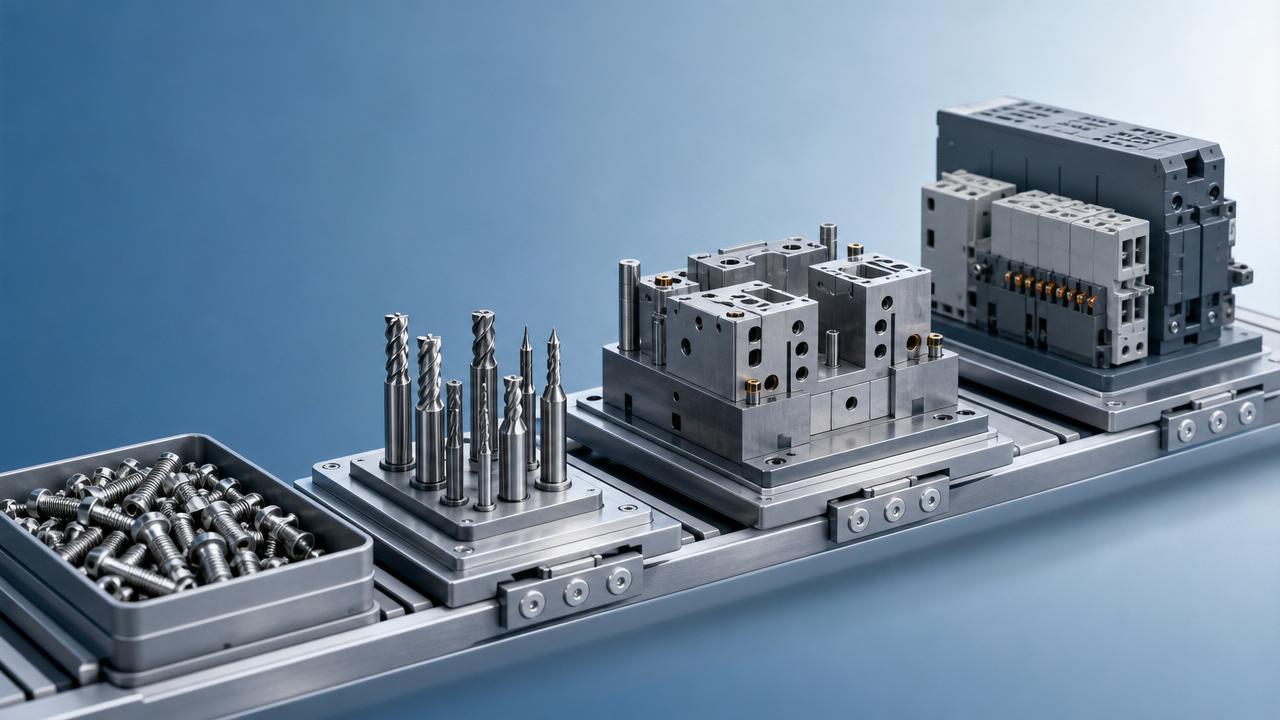
Margins rarely disappear in one place; they leak across procurement, tooling choices, compliance gaps, downtime, rework, and fragmented supplier decisions.
Understanding the industrial value chain means seeing beyond unit price to hidden cost drivers embedded in components, molds, electrical systems, and process reliability.
This article examines where value is lost, why precision parts influence profitability, and how technical insight supports smarter allocation and long-term margin protection.
Defining Margin Leakage in the Industrial Value Chain
The industrial value chain connects materials, components, tooling, assembly, compliance, logistics, service, and market positioning.
Margin is not only created by sales price. It is protected by stable processes, reliable parts, efficient tools, and predictable delivery.
In many sectors, the visible purchase price receives attention while hidden conversion costs remain under measured.
A low-cost fastener may increase downtime. A poorly selected mold insert may extend cycle time and raise scrap.
A non-compliant electrical component may delay certification, damage reputation, or force redesign after production approval.
These losses accumulate inside the industrial value chain before they appear in financial results.
GHTN views this chain from the granular core: fasteners, cutting tools, pneumatic parts, molds, electrical hubs, and precision interfaces.
That level matters because small technical deviations often create large economic consequences across production systems.
Current Pressure Points Across the Industrial Value Chain
Global production networks face rising material volatility, changing standards, labor constraints, and faster product cycles.
Each pressure point increases the probability that margin will leak somewhere inside the industrial value chain.
The industrial value chain becomes fragile when these signals are evaluated separately.
A purchasing decision may seem efficient, yet its operational effect may reduce throughput for months.
The strongest margin protection starts when commercial evaluation and engineering evidence share the same decision framework.
Where the Industrial Value Chain Commonly Loses Margin
Procurement focused only on unit price
The first leakage point is the gap between purchase cost and total ownership cost.
In the industrial value chain, cheaper components may require more inspection, cause assembly defects, or shorten service intervals.
Fasteners, bearings, connectors, and pneumatic elements should be judged by load, environment, tolerance, traceability, and failure impact.
Tooling choices that reduce process stability
Cutting tools, molds, dies, fixtures, and forming systems define production rhythm.
Poor tooling decisions create micro-losses through slower feeds, frequent adjustments, unstable dimensions, and higher rejection rates.
Inside the industrial value chain, tooling efficiency often determines whether a product line preserves margin at scale.
Compliance gaps discovered too late
Electrical components, safety devices, and control systems must align with target-market standards from the beginning.
Late compliance discovery can trigger redesign, retesting, delayed shipment, and contractual penalties.
This is a common industrial value chain loss because standards are often treated as documentation, not design constraints.
Rework hidden inside normal operations
Rework can appear normal when teams become accustomed to correction loops.
However, rework consumes labor, energy, machine hours, replacement materials, and management attention.
The industrial value chain loses margin whenever defects are corrected instead of prevented through specification control.
Supplier decisions made without technical context
Supplier evaluation often emphasizes capacity, price, and delivery.
Those factors matter, but technical depth determines whether suppliers can solve tolerance, material, surface, and compliance issues.
The industrial value chain performs better when hidden champion suppliers are matched with precise application requirements.
Business Value of Technical Visibility
Technical visibility turns scattered production details into margin intelligence.
It helps identify whether a cost increase is caused by material selection, process instability, tooling mismatch, or supplier variation.
For the industrial value chain, this visibility supports better capital allocation and more accurate supplier comparison.
- Lower downtime through component reliability analysis.
- Higher throughput through cutting and molding efficiency.
- Reduced compliance risk through early standards mapping.
- Better working capital control through stable lead times.
- Stronger pricing power through quality consistency.
Precision parts are not peripheral inputs. They are economic control points within the industrial value chain.
When specifications are clear, suppliers can price accurately, production can stabilize, and quality costs become more predictable.
This is why GHTN emphasizes empirical tool data, electrical compliance tracking, and micron-level mold analysis.
Typical Objects and Margin Sensitivity
Different industrial objects affect the industrial value chain through different economic mechanisms.
The table below summarizes common margin-sensitive categories and the questions that should guide evaluation.
A mature industrial value chain does not treat these categories as interchangeable commodities.
It assigns risk weight according to failure consequence, process dependency, and replacement complexity.
Practical Methods to Protect Margin
Margin protection requires repeatable practices, not occasional cost reduction campaigns.
The following methods help expose hidden loss points across the industrial value chain.
- Map total ownership cost before approving component substitution.
- Link tool life data with cycle time, scrap, and maintenance records.
- Review compliance standards during design, not after sampling.
- Segment suppliers by technical capability, not only commercial terms.
- Define critical-to-quality characteristics for precision parts.
- Use failure mode analysis for components operating in harsh environments.
- Track rework as a margin metric, not only a quality metric.
These methods create a clearer connection between engineering choices and financial outcomes.
They also reduce the risk of selecting a part that looks economical but weakens the industrial value chain.
Supplier Evaluation and the Stitch Principle
GHTN’s Stitch Principle connects specialized suppliers with demanding industrial applications through precise technical matching.
This approach is especially relevant when the industrial value chain depends on niche expertise.
A supplier may be small, yet highly capable in carbide tooling, corrosion-resistant fasteners, or complex die-casting inserts.
The challenge is verifying whether that capability fits the application risk profile.
- Check process evidence, not only catalog claims.
- Compare inspection systems and traceability depth.
- Assess response ability during abnormal production events.
- Confirm familiarity with destination-market standards.
- Evaluate engineering support during prototyping and ramp-up.
When supplier selection is anchored in evidence, the industrial value chain becomes more resilient and profitable.
Operational Indicators Worth Monitoring
Margin leakage becomes manageable when it is measured with the right indicators.
The following signals help reveal whether the industrial value chain is strengthening or eroding.
- Scrap rate by component batch and supplier.
- Tool change frequency by material and operation.
- Unplanned downtime linked to part failure.
- Certification lead time by product family.
- Warranty claims traced to component origin.
- Rework hours compared with planned process time.
These indicators translate technical variation into economic language.
They also reveal whether cost savings are genuine or merely shifted to later stages.
Next Steps for Stronger Margin Control
The industrial value chain loses margin where decisions are isolated from technical reality.
Procurement, tooling, compliance, production, and supplier evaluation must share a common evidence base.
Begin with a focused review of the highest-risk components, tools, and electrical systems in current operations.
Rank each item by failure consequence, replacement difficulty, compliance exposure, and process dependency.
Then compare actual operating data with supplier claims, technical specifications, and inspection records.
GHTN supports this work by linking precision knowledge, industrial parts intelligence, and global supplier insight.
By examining the granular core, the industrial value chain can move from reactive cost control to structured margin protection.
Linking Precision, Tooling the Future is not a slogan alone. It is a practical path toward stronger industrial profitability.
Related News