
Manufacturing Insights Behind Slower Quotations and Longer Delivery

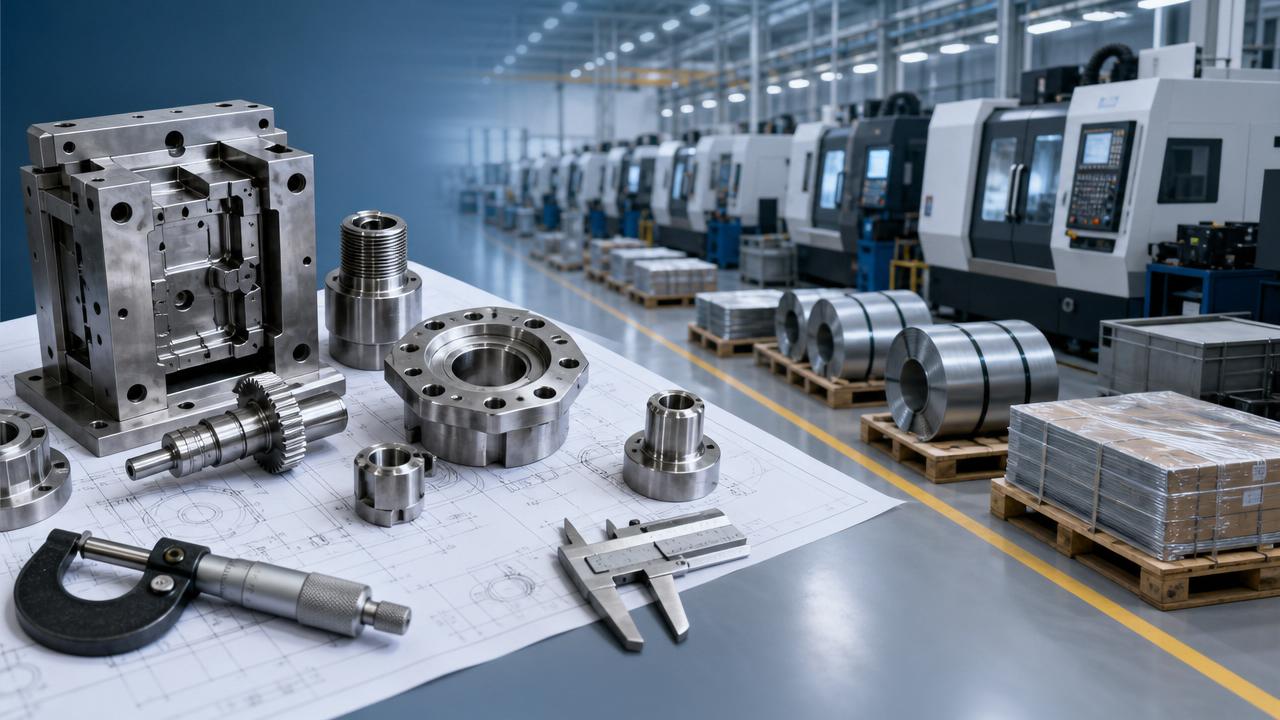
In global sourcing, slower quotations and longer delivery times often signal deeper operational realities rather than simple inefficiency. These manufacturing insights help business evaluators understand how capacity planning, tooling complexity, material volatility, and compliance requirements shape supplier responsiveness. By looking beyond the surface, buyers can make more accurate assessments, reduce procurement risk, and identify partners with stronger long-term manufacturing reliability.
Why a checklist approach matters before judging supplier speed
For business evaluators, speed is easy to observe but hard to interpret. A quote that takes five days instead of one, or a lead time that stretches from four weeks to ten, may reflect poor internal discipline. But it may also reflect serious engineering review, constrained machining capacity, multi-tier sourcing, mold validation, or export compliance checks. The right manufacturing insights come from separating avoidable delay from necessary process control.
This is why a checklist works better than intuition. Instead of asking only “Why is this supplier slow?”, evaluators should ask: What exactly is slowing the quotation? Is the delivery promise based on real capacity? Are there hidden technical risks? Has the supplier identified materials, tolerances, tooling dependencies, testing standards, and logistics exposure? A structured review creates stronger sourcing decisions and prevents low-price, fast-response suppliers from winning simply because they answered first.
First review: what to confirm before treating delay as a warning sign
Before escalating concerns, evaluators should confirm whether the request itself demands deeper technical handling. In hardware, electrical, mold, and precision component sourcing, quotation and delivery speed can change dramatically depending on drawing maturity, order volume, quality expectations, and downstream application risk. Strong manufacturing insights start with checking the input quality given to the supplier.
- Are drawings complete, revision-controlled, and dimensionally clear, or is the supplier spending time interpreting ambiguous specifications?
- Does the inquiry include material grade, finish, hardness, electrical rating, or mold life requirements that affect routing and cost assumptions?
- Is this a standard part, a modified standard, or a fully custom item requiring process planning and fixture assessment?
- Are target quantities realistic for the quoted process, especially if tooling amortization or setup efficiency changes at different volumes?
- Is the requested lead time aligned with actual industrial sequencing such as sampling, first article inspection, PPAP-style documentation, or certification review?
If these basics are incomplete, a slower response may actually indicate process maturity. Suppliers that ask more questions often understand execution risk better than those that immediately issue a superficial quote.
Core checklist: the real drivers behind slower quotations
1. Engineering review depth
Complex components rarely move straight from inquiry to price. Precision machining, electrical assemblies, and mold-based products often require manufacturability review, tolerance stack analysis, process selection, and tooling feasibility checks. If the supplier is consulting process engineers before quoting, the delay may be a sign of control rather than weakness. Good manufacturing insights recognize that engineering review is often the difference between a reliable quote and future cost claims.
2. Capacity planning and machine loading
Suppliers with high utilization need to verify whether they can fit new work into current schedules without disturbing existing commitments. CNC centers, stamping presses, heat treatment windows, coating lines, and molding machines all operate within limited slots. A supplier that checks real loading before quoting lead time is generally safer than one that promises immediately and reschedules later.
3. Material sourcing volatility
Special alloys, engineering plastics, copper grades, high-strength fastener steel, and certified electrical materials may not be available from local stock. Lead time can expand if mill certificates, flame ratings, RoHS or REACH declarations, or UL-recognized inputs are required. One of the most practical manufacturing insights is that quote delays often begin with upstream uncertainty, not internal indecision.
4. Tooling and fixture dependency
In mold manufacturing, die-casting, stamping, and repeat machining, the quoted price depends on tool path design, fixture creation, cavity planning, and expected maintenance cycles. If the supplier must estimate tooling wear, insert strategy, or sampling rounds, quotation time will naturally increase. Longer delivery can also reflect time needed for tool build, debugging, and validation rather than production itself.
5. Compliance and documentation burden
For many global buyers, the part is only half the product. The rest includes test reports, dimensional records, traceability, country-of-origin evidence, and sector-specific compliance files. Suppliers serving regulated export markets usually move more slowly because they review documentary obligations before committing. These manufacturing insights are especially important in electrical hubs, connectors, safety-related hardware, and OEM programs with strict audit trails.
Lead time assessment guide: how to judge whether longer delivery is justified
A longer delivery promise is not automatically negative. It becomes a concern when the schedule is vague, unsupported, or inconsistent with the manufacturing route. Evaluators should test lead times against physical process logic.
These manufacturing insights help evaluators distinguish disciplined planning from optimistic selling. A slower but structured schedule is often more valuable than a fast but fragile one.
Scenario-based checks for different industrial sourcing situations
For standard hardware and fasteners
Check whether the delay comes from plating capacity, tensile testing, thread gauge availability, or packaging customization. Standard-looking parts can still face bottlenecks when corrosion resistance, salt spray duration, or lot traceability is required for export programs.
For electrical components and subassemblies
Focus on terminal materials, insulation grades, connector fit, flame-retardant resin supply, and certification status. A careful supplier may delay quotation until current ratings, temperature rise conditions, or enclosure compatibility are verified. Here, manufacturing insights must include both production capability and compliance readiness.
For molds, dies, and precision tooling
Expect longer front-end timing. Mold flow review, steel selection, cooling layout, shrinkage assumptions, cavity balance, and maintenance design all affect cost and delivery. Business evaluators should not compare tooling quotations as if they were commodity parts. The real question is whether the supplier is exposing technical assumptions clearly.
For prototype-to-production transitions
Longer delivery often reflects process stabilization rather than inefficiency. Evaluators should ask whether the supplier is building temporary fixtures, adjusting inspection methods, or preparing alternate routings for volume scale-up. One of the most useful manufacturing insights is that prototype speed and production reliability are rarely optimized by the same system.
Commonly overlooked factors that distort evaluation
- Time zone and communication layering: International sourcing often adds internal translation, distributor review, and engineering relay delays.
- Quotation completeness: A fast price without assumptions, exclusions, or validity dates may create negotiation delays later.
- Sub-supplier dependence: Heat treatment, coating, resin supply, and stamping inserts may sit outside the direct factory.
- Change history: Frequent drawing revisions can reset lead time logic and make a supplier appear slow when the specification is unstable.
- Hidden MOQ economics: Suppliers may wait to confirm batch efficiency before quoting if requested quantities fall below practical production thresholds.
Ignoring these items leads to poor comparisons. The best manufacturing insights come from evaluating process credibility, not just response speed.
Execution checklist for business evaluators
To move from observation to decision, evaluators should standardize their review process across suppliers. This improves fairness and reveals which delays are structural, temporary, or controllable.
- Request a breakdown of quote lead time: engineering review, sourcing confirmation, tooling estimate, and approval workflow.
- Ask for a process-based delivery schedule rather than a single promised shipment date.
- Verify whether critical materials, outside processes, and testing labs are already secured.
- Check if the supplier distinguishes prototype lead time, pilot lead time, and mass production lead time.
- Review historical on-time delivery data together with NCR trends and engineering change handling.
- Score responsiveness by quality of clarification questions, not only by elapsed days to answer.
How stronger manufacturing insights improve long-term supplier selection
For global OEMs, distributors, and industrial sourcing teams, the fastest supplier is not always the lowest-risk supplier. Careful quotation behavior may indicate stronger technical governance, better load control, and a more realistic view of production constraints. Longer delivery may reflect investment in tooling reliability, material traceability, or compliance discipline that protects total program cost over time.
This is especially relevant in the industrial parts ecosystem covered by GHTN, where fasteners, electrical systems, molds, and precision tools are the granular core of larger manufacturing systems. A missed tolerance, an unverified resin, or an overloaded machining cell can delay entire assemblies downstream. Practical manufacturing insights therefore help evaluators connect supplier timing signals to broader business continuity and quality performance.
Final action guide: what to discuss next with a supplier
If a quotation is slow or delivery appears long, do not stop at the headline numbers. Ask for the assumptions behind price, the sequence behind lead time, the dependencies behind bottlenecks, and the controls behind quality. Prioritize discussion around drawing maturity, material availability, tooling readiness, inspection milestones, compliance documents, and logistics handoff points.
When these topics are clarified early, business evaluators gain the manufacturing insights needed to compare suppliers on operational truth rather than presentation speed. If further confirmation is needed, the most useful next step is to request a structured review covering technical parameters, process route, capacity window, sample timeline, quality documentation, budget boundaries, and cooperation model. That conversation usually reveals whether a delay is a risk signal or a sign of real manufacturing strength.
Related News