
Mechanical Engineering Solutions for Repeated Downtime

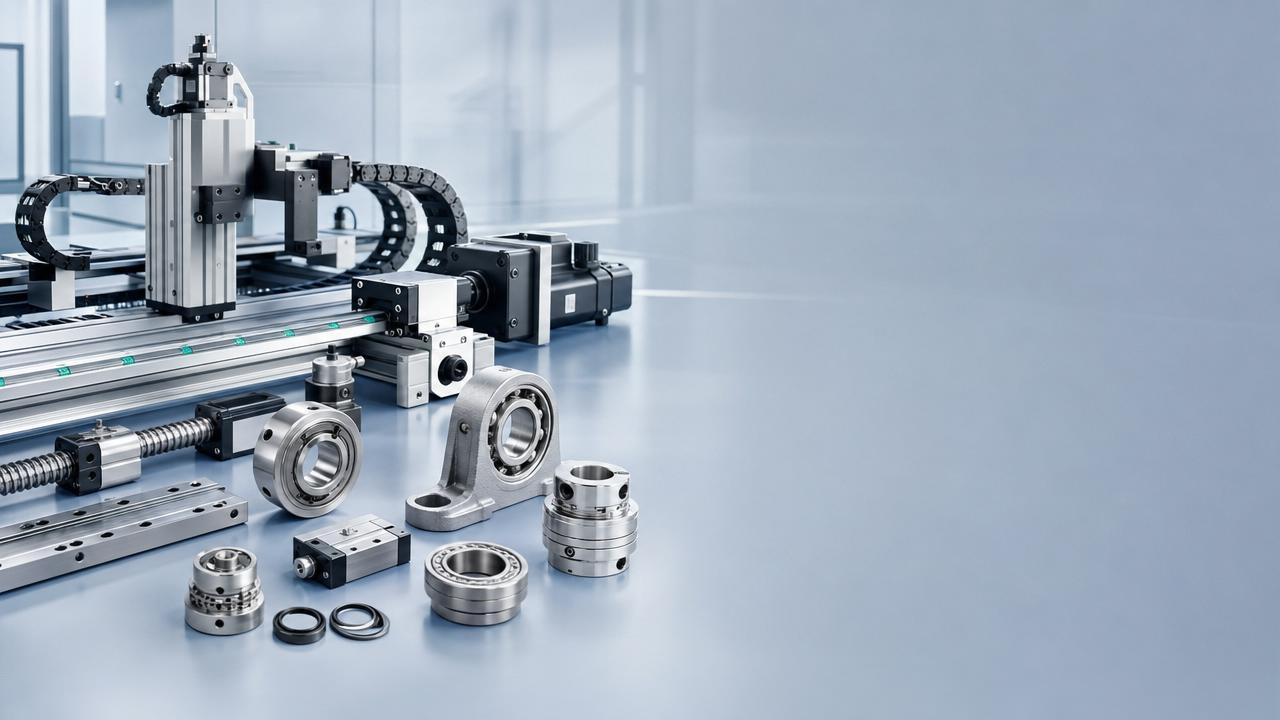
Repeated downtime drains productivity, disrupts maintenance schedules, and raises operating costs. For after-sales maintenance teams, effective mechanical engineering solutions are essential to identifying root causes, improving equipment reliability, and reducing unplanned failures. This article explores practical strategies, component-level insights, and precision-driven approaches that help maintenance professionals restore performance faster and support long-term operational stability.
Why scenario differences matter when downtime keeps coming back
Repeated downtime rarely comes from a single universal fault. The same symptom—unexpected stoppage, abnormal vibration, overheating, loss of positioning accuracy, or unstable cycle time—can point to very different causes depending on the operating scene. A packaging line, a mold processing center, a pneumatic assembly station, and a heavy-duty conveyor may all require mechanical engineering solutions, but the maintenance priorities are not the same.
For after-sales maintenance personnel, this is the key judgment challenge: not every machine needs a complete redesign, and not every failure can be fixed by replacing parts faster. In many real service environments, recurring downtime is driven by a mismatch between equipment design assumptions and actual use conditions. Load profile, contamination level, shift pattern, operator habits, lubrication intervals, alignment quality, and spare-part consistency all change the right response.
That is why strong mechanical engineering solutions should be chosen by scenario. The goal is not just to restart the machine today, but to understand which intervention fits the operating context, cost pressure, and reliability target of the customer site.
Common business scenarios where mechanical engineering solutions are most needed
In the broad industrial ecosystem, repeated downtime appears most often in a few recurring service situations. Each one creates different diagnostic patterns for after-sales teams and different expectations from plant managers, OEMs, and distributors.
This comparison shows why mechanical engineering solutions should be tied to operating reality. A repeated breakdown in an automated line may call for tighter tolerance control, while the same frequency of stoppage in a corrosive environment may require upgraded materials, better seals, and different replacement intervals.
Scenario 1: High-cycle automation needs repeatability more than emergency fixes
In high-speed automated lines, repeated downtime often develops slowly before it becomes visible. Fasteners loosen under vibration, slides gain slight play, pneumatic components respond inconsistently, and bearings begin to heat under extended duty cycles. Operators may report “random stops,” but the deeper issue is often cumulative mechanical instability.
For this scenario, the best mechanical engineering solutions emphasize repeatability. After-sales teams should check whether the original design can still hold tolerance at current production speed. If line output has increased over time, existing components may now be operating outside their practical reliability window even if they still meet nominal specifications.
Useful actions include torque verification programs, anti-loosening hardware upgrades, guided motion inspection, and improved maintenance intervals based on cycle count rather than calendar time. If pneumatic components are involved, poor air quality and inconsistent pressure should be treated as mechanical reliability factors, not just utility issues. In these environments, a precise service report that links stoppage frequency to wear pattern gives far more value than repeated part swaps.
Scenario 2: Precision tooling and mold systems require root-cause accuracy
When downtime affects mold manufacturing, die-casting support systems, or precision machining equipment, the tolerance for error is much smaller. Here, recurring failure may show up as poor surface finish, dimensional variation, tool breakage, abnormal spindle load, or unstable clamping. What looks like a maintenance issue may actually be a precision loss issue that threatens product quality long before a machine fully stops.
Mechanical engineering solutions in this scenario should begin with mechanical geometry and thermal behavior. Maintenance teams need to verify alignment, backlash, fixture integrity, guideway wear, and cooling performance. If a mold-related process repeatedly loses repeatability, the problem may lie in fixture deformation, contaminated interfaces, or a mismatch between cutting forces and structural rigidity.
This is where portals like GHTN add value to maintenance work. Access to component intelligence, tooling performance analysis, and manufacturing-focused trade insight helps service teams move beyond generic repair decisions. Knowing the difference between a standard replacement and a high-precision upgrade can shorten diagnosis time and reduce the chance of recurring downtime after restart.
Scenario 3: Harsh environments demand material and sealing upgrades
In dusty, humid, abrasive, or chemically exposed environments, repeated downtime is often driven by environmental attack rather than design weakness alone. Standard components may fail early because contamination enters moving interfaces, lubricants degrade faster, and corrosion reduces structural integrity at fasteners, fittings, and housings.
After-sales maintenance personnel should be cautious about using the same bill of materials across all customer sites. Mechanical engineering solutions for harsh settings usually involve upgraded seals, coated fasteners, corrosion-resistant alloys, cleaner lubrication practices, and enclosure improvements. Even small changes such as moving from basic carbon steel hardware to treated or stainless alternatives can extend service life significantly when moisture and chemical splash are part of daily operations.
This scenario also highlights the importance of installation discipline. A premium seal installed on a scratched shaft or a corrosion-resistant fastener paired with incompatible mating surfaces will still underperform. Mechanical engineering solutions work best when component choice, surface condition, and maintenance procedure are treated as one system.
Scenario 4: Heavy-load systems need structural thinking, not just replacement speed
Conveyors, lifting mechanisms, drive trains, and large rotating systems create a different maintenance reality. In these applications, repeated downtime often comes from shock loading, uneven load paths, misalignment, or fatigue around joints and support frames. The visible failure may be a damaged bearing or worn coupling, but the underlying cause is frequently structural.
Mechanical engineering solutions for heavy-load scenes should include load mapping, shaft alignment checks, coupling review, and a close look at how vibration travels through the machine base. If an asset keeps consuming the same spare part, the question should shift from “Which brand lasts longer?” to “Why is this part absorbing more stress than intended?”
This type of analysis is especially important for after-sales teams working under restart pressure. Fast restoration matters, but if no one verifies support stiffness, foundation movement, or overload events, the same downtime will return and service credibility will suffer.
How needs differ by customer type and maintenance maturity
Not every customer evaluates mechanical engineering solutions in the same way. Plant size, technical staffing, and production model affect what kind of solution is realistic and valuable.
For maintenance teams, this means the “best” mechanical engineering solutions must fit both the machine and the customer’s operating capability. A sophisticated redesign may not deliver value if the site lacks the tools or procedures to sustain it. On the other hand, a low-cost quick fix may be unsuitable for a plant measured on uptime, traceability, and energy efficiency.
What to confirm before recommending a solution
Before selecting mechanical engineering solutions, after-sales teams should confirm several scenario-specific conditions. First, define the failure pattern clearly: startup failure, mid-cycle stop, load-related shutdown, or progressive precision loss. Second, verify whether the issue is localized to one component or connected to the larger mechanical system. Third, compare actual use conditions with original design assumptions, including duty cycle, environment, and operator behavior.
It is also important to review component quality consistency. In global industrial supply chains, nominally similar parts can behave very differently under vibration, heat, or repeated load. Access to trusted component intelligence, especially in hardware, electrical interfaces, and mold-related tooling, helps avoid hidden compatibility problems. This is one reason industry resources such as GHTN matter: they connect practical service work with deeper knowledge on materials, performance trends, and industrial component selection.
Common misjudgments that keep downtime coming back
A frequent mistake is treating repeated downtime as a spare-parts problem only. If the same bearing, fastener, guide, or actuator fails again and again, the real issue may be installation error, frame distortion, poor contamination control, or an unrecognized overload condition. Another common misjudgment is ignoring small tolerance shifts because the machine can still run. In many applications, especially precision and automated systems, those “small” shifts are exactly what later produce major stoppages.
Maintenance teams should also avoid separating mechanical symptoms from process context. A machine that only fails during product changeover, peak throughput, or high-temperature shifts is already showing a scenario clue. Effective mechanical engineering solutions emerge when service technicians connect failure events to real operating conditions rather than isolated snapshots taken after the stop.
A practical action path for after-sales maintenance teams
A useful field approach is to move through four steps. First, stabilize the asset safely and record the exact symptom. Second, classify the site into a realistic application scenario such as high-cycle automation, precision tooling, harsh environment, or heavy-load duty. Third, choose mechanical engineering solutions that match that scenario’s true failure drivers. Fourth, validate the fix through trend checks, not just restart confirmation.
When teams work this way, downtime reduction becomes more systematic. They stop relying on repeated emergency substitution and start building a knowledge base around component behavior, operating conditions, and design-fit decisions. Over time, this improves spare planning, raises first-time fix rate, and strengthens customer trust.
Conclusion: choose mechanical engineering solutions by operating scene, not by habit
Repeated downtime is costly because it is rarely just a technical interruption; it affects schedules, service workload, customer confidence, and long-term equipment value. The most effective mechanical engineering solutions are those selected with a clear view of the application scenario, the customer’s maintenance maturity, and the real mechanical stresses at work.
For after-sales maintenance professionals, the next step is to review recurring failures by scene: Which assets run in high-cycle conditions? Which operate in contamination-heavy environments? Which depend on precision tooling or carry heavy shock loads? Once those distinctions are clear, solution selection becomes more accurate, and long-term reliability improves. In a complex industrial landscape, better uptime starts with better scenario judgment.
Related News