
Niche Manufacturing Markets With Lower Entry Risk

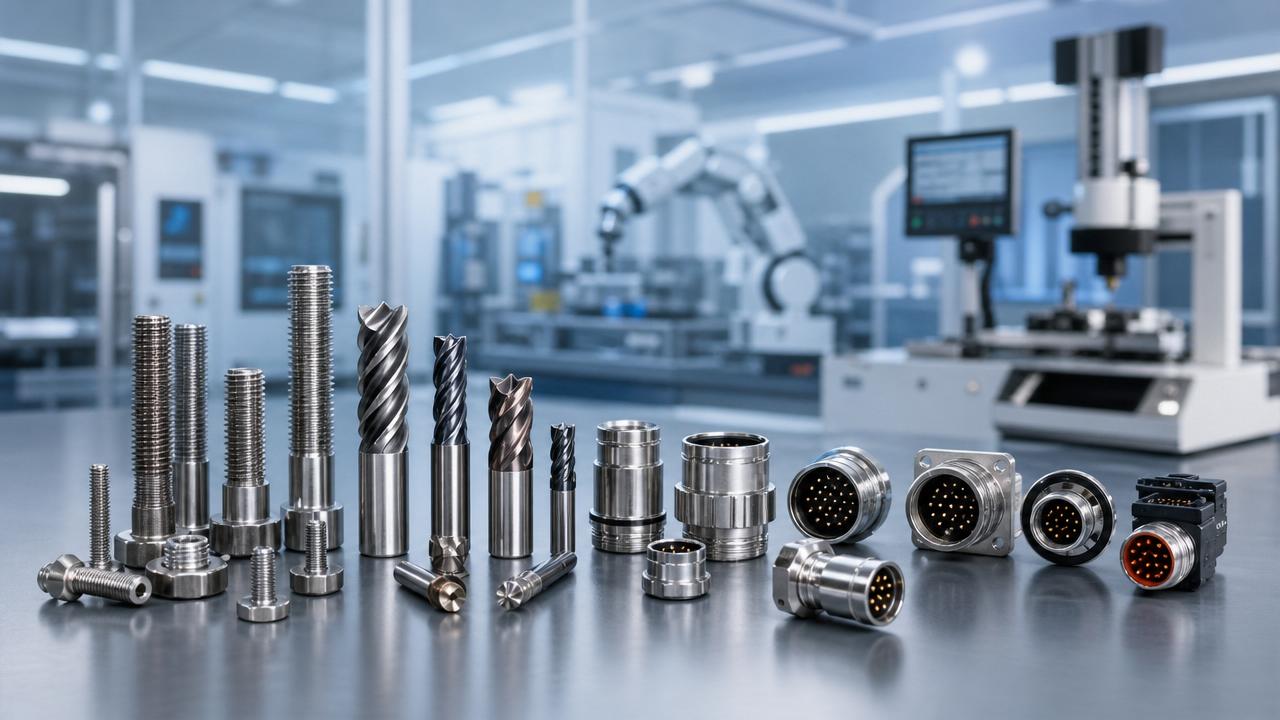
For distributors, agents, and channel partners seeking growth with manageable exposure, niche manufacturing offers a compelling path. Instead of entering overcrowded mass markets, businesses can target specialized segments where technical barriers, steady demand, and higher margins create lower entry risk. This article explores how to identify promising opportunities, assess supplier capabilities, and build a practical market-entry strategy in niche manufacturing.
Why niche manufacturing is gaining momentum now
A clear shift is happening across industrial supply chains. Buyers are no longer focused only on price and volume. They are placing greater weight on supply continuity, product traceability, compliance readiness, shorter lead times, and the ability to support specialized applications. This change is creating room for niche manufacturing markets that were once overlooked by generalist traders and large-volume distributors.
For channel partners, this matters because lower entry risk often comes from better market structure rather than smaller market size. In many niche manufacturing categories, demand is steady, replacement cycles are predictable, and customer requirements are technical enough to discourage low-quality competition. That combination can produce healthier margins and longer customer retention than highly commoditized segments.
GHTN’s industry lens is especially relevant here. In industrial components, electrical subsystems, precision tooling, mold applications, fastening systems, and pneumatic parts, growth is often happening below the surface. The opportunity is not always in mass production headlines. It is often in the specialized components that keep production lines reliable, compliant, and efficient.
The market signals behind lower-risk entry opportunities
Several practical signals suggest why niche manufacturing is becoming more attractive for distributors and agents. First, industrial customers increasingly prefer suppliers who can solve application-specific problems. Second, many OEMs are diversifying sourcing to reduce exposure to single-region disruption. Third, sustainability and compliance rules are reshaping product qualification standards, which benefits suppliers with technical documentation and stable process control.
These shifts favor segments where expertise matters. A distributor entering a niche manufacturing market for high-performance fasteners, precision mold accessories, electrical connection components, or specialized cutting tools may face a smaller addressable market than in general hardware, but also less chaotic competition. In practice, that often means lower pricing pressure and stronger value-based selling.
Where niche manufacturing opportunities are strongest
Not every specialized category offers the same risk profile. The most attractive niche manufacturing segments usually share three traits: clear technical differentiation, recurring industrial demand, and manageable qualification barriers. In the broad industrial landscape, several areas stand out.
One strong direction is engineered fastening systems used in harsh environments such as marine equipment, energy systems, transport assemblies, and outdoor electrical installations. These are not generic bolts competing only on price. Material grade, corrosion resistance, load performance, and certification support all matter. For distributors, this creates a service-led selling model rather than a volume-only model.
Another promising area is precision tooling for specialized machining tasks. Customers often require measurable gains in tool life, cutting stability, surface finish, or compatibility with specific workpiece materials. In this type of niche manufacturing, sales conversations can be anchored in productivity and scrap reduction, which supports stronger margins.
A third area is electrical connection and control components designed for industrial automation, energy efficiency, or high-reliability environments. As factories modernize, buyers need more than basic parts. They need components aligned with evolving installation standards, system integration requirements, and uptime expectations.
Precision mold components and auxiliary parts also deserve attention. Although project cycles can vary, mold ecosystems often produce downstream demand for replacement wear parts, cooling accessories, guide elements, ejector systems, and process optimization tools. This allows channel partners to build recurring business around established production assets.
What is driving the shift toward specialized segments
The rise of niche manufacturing is being driven by more than temporary sourcing disruption. It reflects deeper structural changes in how industrial customers make decisions. Procurement teams are under pressure to secure supply, engineering teams want dependable performance, and management wants better total cost control. That creates a stronger business case for specialized components that reduce failure risk or improve process stability.
Technology is also changing the economics of smaller segments. Better CNC capability, digital quality control, shorter setup times, and more flexible production methods allow manufacturers to profitably serve narrower applications. This means niche manufacturing suppliers can be more responsive than before without requiring mass-market volumes.
At the same time, global industrial buyers have become more comfortable sourcing from expert suppliers that provide documentation, technical communication, and reliable after-sales support. The old assumption that only large-scale vendors are safe is weakening. In many categories, specialized competence now matters more than sheer size.
Key drivers channel partners should track
- Higher cost of downtime in automated production environments
- More stringent product and electrical compliance expectations
- Growing preference for regional inventory and faster replenishment
- Demand for material transparency and performance validation
- Customer willingness to pay for lifecycle value, not just unit price
How the impact differs for distributors, agents, and OEM-focused sellers
The same market change affects each participant differently. For distributors, niche manufacturing opens a path to differentiated inventory and better account stickiness. For agents, it creates a consultative selling role where market knowledge and supplier matchmaking become core value. For OEM-focused sellers, it supports deeper integration into engineering and procurement decisions.
How to evaluate a niche manufacturing supplier before market entry
In lower-risk segments, supplier quality is often the decisive factor. A niche manufacturing opportunity can become high risk if the supplier cannot maintain consistency, support documentation, or communicate technically with downstream buyers. This is why evaluation should go beyond catalog breadth.
Start by checking whether the supplier truly serves a niche or simply labels standard products as specialized. Review process capability, inspection routines, traceability practices, material control, lead-time stability, and responsiveness to customization requests. In technical categories, ask for application case examples, not just certificates. A credible supplier should be able to explain where the product works best, where it does not, and what installation or operating conditions matter.
For GHTN-aligned sectors such as tooling, electrical parts, mold systems, fasteners, and pneumatic components, another important check is whether the supplier understands downstream manufacturing logic. Can they discuss cutting efficiency, wear patterns, environmental loads, tolerance demands, or automation compatibility? If yes, the partnership is more likely to support long-term channel growth.
A practical entry model: start narrow, validate fast, scale selectively
The best way to enter niche manufacturing is usually not with a broad catalog launch. A narrower model reduces exposure and accelerates learning. Choose one end-use cluster, one product family, and one buyer pain point. For example, focus on corrosion-resistant fasteners for coastal infrastructure maintenance, or precision cutting tools for difficult-to-machine alloys, or industrial electrical connectors for automation retrofits.
This phased approach improves risk control because it forces early validation. You can test real market questions: Are customers replacing an inferior product? Are approval requirements manageable? Is local technical support needed? Are reorder cycles visible? Niche manufacturing rewards disciplined expansion, not uncontrolled product line growth.
Signals worth monitoring over the next 12 to 24 months
For anyone evaluating niche manufacturing, the most useful signals are often operational rather than headline-driven. Watch whether OEMs are shortening approved supplier lists but raising qualification standards. Track whether maintenance buyers are shifting from generic substitutes to documented components. Observe whether customers ask more frequently about compliance, service life, origin, material composition, or compatibility with automated systems.
Also pay attention to distributor behavior. If general line competitors begin adding technical support, installation guidance, and application-specific bundles, that is a sign the market is moving away from commodity competition. In parallel, monitor lead-time patterns and MOQ flexibility from suppliers. In niche manufacturing, responsiveness can become a decisive advantage even when unit prices are not the lowest.
Common mistakes that turn a low-risk segment into a high-risk move
The most common mistake is choosing a niche that looks specialized on paper but behaves like a commodity in the market. If buyers treat products as interchangeable, margins will erode quickly. Another mistake is entering too many subcategories at once, which creates inventory complexity before demand patterns are understood.
A third mistake is underestimating technical communication. In niche manufacturing, product success often depends on correct specification, installation, and application fit. If channel partners cannot translate technical value into purchasing logic, even strong products will struggle. Finally, many businesses focus only on first-order opportunity and ignore after-sales expectations. Yet in specialized industrial segments, reliability, documentation, and issue resolution are often what secure repeat orders.
What to confirm before committing resources
Before entering a niche manufacturing market, confirm five questions. Is the demand linked to a real technical or operational need? Can the supplier prove consistency and support? Are the qualification barriers high enough to protect margin but not so high that market entry becomes slow and expensive? Is there a visible path to repeat orders? Can your team explain the value in commercial terms that procurement and engineering both understand?
If most answers are positive, niche manufacturing can be one of the most practical ways for distributors, agents, and channel partners to grow with controlled exposure. The strongest opportunities are rarely the loudest ones. They are often found in precise industrial needs where technical credibility, supply reliability, and focused market positioning matter more than scale alone.
For businesses that want to judge how these trends affect their own portfolio, the next step is simple: identify one specialized industrial problem, one supplier with genuine process depth, and one customer segment that values reduced operational risk. That is where niche manufacturing shifts from concept to durable commercial advantage.
Related News