
OEM Components Price Gaps That Signal Hidden Cost Later

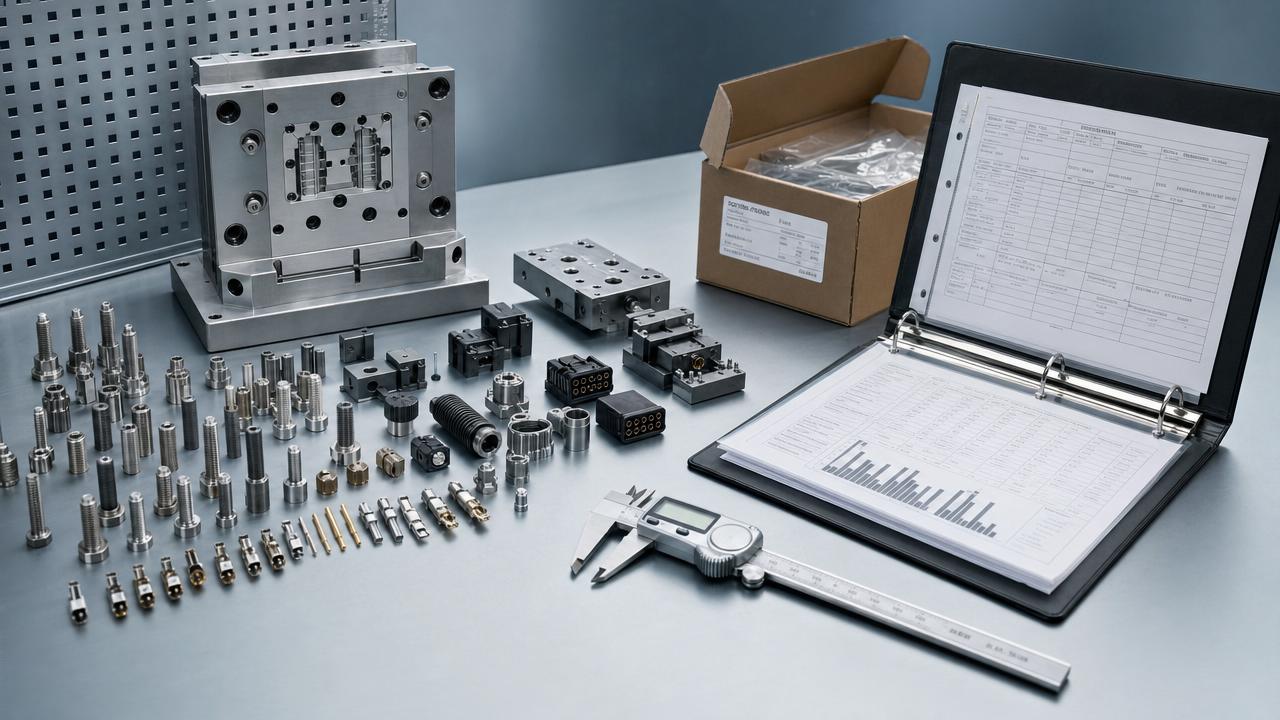
A low quote on OEM components can look like a smart win on paper, but for finance approvers, early savings often hide later exposure in quality failures, delays, rework, and compliance risk. This article highlights the price gaps that deserve closer scrutiny, helping procurement and budget decision-makers distinguish between true cost efficiency and hidden liabilities before they impact margins, timelines, and supplier performance.
In industrial purchasing, the cheapest line item rarely reflects the full cost of ownership. A fastener priced 8% below market, a pneumatic fitting offered with a 2-week shorter lead time, or a mold insert quoted without test documentation may all appear favorable during budget review. Yet for finance teams responsible for margin protection, supplier reliability, and cash flow planning, these price gaps often signal deferred expense rather than real savings.
For global OEMs, distributors, and component buyers operating across hardware, electrical, and tooling categories, the challenge is not simply negotiating down unit price. The real task is identifying which OEM components are competitively priced because of scale, process efficiency, or material optimization, and which are underquoted because critical cost drivers have been removed, delayed, or shifted to the buyer.
Why finance approvers should treat large price gaps as a risk indicator
A meaningful gap between two quotes for the same OEM components is not automatically a problem. In many industrial categories, a 3% to 7% variance can result from different overhead structures, automation levels, or raw material purchasing terms. The concern begins when the gap reaches 10% to 20% without a transparent explanation covering material grade, tolerance, inspection scope, tooling life, packaging standard, and delivery terms.
Finance approvers should view unexplained pricing differences as a signal to ask where cost has been removed. In industrial supply, savings usually come from 1 of 4 places: lower input quality, reduced process control, incomplete service scope, or shifted downstream risk. If the quote does not clearly identify the source, the savings may be temporary while the liabilities are cumulative.
The cost categories that do not appear on the first quote
When OEM components fail, costs often emerge in stages rather than at the moment of purchase. Stage 1 is receiving and inspection, where nonconforming parts trigger sorting, quarantine, and reporting. Stage 2 is production disruption, where line stoppage or setup adjustment adds labor and scheduling pressure. Stage 3 is field or customer-side exposure, where warranty claims, return freight, or compliance review can exceed the original part value by 5 to 15 times.
- Incoming quality sorting and additional inspection labor
- Production downtime caused by fit, tolerance, or performance deviation
- Rework, scrap, and replacement freight across multiple locations
- Supplier management overhead, corrective action cycles, and claim processing
- Compliance exposure for electrical, safety, or material declaration gaps
In practice, a component that saves $0.12 per unit may create a total landed loss of $0.40 to $1.20 per unit once hidden handling and disruption costs are included. That is why finance-led approval should focus on variance explanation, not just nominal price reduction.
Typical warning signs behind underquoted OEM components
Many hidden-cost situations follow repeatable patterns across mechanical tools, electrical subcomponents, mold parts, and fastening systems. A quote that looks sharply below peer offers often excludes one or more technical or commercial protections that should have been part of the baseline package.
The table below outlines common pricing gaps and what they can mean in a real sourcing review.
The key takeaway is simple: the larger the gap, the more important it becomes to validate specification parity. Finance approvers do not need to audit every technical detail themselves, but they do need evidence that the compared quotes are commercially equivalent and operationally comparable.
Where hidden cost usually enters the OEM components lifecycle
Hidden cost rarely sits in one place. It moves through the sourcing lifecycle, from material selection to after-sales support. For finance teams, mapping cost entry points makes approvals more accurate and helps avoid false savings that damage EBIT later in the quarter.
Material and specification downgrades
In industrial components, small changes in specification can create large shifts in lifespan and defect rates. A fastener with reduced surface treatment thickness, a machined part with looser tolerance such as ±0.10 mm instead of ±0.03 mm, or a molded part produced with lower-grade steel inserts may still pass visual inspection while underperforming after 3 to 6 months in service.
This matters most in extreme environments: vibration, humidity, thermal cycling, chemical contact, or repeated torque loads. In those use cases, the low quote may be inexpensive only because the supplier has priced for standard conditions while your actual application requires higher durability.
Questions finance teams should require before approval
- Is the material grade identical across all quotes?
- Are tolerance bands, coating thickness, and hardness ranges documented?
- Does the quote include sampling, test records, or first article validation?
- Has the supplier priced the actual duty cycle, environment, and regulatory need?
Process control and inspection reduction
Another common source of price disparity is process control. Two suppliers can use the same drawing yet quote differently because one includes in-process inspection every 2 hours, calibrated gauges, capability checks, and outgoing verification, while the other relies mainly on final visual checks. The lower price appears efficient, but the buyer is actually accepting a larger probability band for variation.
For finance approvers, the issue is statistical. A lower control regime may work on 80% to 90% of shipments, then create one high-cost event that removes the annual savings. A single rejected batch in custom OEM components can trigger urgent replacement, air freight, and customer escalation within 72 hours.
Lead time promises that move cost into logistics
Short lead times are attractive, especially when inventory carrying costs are under scrutiny. But when a supplier quotes 7 to 10 days for parts that normally require 3 to 4 weeks, finance teams should confirm whether the speed comes from stocked raw materials and reserved machine hours, or from optimistic scheduling with no resilience for disruption.
If capacity is not stable, the low-cost quote can later create partial shipments, expedited transport, or emergency secondary sourcing. In many cases, a 5% unit price saving disappears after one premium freight event.
How to compare OEM components quotes on total cost, not only unit cost
A finance-friendly quote review should use a structured model. The objective is not to make procurement slower. It is to reduce the number of approvals based on incomplete comparisons. A practical review can be done in 5 checkpoints and usually adds less than 1 business day to the decision cycle.
A 5-point evaluation framework
The following framework works well across hardware parts, electrical assemblies, mold components, and precision tooling items. It helps finance approvers identify whether a low quote is genuinely lean or simply incomplete.
This framework gives finance teams a measurable basis for approvals. If the lowest quote scores weakly on 2 or more of the 5 points, the apparent savings should be discounted until the supplier closes those gaps with documentation or revised terms.
Use a simple landed-risk calculation
A useful internal method is to calculate adjusted cost per approved unit. Start with quoted unit price, then add estimated quality handling cost, delay risk cost, and compliance administration cost. Even a conservative model can expose misleading low bids. For example, if a quote is 6% cheaper but carries a projected 3% defect sorting cost and a 4% logistics disruption reserve, it is already more expensive than a stable alternative.
This does not require precise prediction of every failure. It simply requires assigning a reasonable value to likely events over a 6-month or 12-month sourcing window.
High-risk scenarios by component category
Different categories of OEM components carry different hidden-cost patterns. Finance approvers can improve decisions by understanding where price gaps matter most within hardware, electrical, and mold-related sourcing.
Fasteners and mechanical hardware
In fasteners, price gaps often come from steel grade, plating thickness, thread accuracy, and salt-spray durability assumptions. A bolt that is only 4 cents cheaper can become a liability if it fails under cyclical load or corrodes early in outdoor or humid applications. Watch for unclear hardness range, absent coating specification, or no mention of torque consistency testing.
Electrical connectors and control components
In electrical sourcing, lower quotes may reflect thinner contact material, weaker housing resin, reduced insulation performance, or missing validation for operating temperature. If your application requires repeated connection cycles, vibration resistance, or stable performance between -20°C and 70°C, the low price may ignore the actual operating envelope.
Mold parts and precision tooling
For mold bases, inserts, punches, and dies, hidden costs often emerge through shorter tool life, slower cycle stability, or added tuning during production launch. A lower upfront tooling price can be attractive during capex review, but if maintenance frequency doubles from every 100,000 cycles to every 50,000 cycles, the lifecycle economics quickly deteriorate.
- Check whether steel selection matches expected shot volume or wear profile
- Confirm dimensional inspection methods for micron-level critical features
- Ask whether trial runs, correction rounds, and spare inserts are included
Practical approval steps for finance-led sourcing governance
A good approval process should protect margin without blocking business speed. The most effective approach is a tiered review based on price variance and application criticality.
Set variance thresholds that trigger deeper review
For many organizations, a quote variance under 5% may only need standard review if the OEM components are low-risk and specification parity is confirmed. A variance between 5% and 12% should trigger a technical-commercial comparison. Anything above 12% for production-critical parts should require documented explanation of material, process, quality scope, and delivery assumptions.
Recommended internal control points
- Require side-by-side quote normalization before approval.
- Flag missing test, inspection, or packaging details.
- Estimate cost of one supply interruption event.
- Approve pilot volumes before annual volume commitment where risk is unclear.
Use cross-functional validation on critical purchases
The strongest decisions happen when finance, procurement, quality, and engineering align on the same quote basis. This does not need to be a long committee process. For critical OEM components, a 30-minute structured review is often enough to confirm whether the lower price reflects real efficiency or future exposure.
For organizations sourcing globally, a technical intelligence resource such as GHTN can add value by connecting price review with manufacturing logic, component behavior, and market-entry considerations across hardware, electrical, and mold sectors. That broader view helps finance teams avoid treating every low quote as a bargain when some are simply incomplete offers.
Closing perspective for budget and sourcing decisions
Price discipline matters, especially in industrial supply chains where margins, inventory, and customer timelines are tightly linked. But in OEM components sourcing, the lowest quote is only valuable when it preserves specification integrity, process stability, and delivery reliability. If a price gap cannot be clearly explained in technical and commercial terms, finance approvers should treat it as a pending liability rather than confirmed savings.
A disciplined review of material parity, inspection scope, lead-time credibility, and failure-cost exposure can prevent avoidable losses long before they appear in warranty reports or emergency freight bills. For decision-makers evaluating suppliers across hardware, electrical, and precision tooling categories, that is where better approvals create measurable value.
If you want a clearer basis for comparing OEM components quotes, assessing supplier risk, or building a more defensible sourcing review process, contact GHTN to get tailored insights, discuss component-specific concerns, and explore more solutions for precision-driven industrial procurement.
Related News