
Which OEM Parts Cause Delays in Mechanical Assembly?

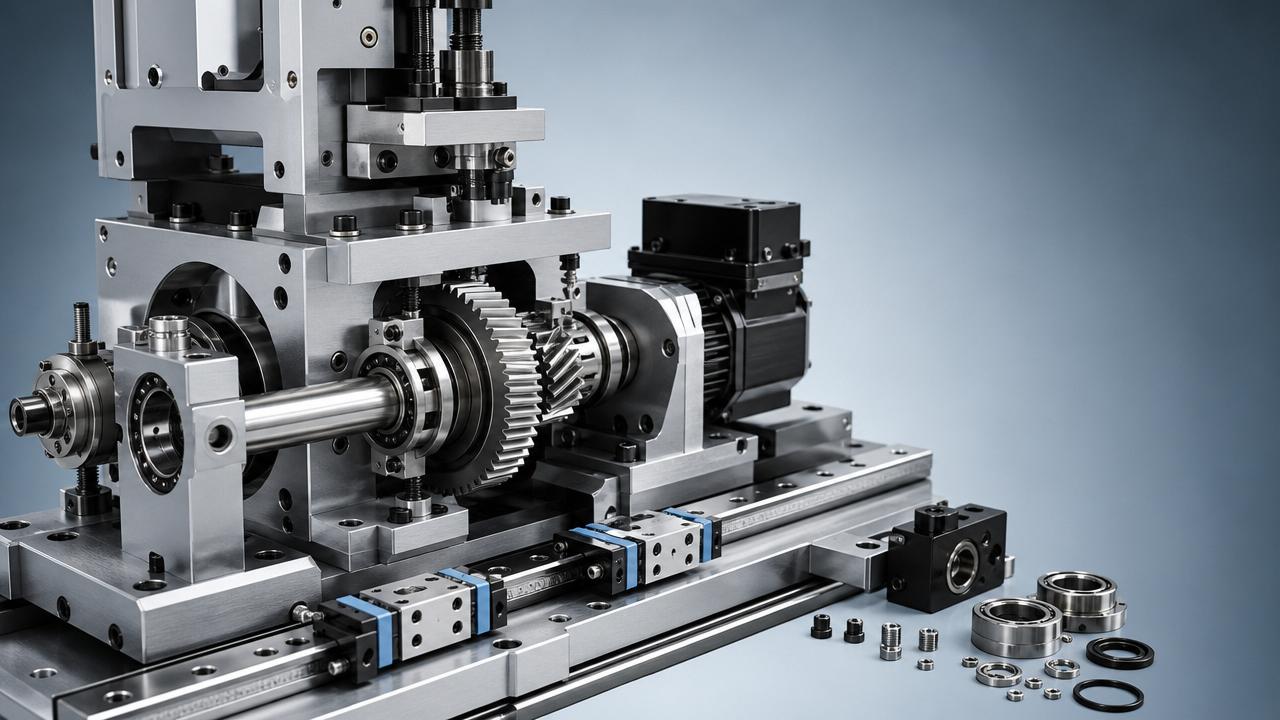
Delays in mechanical assembly rarely begin at the assembly station. In most cases, they start earlier—in engineering release cycles, supplier communication gaps, incomplete drawings, or underestimated lead times for critical OEM parts for mechanical engineering. For project managers and engineering leaders, the question is not simply which parts arrive late, but which parts have the highest probability of stalling the entire build when they do.
The short answer is this: custom-machined components, castings, molded parts, bearings, motors and gear units, electrical control parts, seals, and specialized fasteners are among the OEM items most likely to create schedule disruption. They do so for different reasons, including long tooling cycles, strict tolerances, supply volatility, certification requirements, and hidden dependencies in the bill of materials.
For decision-makers overseeing cost, timing, and execution risk, the priority is to identify these bottleneck parts early, classify them by schedule impact, and manage them with tighter supplier coordination than standard catalog items. This article explains which OEM parts most often delay mechanical assembly, why they become bottlenecks, and how to reduce the risk before production milestones are affected.
What project managers are really trying to solve when they ask this question
When someone searches for delays caused by OEM parts, they are usually not looking for a generic component list. They want to know which purchased parts can stop commissioning, create idle labor, push factory acceptance tests, or trigger expensive resequencing across engineering, procurement, and production.
For project managers and engineering leads, the main concern is schedule exposure. A low-cost part can delay a million-dollar machine if it sits on the critical assembly path. That is why the real issue is not unit price, but dependency. If one unavailable part prevents alignment, wiring, guarding, calibration, or final testing, it becomes a schedule-critical component regardless of value.
This is especially true in complex builds involving mechanical structures, motion systems, pneumatics, electrical controls, and custom tooling. In such environments, the most dangerous OEM parts are the ones that combine long lead times with low substitutability and high integration sensitivity.
Which OEM parts most commonly delay mechanical assembly
Not all parts carry equal delay risk. Standard off-the-shelf components with broad distributor availability are usually manageable. The bigger problems come from parts that are custom, precision-dependent, compliance-sensitive, or tied to external capacity constraints.
The following categories are the most frequent delay sources in mechanical assembly projects.
1. Custom-machined structural and interface components
These include mounting plates, adapter blocks, shafts, housings, brackets, precision spacers, coupling interfaces, and machined frames. They often appear simple on a drawing, but they are high-risk because they depend on finalized dimensions, accurate revision control, machining capacity, and inspection quality.
A delay often occurs when engineering releases these parts late, changes hole patterns after procurement starts, or tightens tolerance requirements without considering manufacturing feasibility. Even a small dimensional issue can stop subassembly because the part must physically interface with multiple other components.
Among all OEM parts for mechanical engineering, custom-machined items are especially risky because they are not easily substituted. Rework is possible in some cases, but only if material stock, wall thickness, and datum strategy allow it.
2. Castings and forged components
Cast housings, machine bases, impellers, heavy brackets, and forged load-bearing parts frequently create longer-than-expected delays. The issue is not only production time. It is the sequence: pattern or die readiness, foundry scheduling, casting, stress relief, rough machining, finish machining, and dimensional inspection.
If porosity, warpage, or material inconsistency is discovered late, the recovery timeline can be severe. In global sourcing situations, transportation adds another layer of uncertainty. For large equipment builds, a single delayed casting can prevent the assembly of drives, alignment systems, covers, and downstream test procedures.
3. Injection-molded or engineered polymer parts
Polymer covers, wear guides, insulators, cable carriers, seals carriers, and custom molded interfaces are often underestimated. Teams sometimes treat them as low-risk because they are lightweight or low-cost, but custom plastic parts can be major schedule drivers when tooling is required.
Tool design approval, mold fabrication, first-article sampling, dimensional correction, and material validation can take much longer than expected. Delays grow when the part must meet heat resistance, chemical resistance, or electrical insulation requirements. If a molded part is linked to enclosure fit or routing geometry, final assembly may not proceed without it.
4. Bearings, linear guides, and motion components
High-precision bearings, ball screws, linear rails, guide blocks, and rotary motion units are common bottlenecks because they depend on exact specifications and are often vulnerable to global supply fluctuations. Lead times can expand sharply for non-standard preload classes, special coatings, sealed versions, or specific origin requirements.
These parts are difficult to replace at the last minute because they affect alignment accuracy, service life, vibration behavior, and motion repeatability. If rail lengths, bearing fits, or preload values differ from design assumptions, assembly may halt while engineering reviews the impact.
5. Motors, gearboxes, and drive assemblies
Motors and gear units are classic schedule-critical items. Their delay impact is high because many installation and testing activities depend on them. This includes mounting, coupling alignment, cable routing, safety checks, motion parameter setup, and system run-off.
Long lead times are common for non-standard voltages, special flange types, brake options, encoder variants, sanitary designs, or custom gear ratios. If the OEM selected a specific brand to match control architecture or performance validation, substitution becomes difficult. That turns even a single delayed drive into a full project bottleneck.
6. Pneumatic and hydraulic components with specific performance requirements
Cylinders, valve manifolds, regulators, pumps, manifolds, hoses, fittings, and custom power units can delay assembly when they involve pressure ratings, fluid compatibility, regional standards, or layout-specific mounting constraints. On paper, these may look interchangeable. In practice, small differences in footprint, response time, flow rate, or thread standard can create redesign work.
Hydraulic power units and custom manifolds are especially risky because they involve fabrication, sealing integrity, cleanliness requirements, and testing before shipment. Pneumatic valve islands may also face communication or protocol compatibility issues with the machine control system.
7. Electrical control components required for mechanical completion
Although the assembly is mechanical in name, many builds cannot be completed without electrical items such as sensors, servo drives, safety relays, connectors, limit switches, cable harnesses, and control cabinets. These components often sit at the boundary between mechanical completion and functional readiness.
For project leaders, this category matters because a machine may appear nearly complete physically, yet still miss milestone acceptance due to absent controls or safety components. Recent market volatility in electronics has made this category even more important in mixed mechanical-electrical systems.
8. Seals, gaskets, and material-specific wear parts
Seals and gaskets are small components with outsized risk. They are often sourced late because teams assume they are easy to obtain. But once chemical compatibility, temperature rating, pressure performance, or regulatory compliance enters the picture, choices narrow fast.
A missing seal can prevent leak testing, fluid charging, or final shipment. If the required compound is specific—such as FKM, EPDM, PTFE blends, or food-grade formulations—lead times may be longer than expected. Their impact is especially high in pumps, cylinders, gearboxes, and fluid-handling modules.
9. Specialized fasteners and joining hardware
Standard fasteners are usually not a major problem. Specialized fasteners are different. This includes high-strength bolts, coated fasteners for corrosive environments, locking systems, shoulder screws, captive hardware, rivet nuts, and application-specific torque-controlled assemblies.
The risk comes from specification detail. If plating, hardness, tensile grade, or thread form is not fully aligned across engineering and procurement, parts can arrive unusable. In regulated or high-load applications, substitution may not be acceptable. A small missing joining element can stop enclosure closure, safety guarding, or load-bearing assembly stages.
Why these parts create delays more often than others
The pattern behind assembly disruption is usually one of five causes: long manufacturing lead time, engineering instability, inspection failure, logistics uncertainty, or limited substitutability. The highest-risk OEM parts often involve more than one of these factors at the same time.
For example, a custom gearbox may have a long production cycle, require final motor matching, and be impossible to replace without software and mechanical changes. A casting may be heavy and simple in appearance, but if a defect appears after machining, the replacement timeline becomes extreme. A sensor may be inexpensive, yet if it is tied to a certified safety architecture, its absence blocks system sign-off.
This is why experienced teams evaluate parts not only by procurement value, but by assembly consequence. A useful internal question is: if this part arrives three weeks late, what exactly stops? The broader the downstream effect, the higher the part’s control priority should be.
How to identify delay-prone OEM parts before they hit the critical path
The best way to reduce assembly delays is to classify risk early, before purchase orders are simply placed in bulk. A practical method is to score each major purchased component against four factors: lead time, uniqueness, integration sensitivity, and recovery difficulty.
Lead time measures how long the part takes to source or manufacture. Uniqueness reflects whether the part has approved alternatives. Integration sensitivity shows how many adjacent assemblies depend on it. Recovery difficulty estimates how hard it is to rework the design, expedite supply, or temporarily bypass the item.
Parts with high scores in all four categories deserve exception handling. They should receive early engineering release, supplier confirmation checkpoints, and separate schedule tracking. This is far more effective than treating all line items in the bill of materials the same way.
Project managers should also map parts against assembly sequence rather than procurement category alone. A part may not look important in ERP data, but if it unlocks alignment, enclosure closure, drive installation, or functional test, it belongs on the critical path watchlist.
What procurement and engineering teams should do differently
Most delay problems are not caused by procurement alone. They occur at the handoff between design intent and supply execution. To reduce risk, engineering, sourcing, quality, and project management need tighter coordination around schedule-critical OEM parts for mechanical engineering.
First, freeze critical specifications earlier. Late drawing revisions are one of the biggest hidden causes of part delay, especially for machined components, molded parts, and electrical interfaces. If a part is likely to drive the assembly schedule, its release package should be prioritized and cross-checked before RFQ.
Second, qualify suppliers based on process capability, not just price. A low-cost supplier may be acceptable for simple fabricated items but unsuitable for precision fits, casting quality, or validated sealing performance. For risky components, it is better to buy confidence than to buy nominal savings.
Third, require milestone visibility. For long-lead items, ask for progress checkpoints such as material receipt, tooling completion, first-article inspection, test completion, and dispatch date. Waiting passively for the promised ship date often means discovering problems too late to recover.
Fourth, define approved alternates where possible. Not every component can be dual-sourced, but many can. Even if the primary choice remains preferred, a validated alternative reduces panic when the original supplier slips.
Fifth, protect logistics. Some parts are manufactured on time but still miss the build due to export documentation, customs delay, packaging failure, or poor shipment planning. This matters particularly for large castings, sensitive motion parts, and mixed electrical-mechanical assemblies.
How to reduce the business impact when delays still happen
Even strong planning cannot eliminate all delays. The goal then shifts from prevention to containment. Project leaders should ask whether the assembly sequence can be rearranged, whether temporary mock components can be used, and whether testing can be split into partial milestones.
In some cases, mechanical pre-assembly can continue using surrogate blocks, temporary brackets, or non-production fittings to preserve labor productivity. In other cases, software simulation, dry wiring, or off-line fixture checks can proceed while waiting for final hardware. These are not ideal solutions, but they can protect schedule momentum.
It is also useful to separate “parts that delay assembly” from “parts that delay shipment.” Some items must be present for safe mechanical completion, while others are only needed for final commissioning or customer acceptance. That distinction helps teams make better escalation decisions and avoid overreacting to every shortage equally.
A practical rule for prioritizing OEM parts risk
If a part is custom, difficult to substitute, required for alignment or motion, or linked to compliance and final testing, it deserves elevated control from day one. In most industrial projects, these items will create more schedule exposure than bulk commodities.
For many project managers, the biggest gain comes from focusing on the top 5 to 10 parts most likely to stop the build rather than reviewing every line item with the same intensity. This targeted approach improves forecasting accuracy, supports better supplier conversations, and helps management act before delays become visible on the shop floor.
In fast-moving industrial environments, the companies that manage OEM parts well are not simply better buyers. They are better at connecting engineering decisions, supplier reality, and assembly logic into one schedule discipline.
Conclusion
Mechanical assembly delays are most often caused by OEM parts that are custom, precision-dependent, long-lead, or deeply embedded in the assembly sequence. Custom-machined components, castings, molded parts, motion hardware, motors, fluid power components, electrical controls, seals, and specialized fasteners are among the most common bottlenecks.
For engineering project leaders, the key insight is simple: the parts most likely to delay a build are not always the most expensive ones, but the ones with the greatest downstream dependency and the fewest recovery options. By identifying those items early, stabilizing specifications, improving supplier visibility, and building realistic contingency plans, teams can protect schedule performance and reduce costly disruption.
In the world of OEM parts for mechanical engineering, better assembly outcomes start long before assembly begins.
Related News