
Mechanical Engineering Solutions That Reduce Downtime First

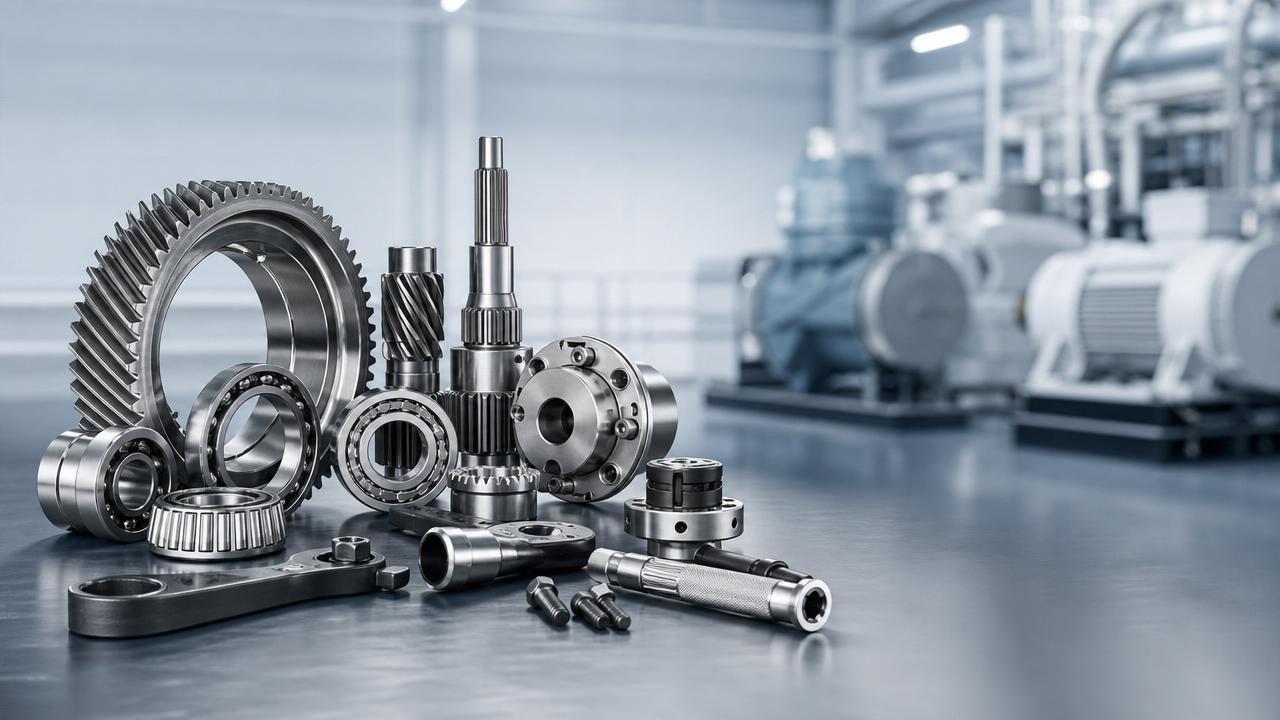
Unplanned stoppages can drain maintenance budgets, delay delivery, and strain service teams. For after-sales maintenance professionals, mechanical engineering solutions are no longer optional—they are the frontline strategy for cutting downtime first. From precision tooling and component reliability to data-backed maintenance planning, the right approach helps identify root causes faster, improve equipment uptime, and support long-term operational stability across complex industrial environments.
For most maintenance teams, the real question is not whether downtime can be reduced, but which actions reduce it fastest without creating new reliability risks. The answer usually starts with practical mechanical engineering solutions: improving wear-prone components, standardizing failure analysis, upgrading tooling accuracy, and matching service decisions to how equipment actually fails in the field.
After-sales maintenance personnel are often measured by response speed, repair quality, repeat failure rates, and customer confidence. That is why the most valuable strategies are not broad theory or generic productivity advice. What matters is knowing where stoppages begin, how to diagnose them quickly, which mechanical fixes last, and how to prevent the same fault from returning.
What after-sales maintenance teams really need from mechanical engineering solutions
When a machine goes down, service teams face pressure from every direction. Operators want a restart now. Plant managers want the root cause confirmed. Procurement wants part availability. Customers want assurance that the problem will not happen again next week. In that environment, mechanical engineering solutions must do more than “support maintenance.” They must shorten time to diagnosis, reduce repair uncertainty, and improve first-time fix rates.
The strongest solutions usually share four traits. First, they target common mechanical failure points such as misalignment, fatigue, loosening, seal degradation, vibration damage, and tool wear. Second, they are based on measurable operating conditions rather than assumptions. Third, they are practical for field service teams with limited downtime windows. Fourth, they create a repeatable service standard instead of depending on one experienced technician’s intuition.
For after-sales professionals, this means the value of mechanical engineering solutions should be judged by operational outcomes: shorter mean time to repair, fewer recurring breakdowns, better spare parts forecasting, safer interventions, and more stable equipment performance after handover. If a solution looks impressive in design documents but does not improve those field metrics, it is not solving the right problem.
Why downtime often starts with small mechanical issues, not major failures
Many stoppages are traced back to issues that appear minor at first. A fastener loses preload. A coupling develops slight angular misalignment. A pneumatic actuator experiences inconsistent friction. A mold insert shows early wear that changes dimensional accuracy. None of these may look catastrophic on day one, but each can trigger larger failures, quality escapes, or full line interruptions if ignored.
This is why downtime reduction should begin with the components and interfaces that carry load, transmit motion, hold position, or seal pressure. In industrial systems, small mechanical deviations often spread across the process. A worn guide rail increases vibration. Vibration accelerates bearing wear. Bearing wear affects shaft stability. Shaft instability reduces tool precision. Eventually, the line stops for a symptom that is far removed from the original cause.
Mechanical engineering solutions help break that chain early. Instead of only replacing failed parts after a stoppage, they focus on understanding stress concentration, wear patterns, lubrication breakdown, tolerance drift, and assembly quality. For maintenance teams, this shift from symptom repair to failure pathway control is where downtime reduction becomes sustainable.
How to identify the root cause faster during field service
Speed matters in after-sales service, but speed without structure creates repeat failures. A reliable root cause process starts by separating the initiating fault from the visible symptom. For example, overheating may be caused by friction, but friction may be caused by misalignment, insufficient lubrication, contamination, or incorrect preload. Replacing the overheated part alone may restore operation briefly, but the machine is still on track to fail again.
A practical field approach is to inspect in layers. Start with the failed component, then move outward to the mating surfaces, the mounting condition, the load path, and the operating environment. Check whether the failure pattern matches the expected service life. Examine whether installation torque, shaft runout, belt tension, backlash, or sealing compression stayed within design intent. Ask what changed before the failure: speed, load, cycle frequency, material, ambient conditions, or maintenance practice.
Among the most useful mechanical engineering solutions here are standardized inspection checklists, wear pattern libraries, failure mode comparison guides, and tolerance verification tools. These resources reduce guesswork and help less experienced technicians work more like senior specialists. The goal is not just faster repair, but faster certainty.
Field teams also benefit from documenting three levels of evidence in every major stoppage: physical evidence from the failed part, operational evidence from the machine history, and procedural evidence from installation or maintenance records. That combined view often reveals whether the fault came from design mismatch, component quality, service error, or operating condition. Without that discipline, downtime tends to repeat under a different label.
Which mechanical upgrades usually reduce downtime first
Not every improvement requires a major redesign. In many industrial environments, the fastest gains come from targeted upgrades at known weak points. These include higher-stability fasteners for vibration-prone assemblies, better bearing selection for contaminated environments, seal materials matched to actual temperature and chemical exposure, wear-resistant tooling surfaces, and couplings better suited to dynamic misalignment.
Precision in component selection matters. A part that meets nominal specification may still fail early if the duty cycle is harsher than the catalog assumption. After-sales teams should pay close attention to real-world load variation, shock conditions, contamination, lubrication access, and maintenance intervals. Mechanical engineering solutions work best when they reflect operating reality, not just original design intent.
Another high-impact area is assembly repeatability. Many recurring stoppages are not caused by poor parts alone, but by inconsistent installation. Controlled torque application, alignment fixtures, calibrated measurement tools, and clear assembly standards can dramatically reduce premature failures. In this sense, tooling quality is itself a downtime strategy. Better tools improve repair accuracy, and repair accuracy improves uptime.
For organizations supporting global OEMs or distributed equipment fleets, standardizing these upgrades across common machine platforms can produce significant service gains. It simplifies training, reduces spare part complexity, and builds a more reliable knowledge base around proven fixes.
How precision tooling supports faster repairs and longer equipment uptime
After-sales maintenance is often discussed in terms of labor and spare parts, but tooling deserves equal attention. Precision tools directly affect how quickly technicians can disassemble, measure, align, tighten, and verify critical components. When tools are inaccurate, worn, or unsuitable for the task, repair time increases and service quality becomes inconsistent.
Consider alignment work. A small error in shaft alignment can lead to vibration, seal damage, bearing overload, and energy loss. If technicians rely on rough visual methods instead of precision measurement, the machine may restart but remain unstable. The same is true for fastening, where incorrect torque can cause loosening, distortion, or fatigue failure. In both cases, the tool quality influences the failure risk after repair.
This is where mechanical engineering solutions connect directly with GHTN’s focus on industrial components and precision tools. The right tools are not just accessories for maintenance; they are enablers of repeatable engineering outcomes. Torque tools, dial indicators, laser alignment systems, thread inspection gauges, surface measurement devices, and fitment tools can all shorten troubleshooting cycles while improving repair confidence.
For service leaders, investing in precision tooling often pays back faster than expected because it reduces hidden costs: repeat visits, warranty claims, customer dissatisfaction, and extra downtime caused by incomplete repairs. In high-pressure maintenance settings, a precise repair completed once is far less expensive than a quick repair completed twice.
How data-backed maintenance planning improves after-sales performance
Mechanical engineering solutions are most effective when they are linked to failure data. After-sales teams often sit on a valuable source of field intelligence: which components fail first, under what conditions, after how many cycles, and with what repair outcomes. When that data is organized, it becomes a practical guide for planning interventions before downtime escalates.
Useful maintenance planning does not require a complex digital transformation from day one. It can begin with structured records on failure mode, component location, service interval, environmental condition, and repair method. Over time, patterns become visible. One machine family may show chronic fastener loosening in high-vibration applications. Another may reveal seal degradation under thermal cycling. A third may have repeat actuator failures tied to contamination ingress.
Once those trends are clear, teams can move from reactive service to prioritized prevention. They can pre-position high-risk spare parts, update inspection frequencies, revise assembly procedures, and recommend targeted component upgrades. This is one of the most practical uses of mechanical engineering solutions: turning field failures into design and service improvements that reduce the next downtime event.
Data also improves communication with customers. Instead of offering vague recommendations, maintenance teams can explain why a specific intervention is justified, what failure pattern it addresses, and how it is expected to affect uptime. That level of evidence strengthens trust and supports better decision-making at the customer site.
How to evaluate whether a solution will actually reduce downtime
Maintenance professionals are often presented with products, retrofits, or service packages that promise better reliability. The challenge is deciding which options are worth implementing. A useful evaluation framework starts with five questions. Does the solution address a known failure mode? Can it be installed within realistic service windows? Does it reduce diagnostic ambiguity? Does it improve mean time between failures? Can technicians apply it consistently across sites?
It is also important to distinguish between solutions that improve theoretical durability and those that improve serviceability. Some upgrades may last longer but require complex installation or hard-to-source parts, which can increase downtime if a failure still occurs. The best mechanical engineering solutions usually balance robustness with maintainability. They reduce failure risk while making inspection, replacement, and verification easier for field teams.
Another test is whether the solution changes the total downtime equation. That includes detection time, repair preparation, access difficulty, parts availability, installation complexity, and post-repair verification. A component that is stronger but harder to align or inspect may not improve real uptime performance. For after-sales teams, practical maintainability is part of engineering quality.
Common mistakes that keep downtime high even after repairs
One common mistake is treating every stoppage as an isolated event. When teams fail to compare repeated incidents across machines, shifts, or customer sites, systemic issues remain hidden. Another mistake is replacing like for like without checking whether the original specification was suitable for the actual operating environment. Repeating the same part choice often repeats the same failure pattern.
A third mistake is weak post-repair verification. Machines are restarted before alignment, preload, vibration, leakage, or cycle performance are fully checked. This creates “successful” repairs that only postpone the next breakdown. There is also the documentation gap: if technicians do not record what they found, what they changed, and how the machine behaved afterward, the organization cannot learn from the event.
Finally, many teams underinvest in technician support tools. Even skilled personnel struggle when parts information is incomplete, inspection standards are unclear, or measurement tools are inadequate. Downtime reduction depends on both engineering choices and execution systems. The strongest mechanical engineering solutions recognize that field performance is shaped by both.
What a downtime-first strategy looks like in practice
A downtime-first strategy begins by ranking assets and components by stoppage impact, not just replacement cost. It then identifies the mechanical failure modes most likely to disrupt operations and builds standardized responses around them. These responses may include upgraded components, inspection triggers, precision tooling requirements, spare parts rules, and root cause reporting templates.
For after-sales maintenance teams, the practical goal is simple: resolve the current fault while making the next fault less likely. That requires close linkage between service observations, component engineering, tooling capability, and maintenance planning. It also requires collaboration across suppliers, OEMs, distributors, and end users, especially in global industrial environments where operating conditions differ significantly from one site to another.
Organizations that succeed in reducing downtime first do not wait for catastrophic failures to justify action. They use mechanical engineering solutions to control the small, repeatable problems that create large operational losses over time. In many cases, the biggest gains come not from dramatic redesigns, but from disciplined improvement in components, assembly quality, diagnosis, and field feedback.
Conclusion
For after-sales maintenance professionals, reducing downtime starts with practical engineering, not abstract theory. The most effective mechanical engineering solutions help teams find root causes faster, strengthen weak components, improve repair precision, and turn field data into prevention plans. They focus on how machines fail in real operating conditions and how service teams can respond with speed and consistency.
In today’s industrial environment, uptime depends on the details: component fit, material performance, fastening integrity, alignment accuracy, tooling quality, and evidence-based maintenance planning. When those details are managed well, downtime falls, repeat failures decline, and customer confidence grows. That is why a downtime-first mindset should lead every maintenance decision—and why the right mechanical engineering solutions remain one of the most reliable ways to deliver it.
Related News