
OEM Parts for Mechanical Engineering and Tolerance Risks

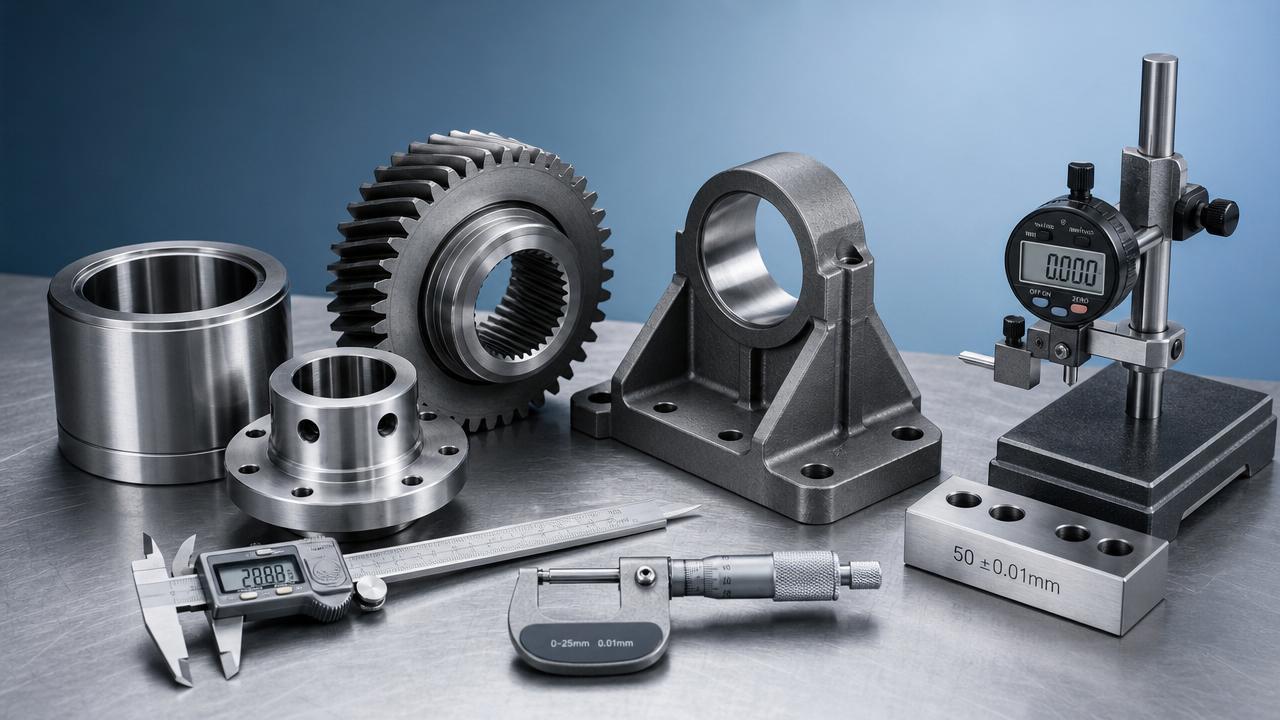
OEM parts for mechanical engineering can quietly determine whether a system performs safely or fails under load. For quality control and safety managers, even minor tolerance deviations may trigger assembly issues, premature wear, or compliance risks. This article explores how to identify tolerance-related threats early, strengthen inspection logic, and reduce hidden failures across complex mechanical applications.
When professionals search for OEM parts for mechanical engineering, they are usually not looking for generic product descriptions. They want to know whether supplied parts will fit, function, and remain safe in real operating conditions. For quality control and safety managers, the key issue is simple: a part that meets a drawing on paper may still create risk if its tolerance stack-up, material behavior, or process variation is not controlled in context.
The most practical conclusion is that tolerance risk is rarely an isolated dimensional problem. It is a system problem that affects assembly consistency, vibration behavior, sealing performance, fatigue life, maintenance frequency, and even regulatory exposure. In many mechanical systems, the real danger comes not from a dramatic defect but from small, repeated deviations that remain invisible until field performance begins to fail.
That is why supplier evaluation, drawing review, incoming inspection, process capability monitoring, and application-based risk assessment must work together. If one link is weak, even high-quality OEM parts can become a hidden liability. For organizations responsible for quality and safety outcomes, the goal is not only to reject bad parts. It is to build a control logic that prevents borderline parts from entering critical assemblies in the first place.
What quality and safety teams are really trying to prevent
In mechanical engineering, tolerance errors are dangerous because they can look acceptable during basic inspection while still creating downstream failures. A shaft may measure within nominal diameter limits, yet poor roundness or surface finish can accelerate bearing wear. A bracket hole pattern may technically pass dimensional checks, but slight positional variation can force installation stress into the assembly. These are not academic concerns. They are common root causes of reliability problems.
Quality control teams typically focus on conformance, traceability, and supplier consistency. Safety managers, however, must also consider what happens when a part interacts with vibration, pressure, temperature, impact, torque, or repeated load cycles. The overlap between those two perspectives is where tolerance risk should be managed. If a component is used in a guard system, drive assembly, pneumatic linkage, or load-bearing connection, tolerance should be treated as a functional safety variable, not only a manufacturing variable.
The highest-risk situations often involve mating parts, multi-component assemblies, dynamic interfaces, and replacement parts sourced from different production lots or regions. In these cases, a small shift in one dimension can combine with variation in another and create a stack-up effect. The result may be noise, friction, leakage, overheating, misalignment, or failure under stress. By the time these symptoms appear in operation, the original tolerance issue is usually harder and more expensive to correct.
Why OEM parts for mechanical engineering create hidden tolerance challenges
OEM environments are especially sensitive because parts are rarely evaluated in isolation. They must fit an existing design architecture, match process assumptions, and deliver repeatable performance across large production volumes. A component may come from a qualified supplier, use approved materials, and still become risky if its process window drifts or if design intent is not fully translated into inspection criteria.
One of the most common problems is overreliance on nominal dimensions without enough attention to geometric tolerances, datum strategy, and functional relationships. A drawing that appears complete may still leave room for interpretation on concentricity, perpendicularity, flatness, thread engagement, edge condition, or assembly alignment. If those details are not clearly controlled, the supplier may produce parts that pass routine checks but perform inconsistently in service.
Another challenge is that OEM parts for mechanical engineering often operate under combined stresses. Mechanical load, lubrication condition, thermal expansion, corrosion exposure, and maintenance handling can all amplify the impact of a small dimensional deviation. This is why quality incidents often seem surprising at first. The part did not fail simply because it was out of tolerance. It failed because the tolerance variation interacted with real-world operating conditions in a way that had not been fully anticipated.
For global sourcing teams and industrial buyers, cross-border supply chains add another layer of risk. Different shops may interpret standards differently, use different measurement methods, or maintain different levels of process capability. Without strong tolerance communication and verification discipline, identical drawings do not always produce identical outcomes.
Which tolerance-related failures should trigger the most concern
Not all deviations carry the same risk. Quality and safety managers should prioritize the deviations most likely to affect fit, load path, sealing, rotational balance, and operator protection. For example, bore-to-shaft mismatch can alter clearance, friction, and heat generation. Mislocated mounting features can introduce residual stress during installation. Excessive flatness variation in a sealing surface can lead to leakage that only emerges after pressure cycling.
Threaded components deserve special attention because tolerance variation can influence clamp load, stripping resistance, loosening behavior, and fatigue life. In safety-relevant systems, an apparently minor issue such as inconsistent thread quality or under-controlled pitch diameter can compromise fastening integrity over time. The same logic applies to pins, bushings, couplings, and guide components where positional repeatability matters more than a single measured dimension.
Surface-related tolerances are another blind spot. Surface roughness, waviness, burr formation, edge break condition, and coating thickness can all affect assembly and wear. A part may be dimensionally acceptable but still damage mating components, resist proper seating, or fail early because contact conditions are wrong. For rotating, sliding, or sealing applications, surface quality should be reviewed with the same seriousness as dimensional accuracy.
Wherever there is movement, force transfer, or safety guarding, tolerance failures should be classified by functional consequence. The useful question is not only, “Is the part in spec?” but also, “If this parameter shifts toward the edge of spec, what system behavior changes first?” That question helps teams identify which tolerances are critical-to-function and which are merely preferred.
How to assess tolerance risk before parts reach production
The best time to control tolerance risk is before volume manufacturing begins. This starts with a functional drawing review. Quality and safety stakeholders should verify that the drawing reflects actual use conditions, not just design intent in a simplified form. Critical dimensions should be linked to specific functions such as alignment, torque transfer, sealing, guarding, or fatigue resistance. If a tolerance exists but its functional purpose is unclear, it should be questioned.
A practical review should include datum logic, geometric dimensioning where needed, material condition assumptions, inspection method feasibility, and expected process capability. It is also wise to examine whether tolerances are realistic for the selected manufacturing route. A tolerance that is technically possible but difficult to hold consistently may create unstable quality performance and unnecessary cost pressure. Risk rises when suppliers are forced to “chase the print” without a stable process.
Prototype and first article evaluation should go beyond pass/fail dimensional checks. Teams should measure variation trends, not only isolated values. They should also test assembly fit, torque response, movement behavior, leak resistance, and load response under realistic conditions. In many cases, a pilot assembly reveals more about tolerance risk than a stack of inspection reports.
For high-consequence applications, tolerance stack-up analysis should be part of launch planning. This does not need to be overcomplicated in every case, but it should identify whether worst-case or statistical combinations can create unsafe or unreliable conditions. Where multiple suppliers are involved, interchangeability testing is especially important.
What incoming inspection should look for beyond simple dimension checks
Incoming inspection often fails when it measures what is easy instead of what is functionally important. For critical OEM parts, inspection plans should be based on failure modes, not only on drawing line items. If misalignment is the actual concern, then feature position and datum relationship matter more than a non-critical overall length. If leakage is the concern, sealing geometry and surface condition deserve priority.
Sampling logic should reflect risk level, supplier maturity, and process stability. New suppliers, engineering changes, tool modifications, and material substitutions should trigger tighter controls. Inspection should also verify measurement system adequacy. A precise tolerance is meaningless if the measurement method cannot reliably detect meaningful variation. Gauge repeatability and reproducibility, fixture consistency, and operator training remain essential foundations.
Documentation matters as much as measurement. Certificates, process records, heat treatment data, coating reports, and traceability labels should support the inspection result, not replace it. When dealing with safety-relevant parts, quality teams should confirm that lot identity and revision status are controlled all the way through receiving, storage, and release. Many field problems arise not from poor machining alone, but from mixed lots, undocumented changes, or outdated drawings used at the supplier site.
It is also valuable to track soft signals. Frequent rework marks, unusual burr patterns, unstable finish appearance, or increased dimensional spread near specification limits often indicate process drift before formal nonconformance appears. A mature incoming inspection function treats these signs as early warnings.
How supplier management reduces long-term compliance and safety exposure
Supplier approval for OEM parts for mechanical engineering should include more than pricing, lead time, and basic capability. For quality and safety purposes, the key question is whether the supplier can repeatedly translate functional requirements into stable manufacturing output. That means reviewing process controls, tooling maintenance, calibration discipline, operator competence, and change management procedures.
Process capability data can be highly useful, but only if it relates to truly critical characteristics. A supplier may report excellent capability on easy dimensions while struggling with geometric relationships that determine actual assembly performance. Audit discussions should therefore focus on critical-to-quality and critical-to-safety features. Ask how those features are produced, measured, trended, and reacted to when variation begins to move.
Change control is one of the most underestimated risk points. Tool wear compensation, sub-supplier changes, material lot variation, machine relocation, software updates, and surface treatment adjustments can all influence tolerances. Quality agreements should define which changes require notification, validation, and reapproval. If safety-relevant components are involved, unauthorized process changes should be treated as a serious exposure.
Strong suppliers also help customers reduce risk through technical transparency. They can explain which tolerances are naturally stable, which require special control, and where design modifications might improve manufacturability without harming function. This collaboration is particularly important when cost pressure tempts organizations to widen tolerances or switch sources without full validation.
Practical warning signs that tolerance risk is already affecting the system
By the time a formal failure occurs, warning signs have often been visible for weeks or months. Quality and safety teams should watch for repeated assembly adjustments, unexplained torque variation, inconsistent fit-up, rising scrap at downstream stations, unusual noise during operation, accelerated wear in mating components, and service complaints that seem random at first glance.
Other signs include increased dependence on shimming, selective fitting, forceful installation, or manual correction by technicians. These workarounds can normalize an unstable process and hide the fact that tolerances are no longer supporting true interchangeability. If operators begin describing parts as “tight,” “loose,” “slightly off,” or “needing persuasion,” the tolerance system deserves immediate review.
Field data should also be connected back to dimensional analysis. Premature seal replacement, cracked mounts, loosened fasteners, repeated bearing failures, and vibration-related shutdowns may all point to dimensional interactions. A safety manager should view these not as isolated maintenance incidents but as possible evidence that component variation is influencing system behavior beyond acceptable limits.
Building a smarter control strategy for critical mechanical parts
The most effective organizations classify OEM parts by functional risk and then apply control intensity accordingly. Low-risk hardware may only require standard receiving checks and routine supplier monitoring. High-risk parts, especially those affecting motion control, pressure containment, structural integrity, or guarding, should have stronger drawing discipline, validation testing, inspection depth, and traceability requirements.
A good control strategy usually includes five elements: clear identification of critical characteristics, validated inspection methods, supplier capability review, structured change control, and feedback from assembly and field performance. When these elements are connected, tolerance risk becomes visible earlier and decisions become more evidence-based.
It is equally important to align design, sourcing, quality, and safety functions. Many tolerance problems survive because each department sees only part of the issue. Design assumes manufacturing can hold the print, sourcing assumes approved suppliers are interchangeable, quality checks isolated dimensions, and safety only sees the problem after performance is affected. Cross-functional review closes those gaps.
For industrial organizations managing global supply chains, the strategic value is significant. Better tolerance control improves uptime, lowers warranty exposure, supports compliance, reduces hidden cost in assembly, and protects operator safety. In that sense, tolerance management is not only a technical task. It is a business resilience issue.
Conclusion: tolerance risk is a system-level decision, not a paperwork detail
For quality control and safety managers, the real lesson behind OEM parts for mechanical engineering is that conformance cannot be judged by nominal dimensions alone. Small tolerance deviations can trigger large mechanical consequences when they affect load paths, movement, sealing, fastening, or alignment. The earlier those relationships are identified, the lower the risk of hidden failure later.
The most reliable approach is to connect drawing intent, supplier capability, incoming inspection, assembly feedback, and field performance into one control loop. That makes it easier to identify which tolerances are truly critical, where variation is drifting, and when intervention is needed before safety or reliability suffers.
In complex mechanical applications, precision is not just about manufacturing quality. It is about protecting performance under real operating conditions. Teams that treat tolerance as a functional and safety priority, rather than a routine specification item, are far better positioned to prevent failures, maintain compliance, and make smarter sourcing decisions over the long term.
Related News