
What Makes Mechanical Engineering Solutions Scalable?

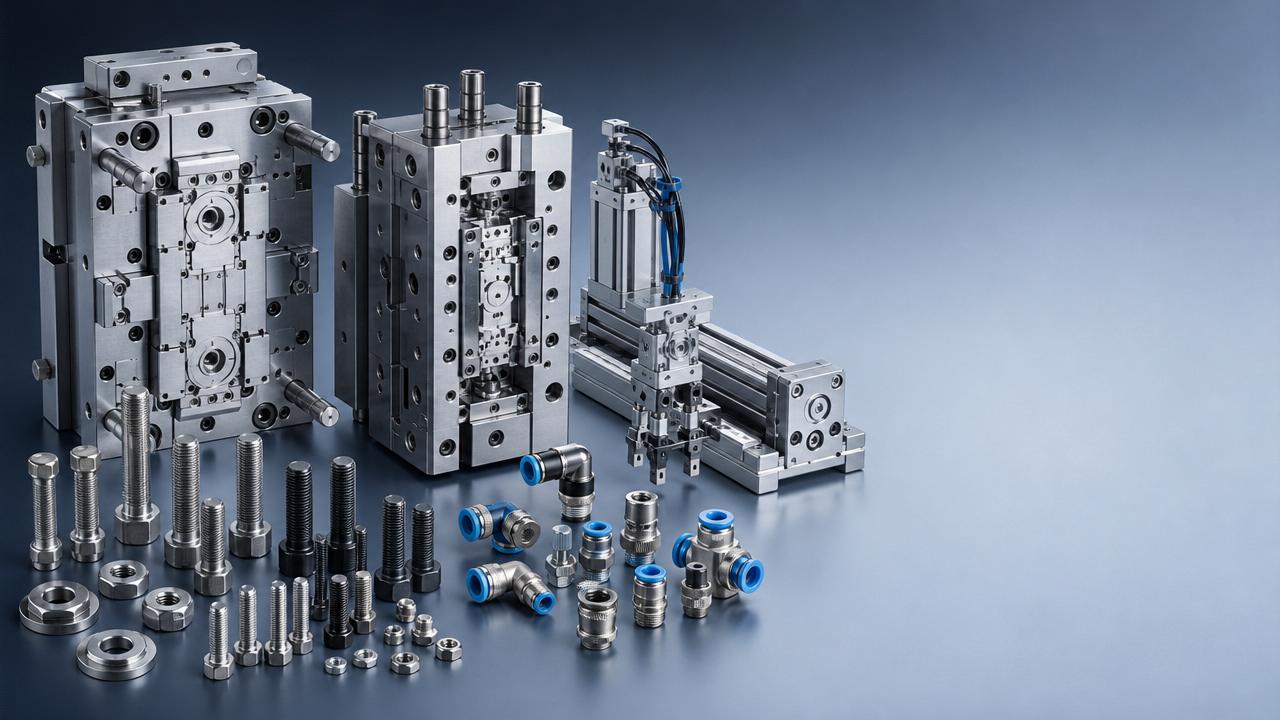
In a market where production demands shift fast, scalable mechanical engineering solutions help business performance, cost control, and long-term resilience move in the same direction. Whether the focus is precision tooling, durable fasteners, automation-ready assemblies, or mold-supporting components, scalability is not simply about making more parts. It is about designing systems, components, and workflows that can expand output, adapt to variation, and maintain quality without creating disproportionate cost or operational risk. For industrial enterprises operating across hardware, electrical, and mold-related sectors, understanding what makes mechanical engineering solutions scalable is essential to building stable growth and future-ready manufacturing strategies.
Why scalable mechanical engineering solutions need a structured evaluation
Many projects appear efficient at prototype stage but become difficult once production volume rises, product variants multiply, or global sourcing enters the equation. A part that performs well in a controlled pilot run may fail when tolerances stack across suppliers, when cycle times tighten, or when materials face harsher environments. This is why scalable mechanical engineering solutions require a disciplined way to assess design choices, process capability, tooling readiness, and supply chain resilience before expansion begins.
A structured review also supports better decisions across the broader industrial ecosystem. In sectors connected to tools, molds, electrical integration, and mechanical assemblies, scalability depends on how well individual components fit larger systems. GHTN’s perspective on industrial parts highlights this reality: every precision mold, cutting tool, fastening element, and pneumatic component affects throughput, maintenance, and market responsiveness. Strong scalable mechanical engineering solutions therefore combine engineering depth with practical execution standards.
Core points that define scalable mechanical engineering solutions
The following points can be used to judge whether mechanical engineering solutions are ready to grow from pilot success to repeatable industrial performance.
- Confirm the design remains functional when output increases, tolerance windows tighten, and multiple production lines or suppliers must deliver the same result consistently.
- Verify material selection supports lifecycle demands, including wear, corrosion, temperature fluctuation, fatigue exposure, and compatibility with downstream machining or assembly processes.
- Check that tooling and mold strategies can sustain higher volumes without rapid degradation, unstable cycle times, or excessive maintenance interruptions.
- Review manufacturability to ensure features, dimensions, and finishing requirements do not create hidden bottlenecks when production shifts from low to high volume.
- Assess process capability with measurable data, including repeatability, scrap rate, calibration stability, and machine compatibility across locations or subcontracting partners.
- Ensure modularity so components, fixtures, or assemblies can be upgraded, replaced, or customized without redesigning the complete system architecture.
- Validate integration with automation, including sensor access, handling geometry, fastening consistency, pneumatic control logic, and robotic positioning reliability.
- Measure total cost at scale rather than unit price alone, including downtime, maintenance labor, tool replacement, inventory exposure, and quality loss.
- Examine supplier depth to confirm alternate sources, compliance traceability, logistics flexibility, and the ability to maintain standards during demand swings.
- Review standardization opportunities so common parts, shared tolerances, and documented specifications reduce complexity across product families and global operations.
- Confirm testing protocols reflect real operating conditions instead of laboratory-only assumptions, especially for vibration, thermal stress, contamination, and load cycling.
- Plan for engineering change control so future iterations improve performance without disrupting qualification records, spare parts logic, or customer-facing reliability.
The most important building blocks behind scalable mechanical engineering solutions
1. Design for repeatability, not just functionality
A design may be technically sound and still fail to scale. Scalable mechanical engineering solutions begin with geometry, tolerances, fastening methods, and assembly logic that remain stable under production pressure. This includes reducing unnecessary complexity, using proven interfaces, and avoiding dimensions that demand unusually narrow process windows. When a design can be repeated across shifts, facilities, or tooling replacements, scalability becomes practical rather than theoretical.
2. Material reliability under real industrial conditions
Material selection is often where scalable mechanical engineering solutions either gain resilience or accumulate risk. Strength values on paper are not enough. Wear rate, thermal expansion, corrosion behavior, lubrication response, and machining consistency all influence scale. In hardware and tooling applications, even small changes in raw material quality can affect thread integrity, cutting life, mold finish, or pneumatic sealing performance. A scalable solution relies on materials that perform predictably over time and across suppliers.
3. Tooling, mold, and fixture durability
Production can only scale if the supporting toolset scales with it. Dies, molds, jigs, and cutting tools must withstand increased cycles without compromising output quality. This is especially relevant where micron-level precision, injection geometry, or die-casting repeatability matter. Durable tooling reduces changeover disruptions and keeps scalable mechanical engineering solutions aligned with throughput goals.
4. Supply chain alignment and component standardization
Even the best design cannot scale if supply is fragile. Scalable mechanical engineering solutions require dependable access to base components, replacement tools, qualified fasteners, and compatible subassemblies. Standardization improves flexibility by allowing cross-platform use of parts, simpler inventory logic, and faster sourcing recovery. This is one reason industrial intelligence platforms such as GHTN matter: market entry, material choices, and compliance awareness increasingly shape engineering scalability.
How scalable mechanical engineering solutions change by application
Precision tooling and machining systems
For cutting tools, holders, and machining accessories, scalability depends heavily on wear behavior, repeatable cutting efficiency, and compatibility with different machine platforms. A tool that performs well in one cell but requires constant parameter tuning across others is not truly scalable. Check insert life consistency, vibration control, regrind feasibility, and setup simplicity.
Also review data feedback loops. Tooling solutions become more scalable when empirical process data can guide preventive replacement intervals, optimize feed and speed settings, and limit scrap growth during volume expansion.
Fasteners and structural hardware
In fastening applications, scalable mechanical engineering solutions rely on stable torque behavior, coating performance, thread quality, and resistance to loosening under dynamic load. High-volume assembly magnifies every weakness in consistency. Review material certification, surface treatment durability, and compatibility with automated feeding or torque-control systems.
Standard fastener platforms often increase scalability by reducing SKU complexity and simplifying maintenance planning. However, over-standardization should not compromise safety or environmental resistance in demanding applications.
Pneumatic and automation-connected components
For cylinders, valves, fittings, and motion-supporting mechanical elements, scalability is tied to response consistency, leak prevention, and control logic compatibility. A component may meet basic function requirements yet still limit line expansion if it introduces unstable timing or difficult maintenance access. Scalable mechanical engineering solutions in automated environments must support modular upgrades and straightforward diagnostics.
Check connection standards, contamination tolerance, spare-part availability, and line balancing effects. Small deviations can create large efficiency losses once multiple automated stations depend on synchronized operation.
Mold manufacturing and forming applications
In mold and forming systems, scalable mechanical engineering solutions depend on cavity stability, cooling efficiency, material flow predictability, and maintenance planning. At higher output levels, small geometric or thermal imperfections can quickly become major quality issues. Evaluate venting, wear surfaces, cycle-time sensitivity, and the ability to refurbish high-stress areas without rebuilding the entire tool.
Commonly overlooked risks that weaken scalable mechanical engineering solutions
Ignoring maintenance scalability
A solution that is efficient to install but difficult to inspect, clean, or replace often becomes expensive at scale. Maintenance access, spare-part simplicity, and predictable service intervals should be built into scalable mechanical engineering solutions from the start.
Over-optimizing for lowest unit cost
Low purchase cost can mask losses in uptime, tool life, energy use, or quality yield. True scalability comes from total economic efficiency. If a cheaper component causes frequent stoppages or inconsistent output, the overall system will not scale well.
Treating compliance as a late-stage issue
International expansion introduces compliance complexity related to materials, electrical interfaces, environmental rules, and documentation. Scalable mechanical engineering solutions should be reviewed against target-market requirements early to prevent redesign delays and blocked shipments.
Using incomplete field data
Short test runs may not reveal fatigue, thermal drift, contamination sensitivity, or wear acceleration. Decisions based only on initial performance often create false confidence. Scalable mechanical engineering solutions must be validated through operating conditions that reflect actual lifecycle stress.
Practical steps to improve scalability in mechanical engineering projects
- Map the full process chain, from raw material and tooling to final assembly, and identify where variation could multiply as volume rises.
- Prioritize component standardization where it lowers complexity without reducing required performance in harsh or specialized operating environments.
- Run pilot validation under realistic load, speed, temperature, and contamination conditions rather than relying on ideal lab settings alone.
- Build a supplier qualification matrix that includes technical capability, backup sourcing, compliance readiness, and responsiveness to engineering changes.
- Document tolerance logic, maintenance instructions, and replacement criteria clearly so expansion across teams or sites remains consistent.
- Use performance data to refine design and tooling decisions continuously, especially where wear, cycle time, and quality yield affect scale economics.
FAQ about scalable mechanical engineering solutions
Does scalability always mean higher automation?
No. Automation often supports scalable mechanical engineering solutions, but scalability can also come from simpler design, more durable materials, modular tooling, and better supply consistency. Automation is effective only when the mechanical foundation is already stable.
What is the first sign that a mechanical solution will not scale well?
A common early signal is rising variability when output increases. This may appear as unstable cycle times, more frequent rework, inconsistent assembly performance, or growing maintenance intervention. These indicators usually point to design or process limits.
Why does supply chain strategy matter so much for mechanical engineering solutions?
Because scalability depends on continuity. If qualified materials, tools, or components cannot be sourced reliably, production growth becomes fragile. Strong scalable mechanical engineering solutions align technical design with sourcing resilience and compliance visibility.
Conclusion and next actions
What makes mechanical engineering solutions scalable is not a single feature but a disciplined combination of repeatable design, proven materials, durable tooling, process capability, automation compatibility, and supply chain readiness. The most effective scalable mechanical engineering solutions are built to maintain quality and efficiency while adapting to higher volume, broader application, and stricter market requirements.
A practical next step is to review one current component, toolset, or assembly against the points above: repeatability, material performance, tooling life, standardization, compliance, and maintenance access. That simple assessment often reveals whether growth barriers are rooted in engineering assumptions or execution gaps. In complex industrial environments, scalable mechanical engineering solutions create the foundation for stronger competitiveness, more reliable output, and long-term manufacturing resilience.
Related News