
What OEM manufacturing really saves and where it costs

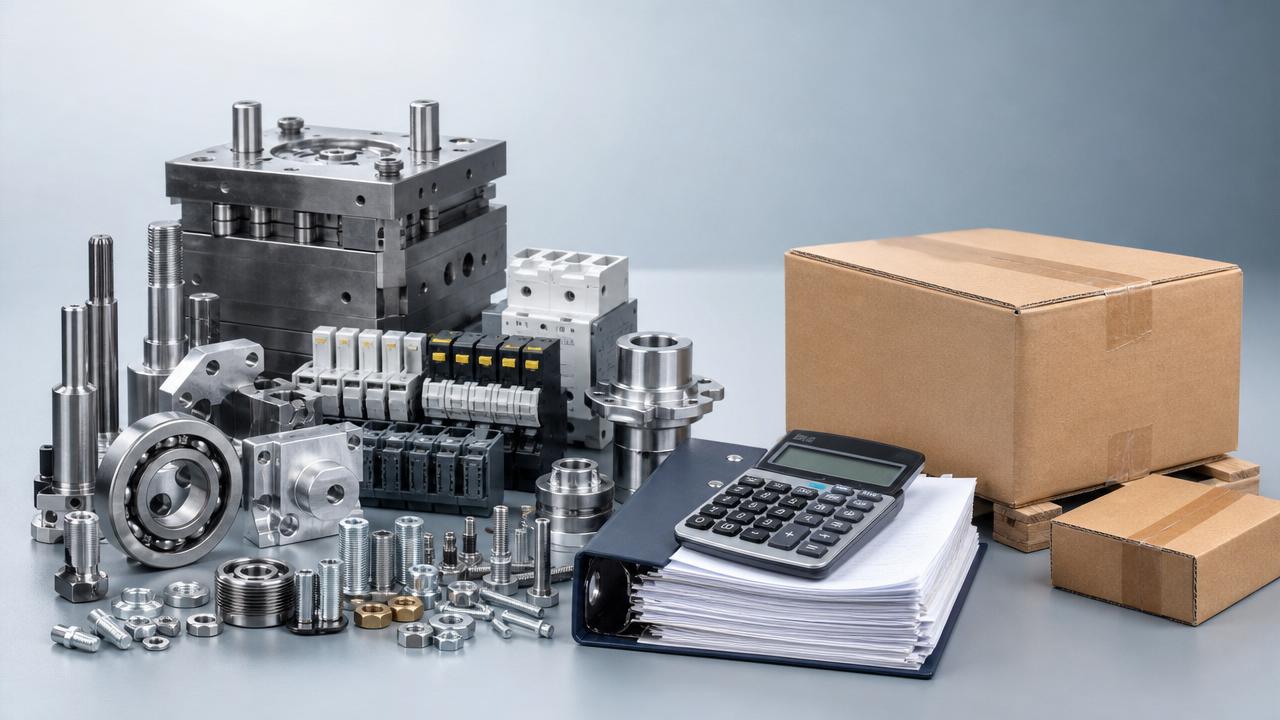
For finance decision-makers, OEM manufacturing can look like a direct path to lower capital spending, leaner operations, and faster market entry. Yet the real equation goes beyond unit price. Hidden costs in quality control, supply chain coordination, tooling changes, and compliance can reshape total value. This article breaks down what OEM manufacturing truly saves, where it adds cost, and how to evaluate the trade-offs with greater financial clarity.
In industrial components, electrical assemblies, mold-based parts, and tooling ecosystems, the decision is rarely binary. A sourcing model that lowers upfront investment by 20% can still erode margin if defect handling, engineering revisions, or long replenishment cycles are ignored. For OEMs, distributors, and procurement-led finance teams, the right question is not whether OEM manufacturing is cheaper, but under which conditions it creates better total economic value.
Where OEM manufacturing typically creates measurable savings
The strongest case for OEM manufacturing usually starts with asset-light growth. Instead of funding plant expansion, secondary machining lines, new molds, or test fixtures internally, buyers can convert part of that burden into variable cost. In many industrial categories, this reduces near-term capital expenditure over a 12- to 24-month planning cycle.
For finance approvers in hardware, electrical, and tooling supply chains, the savings often come from four areas: equipment avoidance, labor flexibility, faster launch timing, and scale purchasing. Each of these matters differently depending on product complexity, annual volume, and tolerance requirements.
1. Lower capital commitment
When production is outsourced to an established OEM manufacturing partner, the buyer may avoid spending on CNC centers, stamping presses, injection molds, die-casting support equipment, assembly jigs, and inspection systems. For mid-volume product lines, this can preserve cash for inventory, channel expansion, or engineering upgrades rather than fixed production assets.
This matters even more in sectors where technical depreciation is fast. Tooling for precision mold work, electrical connector assembly, or pneumatic component machining can require periodic updates every 18 to 36 months. If demand is uncertain, carrying those assets internally can strain return on invested capital.
Typical savings profile by cost category
The table below shows how OEM manufacturing commonly shifts the financial structure of an industrial product program. The ranges are indicative planning ranges rather than universal benchmarks, but they are useful in budgeting discussions.
The key takeaway is that OEM manufacturing usually saves the most when internal utilization is low, launch windows are tight, or the required process chain is too specialized to justify dedicated in-house assets.
2. Faster scaling across multiple product families
A capable OEM partner can often support parallel production of fasteners, machined housings, molded components, and electrical subassemblies through an existing supplier base. That can reduce the cost of adding SKUs across 3 to 5 adjacent product families without duplicating support functions internally.
For finance teams, this improves flexibility. If demand changes by 15% to 25% quarter over quarter, outsourced capacity is typically easier to adjust than fixed in-house overhead. The value is not only in lower cost, but in lower balance-sheet rigidity.
3. Reduced indirect operational burden
OEM manufacturing can reduce maintenance planning, calibration schedules, overtime exposure, environmental controls, and machine downtime risk. In mold and precision tooling programs, maintenance intervals, insert wear, and inspection resources can absorb more cost than expected if retained in-house.
- Less spending on machine upkeep and spare-part stocking
- Lower exposure to underused factory space
- Reduced recruiting pressure for scarce technical operators
- Fewer internal bottlenecks during peak seasonal demand
These savings are especially relevant in industrial sectors with volatile order patterns, long-tail catalogs, or multi-standard compliance requirements across export markets.
Where OEM manufacturing adds cost that finance teams often underestimate
The hidden cost side of OEM manufacturing usually appears after the purchase order is placed. Unit pricing may look attractive, but total landed cost can rise through engineering churn, supplier coordination, inspection failures, logistics delays, or compliance gaps. These items are rarely visible in the first quote.
In industrial components and precision tooling, cost creep often comes from variation, not from the original base price. A low-cost source that misses tolerance, traceability, or packaging requirements can trigger rework, line stoppages, and customer claims that outweigh the initial savings.
1. Quality control and rework costs
When parts involve ±0.02 mm machining tolerance, surface coating requirements, torque performance, electrical insulation integrity, or mold fit consistency, inspection discipline becomes financially material. Even a 2% to 4% nonconformance rate can eliminate the apparent price advantage on high-volume orders.
For finance reviewers, the true exposure includes incoming inspection labor, sorting, return handling, replacement freight, and downstream customer impact. In industrial supply chains, a single batch problem can affect 3 layers at once: assembly efficiency, on-time delivery, and warranty reserve.
Common hidden cost drivers in OEM manufacturing
Before approving a sourcing shift, it helps to map the most common hidden cost drivers. The table below highlights where OEM manufacturing can become more expensive than expected.
For many buyers, the most expensive issue is not a high quoted price, but repeated small failures across multiple orders. Those hidden frictions raise administrative cost and reduce forecast reliability.
2. Tooling, NPI, and change-order expense
In mold manufacturing, cast components, or custom hardware programs, OEM manufacturing often requires upfront tooling investment even if production equipment is externalized. A mold revision, cavity adjustment, electrode change, or fixture redesign can create cost spikes that were not visible in the base quotation.
New product introduction can be particularly sensitive. First-article sampling may take 2 to 4 rounds before approval if drawings, material grades, or mating features are still evolving. For finance teams, every additional round affects working capital, lead time, and launch timing.
3. Coordination overhead across the supply chain
OEM manufacturing does not eliminate management cost; it redistributes it. Supplier audits, document control, packaging review, version tracking, and shipment follow-up still require internal attention. If the product crosses mechanical, electrical, and molded subcomponent categories, the coordination burden can increase rather than decrease.
- Engineering must align drawings, tolerances, and approved materials.
- Quality teams must define AQL, test plans, and traceability rules.
- Procurement must manage MOQ, lead time, and replenishment cadence.
- Finance must monitor cost variance, claim recovery, and inventory exposure.
If these four functions are loosely coordinated, OEM manufacturing savings can be diluted by duplicated communication and reactive firefighting.
How finance teams should evaluate total cost, not just quoted price
A strong OEM manufacturing decision framework should compare total cost of ownership over at least 12 months and preferably 24 months for repeat industrial programs. This matters because some savings appear immediately, while several costs emerge only after production stabilizes.
In practical terms, finance approval should not stop at piece price. It should include tooling amortization, inbound quality cost, forecast error exposure, inventory carrying cost, and the cost of delayed market response.
A 6-point approval checklist
- Compare unit price against total landed cost over 4 quarters.
- Model defect scenarios at 1%, 3%, and 5% nonconformance rates.
- Separate one-time tooling fees from recurring production cost.
- Estimate safety stock needs based on lead times of 2, 6, and 10 weeks.
- Check compliance documentation for each destination market in advance.
- Assign internal ownership for engineering, quality, procurement, and claims.
This simple structure helps expose whether an attractive quote depends on unrealistic assumptions. It also gives approval committees a shared language for discussing risk-adjusted value.
When OEM manufacturing makes the most financial sense
The model tends to work best when annual demand is stable enough to support supplier planning, but not large enough to justify dedicated in-house capital. It is also effective when the supplier already has mature capability in the required process, such as fastener production, electrical terminal assembly, or precision mold tooling support.
It is less attractive when the product changes every 6 to 8 weeks, tolerance windows are extremely tight, or the buyer lacks internal quality control resources. In those cases, the indirect cost of coordination and change management can become the dominant expense.
Decision signals by sourcing scenario
The following matrix can help finance teams classify whether OEM manufacturing is likely to generate real value or just shift cost to a less visible place.
This type of scenario-based evaluation helps finance leaders avoid overgeneralizing. OEM manufacturing is not a universal savings lever; it is a context-specific operating model.
Practical steps to protect savings in industrial OEM programs
The best cost outcomes come from disciplined implementation rather than aggressive negotiation alone. In the hardware, electrical, and mold sectors, a well-governed OEM manufacturing program can preserve both margin and delivery confidence if the operating rules are set early.
Build cost visibility before launch
Request a cost breakdown that separates material, processing, tooling, surface treatment, inspection, packaging, and logistics assumptions. Even if the supplier does not disclose every internal detail, you should still understand which elements are fixed, variable, or volume-dependent.
For example, if MOQ is 5,000 units but your quarterly demand is 2,500 units, the apparent price advantage may be offset by inventory holding cost and obsolescence risk. That is a finance issue, not only a procurement issue.
Control changes through gated review
Use a 3-stage change process: drawing release, pilot approval, and mass-production confirmation. This reduces the chance that an engineering adjustment will trigger unplanned tooling rework after volume production begins.
For precision parts, define acceptance criteria in advance: dimensional tolerance, finish requirement, assembly fit, and test method. A vague specification is one of the fastest ways to turn OEM manufacturing savings into claim expense.
Monitor the right KPIs quarterly
Finance teams should review more than purchase price variance. A balanced OEM manufacturing dashboard should include at least five indicators: on-time delivery, defect rate, cost of quality, inventory days, and engineering change frequency.
If defect cost stays below 1.5%, lead time remains within the planned 4- to 8-week range, and change orders are limited, the sourcing model is likely working. If two or more indicators drift for 2 consecutive quarters, the original savings case should be revalidated.
Why this matters for industrial sourcing strategy
In global industrial markets, OEM manufacturing is not only a production choice. It is a strategy that affects cash flow, launch speed, service reliability, and competitiveness. For companies working across mechanical tools, electrical systems, precision molds, and component distribution, the real advantage comes from matching the sourcing model to the technical and commercial realities of each part family.
That is where a technically informed resource network becomes valuable. Evaluating OEM manufacturing for a stamped bracket is different from evaluating it for a mold-critical insert, an insulated connector assembly, or a pneumatic control component. The process logic, quality thresholds, and compliance demands are not interchangeable.
GHTN supports this kind of decision by connecting industrial buyers with deeper insight into materials, process capability, tooling implications, and market-entry considerations. For finance approval teams, that means better visibility into what is truly being bought, what risk is being transferred, and what cost is only being postponed.
OEM manufacturing can absolutely reduce cost, but the strongest savings come when product fit, supplier capability, quality controls, and change discipline are aligned from the start. If you are reviewing sourcing options across hardware, electrical, mold, or precision tooling categories, a structured cost model will reveal whether the quote supports long-term value or short-term illusion.
To assess your next industrial sourcing decision with greater clarity, contact GHTN for tailored insight, compare supplier pathways more effectively, and explore more solutions built around precision, compliance, and scalable manufacturing performance.
Related News