
How global value chains are reshaping sourcing risk

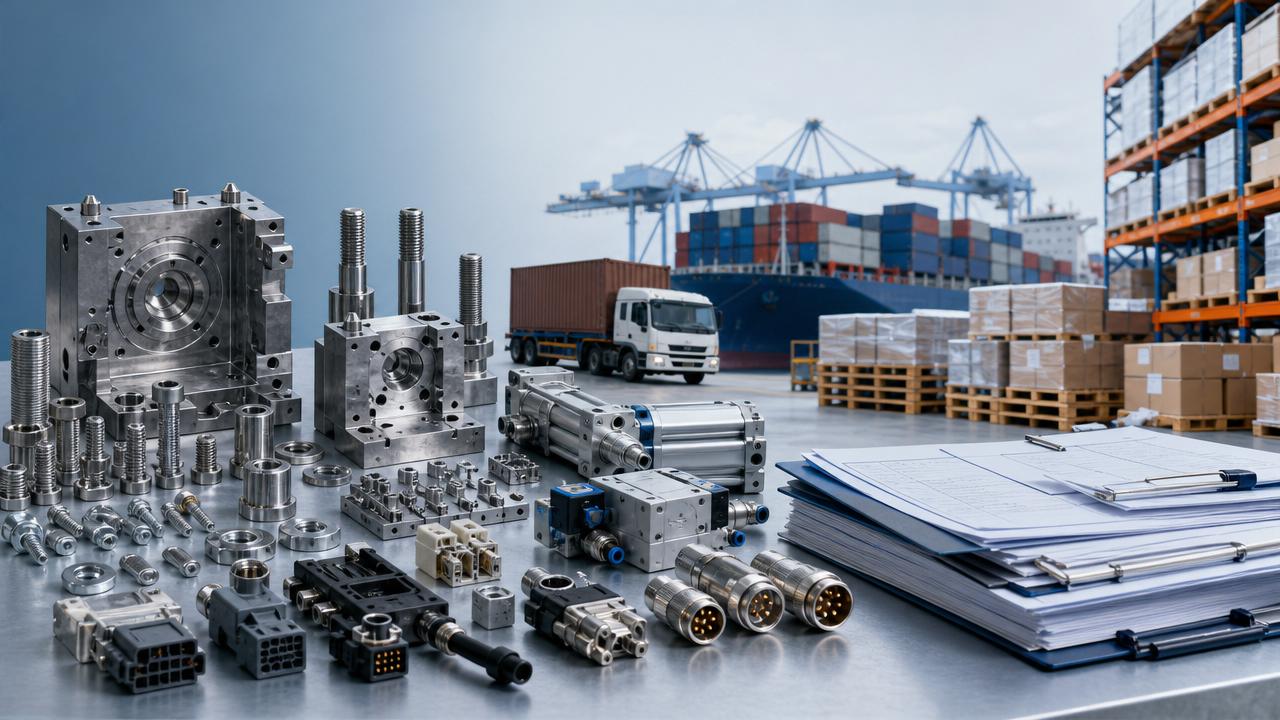
As the global value chain becomes more fragmented and interconnected, sourcing risk now extends far beyond unit cost and lead time. Visibility gaps, compliance exposure, logistics volatility, and regional policy shifts increasingly affect industrial purchasing outcomes.
For industrial components, tooling, electrical parts, and mold-related inputs, the global value chain creates both reach and fragility. A single disruption upstream can alter availability, certification status, and production continuity downstream.
This is especially relevant in sectors covered by GHTN, where fasteners, pneumatic parts, electrical hubs, and precision molds often sit deep inside multi-tier supply structures. Risk must be judged by scenario, not by price alone.
When the global value chain changes, sourcing risk shifts by scenario
The global value chain does not affect every purchase in the same way. Risk changes according to part criticality, supplier concentration, regulatory burden, and the number of production steps spread across regions.
A standard hand tool may face manageable substitution risk. A custom mold insert, certified cable assembly, or specialty fastener may carry higher switching cost and deeper process dependency.
That is why sourcing decisions increasingly require scenario mapping. The right question is not whether the global value chain is risky. The real question is where that risk becomes operationally material.
Key signals that the sourcing profile is changing
- More tiers between raw material and finished component
- Longer certification or inspection pathways
- Growing dependence on one geography for specialized inputs
- Higher exposure to sanctions, tariffs, or export controls
- Stricter customer demands for traceability and ESG data
Scenario 1: Multi-tier industrial components create hidden upstream exposure
Many industrial buyers believe they know their supplier base. In reality, the global value chain often hides the most fragile links in sub-tier processing, finishing, coating, or material conversion.
This is common in fasteners, stamped parts, castings, and machined fittings. The direct supplier may be stable, while upstream heat treatment, plating, or alloy sourcing remains concentrated in one region.
When energy costs rise, ports slow down, or metal inputs tighten, these upstream nodes become bottlenecks. The global value chain therefore changes risk from visible supplier failure to hidden process failure.
Core judgment points
- Is the part dependent on specialized metallurgy or finishing?
- Can upstream material origin be verified quickly?
- Would a sub-tier disruption stop the full assembly line?
Scenario 2: Electrical and compliance-heavy sourcing faces rising regulatory friction
Electrical components operate inside a tougher compliance environment. The global value chain now intersects with product safety rules, substance restrictions, regional certifications, and documentation expectations.
A component can be physically available but commercially unusable if declarations, test reports, or market-entry documents are incomplete. In this scenario, sourcing risk becomes a compliance continuity issue.
For switches, connectors, terminal blocks, sensors, and power distribution parts, even minor design revisions may trigger new validation work. The global value chain amplifies this because engineering and production often span multiple jurisdictions.
Core judgment points
- Does the supplier maintain current compliance files?
- Are component changes communicated before shipment?
- Can alternate sources match both function and certification?
Scenario 3: Precision tooling and molds carry high switching cost risk
In tooling and mold ecosystems, the global value chain reshapes risk through technical lock-in. Capacity may exist elsewhere, but process knowledge, tolerances, and maintenance history are harder to replace.
A die-casting mold, injection tool, or custom fixture often embeds design assumptions, machine compatibility, and iterative tuning. If one supplier node fails, transfer time can exceed the cost of the tool itself.
This means sourcing risk is not only about delivery. It includes engineering response speed, spare part availability, digital file integrity, and the ability to support process changes across borders.
Core judgment points
- Who controls tooling data, revision records, and maintenance logs?
- Is there a validated backup source for tool repair?
- How long would requalification take after transfer?
Scenario 4: Geopolitical and logistics shocks matter most for critical replenishment items
Not every disruption justifies redesigning the supply base. The global value chain becomes most dangerous when critical replenishment items have low inventory tolerance and weak regional alternatives.
Pneumatic components, maintenance spares, control accessories, and replacement tools often appear routine. Yet line stoppages can occur quickly when these items are delayed by customs checks or route instability.
In this scenario, sourcing risk is driven by time sensitivity. The global value chain turns transport reliability and border predictability into core procurement variables.
How different sourcing scenarios change risk priorities
Practical adaptation strategies for a more complex global value chain
Effective risk control starts by separating spend value from operational importance. A low-cost item can still carry high disruption impact if it blocks production, service delivery, or certification status.
For industrial sourcing, resilience improves when data, engineering, logistics, and compliance checks are connected. The global value chain rewards organizations that treat supplier intelligence as an operating system.
Recommended actions by priority
- Map critical parts by tier depth, not only by annual spend.
- Identify single-region dependencies in materials, coatings, and testing.
- Create dual-source plans for compliance-sensitive components.
- Secure tooling files, revision history, and maintenance documentation.
- Use risk-trigger thresholds for inventory, lead time, and route delays.
- Review supplier change notices with engineering and trade teams together.
Common mistakes when evaluating sourcing risk in the global value chain
One common error is assuming direct supplier stability equals supply stability. In the global value chain, hidden subcontractors often determine actual resilience.
Another mistake is treating compliance as paperwork completed after sourcing. For electrical and industrial exports, documentation quality often determines whether supply is commercially usable.
A third error is underestimating transfer time for specialized tools and molds. Even with a second supplier, qualification may require trials, corrections, and approval cycles.
It is also risky to rely on broad regional labels. Two suppliers in the same country may still share one plating line, one testing lab, or one port corridor.
Next steps for building stronger decisions across the global value chain
The global value chain is not becoming simpler. It is becoming more layered, more regulated, and more dependent on technical transparency across industrial ecosystems.
A stronger response begins with scenario-based review. Focus first on parts that combine process complexity, compliance sensitivity, and high stoppage impact.
GHTN supports this approach through deep analysis of mechanical tools, electrical systems, molds, and component trade dynamics. Better sourcing decisions start with better visibility into how the global value chain truly works.
Use that visibility to audit exposure, refine supplier selection, and build practical backup paths. In industrial markets, resilience is no longer optional. It is a competitive capability.
Related News