
Industrial automation technical analysis that helps avoid downtime

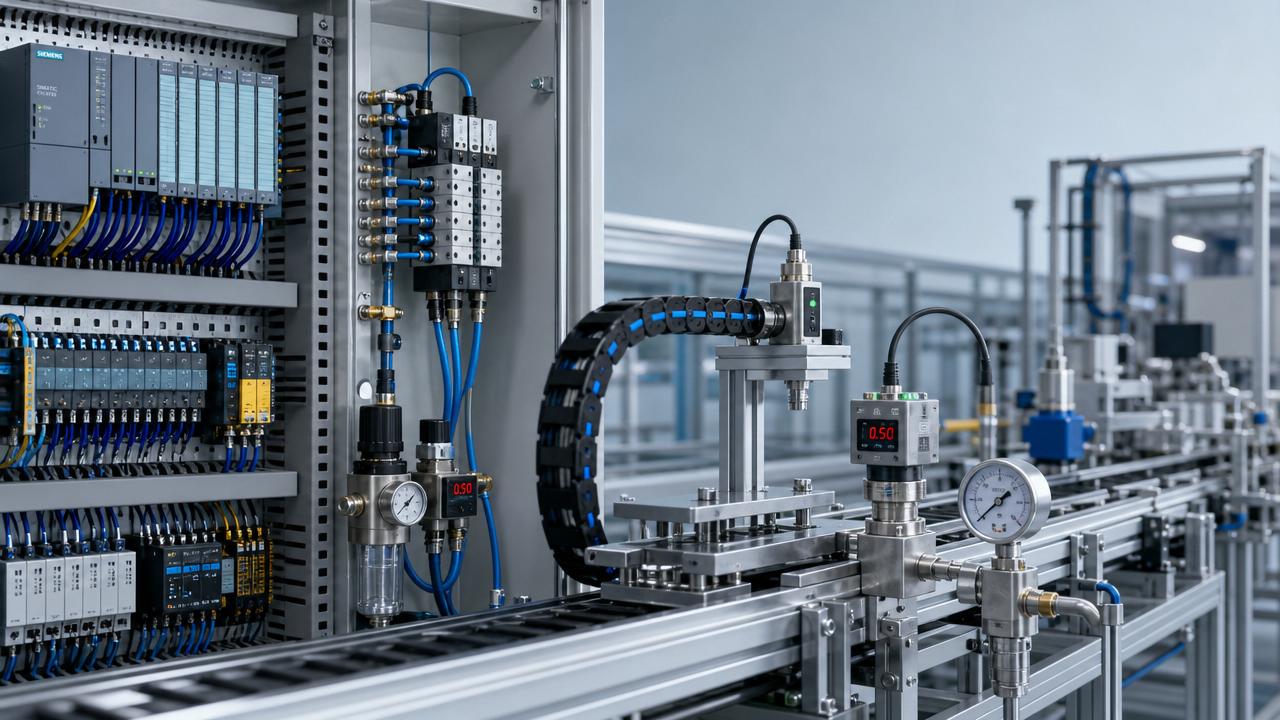
Industrial automation technical analysis is shifting from reactive repair to early risk detection
Unplanned stoppages often start as small deviations, not dramatic failures.
A loose terminal, unstable air pressure, rising cycle time, or abnormal vibration can quietly grow into expensive downtime.
This industrial automation technical analysis focuses on those early signals.
It explains how control systems, pneumatic assemblies, electrical links, and tooling behavior interact inside modern industrial lines.
For complex production environments, stable output depends on details at the component level.
That is why GHTN tracks industrial parts, precision tools, electrical compliance, and manufacturing logic as one connected reliability system.
The current trend is clear: maintenance value is moving upstream.
The most effective teams no longer wait for alarms alone.
They use industrial automation technical analysis to recognize weak points before a line stops.
Several trend signals now reveal why downtime risk is becoming harder to ignore
Industrial systems are becoming more integrated, but that integration also increases failure propagation.
A small sensor drift can disrupt logic timing, pneumatic actuation, and tooling repeatability within minutes.
At the same time, faster production cycles reduce tolerance for hidden degradation.
Electrical loading patterns are less forgiving, especially where variable-speed drives and compact control cabinets are common.
Another signal is the growing gap between machine complexity and available troubleshooting time.
Maintenance windows are shorter, yet root causes often involve several systems at once.
This makes industrial automation technical analysis more important than isolated component checks.
Across mixed-industry operations, the same pattern appears.
Failures increasingly originate at connection points, control handoffs, and wear transitions rather than catastrophic breakage.
The most common early warning signs are often small and repeatable
- Intermittent PLC input loss during vibration or thermal changes
- Solenoid valve response delays under stable command signals
- Localized terminal discoloration caused by resistance heating
- Tool wear that increases cycle variation before quality alarms appear
- Pressure drops near the actuator despite acceptable compressor output
- Repeated fault resets that temporarily clear symptoms without removing causes
The driving forces behind this shift can be traced across components, controls, and operating expectations
The rise of industrial automation technical analysis is not a theoretical trend.
It is a practical response to tighter output targets and more interconnected equipment.
These drivers show why component-level intelligence matters.
GHTN’s perspective is useful here because fasteners, pneumatic parts, electrical interfaces, and molds all influence automation stability.
The biggest operational impact appears where systems hand off responsibility
Downtime rarely belongs to one discipline alone.
It usually appears where mechanical, electrical, and control functions intersect.
This is where industrial automation technical analysis creates the strongest value.
Control systems
PLC logic may be correct while field execution remains unstable.
Signal noise, delayed feedback, or inconsistent device response can mimic software problems.
Pneumatic circuits
Air leaks, sticky valves, and contamination often create slow degradation instead of immediate failure.
That makes trend tracking more valuable than one-time pressure readings.
Electrical connections
Terminals, relays, grounding points, and connectors age under thermal cycling and vibration.
A brief voltage dip can produce stop events that leave little obvious evidence.
Tooling and precision interfaces
Worn cutting edges, misaligned fixtures, or mold wear can increase load on automated handling systems.
The result may look like an automation fault when tooling is the original cause.
The next stage of industrial automation technical analysis will focus on weak-point mapping
A useful reliability approach begins by identifying failure concentration zones.
Not every component deserves the same monitoring effort.
Priority should go to parts that combine high failure frequency with high process impact.
- Sensor mounts exposed to shock, heat, oil, or repeated adjustment
- Valve manifolds near contamination sources or moisture carryover
- Cabinet terminals serving high-current or high-cycle loads
- Tooling interfaces with tight tolerances and repeated clamping stress
- Connectors at moving axes, robotic wrists, or cable chain exits
This weak-point method supports faster decisions during short maintenance windows.
It also reduces unnecessary replacement of healthy parts.
That balance is central to effective industrial automation technical analysis.
What deserves immediate attention in daily maintenance routines
Several checks consistently deliver high diagnostic value with limited downtime.
- Compare commanded actuator time with actual response time across shifts
- Inspect electrical terminations for heat marks, looseness, and oxidation
- Record pressure behavior at the point of use, not only at supply entry
- Review recurring alarms by sequence position, not only by alarm text
- Check tooling wear against cycle stability and handling accuracy
- Verify grounding integrity after cabinet modifications or repairs
- Track temporary fixes that repeatedly restore operation without root-cause closure
These actions are simple, but they create a stronger evidence base.
That evidence is what turns observation into industrial automation technical analysis.
A practical response framework helps convert observations into fewer stoppages
This framework supports quicker triage without oversimplifying the fault chain.
It also fits mixed-industry facilities where systems and component standards vary.
A stronger next step is to connect maintenance evidence with component intelligence
The best downtime prevention plans combine field records with deeper component knowledge.
That includes material behavior, electrical compliance trends, pneumatic reliability limits, and tooling wear logic.
This is where GHTN adds practical value.
By linking precision components, industrial tools, and technical trend analysis, it helps reliability work become more targeted.
Use industrial automation technical analysis as an ongoing discipline, not a one-time review.
Map recurring weak points, standardize inspection evidence, and compare failures at the interface level.
When small signals are captured early, downtime becomes more preventable, response becomes faster, and industrial operations become more stable.
Linking Precision, Tooling the Future starts with seeing hidden causes before they stop production.
Related News