
When mechanical engineering solutions save more than cost

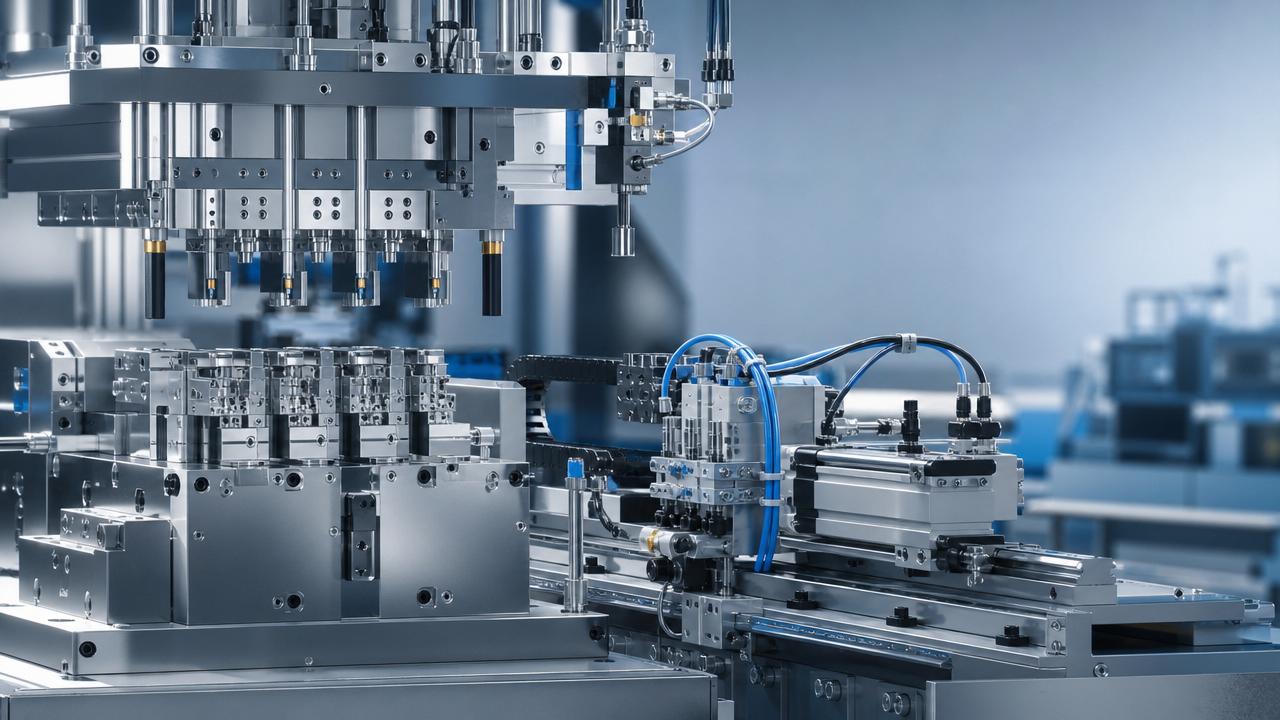
When downtime, compliance risks, and hidden inefficiencies threaten margins, mechanical engineering solutions protect far more than cost. They improve uptime, reduce variation, strengthen safety, and support resilient supply chains. In modern industry, thoughtful engineering decisions often preserve reputation, delivery performance, and long-term market position.
For complex production systems, the value of mechanical engineering solutions goes beyond a cheaper part or faster repair. The right design logic can stabilize output, simplify maintenance, and reduce lifecycle risk. That is why precision-focused platforms such as GHTN continue to highlight component intelligence, tooling insight, and practical implementation standards.
What do mechanical engineering solutions really protect besides cost?
Many people first associate mechanical engineering solutions with direct savings. That view is incomplete. The larger benefit is protection against operational losses that rarely appear on a simple purchase comparison.
A redesigned fixture, better fastener selection, or improved pneumatic layout can prevent recurring stoppages. Those changes preserve delivery reliability, product consistency, and machine health across the production cycle.
In regulated environments, sound engineering also protects compliance. Material choice, tolerance control, and electrical-mechanical interface quality can influence certification, traceability, and audit performance.
There is also a strategic layer. Effective mechanical engineering solutions help organizations adapt to higher precision demands, automation upgrades, and greener production targets without destabilizing current operations.
- Reduced unplanned downtime
- Better quality repeatability
- Lower maintenance complexity
- Stronger compliance readiness
- Longer asset service life
Where do mechanical engineering solutions create the biggest operational impact?
The strongest impact appears where small failures trigger large consequences. This is common in automated lines, high-volume assembly, mold production, electrical integration, and harsh operating environments.
In tooling systems, geometry optimization can improve cutting stability and extend tool life. That change influences scrap rate, cycle time, and machine loading at the same time.
In mold manufacturing, micron-level design refinement can improve filling behavior, cooling balance, and part release. Such mechanical engineering solutions reduce defects that otherwise become recurring quality costs.
Fasteners also matter more than expected. In vibration, corrosion, or temperature extremes, improper specification may cause loosening, fatigue, or sealing failure. Correct engineering protects both safety and system continuity.
Pneumatic and motion systems provide another example. A logic issue in actuator timing can create wear, jams, or inconsistent positioning. Solving that root cause often delivers faster value than replacing entire equipment.
How can you judge whether mechanical engineering solutions are worth the investment?
A good evaluation starts with total operational effect, not unit price. The best mechanical engineering solutions often cost more upfront but reduce risk across the full asset lifecycle.
Look first at failure frequency. If the same issue repeatedly causes stoppages, rejects, or maintenance intervention, the cumulative loss may already exceed the cost of redesign.
Next, measure impact across linked processes. A component change that improves one station but disrupts downstream flow is not a true gain. System-level compatibility matters.
Implementation speed is another factor. Some mechanical engineering solutions provide fast returns through fixture updates, tolerance refinement, or material substitution. Others require phased validation and supplier coordination.
Decision quality improves when technical data supports the process. GHTN’s industry perspective is useful here because it connects component behavior, standards evolution, and manufacturing realities in one view.
Practical evaluation checklist
- Does the problem affect uptime, quality, safety, or compliance?
- Is the root cause mechanical, material-related, or process-linked?
- Can the solution integrate with current tooling and controls?
- What validation data confirms expected performance?
- Will the improvement scale across plants or suppliers?
What mistakes weaken the value of mechanical engineering solutions?
One common mistake is solving symptoms instead of causes. Replacing failed parts without analyzing load paths, alignment, heat, contamination, or duty cycle often repeats the same problem.
Another mistake is over-focusing on specification sheets. Published values matter, but real performance depends on assembly conditions, operator interaction, maintenance practice, and environmental stress.
Some teams also underestimate tolerance stack-up. Even strong mechanical engineering solutions can disappoint when surrounding interfaces are unstable or poorly controlled.
A further risk appears during global sourcing. Equivalent-looking components may differ in metallurgy, surface treatment, sealing behavior, or traceability. Small deviations can change whole-system reliability.
Finally, implementation can fail when feedback loops are weak. Engineering updates need field observation, maintenance input, and measurable acceptance criteria to confirm real improvement.
Risk reminders
- Do not treat every failure as a replacement issue.
- Do not ignore operating environment details.
- Do not approve changes without validation metrics.
- Do not separate component choice from process reality.
How do mechanical engineering solutions support compliance and sustainability?
Compliance is no longer only a documentation exercise. It depends on whether parts, tools, and assemblies consistently perform within defined limits. That is where mechanical engineering solutions become essential.
Material traceability, dimensional consistency, and design safety margins all affect audit readiness. Engineering discipline helps reduce the gap between approved design intent and factory-floor reality.
Sustainability benefits follow a similar logic. Better tooling reduces waste. Durable fasteners extend service intervals. Optimized molds shorten cycles and lower energy intensity per unit produced.
GHTN’s mission of linking precision and driving manufacture fits this direction. Standardization, greener component choices, and better technical visibility help industrial systems become both competitive and responsible.
What is the smartest next step when considering mechanical engineering solutions?
Start with one critical failure pattern, not a broad transformation. The most effective mechanical engineering solutions usually begin with a well-defined bottleneck that has measurable business impact.
Collect evidence from maintenance logs, quality records, and operating conditions. Then compare root causes against available component, tooling, or design improvement options.
Prioritize actions that are technically clear and operationally scalable. A focused pilot can prove whether the proposed change improves reliability, compliance, and lifecycle economics.
Across the global hardware, electrical, and mold sectors, precision is rarely a narrow technical issue. It is a business advantage. That is why mechanical engineering solutions save more than cost: they protect continuity, credibility, and future growth.
Use that perspective when reviewing your next tooling update, fastener standard, mold revision, or automation adjustment. The right engineering choice can strengthen the entire industrial chain, one precise improvement at a time.
Related News