
How OEM parts for mechanical engineering cut downtime

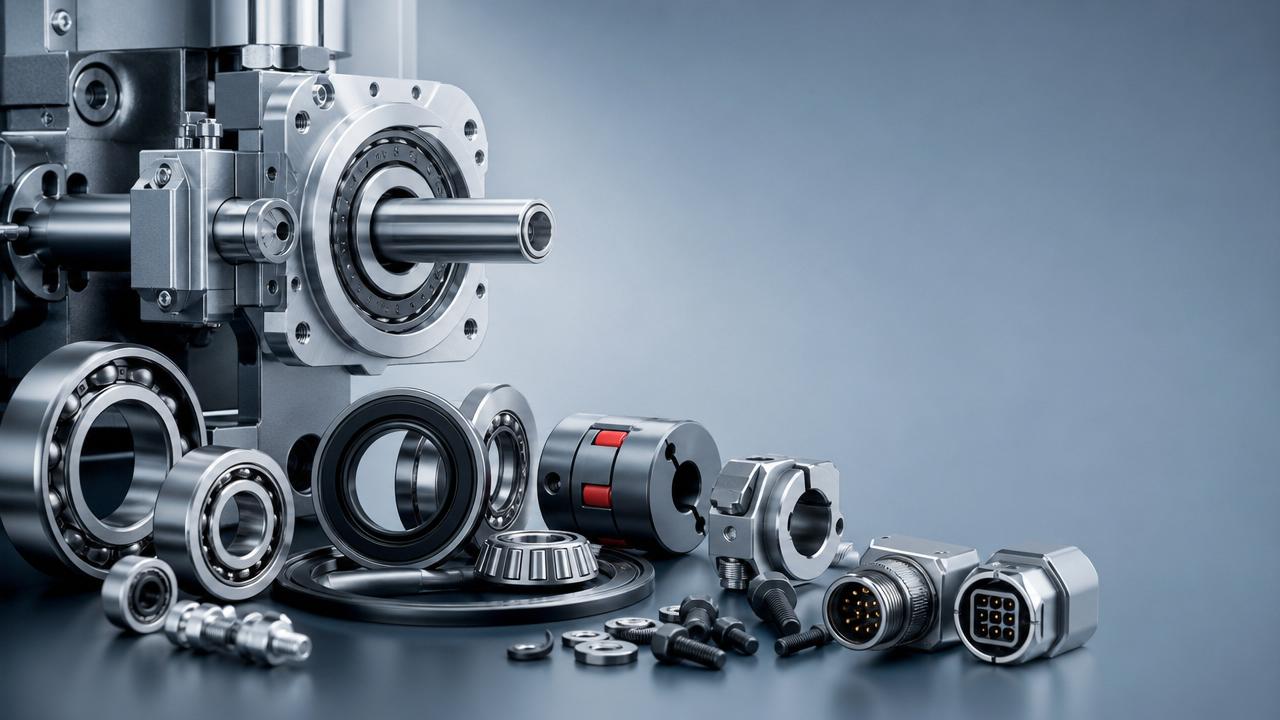
Unexpected equipment stops can drain maintenance budgets and delay production schedules. For aftermarket maintenance teams, choosing OEM parts for mechanical engineering is one of the most effective ways to reduce downtime, protect system compatibility, and maintain reliable performance under demanding conditions. This article explores how genuine components help speed repairs, improve service planning, and support long-term operational efficiency.
Why do OEM parts for mechanical engineering reduce downtime so effectively?
For maintenance personnel, downtime is rarely caused by one failed part alone. It usually comes from a chain reaction: delayed diagnosis, uncertain fit, installation adjustments, secondary failures, and repeat shutdowns. OEM parts for mechanical engineering help break that chain because they are designed around the original assembly logic, tolerance stack, material specification, and operating load.
In complex industrial environments, even a small mismatch in hardness, sealing geometry, thread pitch, coating, or dimensional tolerance can affect machine stability. This is especially true in systems involving fasteners, pneumatic units, rotating components, mold elements, and electrical-mechanical interfaces.
Aftermarket teams often work under pressure. They need parts that can be identified quickly, installed without rework, and trusted during restart. That is why OEM parts for mechanical engineering are not simply a purchasing preference. In many cases, they are a risk-control strategy.
- They reduce fitment uncertainty because dimensions, interfaces, and tolerances follow the original design intent.
- They shorten troubleshooting time because maintenance teams do not need to compensate for undocumented substitutions.
- They lower the risk of collateral damage in connected assemblies such as shafts, seals, couplings, pneumatic valves, and electrical connectors.
- They support more predictable service intervals, which helps planners coordinate labor, stock, and production windows.
What maintenance teams usually face during urgent repairs
When a machine stops unexpectedly, the immediate goal is restart. But the hidden problem is often part confidence. If a replacement component comes from an uncertain source, the team may spend extra time checking drawings, measuring interfaces, modifying brackets, or monitoring abnormal vibration after startup.
That uncertainty turns a one-hour intervention into a multi-shift disruption. In facilities that run automated lines or tightly synchronized processes, this can affect upstream and downstream equipment at the same time.
OEM parts vs aftermarket alternatives: where downtime costs really appear
The purchase price of a component is only one part of the maintenance decision. For aftermarket maintenance teams, the real cost question is broader: how much time, labor, restart risk, and repeat intervention does the replacement create? The comparison below helps clarify where OEM parts for mechanical engineering often deliver value.
This comparison does not mean every generic part is unsuitable. It means maintenance teams should evaluate total downtime exposure, not only unit price. In critical assemblies, OEM parts for mechanical engineering often reduce uncertainty enough to justify the premium.
When alternatives may still be considered
In low-risk, non-critical, or temporary applications, equivalent parts may be considered if the team can confirm dimensions, materials, duty cycle, and compliance requirements. Even then, the decision should be documented and linked to a clear maintenance risk assessment.
Which components have the biggest impact on repair speed and reliability?
Not every component creates the same downtime risk. Some categories are far more sensitive to mismatch because they influence motion control, sealing integrity, clamping force, thermal expansion, or signal continuity. For aftermarket maintenance teams, these are usually the first areas where OEM parts for mechanical engineering deserve priority.
High-priority categories
- Precision fasteners used in high-vibration or high-temperature assemblies, where coating, preload, and thread form directly affect retention and fatigue life.
- Pneumatic and hydraulic sealing elements, where small geometry deviations can create leakage, inconsistent actuation, or pressure loss.
- Bearings, bushings, couplings, and shaft-connected components, where fit, concentricity, and lubrication behavior influence vibration and wear.
- Mold-related wear components and guide elements, where micron-level alignment affects output quality and repeatability.
- Electrical-mechanical interfaces such as connectors, contact blocks, and terminal-related hardware, where compliance and signal reliability matter.
GHTN is especially relevant here because maintenance teams do not only need part names. They need insight into how industrial components behave under load, heat, corrosion, automation cycles, and material stress. That component-level understanding helps maintenance personnel avoid buying parts that look correct on paper but fail in service.
How should maintenance teams evaluate OEM parts for mechanical engineering before purchase?
A fast purchase is not always a safe purchase. In the aftermarket environment, the best practice is to use a short evaluation framework that balances urgency with reliability. The table below can be used by buyers, planners, and maintenance supervisors when deciding whether to source OEM parts for mechanical engineering for routine or critical repairs.
This evaluation method is practical because it supports both emergency orders and preventive maintenance planning. It also helps maintenance teams communicate more clearly with procurement, engineering, and suppliers.
A simple decision process for urgent and planned maintenance
- Confirm the failed component’s exact application point, not only its general part name.
- Check whether the part belongs to a critical assembly with safety, sealing, alignment, or electrical implications.
- Review current operating conditions, especially if the machine has been modified since original installation.
- Compare lead time against outage cost. A slower delivery may still be cheaper than repeated failures.
- Document the decision so the same issue can be handled faster during the next maintenance cycle.
What technical details matter most in demanding industrial service conditions?
Downtime prevention depends on more than having the right outline shape. In mechanical engineering environments, the service life of a replacement part is often determined by hidden technical details. Maintenance teams should pay close attention to the following factors when selecting OEM parts for mechanical engineering.
Key technical considerations
- Tolerance control: Tight dimensional consistency supports alignment, bearing fit, sealing compression, and proper torque transfer.
- Material grade: Carbon steel, alloy steel, stainless steel, engineering polymers, and elastomers each behave differently under fatigue, corrosion, and temperature cycling.
- Surface treatment: Zinc plating, black oxide, passivation, nitriding, and other treatments can influence friction, corrosion resistance, and wear behavior.
- Environmental compatibility: Dust, coolant, oil mist, washdown exposure, and chemical contact can change service life significantly.
- Assembly interaction: A part may be dimensionally correct yet unsuitable because it changes preload, contact pressure, or thermal expansion in the full assembly.
This is where a platform like GHTN adds practical value. Its focus on hardware, electrical systems, and mold manufacturing helps maintenance teams move beyond catalog descriptions and understand which technical characteristics truly matter in real operating conditions.
How can better sourcing and planning lower total maintenance cost?
A common objection is that OEM parts for mechanical engineering can cost more upfront. That may be true at the invoice level, but maintenance budgets are affected by much more than unit price. Labor hours, production loss, repeat failures, emergency shipping, and unplanned inspections often outweigh the cost difference between OEM and non-OEM components.
The more critical the machine, the more the economics shift toward reliability. A small premium on a precision fastener, seal kit, bearing component, or control interface can be minor compared with one additional line stop.
Cost-control practices that still protect uptime
- Classify parts by criticality so OEM sourcing is prioritized for failure-sensitive assemblies rather than applied blindly to every item.
- Build a minimum stock list for long-lead or high-failure components used in rotating, pneumatic, and mold-related systems.
- Link spare part planning to preventive maintenance records so recurring failure points are visible before another outage occurs.
- Review whether repeated low-cost substitutions are creating hidden labor and restart costs.
What standards and compliance points should buyers not overlook?
In global industrial supply chains, maintenance sourcing is not just a technical activity. It also intersects with documentation, traceability, and regulatory expectations. Depending on the component type and target market, teams may need to review general references such as ISO dimensions, IEC-related electrical conformity, material declarations, or environmental requirements like RoHS and REACH.
For OEM parts for mechanical engineering, this matters because undocumented substitutions can slow internal approvals or create uncertainty during audits, export transactions, or customer inspections. Maintenance teams should ask for relevant documentation when the application includes regulated electrical systems, safety-linked machinery, or internationally shipped equipment.
Useful compliance checkpoints
- Verify whether the component has plant-specific approval requirements before ordering.
- Confirm that material and finish specifications match the original service environment.
- Request traceability information for critical hardware, seals, and electrically connected parts where documentation supports maintenance records.
FAQ: what do aftermarket maintenance teams ask most often?
Are OEM parts for mechanical engineering always necessary?
Not always. The decision depends on assembly criticality, operating conditions, safety impact, and the cost of repeat downtime. For non-critical applications, an equivalent part may work. For precision, sealing, vibration-sensitive, or compliance-linked assemblies, OEM components are often the safer choice.
What should we check first when a generic replacement keeps failing?
Start with fit, material, surface treatment, and operating load. Many repeat failures come from hidden mismatches rather than obvious dimensional errors. Review installation torque, temperature exposure, vibration, media compatibility, and whether the part changed contact pressure or alignment in the assembly.
How can we justify OEM purchasing to budget controllers?
Use total downtime cost, not unit price alone. Include labor, emergency logistics, lost production time, restart risk, and repeat interventions. In many industrial settings, one avoided shutdown offsets a significant portion of the price difference.
Which areas benefit most from OEM sourcing?
Focus first on fasteners under dynamic load, sealing components, pneumatic control parts, rotating interfaces, mold wear elements, and electrical-mechanical connection points. These categories have high sensitivity to tolerance, material behavior, and system compatibility.
Why choose us for sourcing insight and part selection support?
GHTN supports maintenance and sourcing decisions from the component level upward. That matters when your team needs more than a product list. You need guidance that connects material selection, operating environment, system logic, compliance considerations, and market availability.
Our strength lies in linking precision industrial knowledge across hardware, electrical, and mold-related sectors. This makes it easier for aftermarket maintenance teams to evaluate OEM parts for mechanical engineering with fewer blind spots, especially in applications where downtime, compatibility, and service continuity are critical.
- Ask about parameter confirmation if you need help checking dimensions, materials, finishes, pressure limits, or operating temperatures.
- Ask about product selection if you are comparing OEM parts for mechanical engineering across fasteners, pneumatic components, electrical hardware, or mold-related wear items.
- Ask about delivery timing if your outage window is short and you need to balance lead time against downtime risk.
- Ask about certification and documentation if your plant, customer, or export route requires compliance support.
- Ask about sample support or quotation communication if you need to validate a replacement strategy before larger procurement.
If your maintenance team is dealing with repeated failures, uncertain substitutions, or urgent replacement planning, contact us with the part application, operating condition, and current sourcing challenge. We can help you narrow the specification, review selection risks, and identify a more reliable path to shorter downtime and stronger lifecycle performance.
Related News