
How an OEM parts catalog speeds up sourcing decisions

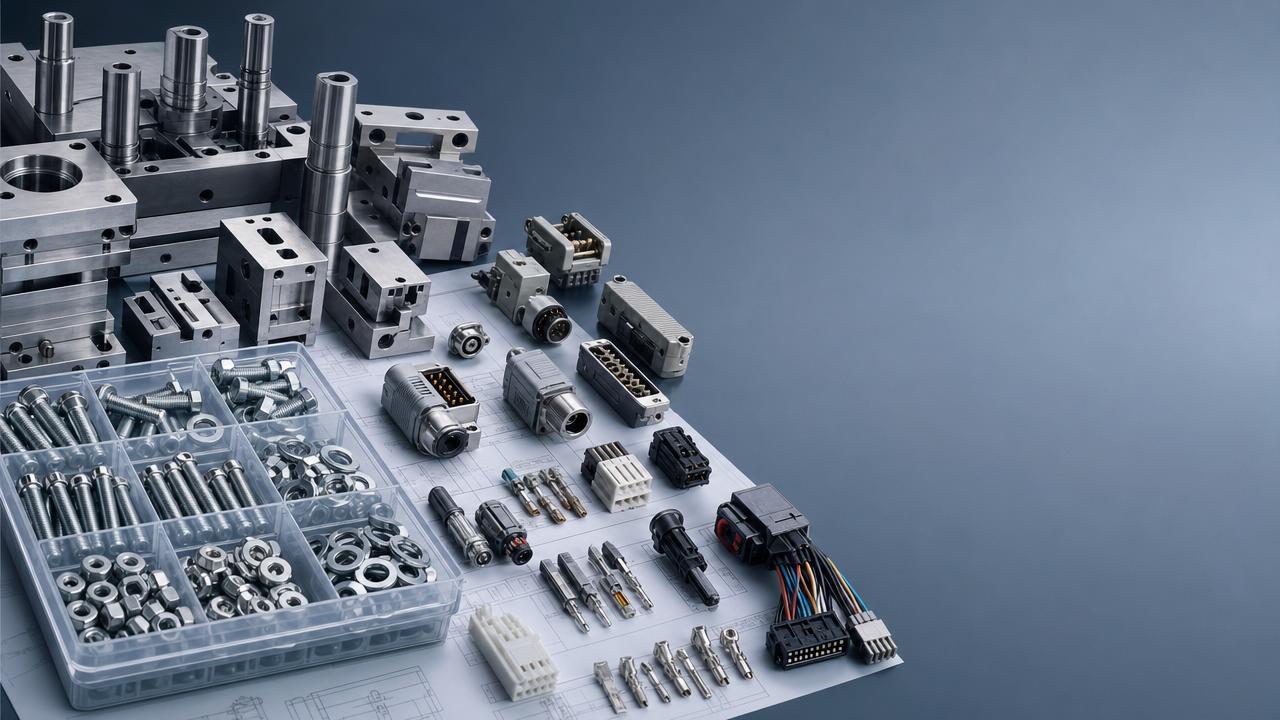
Why the OEM parts catalog is becoming a strategic sourcing tool
For business evaluators under pressure to compare suppliers, specs, and lead times quickly, an OEM parts catalog can turn fragmented data into faster, more confident sourcing decisions.
By centralizing technical details, compatibility information, and procurement options, it reduces evaluation risk and shortens approval cycles.
In complex industrial supply chains, this visibility is essential for identifying reliable partners and securing the right components with greater precision.
Across the broader industrial ecosystem, sourcing has changed from simple price comparison to data-led qualification.
An OEM parts catalog now supports technical validation, lifecycle planning, compliance review, and replacement strategy in one searchable environment.
For sectors covered by GHTN, this shift matters because fasteners, electrical parts, tooling elements, and mold components all require exact fit and proven performance.
Current market signals show rising dependence on structured parts data
Several market signals explain why the OEM parts catalog has moved closer to the center of industrial decision-making.
Product variation is increasing, while qualification windows are getting shorter.
Buy-side teams must verify dimensions, materials, tolerances, standards, and interchangeability before committing to supply.
At the same time, supply chains are more global and less forgiving of specification errors.
A missing drawing, unclear revision note, or outdated stock reference can delay a project far more than unit price differences.
This is especially true in hardware, electrical, and tooling environments, where part-level accuracy shapes uptime, safety, and output quality.
What the latest sourcing environment is demanding
- Faster comparison across multiple approved and alternative sources
- Cleaner technical documentation linked to part numbers
- Better visibility into lead time, availability, and revision status
- Clearer compliance references for global trade and installation use
- Stronger cross-functional alignment between engineering and procurement
In this context, an OEM parts catalog is no longer just a reference file.
It becomes a live decision layer that helps reduce ambiguity before commercial negotiation even starts.
The drivers behind the shift toward OEM parts catalog adoption
The growth of the OEM parts catalog reflects several deeper industrial forces.
These drivers are visible across general industry, especially where precision and repeatability directly affect operational results.
GHTN’s industry lens shows this clearly in fasteners under harsh conditions, electrical assemblies under compliance pressure, and mold tooling under micron-level tolerance demands.
How an OEM parts catalog changes sourcing outcomes across business stages
The impact of an OEM parts catalog is strongest when sourcing decisions depend on both technical certainty and timing discipline.
During specification review
A structured OEM parts catalog reduces confusion around dimensions, coatings, electrical ratings, compatible assemblies, and revision history.
This lowers the risk of comparing parts that appear similar but differ in performance-critical details.
During supplier comparison
When technical data is normalized, supplier evaluation becomes more objective.
Decision-makers can assess availability, documentation quality, substitution options, and reliability signals with less manual consolidation.
During approval and onboarding
A complete OEM parts catalog shortens internal handoffs.
Technical, commercial, and compliance checks can happen from the same data foundation, reducing repeated clarification loops.
During maintenance and replacement cycles
Replacement sourcing often fails because legacy records are incomplete.
An OEM parts catalog helps map original part numbers, functional equivalents, and updated versions more efficiently.
This matters greatly in general industry, where one delayed low-value component can interrupt a high-value production process.
The most important elements to evaluate inside an OEM parts catalog
Not every OEM parts catalog delivers the same decision value.
The strongest catalogs combine technical depth with sourcing usability.
- Accurate part numbering with revision control
- Material, tolerance, finish, and performance data
- Compatibility with assemblies, machines, or systems
- Compliance references, certificates, or standard mappings
- Availability signals and realistic lead-time indicators
- Cross-reference capability for equivalent or successor parts
- Downloadable drawings, datasheets, and ordering details
If these elements are missing, the OEM parts catalog may still look comprehensive while failing at the moment of real sourcing comparison.
The true test is whether it supports a faster yes-or-no decision without raising hidden qualification risk.
Practical guidance for using an OEM parts catalog more effectively
A better catalog alone does not guarantee better outcomes.
Its value depends on how sourcing workflows are designed around it.
This approach turns the OEM parts catalog into a repeatable sourcing intelligence asset, not just a static document repository.
What to watch next as OEM parts catalog capabilities continue to evolve
The next phase of catalog development will likely focus on smarter integration and deeper traceability.
Searchable geometry, compliance-linked metadata, lifecycle alerts, and alternative-source mapping will become more valuable than simple product listings.
Industrial networks that connect precision components with market intelligence will gain an advantage here.
That is where GHTN contributes practical relevance.
By linking technical trend analysis with trade insight across hardware, electrical, and mold sectors, GHTN helps expose the sourcing context behind each component decision.
When evaluating any OEM parts catalog, the key question is simple: does it help validate fit, reduce uncertainty, and accelerate qualified action?
If the answer is yes, sourcing becomes faster, more resilient, and more aligned with long-term industrial performance.
The next step is to review current part data sources, identify gaps in technical consistency, and prioritize catalogs that support both immediate comparison and future supply continuity.
Related News