
Industrial automation solutions that scale with production

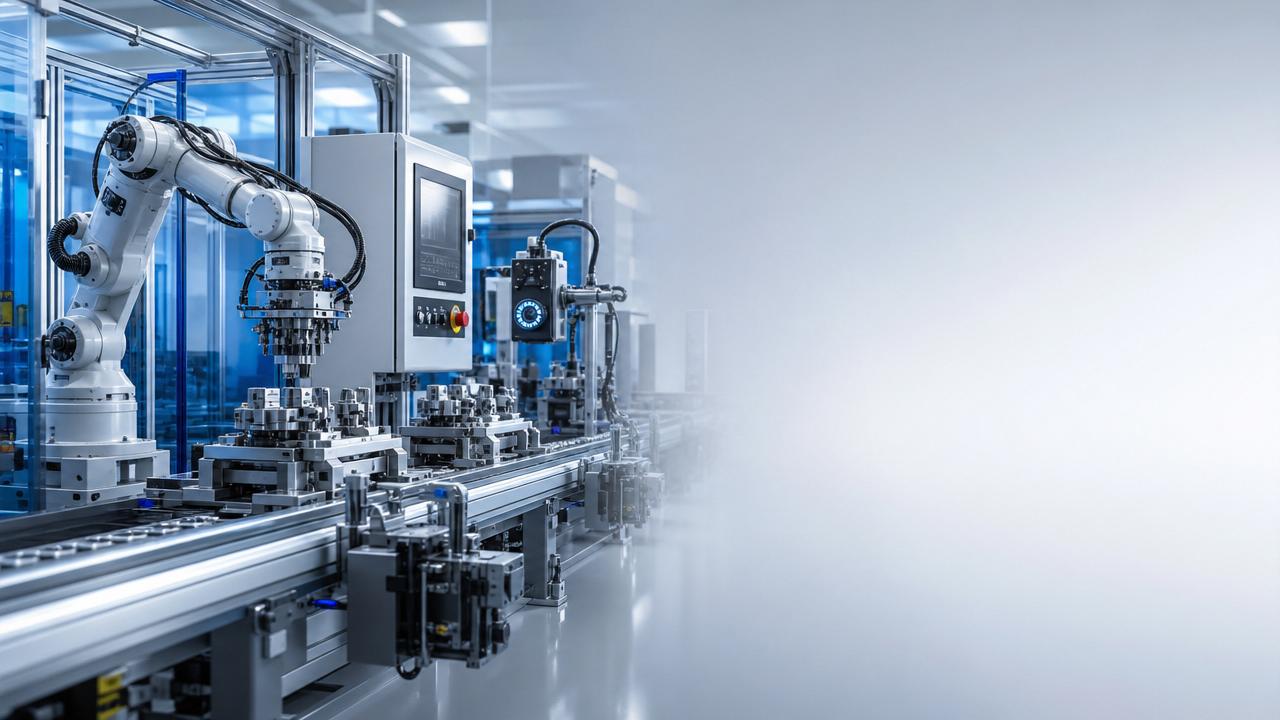
As production demands shift faster than ever, industrial automation solutions have become a core strategy for stable growth.
Scalable systems help operations expand output without sacrificing precision, quality control, or delivery reliability.
Across tooling, electrical systems, and mold-based manufacturing, automation now supports both resilience and competitiveness.
For sectors tracked by GHTN, the real value lies in connecting components, controls, and production logic into one adaptable framework.
Understanding industrial automation solutions in scalable production
Industrial automation solutions combine machines, sensors, controls, software, and mechanical systems to manage production with less manual intervention.
Their purpose is not only labor reduction. Their broader role is process stability, repeatability, traceability, and controlled expansion.
A scalable automation model allows capacity increases through modular upgrades instead of disruptive full-line replacement.
That approach matters in mixed industrial environments where demand, product variety, and compliance expectations change quickly.
Common building blocks include:
- PLC and motion control systems
- Pneumatic and electric actuators
- Industrial sensors and vision devices
- Robotic handling and assembly units
- Tool monitoring and machine condition tracking
- MES, SCADA, and data integration layers
When these elements are selected carefully, industrial automation solutions can grow step by step with production volumes and process complexity.
Industry signals shaping scalable automation demand
Several pressures are pushing industrial automation solutions from optional investment to essential infrastructure.
These signals are visible across hardware, electrical, and mold-focused production systems.
They also explain why industrial automation solutions must be evaluated as long-term production architecture, not isolated equipment purchases.
Business value across tools, electrical systems, and mold manufacturing
Scalable industrial automation solutions generate value when they improve the physical and digital performance of production together.
Precision tooling performance
Tool wear, cutting stability, and setup variation directly affect cycle time and dimensional quality.
Automation can track spindle load, vibration, and tool life, reducing unplanned stoppages and scrap.
Electrical system reliability
Electrical hubs, drives, relays, and control cabinets form the backbone of automated lines.
Well-structured industrial automation solutions improve fault isolation, energy management, and standards alignment.
Mold process stability
Injection molding and die-casting depend on repeatable pressure, temperature, timing, and cooling behavior.
Automated feedback loops help maintain micron-level precision and reduce deviation between batches.
For GHTN’s industrial scope, this integrated view matters because every fastener, actuator, cavity, and sensor influences line performance.
Typical scalable automation scenarios
Not every application requires the same automation depth. Industrial automation solutions should match process risk, throughput goals, and product complexity.
These examples show that industrial automation solutions scale best when each expansion follows a defined production logic.
What makes industrial automation solutions truly scalable
Scalability is more than adding machines. It requires technical consistency across hardware, controls, data, and maintenance practices.
- Modular equipment design that supports phased expansion
- Interoperable communication protocols across devices
- Reusable control logic and standardized electrical layouts
- Data structures that connect shop-floor events with business systems
- Preventive and predictive maintenance readiness
- Operator interfaces that remain clear as complexity increases
Without these foundations, automation may improve one process while creating bottlenecks elsewhere.
Strong industrial automation solutions protect against fragmented upgrades, incompatible controls, and hidden lifecycle costs.
Implementation priorities and common risks
A practical rollout should begin with measurable constraints rather than broad technology ambition.
Useful starting points include recurring defects, unstable cycle time, tool failure frequency, energy waste, or compliance documentation gaps.
Recommended implementation sequence
- Map current process flow and identify constraint points.
- Define target KPIs for throughput, quality, uptime, and traceability.
- Prioritize automation modules with fast operational impact.
- Verify electrical compatibility, safety standards, and data interfaces.
- Pilot on one cell before wider replication.
- Review performance data and refine scaling logic.
Common risks to avoid
- Overspecifying equipment beyond actual production need
- Ignoring maintenance access and spare parts strategy
- Separating mechanical upgrades from control system planning
- Underestimating data quality and sensor calibration requirements
- Expanding capacity before stabilizing process variation
The best industrial automation solutions reduce complexity while increasing visibility and control.
A practical next step for long-term production resilience
Scalable industrial automation solutions are now central to reliable, efficient, and standards-aware production growth.
They help align precision tools, electrical infrastructure, and mold-centered processes with changing market demand.
GHTN’s industry perspective highlights an important principle: strong production systems are built from well-matched components and informed decisions.
A useful next step is to review one production line through three lenses: control stability, component reliability, and expansion readiness.
That focused review often reveals where industrial automation solutions can deliver the fastest and most sustainable improvement.
In a global industrial environment shaped by precision and speed, scalable automation is no longer a future concept. It is operational groundwork.
Related News