
Where Mechanical Engineering Solutions Break Down in Deployment

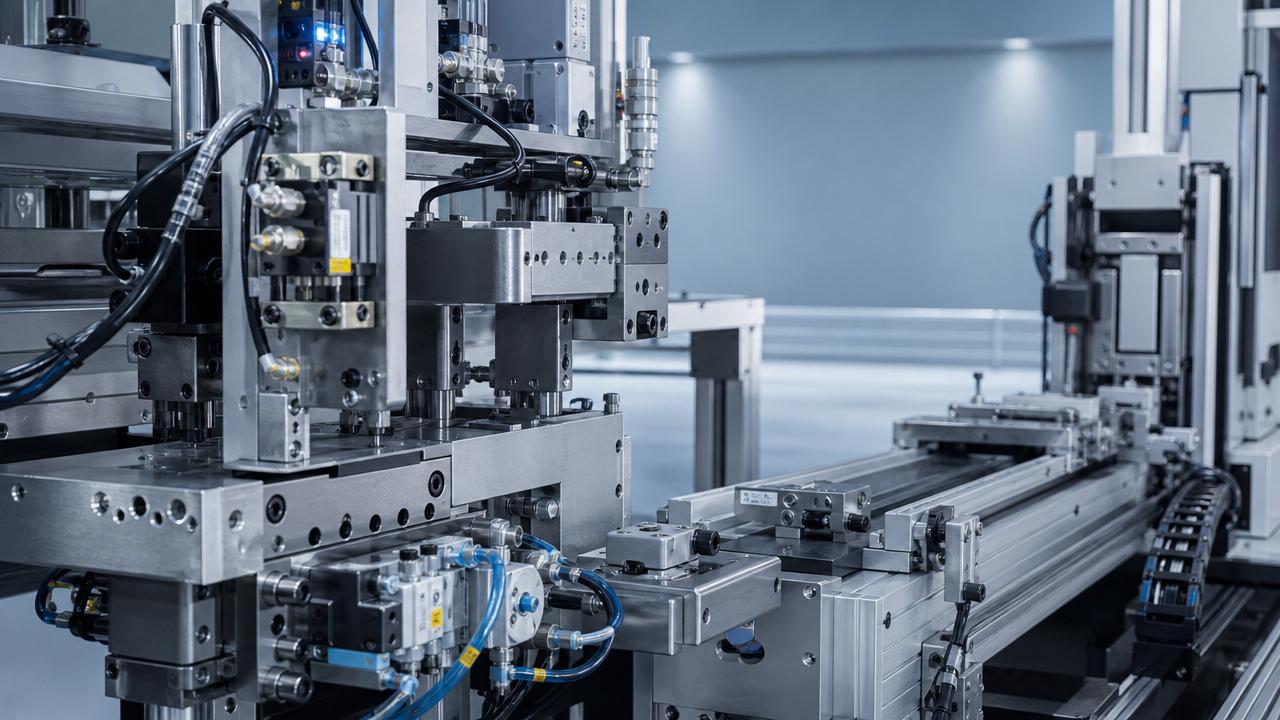
Even the most advanced mechanical engineering solutions can fail when they meet the realities of deployment—tight timelines, supplier variability, compliance gaps, and on-site execution risks. For project leaders, understanding where breakdowns occur is essential to protecting cost, quality, and delivery. This article explores the hidden friction points that turn sound designs into operational challenges across complex industrial environments.
Why deployment risk looks different across industrial scenarios
Project managers rarely struggle with mechanical engineering solutions at the concept stage alone. The real pressure emerges when a solution moves from approved drawings to factory floors, utility rooms, field installations, or automated production lines. At that point, success depends not only on engineering quality, but also on procurement timing, installer capability, tolerance control, regulatory alignment, and how well the design fits the operating environment.
This matters because deployment conditions vary widely. A precision tool integration project in a mature plant has very different failure triggers than a greenfield equipment installation, a retrofit in a legacy facility, or a multi-country rollout involving local suppliers. For decision-makers, the question is not simply whether mechanical engineering solutions are technically sound. The better question is: in which scenario are they most likely to break down, and what should be checked before deployment begins?
For organizations operating across hardware, electrical, tooling, mold, and industrial component ecosystems, the challenge becomes even more complex. Interfaces between fasteners, machined parts, pneumatic logic, housings, fixtures, and compliance requirements can create hidden risk chains. That is why deployment planning must be scenario-based rather than design-centered only.
Where mechanical engineering solutions commonly break down by application scenario
The same design can perform very differently depending on how and where it is deployed. Below are the most common industrial scenarios where mechanical engineering solutions encounter preventable breakdowns.
1. Greenfield production line installation
In new plant construction or first-time line setup, schedules usually drive decisions too early. Mechanical engineering solutions may be finalized before utility routing, vibration behavior, operator movement, maintenance access, and spare part logic are fully understood. The breakdown often appears as late rework: anchor points shift, machine bases need modification, cable and air routing interfere with guarding, or service clearances fail inspections.
In this scenario, project leaders should focus on installation sequence, civil tolerance, lifting constraints, and cross-discipline coordination. A mechanically elegant layout can still fail if electrical, controls, and maintenance realities were not integrated into deployment planning.
2. Brownfield retrofit in legacy facilities
Retrofits are one of the most difficult environments for mechanical engineering solutions. Existing structures may have undocumented changes, worn foundations, limited access, nonstandard fasteners, and legacy control architecture. Engineers often underestimate how much “site truth” differs from historical drawings.
Breakdowns here typically come from fit mismatch, unrealistic shutdown windows, hidden corrosion, incompatible mounting patterns, or maintenance teams resisting solutions that complicate existing workflows. In retrofit projects, the risk is rarely pure design quality. It is the gap between ideal geometry and real installed conditions.
3. High-precision tooling and mold deployment
In precision mold and tooling applications, small deviations create outsized commercial consequences. Mechanical engineering solutions may appear complete on paper, yet fail in deployment because thermal expansion, repeatability under load, clamping consistency, material behavior, or micron-level alignment was not protected during installation and startup.
This scenario demands stronger controls on machining tolerance transfer, assembly cleanliness, calibration discipline, and operator handling. A premium component can underperform if the deployment process introduces stress, contamination, or fixture instability.
4. Automated lines with pneumatic and electromechanical interfaces
Automation projects often expose interface problems between mechanical engineering solutions and control logic. Cylinders, valves, end-effectors, guides, brackets, and safety devices may all work independently, but fail as a system when cycle timing, pressure fluctuation, sensor placement, or moving mass was not validated in real operating conditions.
In these deployments, the breakdown usually happens during commissioning. The line runs, but not consistently. Wear accelerates, rejected parts increase, or maintenance demand becomes excessive. For project owners, this is a sign that deployment validation was too narrow and focused on static acceptance rather than dynamic performance.
5. Multi-site or cross-border rollout
Mechanical engineering solutions that succeed in one site can fail elsewhere because supplier capability, local standards, climate, installer skill, and replacement part availability are not identical. A design optimized for one region may face compliance delays, sourcing substitutions, or inconsistent assembly quality in another.
This scenario is especially relevant to global OEMs, distributors, and industrial component buyers. Deployment risk grows when documentation, tolerances, and acceptance criteria are interpreted differently across countries or subcontractors.
Scenario comparison: what project managers should evaluate first
To assess whether mechanical engineering solutions are truly deployment-ready, project leaders should compare scenarios based on failure trigger, decision priority, and control method.
Why good designs fail in deployment even when the engineering is sound
Many mechanical engineering solutions break down not because the core design is wrong, but because deployment introduces variables that were treated as secondary. For project managers, these are the friction points that deserve the most attention.
Supplier variability changes performance in the field
Equivalent-looking parts are not always functionally equivalent. Fasteners, seals, machined plates, springs, housings, and pneumatic elements may vary in finish, hardness, dimensional stability, or fatigue behavior. If procurement substitutes components without a controlled validation process, mechanical engineering solutions can degrade quietly until startup reveals the issue.
Compliance is treated as paperwork instead of deployment criteria
International projects often pass internal review but stumble at customer acceptance or regulatory inspection. Material traceability, pressure ratings, guarding requirements, electrical enclosure interfaces, and local certification rules all affect deployment success. Compliance should shape the solution early, not be checked only before shipment.
Installation capability is overestimated
A design may assume ideal torque control, alignment tools, lifting equipment, or technician skill that does not exist on site. When installation teams improvise, precision degrades fast. This is especially damaging for mechanical engineering solutions involving preload sensitivity, alignment-critical assemblies, or sequential calibration steps.
Operating conditions are narrower in testing than in reality
Bench validation may not include dust, thermal cycling, vibration, operator variation, start-stop frequency, or inconsistent compressed air quality. As a result, the solution passes FAT but weakens during sustained operation. This is a frequent problem in industrial hardware and tooling environments where field variability is much wider than controlled testing assumptions.
How needs differ by stakeholder and project type
Not every team evaluates mechanical engineering solutions the same way. Deployment decisions improve when project leaders understand who is optimizing for what.
Scenario-based checks before approving mechanical engineering solutions
A stronger approval process does not always require more paperwork. It requires sharper validation against the actual scenario. Before deployment, project leaders should confirm the following:
- Has the site condition been verified physically, not just against legacy drawings?
- Are all critical components locked to approved specifications, including substitution rules?
- Does the installation plan reflect real access, lifting, alignment, torque, and calibration constraints?
- Have compliance requirements been translated into design and procurement checkpoints?
- Will commissioning test dynamic operating behavior rather than static acceptance only?
- Can maintenance teams support the deployed solution with available tools, skills, and spare parts?
These checks are especially valuable in industries where hidden component performance matters. GHTN’s perspective across hardware, electrical, and mold ecosystems reinforces a practical lesson: deployment succeeds when micro-level component realities are aligned with macro-level project execution.
Common misjudgments that cause avoidable breakdowns
Several deployment mistakes appear repeatedly across industrial projects. The first is assuming that a proven design is automatically a proven deployment model. The second is treating supplier capability as interchangeable across regions. The third is separating engineering review from maintenance and operations input. The fourth is compressing commissioning time to recover schedule delays, which often hides early signs of failure.
Another common error is focusing heavily on major equipment while underestimating the role of “small” components. In reality, many mechanical engineering solutions break down because of fastener selection, bracket rigidity, air quality preparation, mold alignment, or tolerance stack-up in support tooling. These details are often the stitching points that hold industrial systems together—or allow them to unravel.
A practical path forward for project leaders
For project managers and engineering leads, the best way to strengthen mechanical engineering solutions is to evaluate them in the context they will actually live in. Ask which scenario you are dealing with: new build, retrofit, precision tooling, automation interface, or multi-site replication. Then match the review method to that scenario instead of applying the same checklist to every project.
Organizations that perform well in deployment usually do three things consistently. They validate critical assumptions on site early, control component variation tightly, and connect design intent with installation reality. They also use cross-functional review to bridge engineering, procurement, quality, and operations before problems become expensive.
If your team is selecting or scaling mechanical engineering solutions across industrial environments, the next step is not simply to request more technical detail. It is to define the exact application scenario, identify the most likely deployment failure points, and confirm which component, tooling, compliance, and execution conditions must be locked before rollout. That scenario-first approach protects delivery and makes engineering performance far more repeatable in the field.
Related News