Which Industrial Solutions Create Hidden Maintenance Costs

Many industrial solutions promise efficiency, but hidden maintenance costs often appear only after equipment enters daily service. For after-sales maintenance teams, the biggest risks usually come from systems that look advanced on paper but create access problems, diagnostic delays, spare-part dependency, and frequent unplanned interventions. In practice, the most expensive solution is often not the one with the highest purchase price, but the one that quietly consumes labor hours, replacement parts, and uptime over its operating life.
For maintenance professionals, the key question is not simply which industrial solutions fail more often. It is which ones make service harder, slower, and more unpredictable. Hidden cost usually sits inside design complexity, non-standard components, poor maintainability, limited documentation, and operating conditions that accelerate wear without being obvious during procurement. Recognizing these patterns early helps teams reduce lifecycle cost and support better decisions across installation, service planning, and long-term asset reliability.
Why hidden maintenance costs matter more than upfront savings
Many industrial buyers focus first on acquisition cost, output capacity, and energy efficiency. Those metrics matter, but after-sales maintenance personnel often experience a different reality once equipment reaches the field. If a system needs special tools for routine service, requires proprietary software to diagnose simple faults, or depends on long-lead imported parts, the real operating cost rises quickly.
Hidden maintenance cost is rarely a single expense line. It is usually the accumulation of small penalties: more technician time, more training, more emergency orders, more downtime coordination, and more temporary workarounds. These costs do not always appear in vendor proposals, yet they shape the true performance of industrial solutions across years of operation.
For service teams, maintenance burden also affects customer trust. When a machine repeatedly needs complex intervention, even if the core hardware is technically capable, users begin to view the whole system as unreliable. In that sense, maintainability is not only a technical issue. It is part of product value, support quality, and long-term commercial credibility.
Which industrial solutions most often create hidden maintenance costs
Not all industrial solutions create the same maintenance profile. The highest hidden costs usually come from systems that combine high mechanical stress, electrical complexity, automation dependence, and limited service access. These are common in advanced manufacturing lines, process control equipment, compressed air systems, thermal systems, and precision tooling environments.
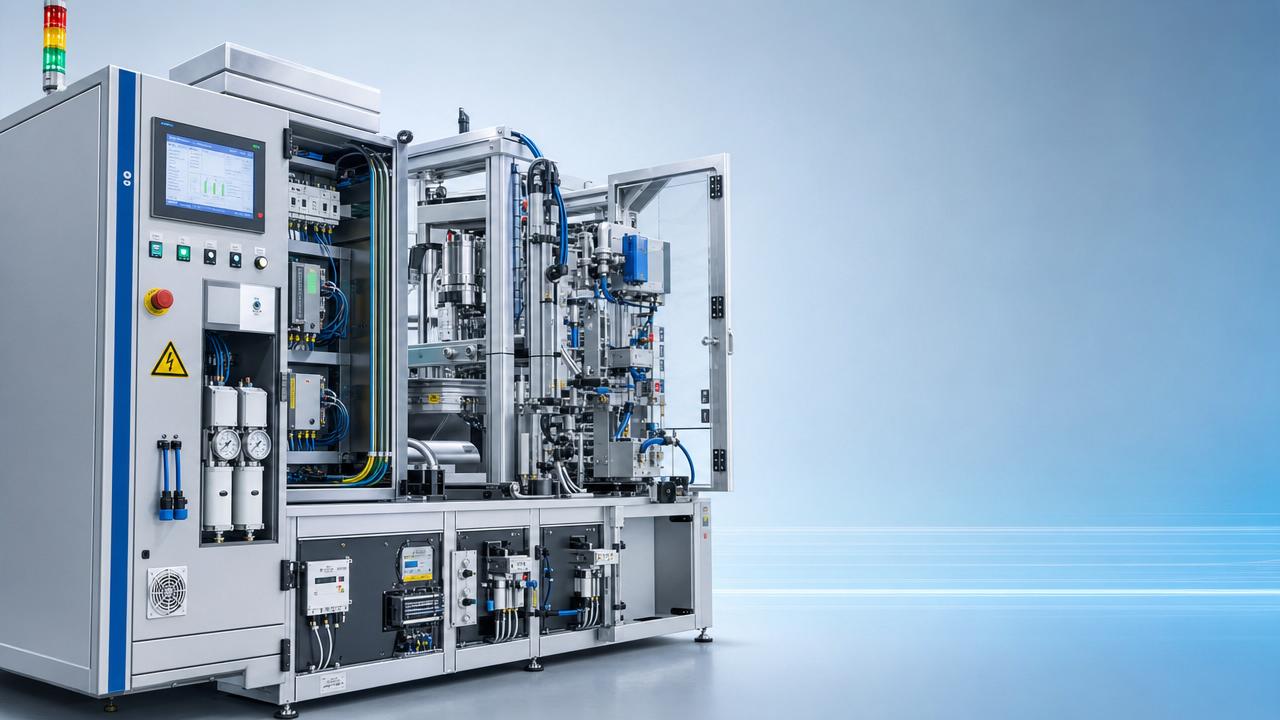
Integrated automated lines are a frequent example. They often improve throughput, but they also connect sensors, actuators, controllers, pneumatic devices, drives, and safety modules into one tightly linked architecture. A minor fault in one component can stop the entire line. Maintenance cost rises because troubleshooting becomes system-wide rather than component-level.
Custom-built or highly specialized machinery can be even more expensive to support. These solutions may fit a production requirement perfectly, yet they often rely on unique assemblies, non-standard fasteners, custom molds, or proprietary control logic. When the original supplier is slow to respond, after-sales teams may spend excessive time reverse-engineering problems or sourcing replacements.
Another high-risk category is equipment marketed mainly for innovation rather than serviceability. Some industrial solutions offer impressive digital features, compact design, or extreme precision, but routine maintenance may require partial disassembly, software authorization, or factory-calibrated replacement modules. The result is a maintenance model that shifts cost from repair to dependency.
Design complexity: the first hidden cost multiplier
Complex design is one of the strongest predictors of hidden maintenance cost. This is not because complexity is always bad. In many industrial applications, complexity is necessary to achieve precision, automation, or safety. The problem begins when complexity is introduced without maintainability in mind.
If technicians cannot quickly isolate fault locations, service labor increases. If major assemblies must be removed to replace low-cost wear parts, downtime extends. If cable routing, pneumatic lines, or fastener placement prevent easy access, even a routine intervention becomes disruptive. In these cases, maintenance cost comes less from failure frequency and more from the effort required to restore function.
For after-sales maintenance personnel, one practical test is service path visibility. Can a technician understand how to reach, inspect, test, and replace critical components without dismantling unrelated sections? If the answer is no, then the industrial solution likely carries hidden lifecycle cost, even when reliability metrics initially appear strong.
Proprietary parts and closed ecosystems increase long-term risk
Many industrial solutions rely on proprietary consumables, vendor-specific connectors, unique tool holders, closed control platforms, or exclusive software interfaces. These choices may improve integration or protect product quality, but they also limit flexibility in field service. When parts can only be sourced from one supplier, maintenance becomes vulnerable to price escalation and delivery delays.
For maintenance teams, the problem is not just part cost. It is the combination of waiting time, inventory planning difficulty, and reduced substitution options. A standard bearing, valve, relay, or fastener can often be sourced quickly through global distribution channels. A proprietary equivalent may require factory approval, regional shipping, and exact revision matching.
Closed ecosystems also affect diagnostic efficiency. If fault logs require licensed software, encrypted interfaces, or supplier-only access, in-house teams lose time during urgent repairs. This creates a hidden support dependency that may not be visible during the equipment sales process. Over time, even technically durable systems can become expensive simply because they are hard to support independently.
Poor access to wear parts turns routine service into costly downtime
Some of the most expensive industrial solutions are not the ones that fail dramatically. They are the ones that make simple wear-part replacement unnecessarily difficult. Filters, seals, belts, cutting tools, nozzles, sensors, pneumatic fittings, and electrical contact components all have predictable service lives. When these parts are buried inside cramped layouts, maintenance labor expands far beyond the value of the part itself.
After-sales teams should pay close attention to the ratio between component cost and replacement effort. A low-cost seal that requires three hours of disassembly is not a low-cost item in practice. The same is true for sensors positioned near hot zones, fasteners located behind guards with poor tool clearance, or lubrication points that are hard to reach during normal operation.
Accessible maintenance design reduces not only labor cost but also the temptation to defer service. When routine tasks are difficult, operators and local technicians may postpone them. That delay can trigger secondary damage, contamination, misalignment, or higher load on adjacent components. The original hidden cost then multiplies into broader reliability loss.
Automation and controls can reduce labor while increasing diagnostic burden
Automation is often sold as a path to lower operating cost, and in many cases that is true. However, advanced controls can also create hidden maintenance costs when field diagnostics become too specialized. A simple mechanical issue may present as a communication fault, servo alarm, or interlock condition, forcing technicians to examine software and hardware together.
In highly automated industrial solutions, the cost is not only replacement parts but diagnostic time. Maintenance teams may need skills in PLC logic, sensor calibration, network communication, electrical safety, and mechanical alignment just to resolve one stoppage. If those skills are not available on-site, every fault becomes slower and more expensive to clear.
This does not mean automation should be avoided. It means maintainability must be assessed along with performance. Good automation design includes clear fault mapping, modular replacement, standardized I/O labeling, readable documentation, and practical manual override procedures. Without those features, automation savings can be offset by service complexity.
Environmental conditions quietly accelerate maintenance cost
Industrial solutions that perform well in controlled demonstrations may behave very differently in dust, vibration, moisture, thermal cycling, chemical exposure, or unstable power conditions. Environmental mismatch is a major source of hidden maintenance cost because the equipment itself may not be defective. Instead, the operating context steadily shortens component life.
Fasteners may loosen under vibration. Electrical terminals may corrode in humid areas. Pneumatic components may suffer from contaminated compressed air. Precision tooling may wear faster under poor chip evacuation or temperature variation. In these situations, maintenance costs rise gradually and repeatedly, often without a single obvious root cause.
After-sales personnel should therefore evaluate industrial solutions not only by rated specification but by environmental tolerance. The best service outcomes usually come from designs that account for sealing, material compatibility, thermal management, contamination control, and realistic load variation. Small mismatches in these areas often generate large maintenance burdens later.
Insufficient documentation and training create avoidable service costs
Even well-built industrial solutions can become expensive to maintain when documentation is incomplete or training is weak. If wiring diagrams are outdated, spare-part references are unclear, or maintenance intervals are too generic, technicians lose time at every intervention. The resulting cost is scattered across labor, downtime, and avoidable replacement errors.
For after-sales maintenance teams, documentation quality directly affects first-time fix rate. Clear exploded views, service access instructions, torque requirements, error-code explanations, and preventive maintenance checklists reduce uncertainty. They also support consistency across teams, shifts, distributors, and regional service partners.
Training matters just as much. Some equipment appears reliable only because the first failures have not yet reached the field. Once wear begins, poorly trained teams may overreplace, misdiagnose, or bypass root causes. In contrast, well-trained technicians can identify patterns early, protect adjacent components, and reduce repeat intervention frequency.
How maintenance teams can identify hidden costs before they escalate
After-sales personnel are often involved after procurement, but they can still create value by developing a practical evaluation framework. The first step is to look beyond failure rate and ask service-centered questions. How long does common maintenance take? Which parts are consumable? Which failures require vendor support? What tools, software, and certifications are needed?
A useful method is to map maintenance cost into five categories: labor time, downtime impact, spare-part availability, skill requirement, and recurrence risk. Industrial solutions with moderate failure frequency may still rank poorly if they score high in three or more of these areas. This approach helps teams explain hidden cost in terms that operations and procurement can understand.
Another effective practice is field feedback consolidation. Service records often contain the clearest evidence of hidden cost: repeated sensor contamination, inaccessible valve blocks, frequent cable damage, hard-to-source fasteners, or excessive setup time after replacement. When these patterns are documented systematically, maintenance teams can influence future design selection and vendor discussions.
What makes an industrial solution easier and cheaper to maintain
The best industrial solutions for long-term support are not always the simplest ones. They are the ones designed with maintenance reality in mind. That usually includes modular assemblies, standardized components, accessible wear points, open diagnostics, clear documentation, and compatibility with common tools and replacement practices.
Standardization is especially valuable. When a system uses widely available bearings, fittings, relays, seals, and fastening methods, service teams can respond faster and manage inventory more efficiently. This reduces emergency sourcing and makes global support more resilient, especially for OEMs and distributors operating across multiple regions.
Predictive visibility also helps control hidden cost. Sensors and monitoring tools are useful when they provide actionable warning rather than raw data overload. A maintainable system does not only detect anomalies. It helps technicians understand what action is needed, how urgent it is, and whether production can continue safely until scheduled service.
Final assessment: the most expensive solutions are often the hardest to support
When asking which industrial solutions create hidden maintenance costs, the answer is usually not tied to one technology alone. The highest-risk solutions are those that combine complex architecture, proprietary dependency, poor service access, weak environmental fit, and insufficient support resources. These traits make every intervention slower, less predictable, and more expensive over time.
For after-sales maintenance teams, the most practical mindset is to judge industrial solutions by lifecycle serviceability, not only by performance claims. Equipment that is easy to diagnose, easy to access, and easy to support will usually deliver better long-term value than a more advanced system with a fragile maintenance model.
In industrial environments where uptime, precision, and cost control all matter, hidden maintenance cost is not a secondary issue. It is a core decision factor. Teams that identify these cost drivers early can reduce unplanned downtime, improve customer outcomes, and build more reliable support strategies across the full operating life of the equipment.
Related News