
Greening Industrial Components Without Raising Failure Risk

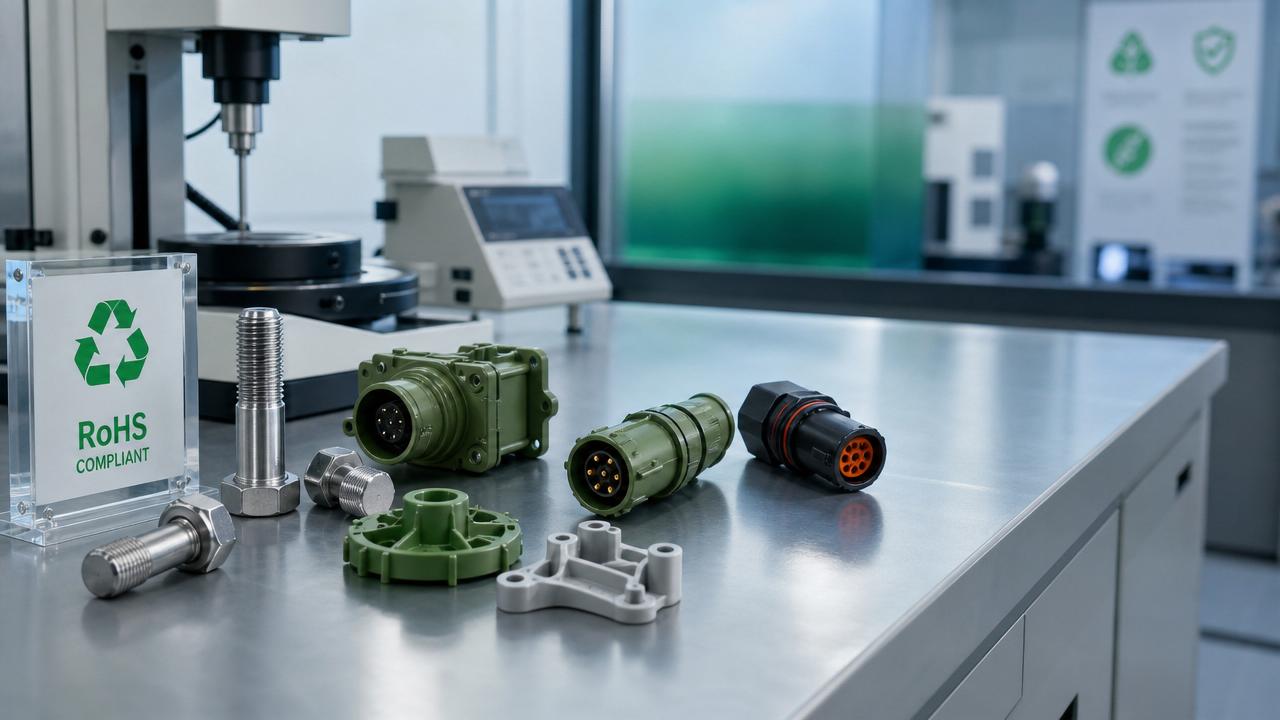
Greening industrial components is no longer just a sustainability goal—it is a quality and risk-management challenge. For QA and safety professionals, the real question is how to reduce environmental impact without introducing new failure modes, compliance gaps, or performance uncertainty. This article explores practical ways to balance material innovation, durability, and operational safety in demanding industrial applications.
For most quality and safety teams, the answer is not to reject greener materials or lower-impact processes. It is to qualify them differently. Greening industrial components can reduce waste, energy use, and regulatory exposure, but only when changes are evaluated through the same disciplined lens used for any critical design or supplier change: failure risk, process stability, traceability, and field performance.
The core search intent behind this topic is practical: how to make industrial components more sustainable without increasing defects, recalls, safety incidents, or compliance risk. Readers are not looking for high-level ESG slogans. They want decision criteria, validation methods, red flags, and a realistic framework for approving greener alternatives in production environments where failure is costly.
Why QA and Safety Teams Often Resist “Greener” Components
That resistance is usually rational. In industrial environments, components fail for physical reasons, not marketing reasons. A fastener made with higher recycled content may show different fatigue behavior. A low-VOC coating may alter corrosion resistance. A bio-based polymer insert may drift under heat, humidity, or chemical exposure. Even a packaging change can affect contamination, handling damage, or shelf life.
QA and safety professionals are trained to ask the right question: what has changed at the material, process, interface, and operating-condition level? If that question is not answered thoroughly, “green” can become a hidden source of variation. This is why greening industrial components must be treated as a controlled engineering and risk-governance program, not just a procurement initiative.
Another reason for caution is that environmental claims often arrive faster than test data. Suppliers may promote recycled alloys, PFAS-free coatings, lower-emission adhesives, or energy-saving production methods before long-term performance evidence is available across the full duty cycle. In sectors where vibration, pressure, heat, corrosion, and electrical loading matter, missing data is itself a risk signal.
What “Greening Industrial Components” Actually Means in Practice
For industrial buyers and approvers, greening industrial components usually involves one or more of five changes: lower-impact raw materials, reduced hazardous substances, lower-energy manufacturing routes, longer service life, or better end-of-life recyclability. Each of those changes can be beneficial, but each can also affect reliability in different ways.
A material substitution changes mechanical, thermal, electrical, or chemical behavior. A coating reformulation changes adhesion, surface energy, galvanic compatibility, or corrosion life. A process change, such as lower-temperature curing or additive manufacturing, may affect dimensional consistency and defect distribution. A design-for-repair strategy may improve sustainability while introducing assembly error risk if tolerances or torque controls are weak.
That is why the most useful definition is this: a greener component is not simply one with a lower environmental footprint on paper. It is a component that delivers verified functional equivalence or verified functional superiority within its intended use conditions while reducing lifecycle burden. If performance equivalence is unproven, the sustainability claim is incomplete.
The First Rule: Do Not Approve a Green Change as a Sustainability Project Alone
The safest approach is to classify any green change as a formal product or process change with cross-functional review. That means QA, safety, engineering, sourcing, compliance, and operations should all have input before approval. A sustainability-driven substitution that bypasses existing engineering change control is one of the fastest ways to create avoidable field failures.
Start by identifying the exact type of change. Is it a raw material composition change? A secondary process change? A surface treatment change? A manufacturing location change tied to lower-carbon supply? A packaging or storage-condition change? Different change types require different validation depth. Teams often underestimate indirect effects because the part number appears unchanged while the process reality is not.
Use a documented risk screen before testing begins. Map the component’s safety criticality, regulatory sensitivity, operating stress, replacement cost, and failure consequences. A greener handle insert on a non-critical hand tool does not require the same burden of evidence as a greener connector housing used in a high-temperature electrical assembly or a fastener installed in a vibration-prone structure.
Where Failure Risk Usually Increases After Green Substitutions
The highest-risk areas are not always obvious. Mechanical properties are only the beginning. Recycled metals can vary in impurity profile, grain structure, and consistency between heats if supplier controls are weak. Alternative polymers can absorb moisture differently, change creep behavior, or become more brittle at low temperature. Safer chemical formulations may reduce toxicity while also reducing adhesion, lubricity, or sealing reliability.
Surface engineering is another common failure point. Many industrial components depend more on their surface condition than their bulk material. If a greener plating, passivation, or coating system changes thickness control, porosity, friction coefficient, or corrosion protection, downstream performance can shift significantly. This is especially important in threaded fasteners, electrical contacts, mold components, and pneumatic sealing parts.
Process capability can also degrade quietly. A supplier may switch to a lower-energy curing cycle, different quench parameters, or reduced solvent cleaning to meet environmental targets. Even if test samples initially pass, the process window may narrow, creating more variability in production. For QA teams, this is a major concern because intermittent failures are often harder to detect than immediate failures.
Finally, there is systems interaction risk. A greener component may pass standalone tests but fail when combined with mating parts, lubricants, cleaning agents, coolants, or assembly conditions. In safety-sensitive applications, validation must cover the actual use environment, not just ideal lab conditions.
How to Evaluate Greener Components Without Slowing the Business Unnecessarily
The best method is staged qualification. Not every green initiative deserves a full redesign program, but none should move directly from supplier claim to full deployment. A three-stage model works well: desk review, technical validation, and controlled production release.
In the desk-review stage, verify what exactly is changing and why. Request updated material declarations, technical data sheets, regulatory certificates, processing information, and any comparative performance data. Ask whether the supplier has changed raw material source, additive package, finishing chemistry, energy source, tooling, cure profile, or factory site. Hidden secondary changes matter.
In the validation stage, test according to actual failure mechanisms rather than generic pass/fail templates. For a fastener, that may include tensile strength, fatigue, torque-tension behavior, hydrogen embrittlement risk, salt spray or cyclic corrosion, and friction consistency. For electrical parts, focus on dielectric performance, thermal aging, contact resistance, flammability, and creep. For mold or tooling components, wear resistance, dimensional stability, heat cycling, and surface integrity are more relevant than broad sustainability narratives.
In the controlled release stage, limit exposure. Start with pilot lots, traceable applications, tightened incoming inspection, and expanded in-process monitoring. If the greener component performs as intended, confidence can scale with evidence. This approach allows progress on sustainability while preserving discipline around failure containment.
The Validation Questions That Matter Most to QA and Safety Managers
When reviewing greening industrial components, the strongest decisions usually come from a focused set of questions.
First, has the component’s critical-to-quality profile changed? If a change affects load-bearing capacity, sealing, conductivity, dimensional repeatability, corrosion life, or thermal margin, the validation plan must be upgraded. “Nominally equivalent” is not sufficient for critical features.
Second, are environmental benefits tied to the material itself or to manufacturing process improvements? A lower-carbon factory may create less product risk than a new polymer chemistry. Not all green changes carry the same technical uncertainty, and teams should prioritize low-risk opportunities first.
Third, what is the evidence base? Internal data, third-party test reports, application-specific trials, and field history are not interchangeable. The strongest approvals combine multiple forms of evidence and clearly define what remains uncertain.
Fourth, what is the worst credible failure mode? QA and safety teams should update FMEA or equivalent risk assessments whenever the material or process basis changes. If the greener version shifts the failure mode from visible wear to sudden cracking, or from gradual corrosion to electrical instability, the risk profile may worsen even if average lab performance looks acceptable.
Fifth, can the change be detected and controlled in routine operations? If incoming inspection cannot distinguish acceptable from unacceptable lots, then supplier process control and traceability become even more important. A green alternative that requires highly specialized verification may not be practical unless the control plan evolves accordingly.
Supplier Qualification Is the Real Gatekeeper
In many cases, component risk comes less from the sustainable concept than from weak supplier execution. Two suppliers may both offer recycled-content steel or solvent-reduced coating systems, yet one has robust metallurgy control, validated processing windows, and full batch traceability, while the other relies on inconsistent inputs and limited test discipline. The environmental claim sounds similar, but the operational risk is not.
For this reason, supplier audits should examine more than certificates. Ask how recycled or alternative feedstocks are sorted, verified, and blended. Review process capability data, lot segregation methods, contamination controls, and change notification procedures. Confirm whether test methods align with your application or only with generic marketing benchmarks.
For safety-sensitive parts, establish minimum expectations for control plans, PPAP or equivalent documentation where relevant, deviation management, and retention samples. A supplier that cannot explain how sustainability changes are governed internally is not ready to support low-risk implementation.
Compliance and Safety: Green Does Not Automatically Mean Safer
One of the most important realities for compliance professionals is that environmentally preferable does not automatically mean safer in service. A chemical restriction may drive substitution toward a new formulation with less toxicological concern but weaker field durability. A lighter material may reduce carbon footprint but compromise impact resistance or heat tolerance in certain applications.
Therefore, compliance review must cover both product-content rules and operational safety implications. Depending on the component category and market, that may involve RoHS, REACH, ELV, Proposition 65, flammability requirements, electrical safety standards, workplace exposure controls, and transport or disposal regulations. The greening decision should improve the compliance position overall, not simply move risk from one category to another.
Documentation quality matters here. Maintain version-controlled specifications, approval records, test reports, supplier declarations, and change rationales. If a field issue appears later, traceable decision history helps teams separate isolated production escape from flawed qualification logic.
How to Prioritize Low-Risk, High-Value Greening Opportunities
Not every component should be first in line. A practical portfolio approach helps. Start with changes that offer measurable environmental gains but low functional disruption. Examples may include improving packaging recyclability, reducing machining scrap through process optimization, shifting to lower-emission manufacturing energy, or extending component life through better wear resistance and maintenance planning.
Next, target non-safety-critical or easily monitored components where field feedback is fast and containment is manageable. This gives teams real data and organizational confidence before moving into highly critical assemblies. Greening industrial components becomes much easier when the organization builds a track record of successful, low-drama transitions.
Leave the hardest cases for later: parts with severe mechanical loading, high thermal stress, strict regulatory demands, difficult inspection, or catastrophic failure consequences. These applications may still justify greener alternatives, but they require stronger evidence, more extensive pilot testing, and tighter post-release surveillance.
A Practical Approval Framework for Cross-Functional Teams
One effective framework is to require five approval gates.
Gate one: define the sustainability objective clearly. Is the goal lower embodied carbon, reduced hazardous chemistry, improved recyclability, or longer service life? Vague goals produce vague decisions.
Gate two: classify technical risk. Assess component criticality, known failure modes, process sensitivity, and detectability of defects. This determines the qualification burden.
Gate three: validate performance under actual use conditions. Test to failure mechanisms, not just catalog claims. Include aging, compatibility, and variability where relevant.
Gate four: confirm control readiness. Ensure supplier controls, incoming inspection, traceability, and internal work instructions are updated before release.
Gate five: monitor field and production outcomes. Use complaint data, scrap rates, maintenance reports, and audit findings to confirm that the greener option is delivering both sustainability value and stable quality.
This framework helps align sustainability ambition with industrial discipline. It also gives QA and safety leaders a defensible basis for saying yes, no, or not yet.
Conclusion: Sustainable Components Are Viable When Risk Control Leads the Process
Greening industrial components does not have to mean accepting higher failure risk. In fact, when done well, it can improve lifecycle performance, reduce regulatory exposure, and strengthen long-term supply resilience. The key is to stop treating sustainability as a separate conversation from quality and safety.
For QA and safety professionals, the practical standard is simple: greener components should be approved only when the change is understood, tested against real failure modes, controlled in production, and traceable through the supply chain. If those conditions are met, sustainability becomes an engineering advantage rather than a reliability gamble.
That is the real path forward for industrial organizations: not choosing between environmental progress and operational confidence, but building a qualification system strong enough to achieve both.
Related News