
Is industrial standardization limiting product differentiation


As industrial standardization reshapes the hardware sector, many manufacturers wonder whether uniform specs are narrowing room for differentiation. Yet in today’s high-end industrial market, advantage often comes from micron-level precision, stronger electrical compliance standards, and smarter manufacturing logic. This article explores how industrial standardization can coexist with greening components, industrial greening, and deeper industrial collaboration network strategies to create value rather than limit it.
For OEMs, distributors, technical evaluators, procurement teams, and project managers, the question is not whether standards exist, but where real differentiation still lives once baseline requirements are shared. In fasteners, tooling, connectors, molds, and automation-linked components, the market increasingly rewards suppliers that meet common standards while outperforming peers on tolerance control, lifecycle stability, compliance readiness, delivery discipline, and application support.
That is especially relevant to platforms such as GHTN, where the value of industrial intelligence lies in connecting base components to system-level outcomes. In many categories, a standard thread, housing size, voltage class, or mold interface is only the starting line. The commercial winner is often the manufacturer that can hold tighter consistency across 5,000 to 50,000 units, reduce line stoppages by one or two shifts per quarter, or shorten qualification cycles from 6 weeks to 3 weeks.
Why standardization is rising across the hardware sector
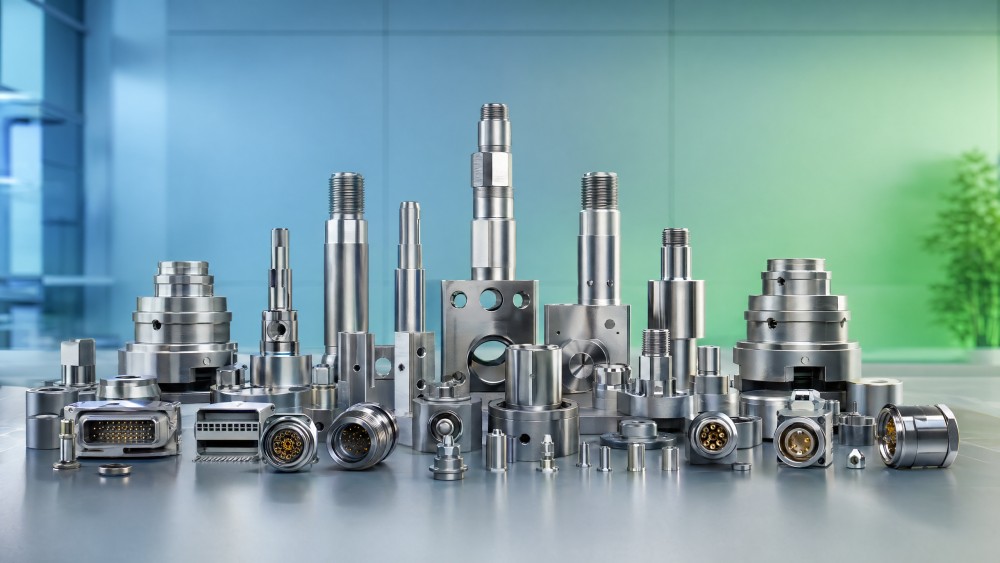
Industrial standardization has expanded because global supply chains now depend on interoperability. A distributor sourcing from 3 countries, an OEM assembling across 2 plants, and a project team managing 20 to 200 line items cannot afford constant dimensional mismatch or undocumented variation. In the hardware sector, standardization reduces onboarding time, simplifies quality checks, and lowers replacement risk when maintenance teams need functional equivalents.
In practice, standardization usually covers the visible layer first: dimensions, interface geometry, voltage classes, material grades, thread forms, safety markings, and test procedures. It can also extend to documentation, including inspection reports, RoHS or REACH declarations where applicable, and electrical compliance standards needed for regional market entry. These shared rules are not a constraint by default; they are the common language that allows trade to scale.
For buyers, standardization often cuts total procurement friction by 10% to 30% over a sourcing cycle because vendor comparison becomes clearer. For operators and quality teams, it creates repeatable inspection checkpoints. For decision-makers, it lowers risk when entering a high-end industrial market where one non-compliant component can delay commissioning by 7 to 21 days.
What standards solve, and what they do not
A standard can define minimum performance, but it rarely guarantees optimal performance in a specific use case. Two parts may share the same nominal size, yet differ significantly in fatigue life, corrosion stability, surface finish, burr control, or thermal behavior. In mold manufacturing, micron-level precision in cavity or insert production can separate a stable process from a scrap-heavy one, even when both suppliers claim the same nominal spec.
The same applies in electrical systems. Meeting electrical compliance standards is essential, but it does not automatically address installation ease, cable routing efficiency, connector retention strength, or performance in high-humidity and vibration-heavy environments. Standards establish eligibility; differentiation shapes operating value.
Common business drivers behind standardization
- Multi-site manufacturing requires interchangeable parts across 2 to 5 production locations.
- Distributor networks need predictable SKUs to reduce inventory duplication and emergency substitution risk.
- Quality teams prefer measurable acceptance criteria such as hardness range, torque value, or dimensional tolerance.
- Compliance teams need auditable documentation for export markets and regulated applications.
This is why industrial standardization continues to grow. It reduces avoidable complexity. The concern arises only when manufacturers treat the standard as the end of innovation rather than the foundation for it.
Where product differentiation still creates measurable value
Differentiation in industrial components has moved away from superficial variation and toward performance depth. In the hardware sector, buyers increasingly evaluate consistency over novelty. A bolt, cutting tool, terminal block, die component, or pneumatic fitting does not need to look unique; it needs to perform better under real load, heat, corrosion, vibration, and maintenance conditions.
This is where manufacturing logic matters. Suppliers that understand the interaction between raw material, heat treatment, coating, machining path, and inspection method can improve outcomes without breaking standard interfaces. For example, maintaining dimensional repeatability within ±0.01 mm rather than ±0.03 mm may lower downstream fitting adjustments. In molds and dies, micron-level precision can reduce flash, improve cycle consistency, and lower rework frequency over runs of 10,000 to 100,000 shots.
Differentiation also appears in service architecture. Lead times of 2 to 4 weeks instead of 6 to 8 weeks, batch traceability down to material lot records, and engineering response within 24 to 48 hours all influence supplier selection. These factors matter to procurement and project managers because they affect commissioning schedules, warranty exposure, and customer delivery commitments.
Key layers of industrial differentiation beyond standard specs
The table below shows how two components can be equally standard-compliant yet commercially very different in practice.
The key conclusion is that industrial standardization mostly compresses low-value variation, not high-value capability. Companies that can prove process stability, lower lifecycle cost, and stronger application matching retain clear room for premium positioning in the high-end industrial market.
How different stakeholders define differentiation
- Technical evaluators focus on tolerance, endurance, thermal performance, and process capability.
- Procurement teams look at MOQ, payment terms, lead time ranges, defect response speed, and replacement continuity.
- Operators and maintenance teams value easier installation, fewer adjustments, and longer service intervals.
- Executives and business evaluators care about margin protection, supplier resilience, and entry into higher-value segments.
For GHTN’s audience, the practical lesson is clear: standards do not erase differentiation; they redefine where the market is willing to pay for it.
How greening components and industrial greening reshape competitive strategy
Another reason many firms misread standardization is that they focus only on physical specifications. The market is now evaluating a broader profile that includes greening components, cleaner material choices, energy-aware processing, and extended product life. Industrial greening is not a separate theme from performance. In many segments, it directly supports durability, compliance, and export readiness.
For example, a component designed for longer replacement cycles can reduce maintenance waste and total resource use. A coating process with more stable thickness control may lower reject rates by 3% to 8%. A mold engineered for better thermal balance can reduce cycle-time drift and scrap. In these cases, greening industrial operations is not marketing language; it is process efficiency translated into environmental and cost value.
This matters in the high-end industrial market because buyers increasingly assess lifecycle implications, not just purchase price. A lower-cost part that triggers extra downtime, over-tight maintenance intervals, or documentation gaps may become more expensive over a 12- to 36-month operating horizon.
Practical greening indicators buyers can evaluate
The table below outlines common evaluation points that link industrial greening to procurement and technical decision-making.
When these checks are built into sourcing, greening components becomes a real differentiator. It helps suppliers move beyond basic price competition and supports SMEs seeking a better margin position through higher consistency and lower risk exposure.
Three common mistakes to avoid
- Treating industrial greening as separate from mechanical or electrical performance, instead of integrating both in one evaluation matrix.
- Focusing on single-batch sample quality without checking 3-batch or 5-batch consistency.
- Assuming a compliant document set guarantees robust field performance in temperature, moisture, or vibration-heavy applications.
A greener component strategy works best when it is tied to process capability, not only label-based claims. That is where manufacturing logic and data-backed review become essential.
Building differentiation through compliance, precision, and collaboration
If standards are the baseline, then the next competitive layer is coordinated execution. In industrial components, this usually depends on 3 linked capabilities: compliance readiness, precision control, and cross-party collaboration. A supplier may be technically strong, but without stable communication among engineering, sourcing, quality, and distribution, differentiation gets lost during quoting, change control, or delivery.
This is where an industrial collaboration network becomes strategically valuable. In fragmented supply chains, buyers often struggle to compare suppliers using the same criteria. GHTN’s role in the market reflects a broader shift: decision-makers want connected insight from material selection to market entry. They do not just need a part. They need context on application fit, electrical compliance standards, process implications, and likely trade-offs between price, lead time, and reliability.
In precision tooling and molds, micron-level precision cannot be maintained by machining alone. It requires upstream alignment on design intent, tolerance stack-up, raw material stability, inspection frequency, and packaging discipline. In electrical hubs and related components, compliance and usability must be addressed together, especially when products move across multiple regulatory environments.
A practical 5-step execution model
- Step 1: Define the non-negotiable standards, including interface dimensions, voltage or material class, and documentation requirements.
- Step 2: Identify performance differentiators such as ±0.01 mm repeatability, coating endurance, insertion force range, or wear-life target.
- Step 3: Review supplier process controls, including inspection frequency, lot traceability, and corrective action lead time of 24 to 72 hours.
- Step 4: Validate in the target environment through pilot lots, sample assemblies, or trial runs lasting 1 to 4 weeks.
- Step 5: Establish ongoing review points for quality drift, engineering changes, and replenishment performance every quarter.
This model helps both buyers and suppliers convert industrial standardization into a disciplined value framework. It also reduces a common sourcing failure: selecting only by unit price while missing hidden costs in installation, rejects, line stoppage, or delayed compliance approval.
How collaboration improves premium positioning
Manufacturers serving the high-end industrial market rarely win on product attributes alone. They win by reducing uncertainty for customers. That can mean clearer document packs, more accurate delivery promises, better pre-shipment inspection reporting, or direct technical discussion before PO release. In sectors where one mold insert error or one electrical mismatch can delay a project by 10 to 15 working days, this operational reliability is a premium feature.
For distributors and agents, an industrial collaboration network also improves catalog strategy. Instead of competing with broad but shallow SKU lists, they can build portfolios around proven fit-for-application components, supported by better compliance visibility and stronger technical explanation.
Procurement guidance: how to evaluate suppliers in a standardized market
When many suppliers appear similar on paper, procurement needs a more granular method. The most reliable approach is to score vendors across technical, commercial, compliance, and operational dimensions. This creates a fair comparison model for technical evaluators, business reviewers, and enterprise decision-makers who may prioritize different risks.
A practical supplier review can use 4 weighted blocks: 30% technical performance, 25% quality and traceability, 25% supply responsiveness, and 20% commercial competitiveness. The exact weighting can shift by product type. For safety-sensitive or export-facing products, electrical compliance standards and traceability may deserve a higher share. For mold parts or cutting tools, micron-level precision and wear consistency may dominate.
The goal is to avoid a false commodity view. In the hardware sector, two quotes with a 5% price gap can produce a 15% difference in total operating cost once downtime, replacement rates, and documentation delays are included. That is why structured evaluation is critical.
Suggested supplier comparison matrix
The following matrix can be adapted for OEMs, distributors, and project-based buyers evaluating standardized industrial components.
This type of matrix helps convert subjective claims into operational questions. It is also useful for quality controllers and safety managers who need evidence-based acceptance criteria rather than generic sales language.
FAQ for common sourcing concerns
How do I know when standardization has gone too far?
If supplier comparison focuses only on price and nominal dimensions, while failure modes such as corrosion, wear, thermal drift, or documentation gaps are ignored, standardization is being used too narrowly. A good process keeps standard baselines but still scores risk and lifecycle value.
Which buyers benefit most from premium differentiation?
High-mix OEMs, export-oriented manufacturers, automation projects, precision mold users, and regulated electrical applications usually benefit most. In these cases, one delay of 7 to 14 days can outweigh a modest price premium.
What should distributors prioritize first?
Distributors should prioritize repeatability, document readiness, and replacement continuity. Broad catalogs are useful, but in industrial channels, reliable replenishment and application clarity often create more long-term customer value than SKU volume alone.
Industrial standardization does not have to limit product differentiation. In most cases, it removes low-value inconsistency and pushes competition toward areas that matter more: precision, compliance, lifecycle performance, greener processes, and collaborative execution. For companies operating in the hardware sector, the real opportunity lies in using standards as a foundation while building distinction through manufacturing logic, greening components, stronger electrical compliance standards, and a more connected industrial collaboration network.
For OEMs, procurement teams, technical reviewers, distributors, and decision-makers, that means evaluating suppliers beyond nominal specs. It also means aligning sourcing with long-term goals in industrial greening, premium market access, and operational resilience. If you want to assess component strategy, compare supplier capabilities, or explore more solutions for the high-end industrial market, contact GHTN to get tailored insights and practical sourcing guidance.
Related News
- industrial components
- mold manufacturing
- fasteners
- electrical systems
- material selection
- industrial intelligence
- hardware sector
- electrical hubs
- industrial standardization
- precision mold
- high-end industrial market
- industrial collaboration network
- electrical compliance
- greening industrial
- industrial collaboration
- greening components
- market entry
- electrical compliance standards
- cutting tools
- industrial greening
- micron-level precision
- manufacturing logic