
Industrial greening trends that are reshaping supplier choices

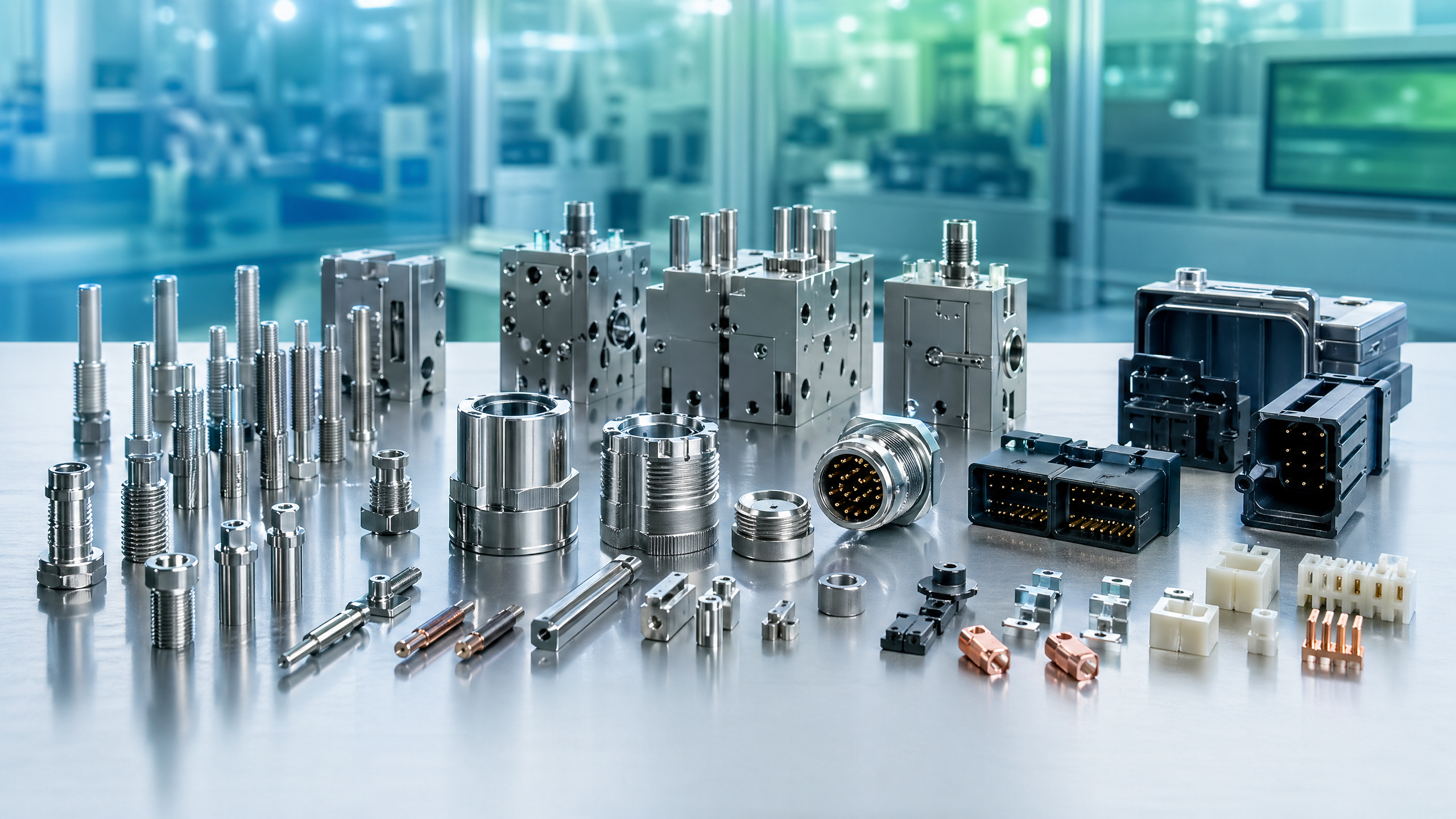
Industrial greening is rapidly reshaping how suppliers are assessed across the hardware sector, from greening components and electrical compliance standards to micron-level precision and industrial standardization. For buyers, engineers, and decision-makers targeting the high-end industrial market, understanding this shift means aligning manufacturing logic with sustainability, performance, and risk control in a more connected industrial collaboration network.
What does industrial greening really mean for supplier selection today?
In practical terms, industrial greening is no longer limited to energy-saving slogans or factory-level environmental messaging. In the hardware sector, it increasingly refers to a measurable shift in how components are designed, sourced, processed, packaged, tested, and delivered. A supplier may now be judged not only on unit price and lead time, but also on material efficiency, scrap control, emissions-aware process planning, and the ability to support industrial standardization across multiple markets.
For procurement teams and technical evaluators, this changes the supplier scorecard. A fastener producer, tooling partner, mold shop, or electrical component source may all be expected to explain whether their greening components strategy affects durability, corrosion resistance, thermal behavior, or maintenance intervals. In many projects, the first screening cycle happens within 2 to 6 weeks, and suppliers that cannot provide clear documentation are often removed early, even before sample testing begins.
This trend also matters because greening industrial practices are moving upstream. OEMs, distributors, and project managers increasingly want evidence that manufacturing logic supports both output and responsibility. A supplier that controls plating chemistry, optimizes cutting fluid usage, reduces mold rework, or improves yield by 3% to 8% may create more long-term value than one offering only the lowest quote.
Why is the shift stronger in underlying industrial components?
Underlying industrial parts sit deep inside larger systems, so their impact multiplies. A small seal, connector, die-cast insert, or hardened tool bit can influence energy loss, failure rate, assembly speed, and field maintenance frequency. In sectors where operating cycles run 8, 16, or 24 hours a day, even minor improvements in wear resistance or electrical stability can alter total ownership cost over 12 to 36 months.
Another reason is compliance pressure. In global sourcing, electrical compliance standards and restricted-substance expectations can affect customs clearance, distributor acceptance, and end-customer qualification. Companies looking at the high-end industrial market are often less tolerant of undocumented materials, unstable coatings, or inconsistent dimensional control. Industrial greening therefore becomes part of access qualification, not just a marketing add-on.
At the same time, micron-level precision has become closely linked with sustainability. Better precision can reduce rework, lower assembly rejection, and stabilize tool life. In precision mold and tooling applications, a dimensional deviation of 10 to 30 microns may be acceptable in one use case but unacceptable in another. Greening and precision are increasingly evaluated together because both affect process waste and product reliability.
Quick indicators buyers now watch
- Whether the supplier can explain material substitution without weakening mechanical or electrical performance.
- Whether batch consistency is maintained across 3 to 5 production runs, not only in one approved sample.
- Whether process improvements reduce scrap, water use, coating loss, or secondary machining load.
- Whether documentation supports export, distribution, and customer audits in more than one destination market.
The following table summarizes how supplier evaluation is changing as industrial greening becomes more central to sourcing decisions.
The comparison shows that supplier choice is shifting from a narrow transactional model toward a broader performance-and-risk model. For many decision-makers, the question is no longer whether industrial greening matters, but how early it should be built into sourcing and qualification workflows.
Which buyers and applications are most affected by greening industrial requirements?
The impact is strongest where components are technically embedded, operationally sensitive, or commercially regulated. This includes OEM buyers sourcing mechanical tools, mold inserts, electrical hubs, pneumatic parts, and fastening systems that must perform under temperature fluctuation, vibration, chemical exposure, or high duty cycles. In these environments, greening components are evaluated through service life, maintenance burden, and downstream system compatibility rather than appearance alone.
Technical assessment teams are particularly affected because they must translate sustainability claims into engineering consequences. A coating with lower environmental burden still has to meet torque retention, salt-spray expectations, insulation performance, or mold-release consistency. If a supplier proposes a process update but cannot show stable output across a tolerance band, typically within ±0.02 mm to ±0.10 mm depending on part type, confidence drops quickly.
Commercial evaluators and distributors are also under pressure. A supplier that aligns with industrial standardization can reduce SKU complexity, simplify multi-market sales, and shorten onboarding for regional channels. For agents and distributors, fewer documentation gaps mean fewer delays when entering the high-end industrial market, where end users often request technical files, process notes, and compliance support before placing repeat orders.
Where does the issue become critical first?
It becomes critical in applications where failure has a multiplier effect. For example, in automated production lines, the logic control performance of pneumatic and electrical assemblies can influence throughput, maintenance intervals, and safety checks. In mold manufacturing, micron-level precision affects cavity life, flashing risk, cycle repeatability, and re-polishing frequency. In fastening systems, surface treatment and material choice affect preload stability and corrosion resistance over service periods of 6 months to several years.
It is also critical in cross-border projects. Once a supplier serves multiple export destinations, electrical compliance standards, documentation discipline, and traceable process control become more important. Even when the product itself is small, the approval burden may be significant if the part sits inside higher-value assemblies or infrastructure-linked equipment.
For project managers, the key takeaway is simple: the earlier industrial greening is reviewed, the fewer redesign loops occur later. Waiting until PPAP-style submission, final article approval, or pre-shipment audit often leads to avoidable schedule pressure.
Who should review supplier greening readiness internally?
- Procurement teams, to compare total landed value instead of only unit cost.
- Engineering teams, to validate manufacturing logic, tolerances, and material behavior.
- Quality and safety managers, to review control plans, traceability, and risk points.
- Commercial leaders, to assess market fit, distributor acceptance, and branding implications.
In most industrial collaboration network environments, no single function can assess all risks alone. The most resilient supplier decisions come from coordinated review across technical, commercial, and compliance stakeholders.
How should procurement and engineering teams compare suppliers under industrial greening pressure?
The best starting point is to compare suppliers by decision layers rather than by broad impressions. A credible review usually covers material integrity, process consistency, compliance readiness, dimensional capability, and response speed. For many hardware sector buyers, the useful question is not “Is this supplier green?” but “Can this supplier deliver measurable performance with lower risk over 12 to 24 months?”
Engineering teams should ask how the supplier balances greening industrial practices with part function. If a manufacturer has changed surface treatment, lubricant chemistry, resin grade, or energy inputs, what happened to wear, conductivity, heat resistance, or tolerance retention? Procurement teams should then connect those answers to practical concerns such as minimum order quantity, lot-to-lot consistency, tooling amortization, and requalification timing.
Another strong comparison method is to separate one-time cost from recurring risk. A lower quote may be attractive if lead time is 20 days instead of 35 days, but not if the supplier struggles with documentation, batch deviations, or unstable packaging. When greening components are involved, the hidden cost often appears later through returns, line stoppage, field replacement, or delayed market access.
What comparison dimensions matter most?
A practical comparison matrix should cover technical evidence, process evidence, and business evidence. Technical evidence includes mechanical properties, fit tolerance, insulation behavior, corrosion expectations, and compatibility with downstream assembly. Process evidence includes control points, tool maintenance routines, scrap handling, and process repeatability. Business evidence includes lead time range, sample turnaround, change notification discipline, and support for certification-related requests.
The table below can be used as a working checklist when comparing suppliers that claim industrial greening capability.
This type of matrix helps procurement avoid a common mistake: mixing environmental claims with technical proof. The strongest suppliers are not those using the most fashionable language, but those that can connect manufacturing logic to stable output, lower waste, and manageable commercial risk.
A simple 5-step review flow
- Define the part’s critical function, including temperature, load, electrical, and lifespan requirements.
- Request process and material clarification, especially where greening industrial adjustments have been made.
- Check sample capability against tolerance, finish, and batch repeatability requirements.
- Review compliance and document readiness for target markets and customer audits.
- Compare landed value over the expected service window, not only first-order pricing.
This workflow is especially useful for OEMs, distributors, and project owners managing both cost pressure and long qualification chains.
What are the most common mistakes companies make when evaluating green suppliers?
One of the most common mistakes is treating industrial greening as separate from performance. In reality, a greener process that weakens hardness, conductivity, sealing reliability, or cycle stability may not reduce total impact at all. The better question is whether the supplier has improved both environmental efficiency and functional reliability within the required application range.
A second mistake is asking for declarations but not asking for process context. For example, a supplier may offer lower-impact plating or optimized mold cooling, but if the buyer does not ask how this affects adhesion, cycle time, or dimensional recovery, the evaluation remains incomplete. In many industrial parts categories, one process change can alter three or more performance variables at once.
A third mistake is underestimating industrial standardization. Some buyers focus only on one project, while ignoring whether the supplier can support repeat programs, multi-region documentation, and broader platform use. Suppliers that align product dimensions, materials, and reporting methods with common standards often reduce future qualification cost by a meaningful margin, especially across 2 to 4 factories or distribution regions.
Which warning signs deserve closer attention?
- Claims about greening components without any explanation of process controls or technical trade-offs.
- Excellent prototype samples but weak evidence of repeatability in production lots.
- Unclear responsibility for testing, document updates, or change notification after approval.
- Promises of compatibility with the high-end industrial market without support for compliance review.
These signs do not automatically disqualify a supplier, but they indicate where deeper review is needed. Quality managers and engineering leads should ask for corrective detail early, ideally before tooling release or first large-volume order.
FAQ summary: fast judgment points
For teams needing a quick internal reference, the following FAQ-style table can help align sourcing, engineering, and business review.
This summary is useful because industrial greening decisions are rarely made by one department alone. A simple shared framework helps prevent misalignment between sustainability goals, operating reality, and sourcing speed.
How can companies prepare for future supplier requirements in a more connected industrial collaboration network?
Preparation starts with better information flow. In a modern industrial collaboration network, supplier readiness depends on how well technical, quality, compliance, and commercial data move between participants. If engineering changes are slow to reach procurement, or if compliance questions surface only after tooling is cut, the cost of correction rises. Many companies can reduce friction by establishing a 30-, 60-, and 90-day review rhythm during new supplier onboarding.
The next step is to define a practical evidence package. For example, buyers may ask suppliers for material statements, process descriptions, tolerance capability notes, sample records, and change-control commitments. This does not need to be bureaucratic, but it does need to be consistent. In sectors where micron-level precision and process stability matter, structured data is often more valuable than broad sustainability language.
Companies should also segment suppliers by application criticality. Not every item requires the same depth of review. A low-risk consumable may need a lighter process, while a precision mold component, insulated electrical part, or mission-critical fastener may require deeper verification. This tiered approach helps balance speed and discipline across the hardware sector.
What should be confirmed before requesting quotes or samples?
Before moving to RFQ or sample requests, teams should confirm the function profile, operating environment, target market, expected lifecycle, tolerance range, and documentation needs. If the part is intended for the high-end industrial market, the review should also include appearance expectations, traceability scope, packaging standards, and after-sales response logic. These points save time because they reduce mismatched assumptions in the first quotation cycle.
It is also wise to ask whether the supplier can support iterative optimization. In many precision and industrial standardization projects, the first sample is only a starting point. A supplier that can discuss mold venting, tool wear compensation, thread performance, conductor stability, or plating uniformity in detail is usually better positioned for long-term cooperation.
This is where a specialized knowledge platform becomes valuable. Access to cross-category analysis, from mechanical tools and electrical hubs to mold manufacturing and component materials, helps teams compare suppliers with more confidence and less guesswork.
Why choose us for insight and sourcing evaluation support?
GHTN focuses on the granular core of industry: underlying components, precision manufacturing tools, electrical systems, and mold-related processes. Our perspective is built around manufacturing logic, technical trend analysis, and trade insight that matter to OEMs, distributors, quality managers, project leaders, and sourcing teams. We pay close attention to greening components, electrical compliance standards, industrial standardization, and the real production consequences of micron-level precision.
If you are comparing suppliers, entering a new market, or reviewing whether industrial greening requirements may affect product selection, we can help frame the right questions early. That may include parameter confirmation, material and process review, product selection guidance, expected delivery cycles, documentation preparation, custom solution discussion, sample support, and quotation communication.
If you need to move from trend awareness to practical action, contact us to discuss your component category, application environment, compliance concerns, target lead time, or supplier evaluation priorities. Whether you are assessing one precision part or building a broader industrial collaboration network, early technical clarification usually creates faster decisions and more reliable sourcing outcomes.
Related News
- industrial components
- precision manufacturing tools
- mechanical tools
- mold manufacturing
- electrical systems
- material selection
- hardware sector
- industrial parts
- electrical hubs
- industrial standardization
- precision mold
- automated production lines
- high-end industrial market
- industrial collaboration network
- electrical compliance
- greening industrial
- industrial collaboration
- greening components
- electrical compliance standards
- manufacturing tools
- industrial greening
- micron-level precision
- manufacturing logic